
ᐅ Who is right? Window planning regarding ventilation & thermal insulation, cost & value, installation effort
Created on: 25 Apr 2026 11:34
C
Chris1234567C
Chris123456725 Apr 2026 11:34Hello everyone,
I have an old building from 1900 with a full basement on sandstone, featuring a double-walled masonry 430mm (17 inches) thick with clay plaster, resulting in a U-value of 1.2 W/m²K with the red bricks.
CURRENT CONDITION:
Some of the windows are still double-glazed from 1984 with AUBI fittings; some are sagging, while others are still in good condition.
In the auxiliary rooms and basement, Veka windows with Roto fittings and double glazing (from 2008) have been installed. Bedroom and balcony door windows were replaced in 2002.
In the extension, KÖMMERLING EuroFutur Classic windows with WINKHAUS fittings from 2017 are installed.
DESIRED CONDITION:
New windows or possibly only new panes on the ground floor (6 windows with transoms measuring 1200 x 1800mm (47 x 71 inches) plus a panoramic round-arch window measuring 2600 + 2300mm (102 + 91 inches))
New windows or only new panes on the first floor (6 windows with transoms measuring 1200 x 1800mm (47 x 71 inches))
STATEMENTS FROM THE WINDOW INSTALLERS:
One suggests using triple glazing and offers only the 82mm (3.2 inches) profile Gealan S 9000, saying that everything else in a 70mm (2.8 inches) construction is no longer up to modern standards.
Another recommends VEKA windows with a 70mm (2.8 inches) profile, claiming this saves the most energy and fits best with the existing structure.
A third recommends Salamander GreenEvo 76 3D (with a 10% surcharge for triple glazing).
Regarding ventilation according to DIN 1946-6 (>30% is required, with about 70% currently achieved), I was advised not to worry and to avoid ventilation slots like those used in care homes, but rather to ventilate properly, making it a non-issue. Another installer said they would install the new windows by only cutting into the old frames and inserting the new ones, which makes little mess and is how they do it about 80% of the time. Ventilation and mold issues were not considered particularly critical in either case.
QUESTION:
The dimensions of the 12 windows plus the panoramic window are estimated at €9,000 (without installation) and rise to €33,000 with installation (Brügmann bluEvo 82). The cost for pane replacement alone is about €2,500, but I wonder if that makes sense when the windows still close well but lack a central seal.
How can I get an orientation by asking the right questions, and what should I particularly pay attention to?
Best regards,
Christian
I have an old building from 1900 with a full basement on sandstone, featuring a double-walled masonry 430mm (17 inches) thick with clay plaster, resulting in a U-value of 1.2 W/m²K with the red bricks.
CURRENT CONDITION:
Some of the windows are still double-glazed from 1984 with AUBI fittings; some are sagging, while others are still in good condition.
In the auxiliary rooms and basement, Veka windows with Roto fittings and double glazing (from 2008) have been installed. Bedroom and balcony door windows were replaced in 2002.
In the extension, KÖMMERLING EuroFutur Classic windows with WINKHAUS fittings from 2017 are installed.
DESIRED CONDITION:
New windows or possibly only new panes on the ground floor (6 windows with transoms measuring 1200 x 1800mm (47 x 71 inches) plus a panoramic round-arch window measuring 2600 + 2300mm (102 + 91 inches))
New windows or only new panes on the first floor (6 windows with transoms measuring 1200 x 1800mm (47 x 71 inches))
STATEMENTS FROM THE WINDOW INSTALLERS:
One suggests using triple glazing and offers only the 82mm (3.2 inches) profile Gealan S 9000, saying that everything else in a 70mm (2.8 inches) construction is no longer up to modern standards.
Another recommends VEKA windows with a 70mm (2.8 inches) profile, claiming this saves the most energy and fits best with the existing structure.
A third recommends Salamander GreenEvo 76 3D (with a 10% surcharge for triple glazing).
Regarding ventilation according to DIN 1946-6 (>30% is required, with about 70% currently achieved), I was advised not to worry and to avoid ventilation slots like those used in care homes, but rather to ventilate properly, making it a non-issue. Another installer said they would install the new windows by only cutting into the old frames and inserting the new ones, which makes little mess and is how they do it about 80% of the time. Ventilation and mold issues were not considered particularly critical in either case.
QUESTION:
The dimensions of the 12 windows plus the panoramic window are estimated at €9,000 (without installation) and rise to €33,000 with installation (Brügmann bluEvo 82). The cost for pane replacement alone is about €2,500, but I wonder if that makes sense when the windows still close well but lack a central seal.
How can I get an orientation by asking the right questions, and what should I particularly pay attention to?
Best regards,
Christian

“Who is right” is a good way to introduce the topic, and it’s easy to answer: when in doubt, of course me (because I have knowledge but am not currently working in the trade, so I have no conflicting interests with yours). An exchange of “PVC for PVC” is never really a meaningful upgrade. The idea of just sanding and re-capping the window frames at least shows some understanding on the part of the window specialist about where most of the dirt and damage potential lies. In terms of budget, it often amounts almost to a decimal place difference to limit yourself to replacing the insulated glass units and making adjustments; here you achieve the greatest efficiency gain. Many profiles have long had identical outer and middle seals, so the central seals can simply be inserted into empty grooves. Without the middle seal, you basically only have a “narrow-gauge version of rebate ventilation,” so I wouldn’t worry too much about the few models that cannot be retrofitted with a middle seal. The profile thicknesses of 70/76/82 (millimeters) (approximately 3/3/3¼ inches) as well as the number of chambers are more or less “random” design results and not a quality indicator in themselves. I drive a compact car daily, and yes, the lack of 8 cylinders is noticeable on the highway uphill. Every dealer prefers to sell you the product with the highest margin, with volume bonuses also playing a role. The most innovation has taken place in the insulated glass units, and more panes do not necessarily mean better. Look for what you actually need, and when replacing on the noise-facing side, you might apply different criteria than on the sun-facing side. I am entering my seventh year of retirement; if you want a “fresher” unbiased opinion, spend a little money just for advice and ask installers who you do not intend to buy from directly.
https://www.instagram.com/11antgmxde/
https://www.linkedin.com/company/bauen-jetzt/
https://www.instagram.com/11antgmxde/
https://www.linkedin.com/company/bauen-jetzt/
C
Chris123456726 Apr 2026 14:35@11ant This is exactly the discussion I’ve been hoping for, since you usually only get representatives for either the installer or the seller. For me, it’s about 80% the added benefit of energy efficiency and possibly replacing the windows that have issues with the corner hinges or are warped/sticking and supposedly can’t be adjusted anymore, so they are basically useless.
Roughly speaking, I have 230m² (2470 sq ft) of living space on the ground floor with 6 times 1.3m² (14 sq ft) of poor-quality glass plus a huge panoramic window, which already has new panes in the casement windows and is coated yellowish on the top side due to the southern exposure for heat reflection. According to the thermal imaging camera, they look like the new ones underneath based on the heat emission. On the first floor, there are 6 times 1.3m² (14 sq ft) of poor glass with a presumed U-value over 3.0, and some of the panes in the skylights are even showing moisture inside. The glass is definitely bad!
QUESTIONS:
1.) Some windows’ locking mechanisms seem very easy to operate in my opinion. Is it worthwhile to replace the glass for around 100 euros to noticeably improve energy efficiency, or is the 60mm (2.4 inches) frame also the bigger problem?
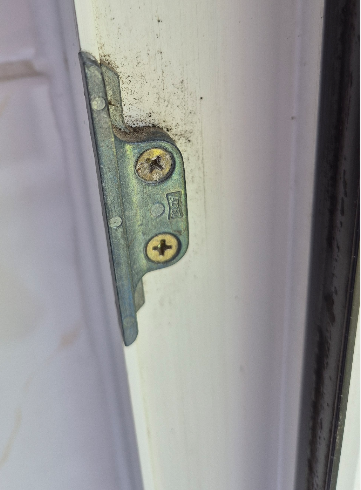
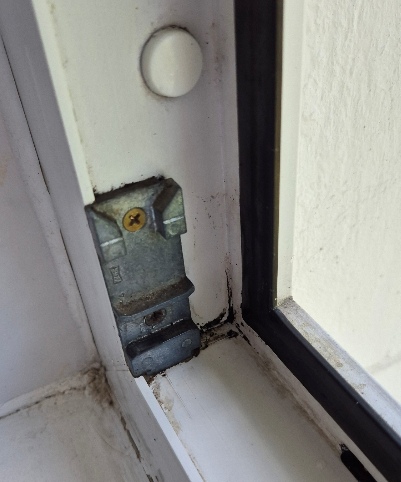
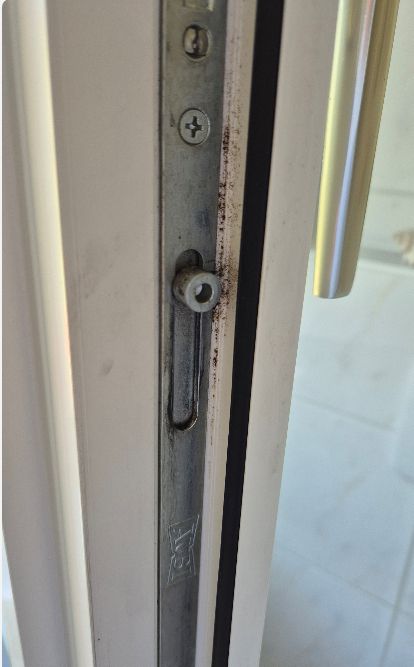
2.) Some windows stick and there is noticeable draught from the sides, in one case even under the windowsill. Can the plastic warp, or is this a matter of adjustment or poor installation? I couldn’t find any way to adjust it.
3.) For the 1.3m (4.3 ft) wide sashes, you have to lift the window, and one pane was even cracked once. Is it possible to replace or repair the corner supports?
4.) The frames have a depth of 60mm (2.4 inches). Is it possible to add a central gasket here?
5.) How do you remove the edge to replace the glass? I wasn’t able to do it :-(, while the window fitters managed to replace the glass in 2 minutes without any visible marks on the beading. Using a sharp, sturdy multifunction spatula didn’t work; it didn’t get into the gap.
6.) What is best to lubricate with? WD40 probably isn’t it, and oil is also no good. What do you do with rubber seals that are still flexible but rub off black residue?
7.) Besides the dirt, I am worried about how much glass area I might lose in the bathroom where tiles are still on top of the window. How much area is lost and how is the replacement done there?
Roughly speaking, I have 230m² (2470 sq ft) of living space on the ground floor with 6 times 1.3m² (14 sq ft) of poor-quality glass plus a huge panoramic window, which already has new panes in the casement windows and is coated yellowish on the top side due to the southern exposure for heat reflection. According to the thermal imaging camera, they look like the new ones underneath based on the heat emission. On the first floor, there are 6 times 1.3m² (14 sq ft) of poor glass with a presumed U-value over 3.0, and some of the panes in the skylights are even showing moisture inside. The glass is definitely bad!
QUESTIONS:
1.) Some windows’ locking mechanisms seem very easy to operate in my opinion. Is it worthwhile to replace the glass for around 100 euros to noticeably improve energy efficiency, or is the 60mm (2.4 inches) frame also the bigger problem?
2.) Some windows stick and there is noticeable draught from the sides, in one case even under the windowsill. Can the plastic warp, or is this a matter of adjustment or poor installation? I couldn’t find any way to adjust it.
3.) For the 1.3m (4.3 ft) wide sashes, you have to lift the window, and one pane was even cracked once. Is it possible to replace or repair the corner supports?
4.) The frames have a depth of 60mm (2.4 inches). Is it possible to add a central gasket here?
5.) How do you remove the edge to replace the glass? I wasn’t able to do it :-(, while the window fitters managed to replace the glass in 2 minutes without any visible marks on the beading. Using a sharp, sturdy multifunction spatula didn’t work; it didn’t get into the gap.
6.) What is best to lubricate with? WD40 probably isn’t it, and oil is also no good. What do you do with rubber seals that are still flexible but rub off black residue?
7.) Besides the dirt, I am worried about how much glass area I might lose in the bathroom where tiles are still on top of the window. How much area is lost and how is the replacement done there?
I have never worked as an installer myself, nor am I an expert. Find a qualified professional and arrange an on-site consultation. Of course, windows can warp, but not just from age alone. The sashes have weight, and so do the insulated glass units inside. The latter can also shift within their glazing blocks and cause the sash to become misaligned. In such cases, reglazing can work wonders. The units cannot absorb water, but they can allow air (along with moisture, if they become leaky and the gas filling is gradually replaced by regular air) to enter. Simply replacing the units with those that have a “warm edge” spacer can make a noticeable difference. I already mentioned that a thicker profile is not necessarily better, but naturally, less complexity fits into a 60mm (2¼ inch) profile design. Installation errors around the windowsills are never the window’s fault. Bathroom windows are seldom a highlight of architectural finesse, and I know no one who goes into a bathroom to admire the perfect beauty of the windows. I would leave the bathroom window unchanged without hesitation. As I said, invest some money in getting advice from someone who has no sales interests in your specific case (though they may well earn their living selling windows in other situations). Expertise and sales should always be separated, at least when you are on the buyer’s side. Notaries always begin their explanations by stating they have not provided legal services in the same matter, even when they act as notaries.
https://www.instagram.com/11antgmxde/
https://www.linkedin.com/company/bauen-jetzt/
https://www.instagram.com/11antgmxde/
https://www.linkedin.com/company/bauen-jetzt/
C
Chris123456727 Apr 2026 21:49Well, an energy expert has already been in the house. Blow-in insulation, new windows, doors, and roof. Remove the plaster and add interior insulation.
I was hoping to get a neutral opinion or experience on this topic from someone who works with windows. Specifically, whether windows can still be kept in good condition after 40 years if, for example, only the glass is replaced and they are properly maintained. I have no idea if a window lasts 50-70 years with proper care, or if window frames from 1984 are completely ineffective in terms of energy efficiency. I find it hard to believe that just the surface area alone could make such a big difference.
@11ant Regardless: What is the best product to use for maintenance? WD40 is probably not suitable, and oil is also bad? What do you do with rubber seals that rub off black but are not yet brittle? The buildup could indeed be an issue, since these are precisely the windows that already have a new pane and are "warped."
I was hoping to get a neutral opinion or experience on this topic from someone who works with windows. Specifically, whether windows can still be kept in good condition after 40 years if, for example, only the glass is replaced and they are properly maintained. I have no idea if a window lasts 50-70 years with proper care, or if window frames from 1984 are completely ineffective in terms of energy efficiency. I find it hard to believe that just the surface area alone could make such a big difference.
@11ant Regardless: What is the best product to use for maintenance? WD40 is probably not suitable, and oil is also bad? What do you do with rubber seals that rub off black but are not yet brittle? The buildup could indeed be an issue, since these are precisely the windows that already have a new pane and are "warped."
Similar topics