
Hello,
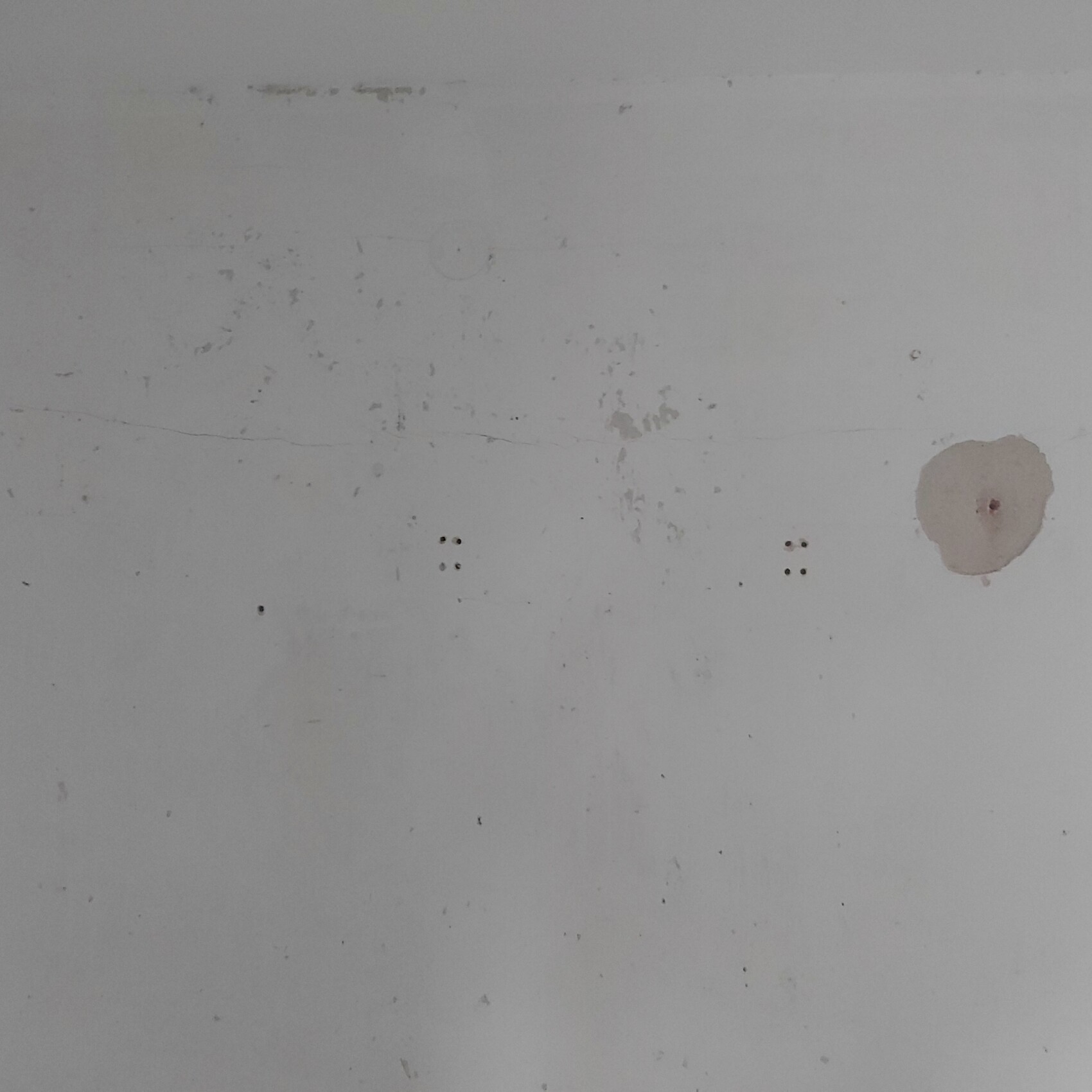
I removed the textured wallpaper from an apartment built in the 1970s. Underneath, there is a single-layer gypsum plaster that has cracks and holes in some areas.
I initially didn’t want to install wallpaper again, so I discussed with the plasterer about embedding a reinforcing mesh and then applying filler to create a smooth, paint-ready surface.
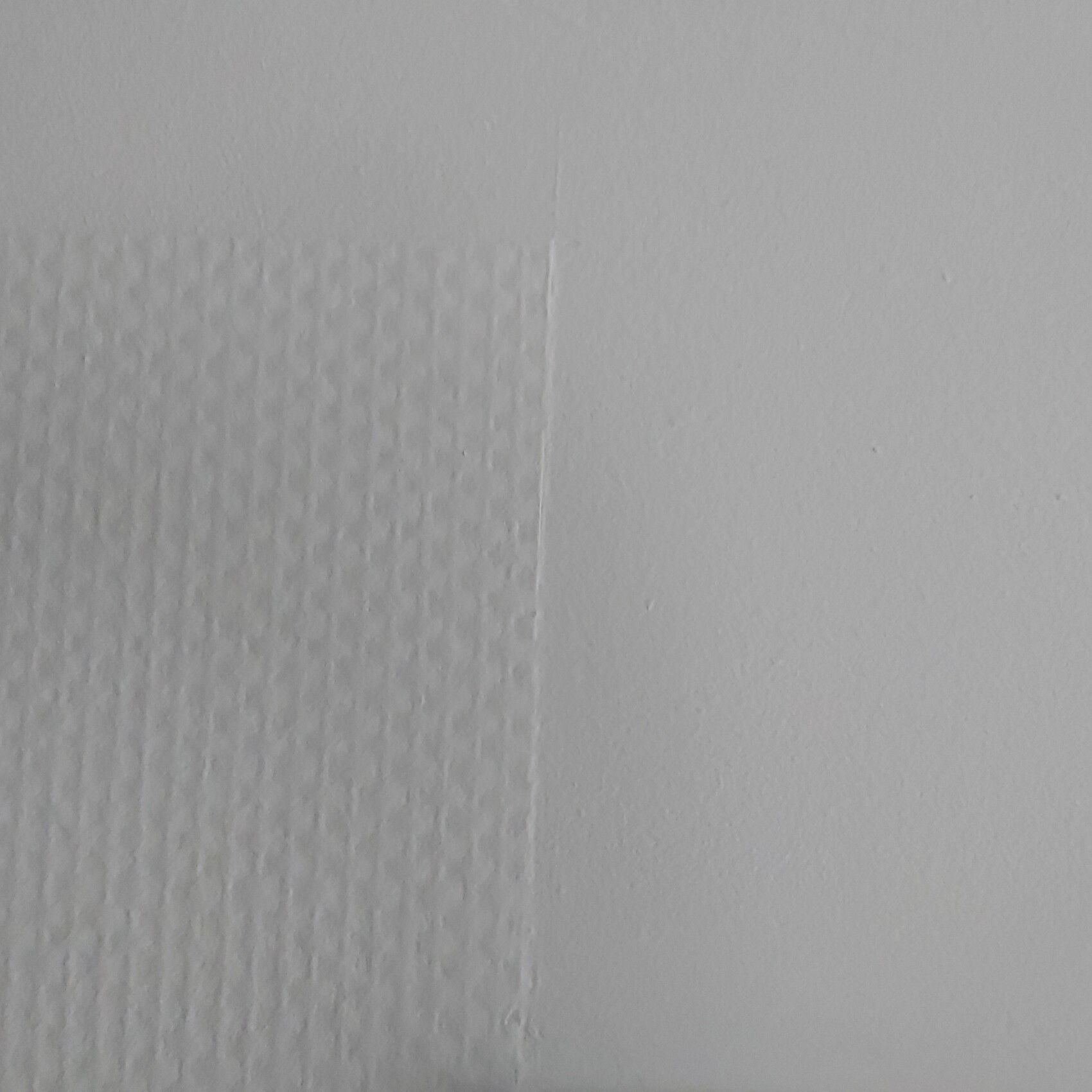
However, the cost for this turned out to be higher than expected, so I now want to install wallpaper again, but definitely not textured wallpaper. I saw a wallpaper with a grid-like pattern in a new build that looks nice to me and has some texture (so it’s not completely smooth), where the difference to painted plaster is very minimal in my opinion; see image: wallpaper on the left, painted gypsum plaster on the right.
The condition of the apartment is shown in the following pictures.
How can I achieve the condition shown in the first image?
1. Sand the wall/ceiling, fill holes in the wall, and then wallpaper directly, or
2. Sand the wall/ceiling, apply painting fleece (also known as scrim or wall lining fabric), and then wallpaper?
For option 2, I am curious how much the fleece affects the surface under the wallpaper. As shown in the picture, the door frame is a steel frame and is not protruding much. I want to avoid the wall being flush with the door frame afterward. The frame should still stand out slightly.

I removed the textured wallpaper from an apartment built in the 1970s. Underneath, there is a single-layer gypsum plaster that has cracks and holes in some areas.
I initially didn’t want to install wallpaper again, so I discussed with the plasterer about embedding a reinforcing mesh and then applying filler to create a smooth, paint-ready surface.
However, the cost for this turned out to be higher than expected, so I now want to install wallpaper again, but definitely not textured wallpaper. I saw a wallpaper with a grid-like pattern in a new build that looks nice to me and has some texture (so it’s not completely smooth), where the difference to painted plaster is very minimal in my opinion; see image: wallpaper on the left, painted gypsum plaster on the right.
The condition of the apartment is shown in the following pictures.
How can I achieve the condition shown in the first image?
1. Sand the wall/ceiling, fill holes in the wall, and then wallpaper directly, or
2. Sand the wall/ceiling, apply painting fleece (also known as scrim or wall lining fabric), and then wallpaper?
For option 2, I am curious how much the fleece affects the surface under the wallpaper. As shown in the picture, the door frame is a steel frame and is not protruding much. I want to avoid the wall being flush with the door frame afterward. The frame should still stand out slightly.