
Hello,
we would like to install a recessed shelf in the shower wall of our bathroom. For this, we ordered a metal built-in recessed shelf from Hansgrohe. The issue is that this recessed shelf requires a plastic insert, which should be placed into the hole first, then sealed along the edges and tiled over. Only after that would the actual shelf box be inserted into the plastic insert and sealed again with silicone beneath the edges on the tiles. The problem now is that the area around the hole has already been tiled, and unfortunately, the hole is also too wide (see attached picture).
What possible solutions would be feasible now? We are considering the following options:
Best regards
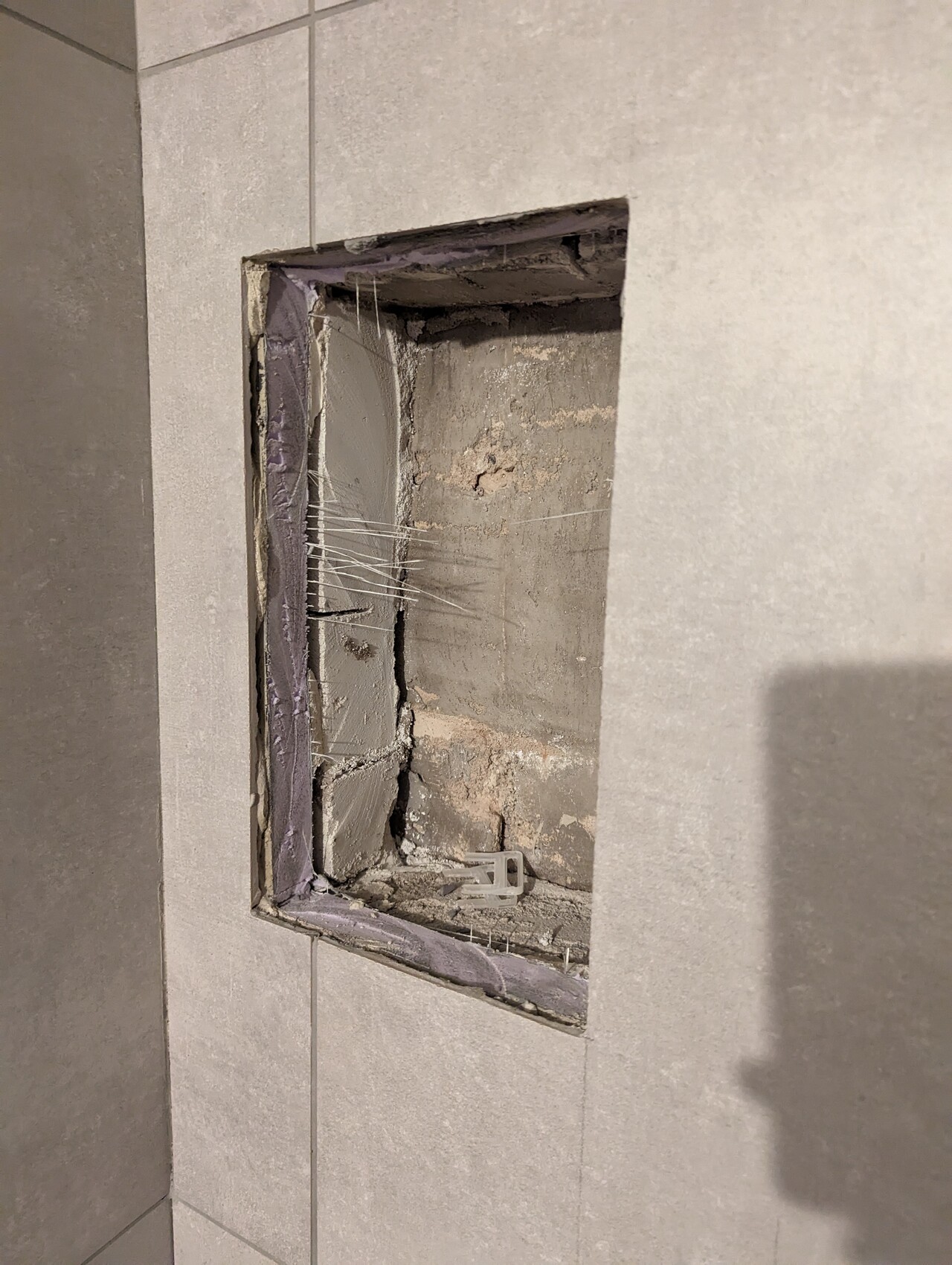
we would like to install a recessed shelf in the shower wall of our bathroom. For this, we ordered a metal built-in recessed shelf from Hansgrohe. The issue is that this recessed shelf requires a plastic insert, which should be placed into the hole first, then sealed along the edges and tiled over. Only after that would the actual shelf box be inserted into the plastic insert and sealed again with silicone beneath the edges on the tiles. The problem now is that the area around the hole has already been tiled, and unfortunately, the hole is also too wide (see attached picture).
What possible solutions would be feasible now? We are considering the following options:
- Remove the tiles around the hole, adjust the hole to the correct size, and install the shelf as planned according to the assembly instructions.
- Enlarge the hole directly in the wall and install a larger recessed shelf. This one does not require a plastic insert and is fixed directly with tile adhesive in the hole. Silicone would then be applied under the edges that rest on the tiles. My question here is: How can the silicone be renewed later on? Because the shelf is permanently fixed in the hole with tile adhesive. With the Hansgrohe solution, the shelf box can be removed from the holder at any time to renew the silicone under the edges.
- Tile over the hole afterwards (which raises the question whether it’s possible to achieve a proper seal this way).
Best regards
N
nordanney29 Feb 2024 17:00No matter how you do it, a watertight seal is only guaranteed if the existing tiles are removed and then a waterproof membrane is applied around the corner. Whether using a waterproof box or a membrane (like on floors and walls), this is essential. Using silicone alone is not recommended—although it might hold up temporarily. If it fails, you will regret it.