
ᐅ Rammed concrete (built in 1963) severely deteriorated, partial wall replacement through recasting with new concrete
Created on: 5 Dec 2025 12:42
D
dedieterHello everyone,
I need an assessment regarding the repair of a rammed concrete basement wall in my detached house.
Project data:
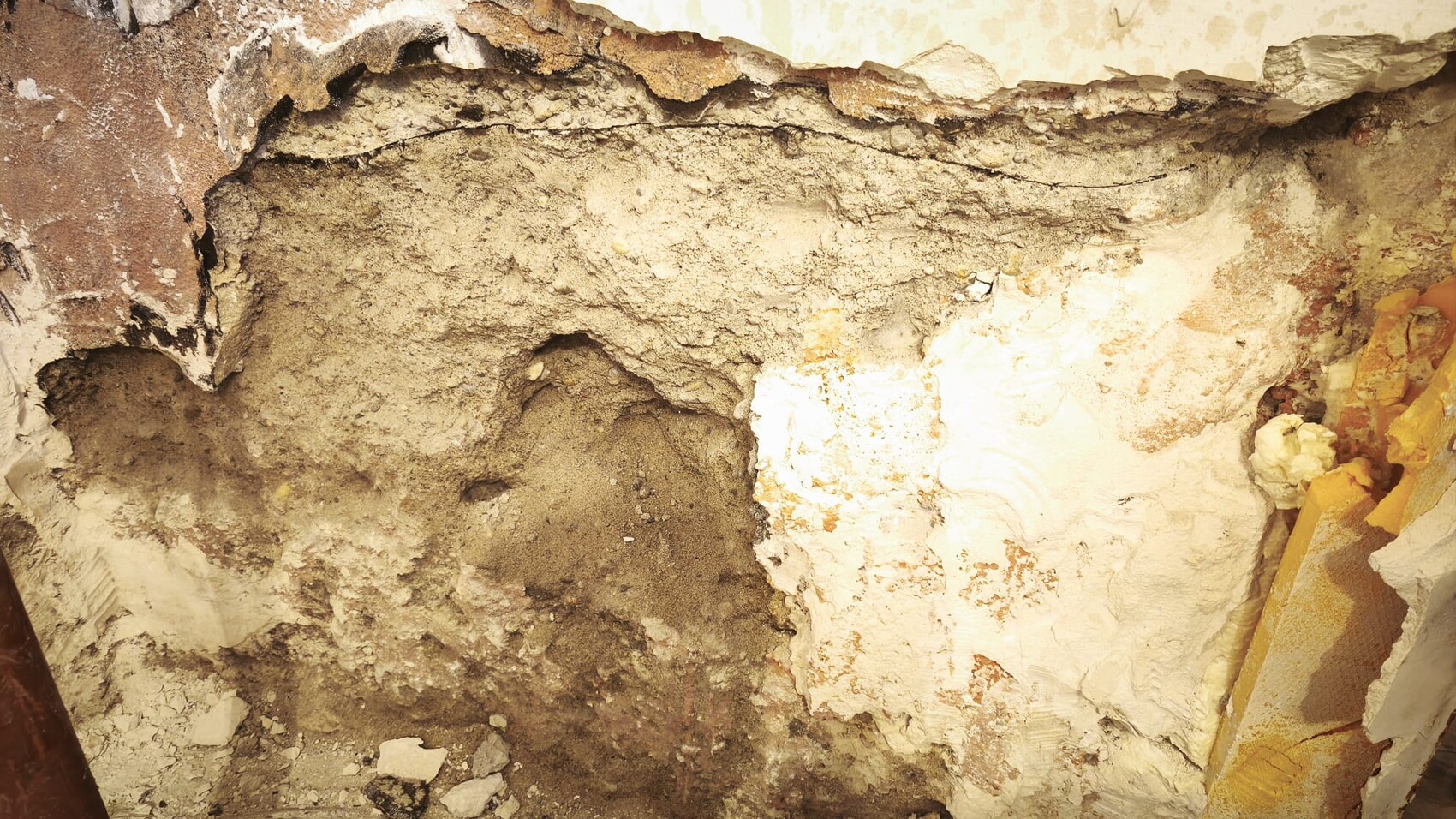
After completely removing the interior plaster, it is apparent that the rammed concrete has largely lost its cohesion in several areas. The concrete is:
Objective:
A partial renewal of the damaged wall sections by re-concreting, without underpinning the foundation and without complete demolition of the wall.
My envisioned approach is as follows:
In my opinion, only the following are appropriate:
Is a partial renewal of the lower 50cm (20 inches) of the wall by new concrete on porous rammed concrete foundation reasonable, or is this inevitably only a temporary solution with residual risk?
Thank you in advance!

I need an assessment regarding the repair of a rammed concrete basement wall in my detached house.
Project data:
- Year built: 1963
- Construction method: rammed concrete, presumably B120
- Affected area: basement wall including adjacent foundation section of the wall
- Moisture penetration: up to the horizontal damp-proof course
- Damage description: severe cement segregation / cement washout → concrete crumbly
After completely removing the interior plaster, it is apparent that the rammed concrete has largely lost its cohesion in several areas. The concrete is:
- mechanically very easily destroyed
- can be easily removed with a hammer
- pronounced localized aggregate nests
- locally so soft that material breaks out by itself
Objective:
A partial renewal of the damaged wall sections by re-concreting, without underpinning the foundation and without complete demolition of the wall.
My envisioned approach is as follows:
- partial removal of the damaged rammed concrete down to the horizontal damp-proof course
- exposing structurally sound existing material
- if necessary, re-anchoring / creating shear connection (dowels, reinforcement connections)
- formwork renewal
- re-concreting in sections (segmental approach)
- Is such a partial repair of a rammed concrete wall generally technically feasible and structurally durable?
- At what point is old rammed concrete no longer repairable and considered just fill material without structural function?
- Is the segmental (step-by-step) method common or structurally justifiable for a basement wall of this type?
- From which point does the condition become structurally critical if the wall is locally easily destroyed with hand tools?
In my opinion, only the following are appropriate:
- specialized companies for concrete repair
- construction companies with experience in structural assessment of older buildings
Is a partial renewal of the lower 50cm (20 inches) of the wall by new concrete on porous rammed concrete foundation reasonable, or is this inevitably only a temporary solution with residual risk?
Thank you in advance!
Hi Dieter,
Your plan using the incremental step method is quite interesting, but I would pay close attention to how stable the remaining structure really is. The question of how load-bearing the old rammed concrete still is cannot be answered in a general way. Depending on how much cement leaching has progressed, the remaining concrete might still serve as filling material, but not necessarily as structurally load-bearing. And a wall that can be easily damaged with a hammer often no longer meets the criteria to be considered “load-bearing.”
It also depends on the overall load the wall section must carry. Is this part of the wall primarily responsible for bearing loads, or is it a less critical area? In many cases, the old concrete gradually breaks down until it only functions as a mortar-like mass. But when deciding whether a partially renovated wall will actually last for decades or only serve as a “long-term temporary solution,” there is no simple answer.
Regarding your question about suitable contractors — only specialists in concrete repair and restoration would be ideal. Many construction companies not specialized in the structural aspects of older buildings may struggle to provide truly long-lasting solutions here. In this area, extremely meticulous work is essential because the old concrete no longer has a uniform consistency due to cement leaching.
So my question to you is: How critical do you consider the structural condition of the remaining wall? Shouldn’t the first cracks already be visible if the wall is really so easily damaged?
Good luck!
Your plan using the incremental step method is quite interesting, but I would pay close attention to how stable the remaining structure really is. The question of how load-bearing the old rammed concrete still is cannot be answered in a general way. Depending on how much cement leaching has progressed, the remaining concrete might still serve as filling material, but not necessarily as structurally load-bearing. And a wall that can be easily damaged with a hammer often no longer meets the criteria to be considered “load-bearing.”
It also depends on the overall load the wall section must carry. Is this part of the wall primarily responsible for bearing loads, or is it a less critical area? In many cases, the old concrete gradually breaks down until it only functions as a mortar-like mass. But when deciding whether a partially renovated wall will actually last for decades or only serve as a “long-term temporary solution,” there is no simple answer.
Regarding your question about suitable contractors — only specialists in concrete repair and restoration would be ideal. Many construction companies not specialized in the structural aspects of older buildings may struggle to provide truly long-lasting solutions here. In this area, extremely meticulous work is essential because the old concrete no longer has a uniform consistency due to cement leaching.
So my question to you is: How critical do you consider the structural condition of the remaining wall? Shouldn’t the first cracks already be visible if the wall is really so easily damaged?
Good luck!
Similar topics