

Hello everyone,
we are still at the early stage of our house planning, and I’m trying to figure out the right heating system for us. Here are a few key points...
- Building style: townhouse with integrated double garage
- Living area: 160 m² (1,722 ft²)
- Occupants: currently 3, will increase to 4
- Both working full-time
- No basement
- Targeting KFW 55 standard
- Exterior walls made of Ytong
- Probably controlled ventilation with heat recovery (personally, not a must-have for me)
- Pellet stove (likely hydronic)
- Probably underfloor heating
- Probably solar thermal for hot water
- No gas connection available/possible
- Large plot, with 3.00–3.50 m (10–11.5 ft) hard clay soil (no drilling progress)
- No shading on the roof, good southern exposure
We definitely want a pellet stove for the living-kitchen-hall-dining area (approx. 55 m² / 592 ft²), mainly for the ambiance, and I’m considering heating the entire house with it (hydronic). Of course, storage and supply of wood pellets are two factors that need to be considered. Ideally, in summer the hot water demand should be covered by a solar thermal system. However, I don’t want to rely entirely on a “living room” stove as the central heating. A heat pump system would probably not be cost-effective if the pellet stove really works out.
Is it economically feasible to provide electric backup heating via the controlled ventilation system or thermal storage / layering tanks in case the pellet stove fails? Do you have any other ideas?
I really love underfloor heating, but since we are not home during the day, I’m not a fan of heating continuously, especially not with a pellet stove. Underfloor heating is well known to be slow to react. We also don’t want visible radiators. Would it be sufficient to charge a buffer tank of about 800 liters (210 gallons) once in the evening to last until the next evening?
Has anyone had experience with floor convector heating units?
Apparently they exist with and without fans. With fans, I guess the controlled ventilation system won’t work together, but without fans the room heating probably takes much longer, right?
How quickly can a controlled ventilation system distribute the heat from a stove/fireplace throughout the house via heat recovery? Probably too slowly, right?
Okay, I guess I’ve asked enough questions for now ops:
I would really appreciate your help and experiences.
Thank you in advance.
Best regards
Judyyy
we are still at the early stage of our house planning, and I’m trying to figure out the right heating system for us. Here are a few key points...
- Building style: townhouse with integrated double garage
- Living area: 160 m² (1,722 ft²)
- Occupants: currently 3, will increase to 4
- Both working full-time
- No basement
- Targeting KFW 55 standard
- Exterior walls made of Ytong
- Probably controlled ventilation with heat recovery (personally, not a must-have for me)
- Pellet stove (likely hydronic)
- Probably underfloor heating
- Probably solar thermal for hot water
- No gas connection available/possible
- Large plot, with 3.00–3.50 m (10–11.5 ft) hard clay soil (no drilling progress)
- No shading on the roof, good southern exposure
We definitely want a pellet stove for the living-kitchen-hall-dining area (approx. 55 m² / 592 ft²), mainly for the ambiance, and I’m considering heating the entire house with it (hydronic). Of course, storage and supply of wood pellets are two factors that need to be considered. Ideally, in summer the hot water demand should be covered by a solar thermal system. However, I don’t want to rely entirely on a “living room” stove as the central heating. A heat pump system would probably not be cost-effective if the pellet stove really works out.
Is it economically feasible to provide electric backup heating via the controlled ventilation system or thermal storage / layering tanks in case the pellet stove fails? Do you have any other ideas?
I really love underfloor heating, but since we are not home during the day, I’m not a fan of heating continuously, especially not with a pellet stove. Underfloor heating is well known to be slow to react. We also don’t want visible radiators. Would it be sufficient to charge a buffer tank of about 800 liters (210 gallons) once in the evening to last until the next evening?
Has anyone had experience with floor convector heating units?
Apparently they exist with and without fans. With fans, I guess the controlled ventilation system won’t work together, but without fans the room heating probably takes much longer, right?
How quickly can a controlled ventilation system distribute the heat from a stove/fireplace throughout the house via heat recovery? Probably too slowly, right?
Okay, I guess I’ve asked enough questions for now ops:
I would really appreciate your help and experiences.
Thank you in advance.
Best regards
Judyyy
The more I read about heating technology, the more confused I become.
The pellet storage/supply and reliability of hydronic pellet stoves somewhat discourage me. Still, we would like to have one for the ambiance (even if not hydronic) and possibly for demand-controlled heating of the building. Now, I am considering a heat pump.
Would it make sense to maintain the room temperature at around 19–20°C (66–68°F) using a heat pump to keep the efficiency high, and then operate the pellet stove when we are home? Which type of heat pump would be advisable for us in this case? Is a ground-source heat pump (with ground collectors) even suitable for the soil conditions, according to the soil report (see attachment)? Are the additional costs for ground collectors justified if we also supplement heating with pellets?
Solar thermal energy seems to be out of consideration, but we do want a 10 kWp photovoltaic system, possibly combined with a heat pump for domestic hot water.
If we decide on a ground-source heat pump, where should the utility room be located? The house connections would be shortest on the south side of the house, but the ground collectors would only have space on the north side.
I would be very grateful for your help.
Best regards
Judyyy
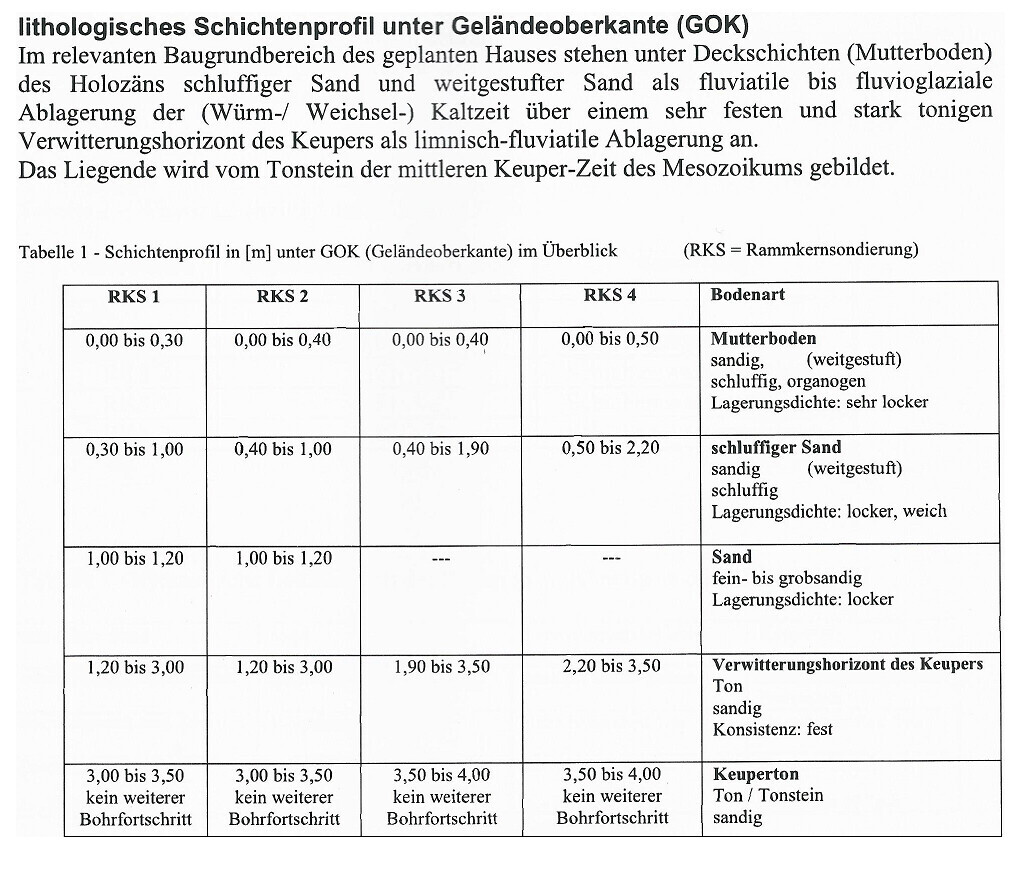
The pellet storage/supply and reliability of hydronic pellet stoves somewhat discourage me. Still, we would like to have one for the ambiance (even if not hydronic) and possibly for demand-controlled heating of the building. Now, I am considering a heat pump.
Would it make sense to maintain the room temperature at around 19–20°C (66–68°F) using a heat pump to keep the efficiency high, and then operate the pellet stove when we are home? Which type of heat pump would be advisable for us in this case? Is a ground-source heat pump (with ground collectors) even suitable for the soil conditions, according to the soil report (see attachment)? Are the additional costs for ground collectors justified if we also supplement heating with pellets?
Solar thermal energy seems to be out of consideration, but we do want a 10 kWp photovoltaic system, possibly combined with a heat pump for domestic hot water.
If we decide on a ground-source heat pump, where should the utility room be located? The house connections would be shortest on the south side of the house, but the ground collectors would only have space on the north side.
I would be very grateful for your help.
Best regards
Judyyy
If you run the pellet stove in the living room for 2 minutes, the temperature reaches 24°C (75°F) and you start sweating like crazy. Your savings amount to 2 € per month.
Just install a heat pump or gas heating with a thermostat and that’s it... you’ll save around 10,000 € and avoid a lot of hassle with technology, maintenance, cleaning, insurance, and optimization...
Just install a heat pump or gas heating with a thermostat and that’s it... you’ll save around 10,000 € and avoid a lot of hassle with technology, maintenance, cleaning, insurance, and optimization...
Hello and thank you very much for your response.
We had rather poor experiences with a new build following the 2009 Energy Saving Ordinance using an 8kW Hark kit fireplace. You had to heat it thoroughly to warm a room of 45 m² (484 ft²). Nevertheless, it always created a nice atmosphere that we don’t want to do without.
As mentioned, gas is not an option unless you install a tank.
To summarize briefly...
Initial situation:
- 160 m² (1,722 ft²) of living space
- KfW 55 standard
- 2 full floors
- Exterior walls made of Ytong
- 10 kWp photovoltaic system
- No gas network available
- Pellet stove in the living/kitchen/dining area
- Large plot of land
Possible additions:
- Controlled mechanical ventilation with heat recovery (quite likely with KfW 55)
- Water-bearing pellet stove
- Various heat pumps (ground source, air source, domestic hot water, etc.)
However, I still have some questions regarding the heat pumps.
1. Is an air-to-water heat pump more cost-effective if I plan to operate the pellet stove on demand during winter (since we are rarely at home)?
2. Placement of the utility room with a ground source heat pump using horizontal collectors (connections on the south side, collectors on the north side)?
3. Heat pumps with a buffer tank to run the system during the day for greater self-consumption of photovoltaic electricity, or is it better to operate with night electricity or without a buffer?
Many thanks in advance.
Best regards,
Judyyy
We had rather poor experiences with a new build following the 2009 Energy Saving Ordinance using an 8kW Hark kit fireplace. You had to heat it thoroughly to warm a room of 45 m² (484 ft²). Nevertheless, it always created a nice atmosphere that we don’t want to do without.
As mentioned, gas is not an option unless you install a tank.
To summarize briefly...
Initial situation:
- 160 m² (1,722 ft²) of living space
- KfW 55 standard
- 2 full floors
- Exterior walls made of Ytong
- 10 kWp photovoltaic system
- No gas network available
- Pellet stove in the living/kitchen/dining area
- Large plot of land
Possible additions:
- Controlled mechanical ventilation with heat recovery (quite likely with KfW 55)
- Water-bearing pellet stove
- Various heat pumps (ground source, air source, domestic hot water, etc.)
However, I still have some questions regarding the heat pumps.
1. Is an air-to-water heat pump more cost-effective if I plan to operate the pellet stove on demand during winter (since we are rarely at home)?
2. Placement of the utility room with a ground source heat pump using horizontal collectors (connections on the south side, collectors on the north side)?
3. Heat pumps with a buffer tank to run the system during the day for greater self-consumption of photovoltaic electricity, or is it better to operate with night electricity or without a buffer?
Many thanks in advance.
Best regards,
Judyyy
 markus27037 Nov 2016 13:33
You always talk about the pellet stove for ambiance. Have you ever actually had a pellet stove in your living room? There is a big difference compared to a wood-burning stove. Romantic atmosphere and cozy ambiance are basically nonexistent with a pellet stove.
Secondly, using it for domestic hot water in the living room is quite unsuitable. Let’s take a warm but cloudy day in August as an example. Your solar thermal system certainly hasn’t produced any warm shower water at 7:00 AM. Do you then want the pellet stove in your living room to provide hot water, while at the same time preheating your living room to 25°C (77°F)? During the day, your home will turn into a nice oven.
Secondly, using it for domestic hot water in the living room is quite unsuitable. Let’s take a warm but cloudy day in August as an example. Your solar thermal system certainly hasn’t produced any warm shower water at 7:00 AM. Do you then want the pellet stove in your living room to provide hot water, while at the same time preheating your living room to 25°C (77°F)? During the day, your home will turn into a nice oven.
Similar topics