
Hello builders and construction experts,
I have been struggling with an important question regarding my new build.
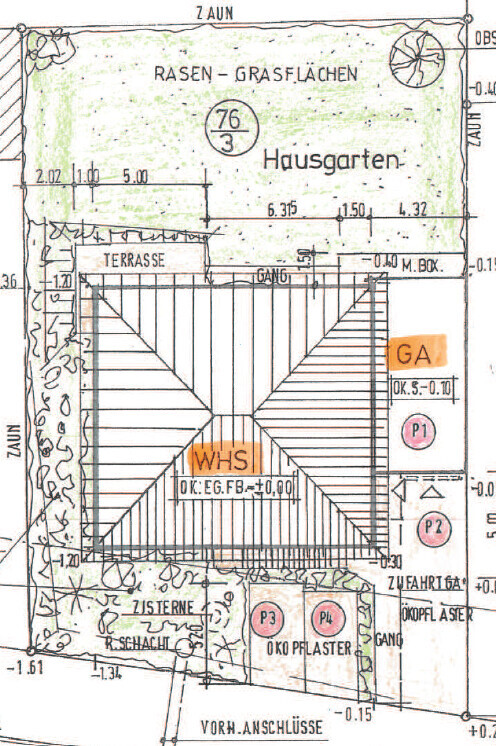
Rainwater cistern with household use: yes or no?
1. Option: 5 m³ (660 gallons) cistern (garden use only)
2. Option: 8-10 m³ (2100-2600 gallons) cistern with household use (laundry, toilets, and garden) or maybe just for toilets?
3. Option: Skip the cistern altogether?
What are your experiences? Unfortunately, I only know one household with a rainwater cistern for household use. Every plumber or heating technician gives a different opinion. Some say it’s good, others say it’s nonsense because it’s just dirty water (engine exhaust and similar pollution, acidic water).
Please share your experiences with cisterns.
Best regards,
Georg
I have been struggling with an important question regarding my new build.
Rainwater cistern with household use: yes or no?
1. Option: 5 m³ (660 gallons) cistern (garden use only)
2. Option: 8-10 m³ (2100-2600 gallons) cistern with household use (laundry, toilets, and garden) or maybe just for toilets?
3. Option: Skip the cistern altogether?
What are your experiences? Unfortunately, I only know one household with a rainwater cistern for household use. Every plumber or heating technician gives a different opinion. Some say it’s good, others say it’s nonsense because it’s just dirty water (engine exhaust and similar pollution, acidic water).
Please share your experiences with cisterns.
Best regards,
Georg
We are now facing the decision to likely forgo using the water for household purposes and limit it to garden use only. This is partly because the water here is quite "dirty" due to the local basalt, lava, and pumice excavation around the area. I know two households that use rainwater to flush toilets, and they experience problems with the cisterns and toilet bowls, which show significant water stains.
We will collect water solely for garden use (800 m² (8600 sq ft) property) and also to wash cars. For me, a major advantage is that on dark-colored cars, no lime spots remain.
You should do the math yourself... one cubic meter of water costs about 5 euros (with a garden water meter 2.50 euros)... my 1/2" (12.7mm) garden hose uses about 15 liters (4 gallons) per minute. So after 66 minutes, 1 cubic meter of water is used. This means that, considering cistern costs of 2000 euros, you can run the hose for about 222 hours before the cistern becomes cost-effective. With a garden water meter, this extends to 444 hours.
Of course, with a cistern there are additional electricity costs for the pump... but I’m too lazy to look that up right now.
We will collect water solely for garden use (800 m² (8600 sq ft) property) and also to wash cars. For me, a major advantage is that on dark-colored cars, no lime spots remain.
You should do the math yourself... one cubic meter of water costs about 5 euros (with a garden water meter 2.50 euros)... my 1/2" (12.7mm) garden hose uses about 15 liters (4 gallons) per minute. So after 66 minutes, 1 cubic meter of water is used. This means that, considering cistern costs of 2000 euros, you can run the hose for about 222 hours before the cistern becomes cost-effective. With a garden water meter, this extends to 444 hours.
Of course, with a cistern there are additional electricity costs for the pump... but I’m too lazy to look that up right now.
J
JDoerbecker18 May 2014 07:36Arnonühm schrieb:
We are now facing the decision and will probably forgo using the water for household purposes, using it only for the garden. This is mainly because the water here passes through basalt, lava, and pumice mining areas around the town, making it quite “dirty.” I know two households that use rainwater to flush their toilets, and they experience issues with the cisterns as well as with the toilet bowls, which show significant water stains.
We will collect water only for garden use (800 m² (8600 sq ft) plot) and also to wash cars. For me, a very positive aspect is that, especially for dark-colored cars, no lime spots remain.Is it really that good for the cars if the water already leaves stains in the neighbors’ toilet bowls...?

Hi,
This is not expert advice and also partly relates to what our general contractor (GC) said.
We also considered using water from the cistern for toilet flushing. The GC told us that this could be done, but it wouldn’t be cost-effective in the long run. Since the conversation was some time ago, I hope I’m still recalling this correctly.
To comply with building regulations, a separate piping system must be installed for non-potable water from the cistern. This water may not be mixed with the municipal drinking water supply—so no shared pipes are allowed (except for the resulting wastewater). The overall setup would cost around 3,000 to 5,000 euros (approximately 3,200 to 5,400 USD) and would not be economical given current water prices.
Additional expenses could include higher maintenance costs for the toilets and flush tanks (see other comments) as well as extra electricity costs for the pump, depending on whether a filter is installed (which also needs to be paid for).
We decided on a 10 cubic meter (10,000 liters / 2,641 gallons) cistern for garden irrigation. The price difference between a 5 cubic meter (5,000 liters / 1,320 gallons) and a 10 cubic meter cistern is under 1,000 euros (about 1,080 USD), so we preferred to go larger right away.
This is not expert advice and also partly relates to what our general contractor (GC) said.
We also considered using water from the cistern for toilet flushing. The GC told us that this could be done, but it wouldn’t be cost-effective in the long run. Since the conversation was some time ago, I hope I’m still recalling this correctly.
To comply with building regulations, a separate piping system must be installed for non-potable water from the cistern. This water may not be mixed with the municipal drinking water supply—so no shared pipes are allowed (except for the resulting wastewater). The overall setup would cost around 3,000 to 5,000 euros (approximately 3,200 to 5,400 USD) and would not be economical given current water prices.
Additional expenses could include higher maintenance costs for the toilets and flush tanks (see other comments) as well as extra electricity costs for the pump, depending on whether a filter is installed (which also needs to be paid for).
We decided on a 10 cubic meter (10,000 liters / 2,641 gallons) cistern for garden irrigation. The price difference between a 5 cubic meter (5,000 liters / 1,320 gallons) and a 10 cubic meter cistern is under 1,000 euros (about 1,080 USD), so we preferred to go larger right away.
B
Bauexperte19 May 2014 08:34Good morning,
I couldn’t have put it better myself
Regards, Bauexperte
f-pNo schrieb:
The general contractor told us that he could build it that way, but it would never be cost-effective in the long run... To comply with building regulations, a separate piping system must be installed for the non-potable water from the cistern. This water must not be mixed with the potable water supplied by the utility – so shared pipes are not allowed (except for the generated wastewater). The entire setup would cost around 3,000 to 5,000 euros and would not pay off over time with current water prices.
Additionally, there may be higher cleaning costs for the toilet and cistern tanks (see other comments) and extra electricity costs for the pump, depending on whether a filter is installed (which also has to be paid for).
I couldn’t have put it better myself
Regards, Bauexperte