
ᐅ Radiators removed. Uncertainty about valves and where to refill the water?
Created on: 24 Apr 2023 22:01
C
CampinoHello house building forum,
I am not skilled with tools and quite inexperienced when it comes to heating systems – but there are some tasks where you don’t want to expose your lack of knowledge and call a professional, for example, temporarily removing and disconnecting two radiators for a room renovation. Now I have several questions:
1. I watched 2-3 YouTube videos and gave it a try. I bled the radiators, closed the valves at the bottom of the radiators, loosened the fittings, lifted the radiators and emptied them into a bucket – so far so good, this is how it was done in the videos. In one video, it was recommended to screw so-called blind caps/plugs onto the now open supply and return pipes. I did that, and it looks like in picture 1 – the right one is slightly higher because the sealing ring is still underneath. On the left one, the ring “sticks” to the radiator pipe and I’m afraid of damaging it when removing it. Now I have an, maybe irrational, fear that the closed valves might “fail” and the blind caps are not completely tight = a disaster due to water leakage. Possibly unnoticed if nobody is home. (The renovation only starts on Thursday, and the radiators will be reattached by Saturday at the latest.)
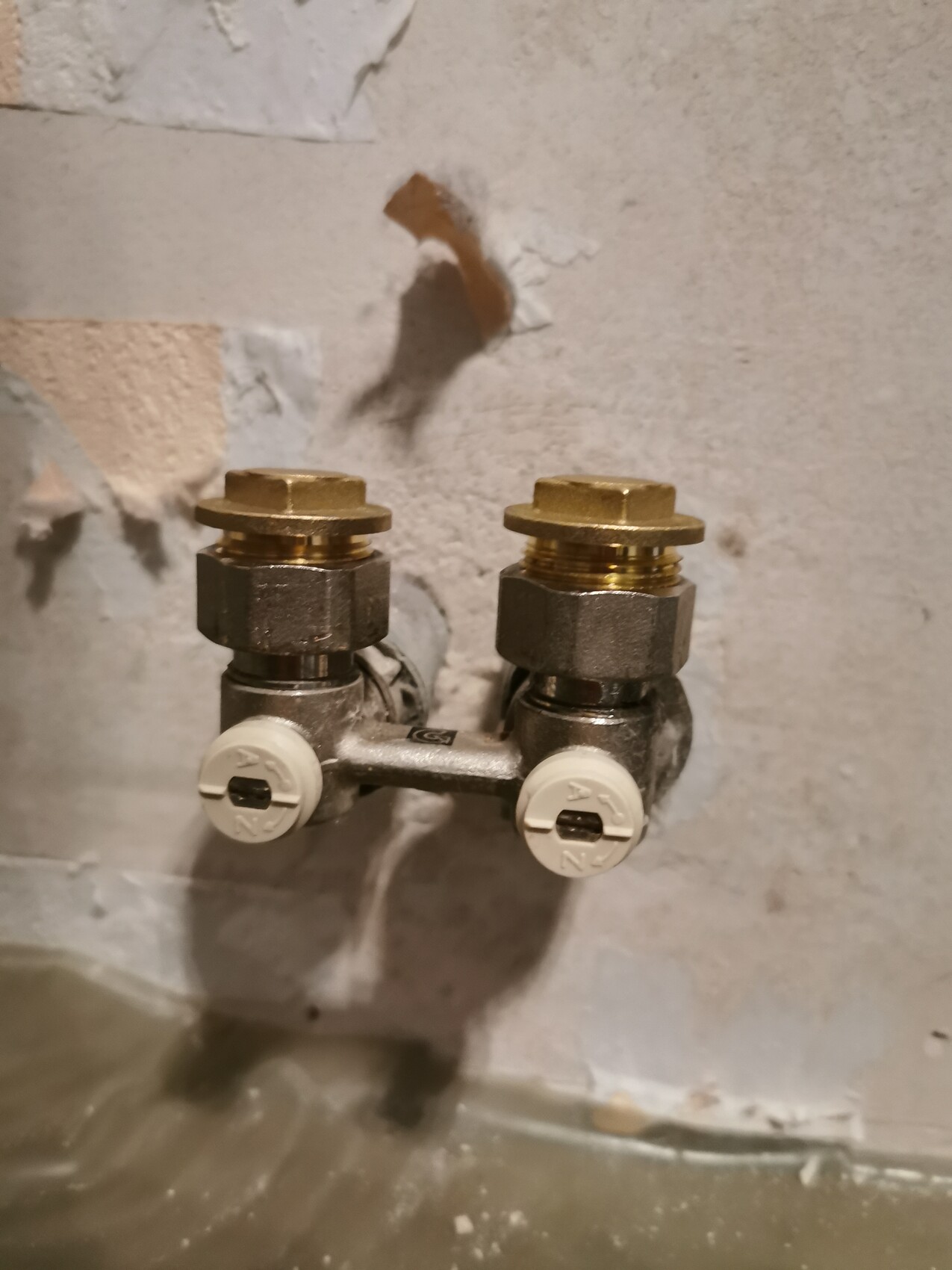
Is this a real risk or can you trust the closed valves (slotted turn valves in the picture)? I imagine they might not be designed for permanent “pressure” since they are usually open? Or are the blind caps considered reliable?
2. For radiator 1, opening the valves worked. For radiator 2 the valves are completely stuck, nothing turns. Could this be connected to the previous bleeding process? The slotted knob on radiator 2 was also very stiff, and my large screwdriver does not fit here. I would have to try a different screwdriver. Or is there another trick to make the valves movable?
3. Now, after reinstalling, I will need to refill the missing water. I already found out after some research that there seems to be insufficient pressure in the heating system; the gauge shows only 0.9 bar, while 1.5 bar is recommended. This is a district heating system. Unfortunately, I am not sure where to add the additional water. In one tutorial video, the example heating system had only one inlet – I have four.
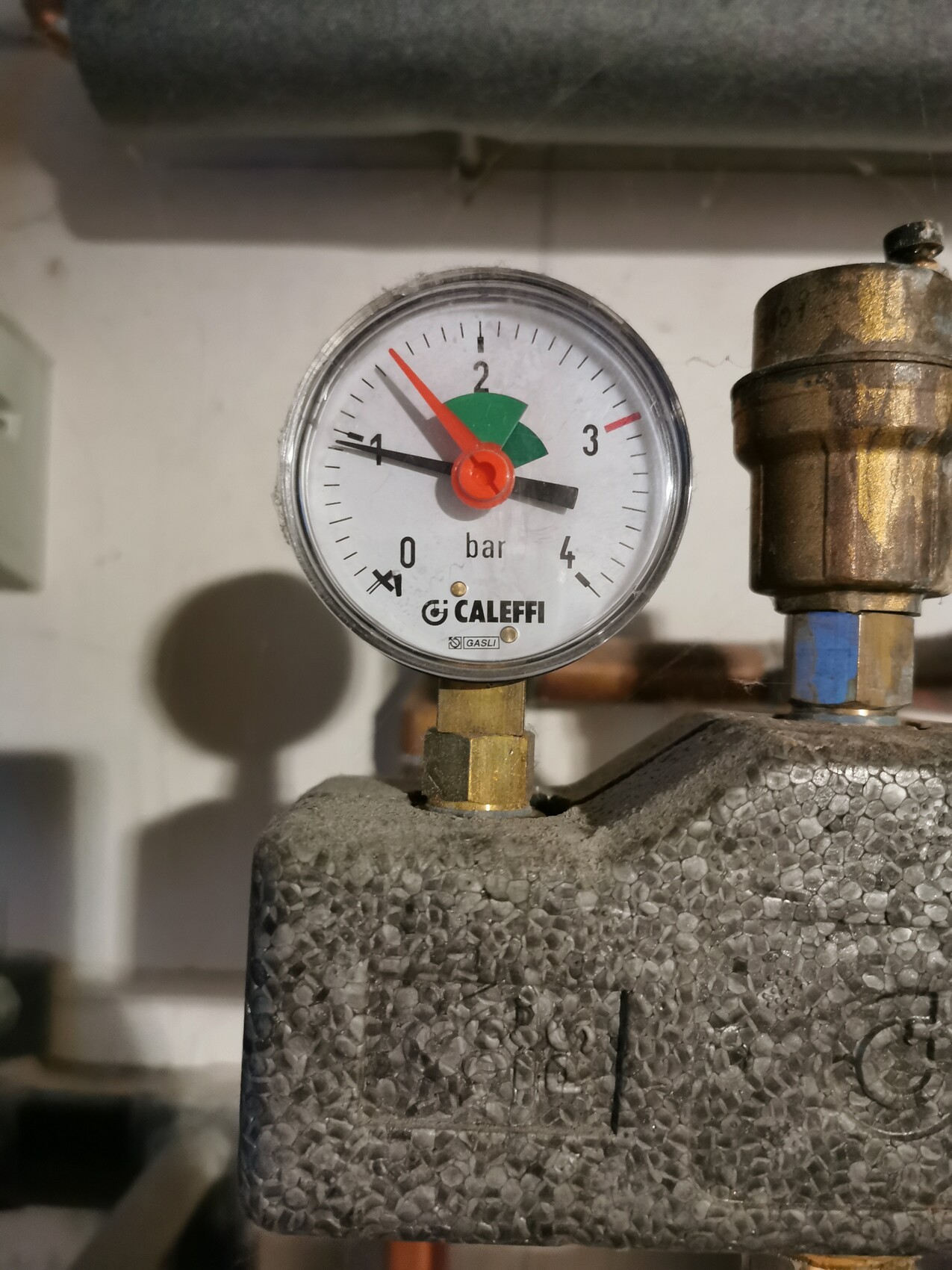

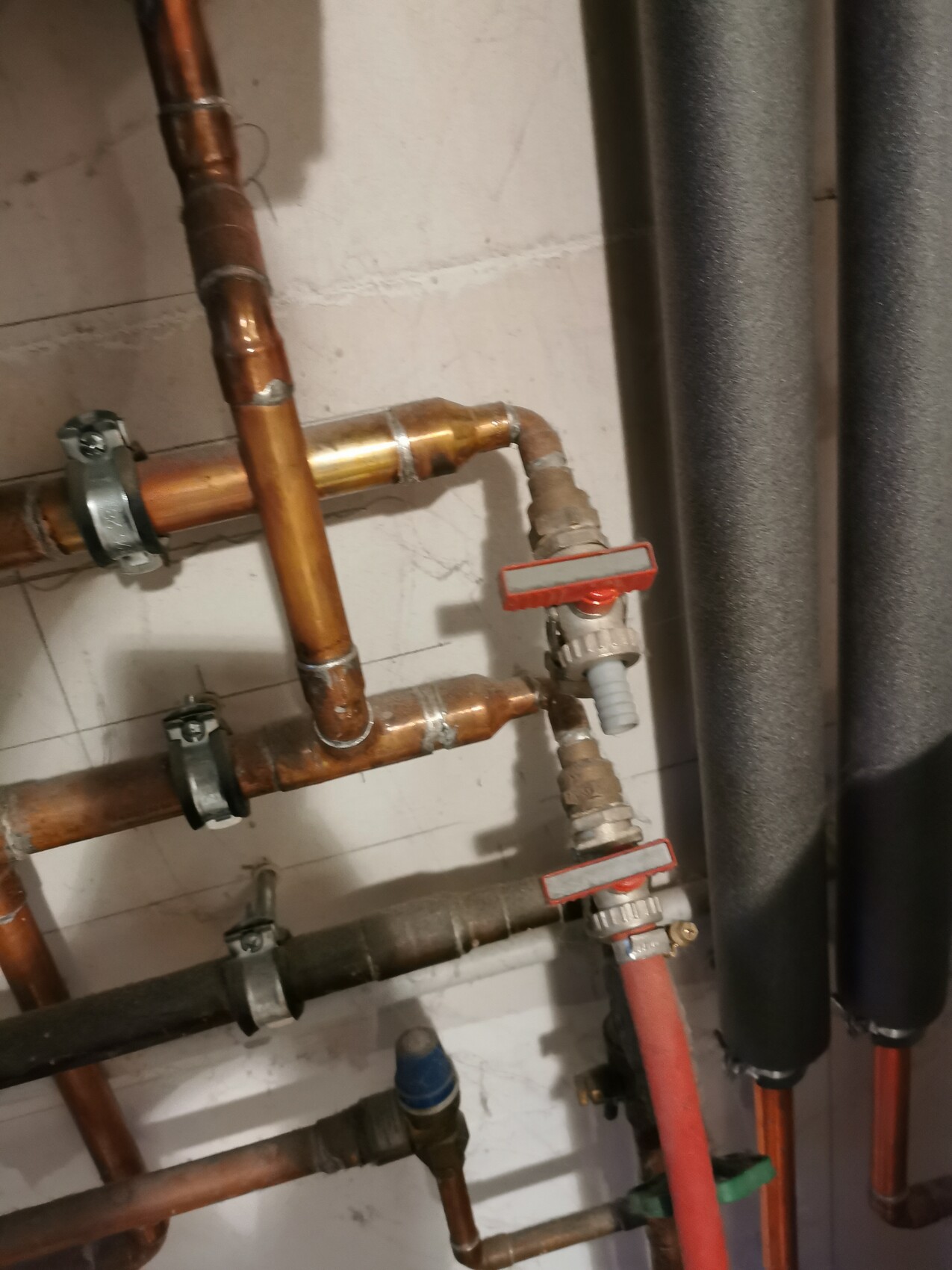
Numbered from top to bottom as 1 to 4. Valves 2 and 4 are connected by a hose (the video said a permanent connection between water supply and heating system is forbidden to prevent heating water from flowing back into drinking water, but I am not sure if this hose counts as such a connection).
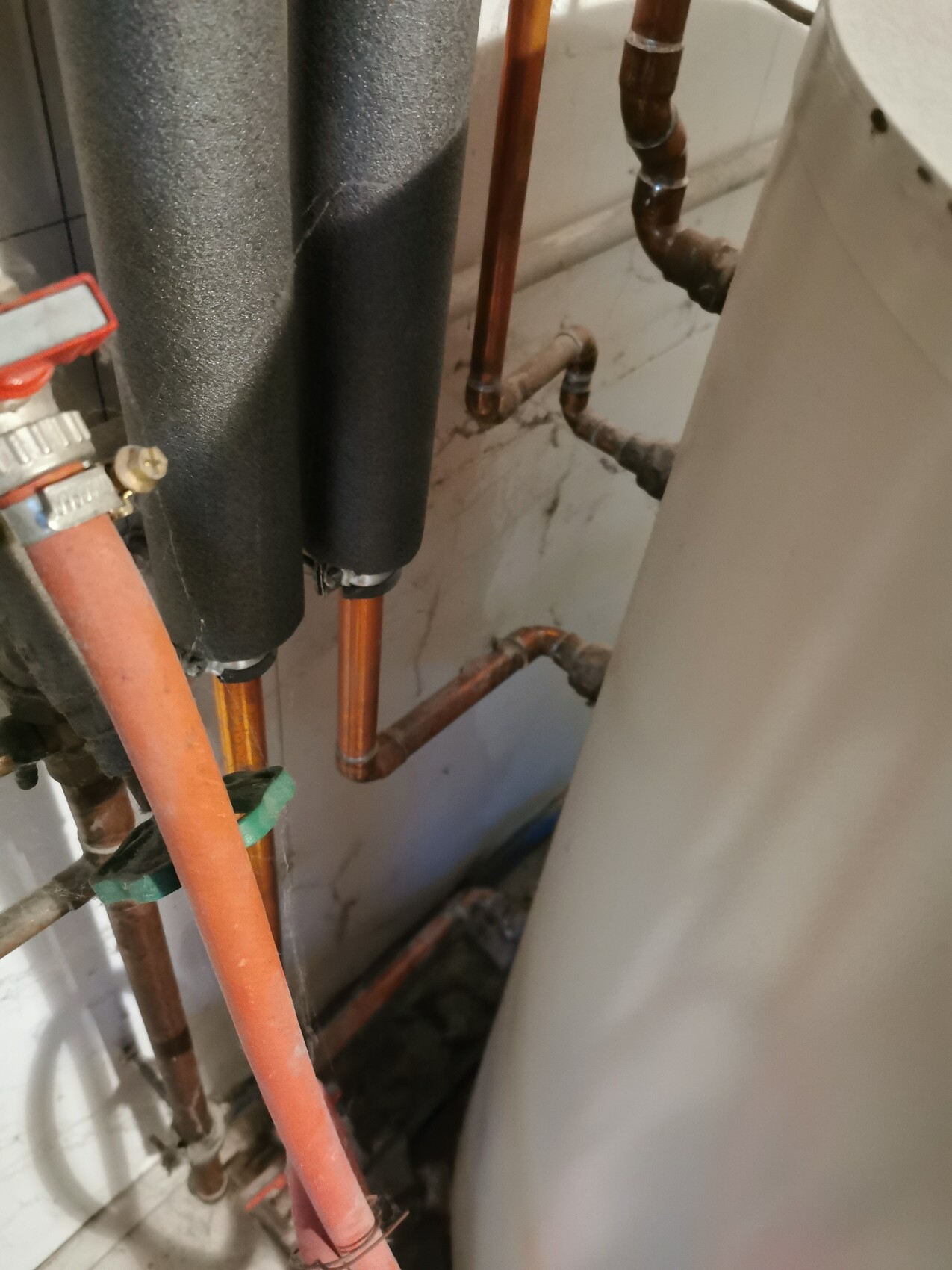
Valve 3 goes partly to the hot water tank
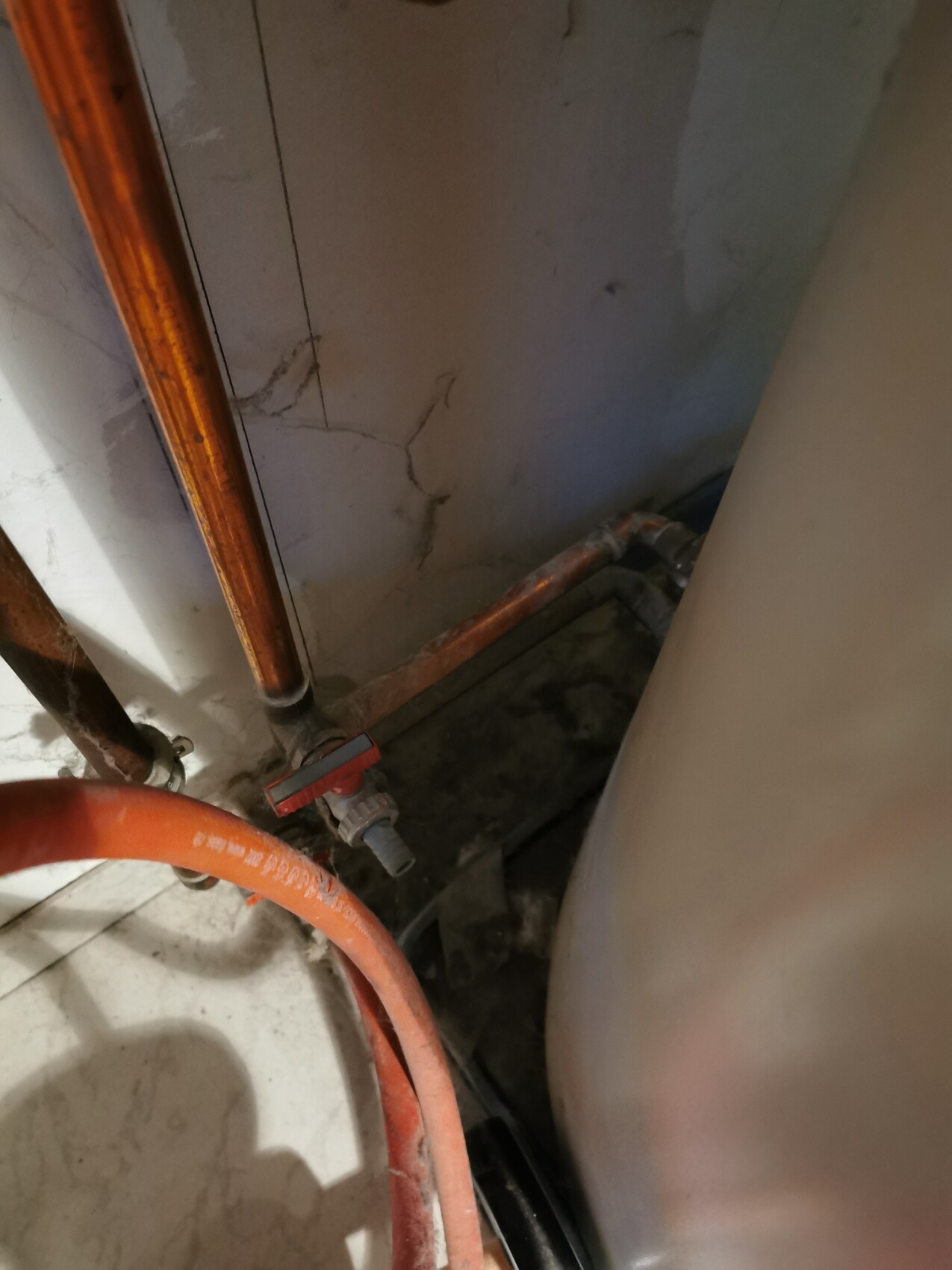
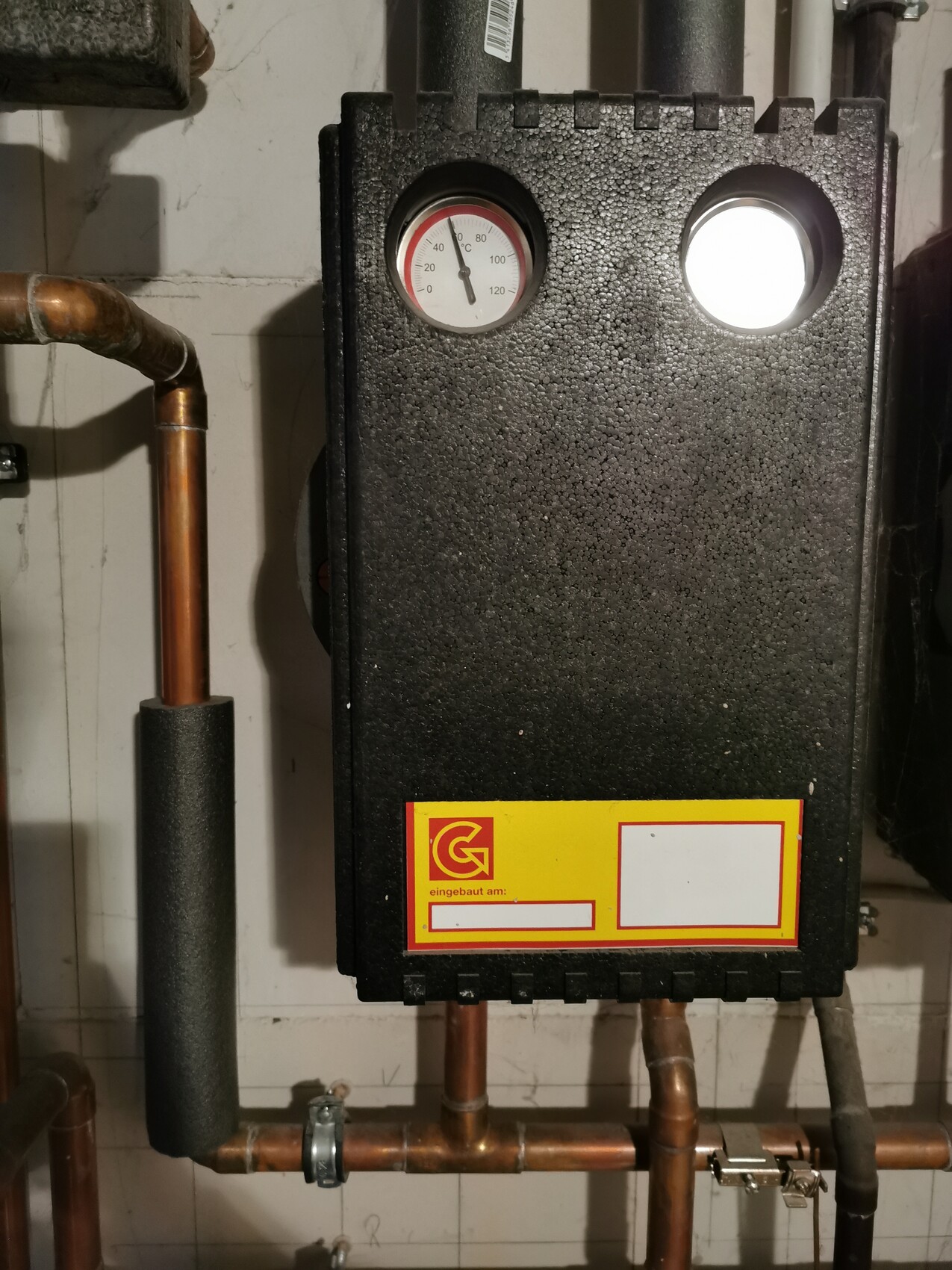
then up into this black box
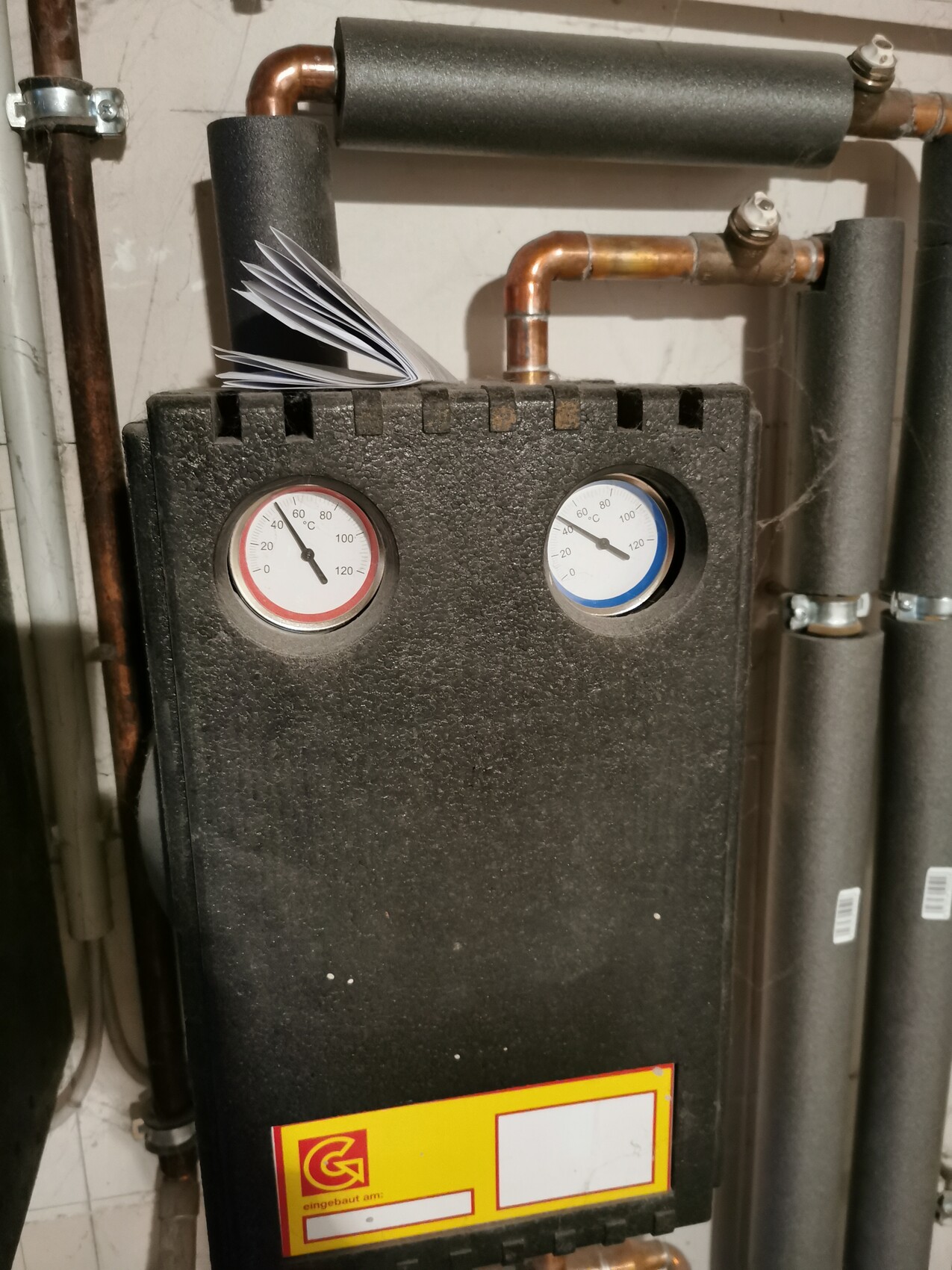
and back down to the upper part of the boiler.
The top valve 1
also leads via a tee fitting to a second black box
but continues further to the pressure gauge
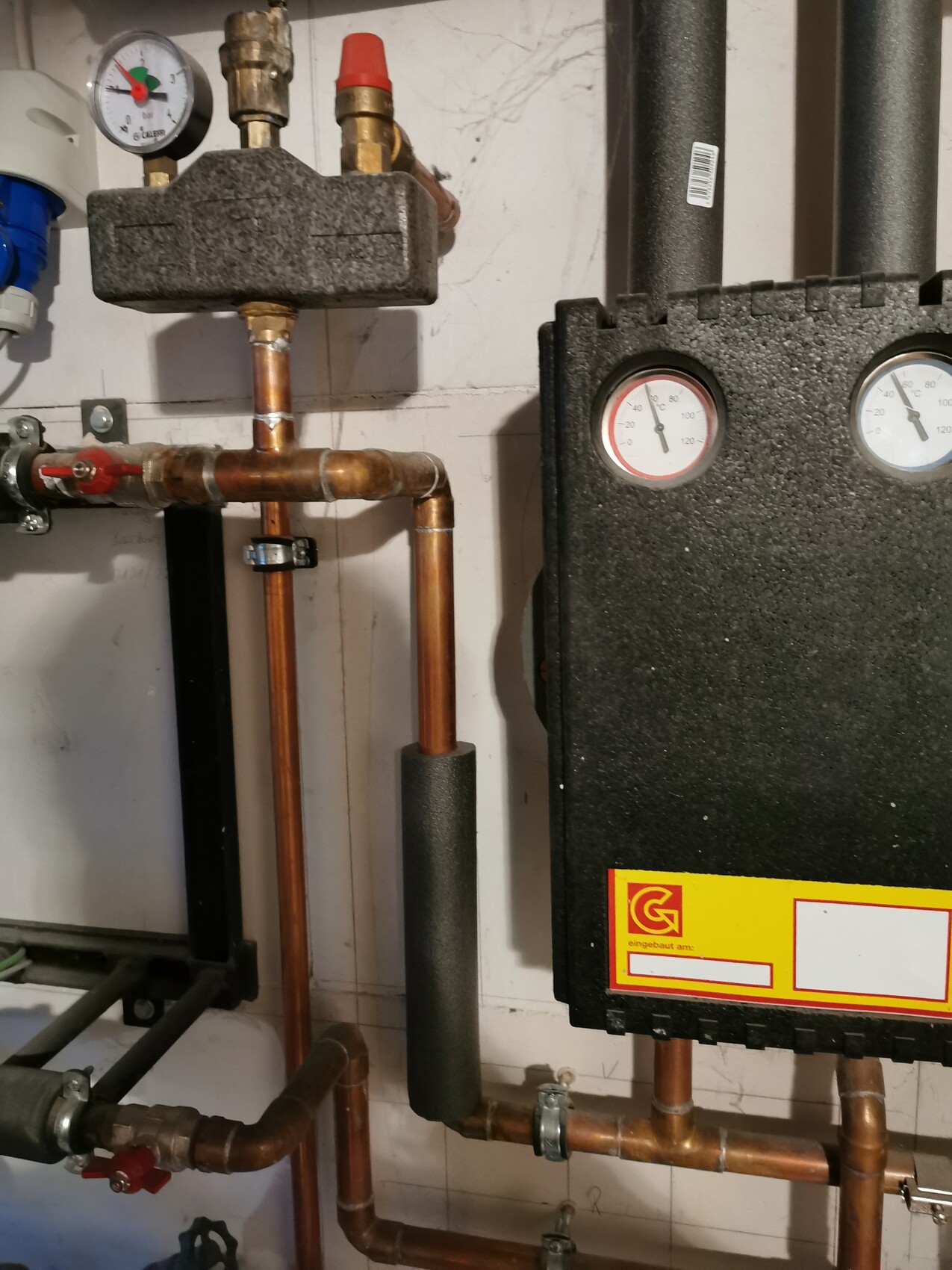
and then towards the exterior wall.
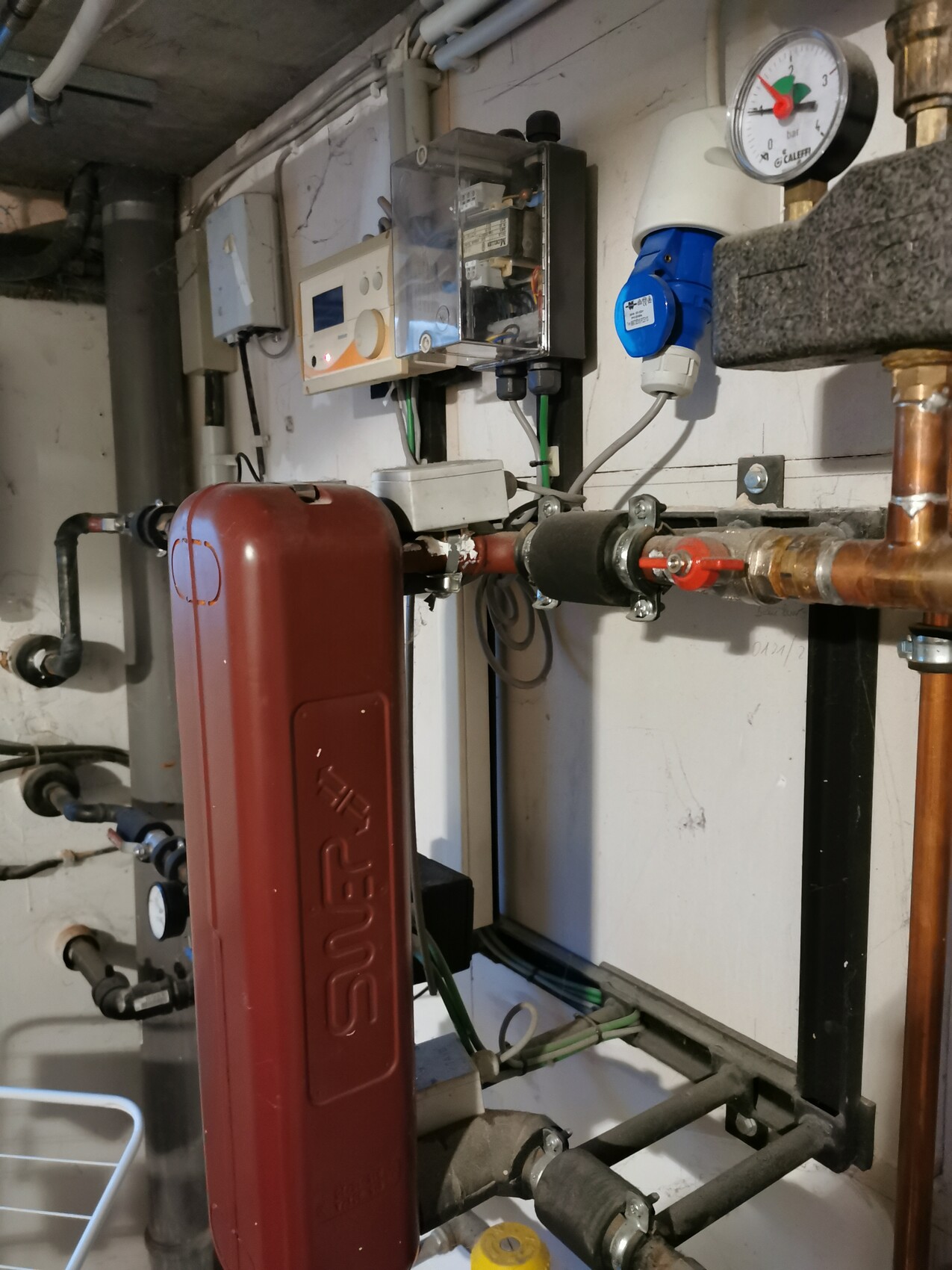
Since valve 1 seems directly connected to the pressure gauge, I initially focused on that one – but I am completely unsure how to be certain.
Experienced members might be thinking “Good grief, this is exactly why heating technicians exist” and they are probably right, but I still hope to find some help here and regarding question 1 either some reassurance or advice on further measures.
Thank you!
I am not skilled with tools and quite inexperienced when it comes to heating systems – but there are some tasks where you don’t want to expose your lack of knowledge and call a professional, for example, temporarily removing and disconnecting two radiators for a room renovation. Now I have several questions:
1. I watched 2-3 YouTube videos and gave it a try. I bled the radiators, closed the valves at the bottom of the radiators, loosened the fittings, lifted the radiators and emptied them into a bucket – so far so good, this is how it was done in the videos. In one video, it was recommended to screw so-called blind caps/plugs onto the now open supply and return pipes. I did that, and it looks like in picture 1 – the right one is slightly higher because the sealing ring is still underneath. On the left one, the ring “sticks” to the radiator pipe and I’m afraid of damaging it when removing it. Now I have an, maybe irrational, fear that the closed valves might “fail” and the blind caps are not completely tight = a disaster due to water leakage. Possibly unnoticed if nobody is home. (The renovation only starts on Thursday, and the radiators will be reattached by Saturday at the latest.)
Is this a real risk or can you trust the closed valves (slotted turn valves in the picture)? I imagine they might not be designed for permanent “pressure” since they are usually open? Or are the blind caps considered reliable?
2. For radiator 1, opening the valves worked. For radiator 2 the valves are completely stuck, nothing turns. Could this be connected to the previous bleeding process? The slotted knob on radiator 2 was also very stiff, and my large screwdriver does not fit here. I would have to try a different screwdriver. Or is there another trick to make the valves movable?
3. Now, after reinstalling, I will need to refill the missing water. I already found out after some research that there seems to be insufficient pressure in the heating system; the gauge shows only 0.9 bar, while 1.5 bar is recommended. This is a district heating system. Unfortunately, I am not sure where to add the additional water. In one tutorial video, the example heating system had only one inlet – I have four.
Numbered from top to bottom as 1 to 4. Valves 2 and 4 are connected by a hose (the video said a permanent connection between water supply and heating system is forbidden to prevent heating water from flowing back into drinking water, but I am not sure if this hose counts as such a connection).
Valve 3 goes partly to the hot water tank
then up into this black box
and back down to the upper part of the boiler.
The top valve 1
also leads via a tee fitting to a second black box
but continues further to the pressure gauge
and then towards the exterior wall.
Since valve 1 seems directly connected to the pressure gauge, I initially focused on that one – but I am completely unsure how to be certain.
Experienced members might be thinking “Good grief, this is exactly why heating technicians exist” and they are probably right, but I still hope to find some help here and regarding question 1 either some reassurance or advice on further measures.
Thank you!
Similar topics