
L
Lonerider23 Mar 2026 17:24Hello,
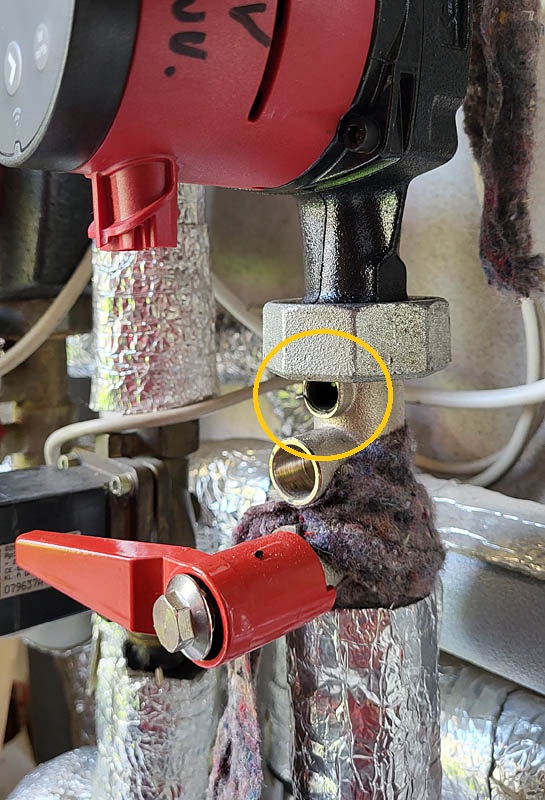
Our hot water heating system was installed nearly 30 years ago – a few days ago, we experienced a heating failure due to a complete loss of pressure. I then inspected the boiler room... behind a slip-on thermometer, I found a "hole" where water had leaked out. Apparently, there used to be a drain screw there:
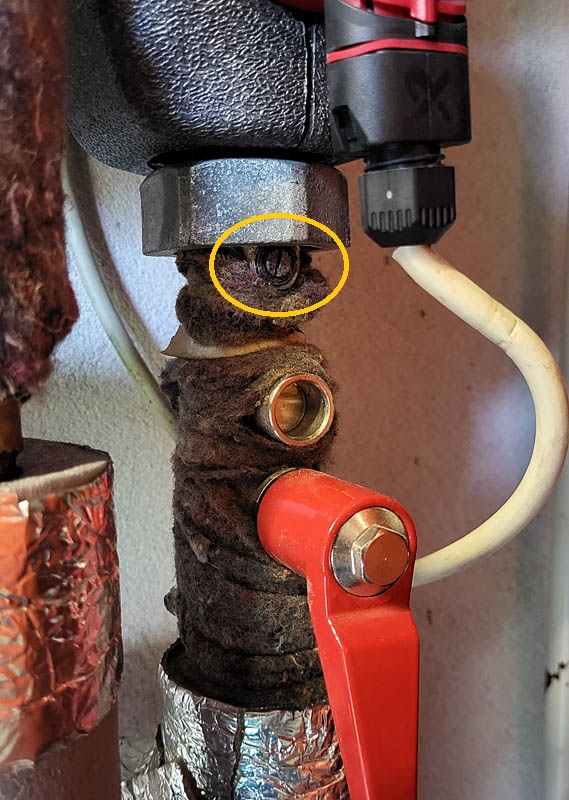
This concerned the heating circuit that was practically never in use, meaning the heating water (protected with Korofin) had been “standing” there without regular circulation. On another heating circuit, where the drain screw is still in place, it currently looks like this:
I was able to isolate the affected heating circuit and restart the heating system. Still, I am worried that the same problem might occur soon in the other heating circuits...
Question: what should be done? That is,
Lonerider
Our hot water heating system was installed nearly 30 years ago – a few days ago, we experienced a heating failure due to a complete loss of pressure. I then inspected the boiler room... behind a slip-on thermometer, I found a "hole" where water had leaked out. Apparently, there used to be a drain screw there:
This concerned the heating circuit that was practically never in use, meaning the heating water (protected with Korofin) had been “standing” there without regular circulation. On another heating circuit, where the drain screw is still in place, it currently looks like this:
I was able to isolate the affected heating circuit and restart the heating system. Still, I am worried that the same problem might occur soon in the other heating circuits...
Question: what should be done? That is,
- Can this type of drain screw be obtained somewhere?
- If yes – how do you install it there, when the large union nut screwed onto the pump above partially covers the hole (it screws downward – over the drain screw...)?
- Or does the whole shut-off valve assembly need to be replaced?
- And: where did the old drain screw go in the first place...?
Lonerider

L
Lonerider23 Mar 2026 21:16Thank you!
... and what is the exact name of this part for searching purposes? Or does anyone have a link? I imagine it would be difficult to find the exact same installation length to be able to replace it myself... or should I just call a plumber?
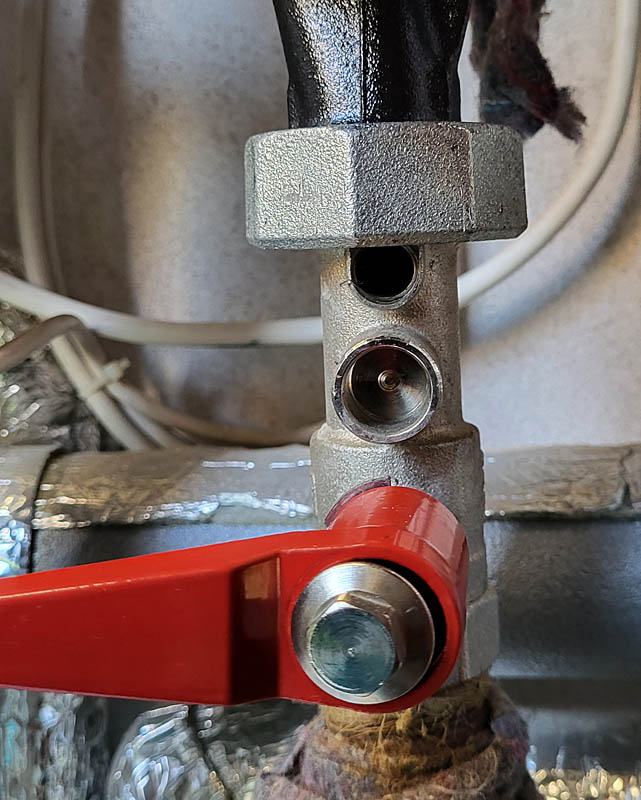
Here is a photo showing the whole thing (unpacked).
Thanks
... and what is the exact name of this part for searching purposes? Or does anyone have a link? I imagine it would be difficult to find the exact same installation length to be able to replace it myself... or should I just call a plumber?
Here is a photo showing the whole thing (unpacked).
Thanks
This is a complete unit; when replacing it, you can omit the thermometer if you prefer. The critical factor is the installation length to ensure proper repair and to avoid stress or pressure, as this can quickly lead to leaks. I can’t judge whether you feel confident doing this yourself, but it’s not rocket science.
There is a fitting on the pump which should be loosened first; the next step is self-explanatory. It’s best to do this in the summer when the heating system is off. 🤗
There is a fitting on the pump which should be loosened first; the next step is self-explanatory. It’s best to do this in the summer when the heating system is off. 🤗
L
Lonerider24 Mar 2026 00:28Thanks ... then I will continue researching for the next few weeks and hope that this complete unit is still available. Since I live in Austria, I will ask SHT and take the item as a sample.
By the way – I keep wondering how they managed to put that large locknut on during manufacturing... ;-)
By the way – I keep wondering how they managed to put that large locknut on during manufacturing... ;-)
Similar topics