
Hello everyone,
I am currently renovating my toilet.
The old close-coupled toilet with a vertical outlet will be replaced by a Duravit DuraStyle Basic Rimless model.
The wall tiles will be painted white with a two-component (2K) paint, and the floor will get new tiles:
The tiles are already purchased (30x60cm (12x24 inches)).
I also have tile adhesive and primer.
I have basic DIY skills.
Now, as a beginner tiler, I’m wondering how to start.
I plan to lay the tiles starting from the door towards the window. In this orientation, I would lay the tiles from right to left. After laying the first row, I’d wait for it to set before continuing further back – I have the time and a backup toilet for that.
My biggest question is: where should I compensate for angle deviations against the wall? Or rather, where should I cut the tiles?
And what tool should I use to cut about a 5° angle off the tile?
I have a manual tile cutter and a multitool with a diamond blade (for door openings etc.).
I’m afraid I might need a wet tile saw, as the manual cutter only works if there’s enough tile left to snap cleanly.
The subfloor is slightly uneven, as you can see a bit in the pictures. I’m considering leveling the entire floor with about 3mm (0.1 inch) of leveling compound.
Does this make sense, or can I compensate for the unevenness with the tile adhesive?
Maybe someone here could kindly share one or two tips.
Thanks in advance!
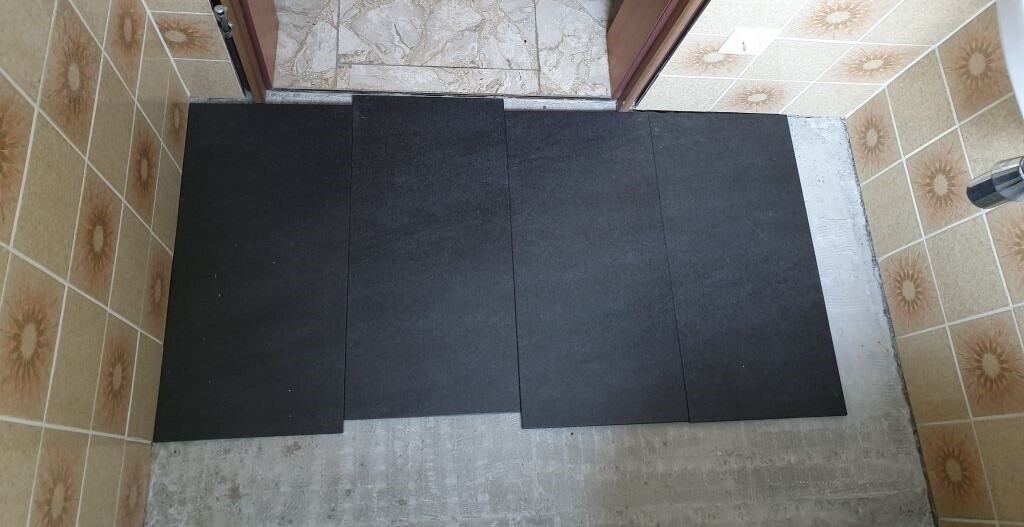
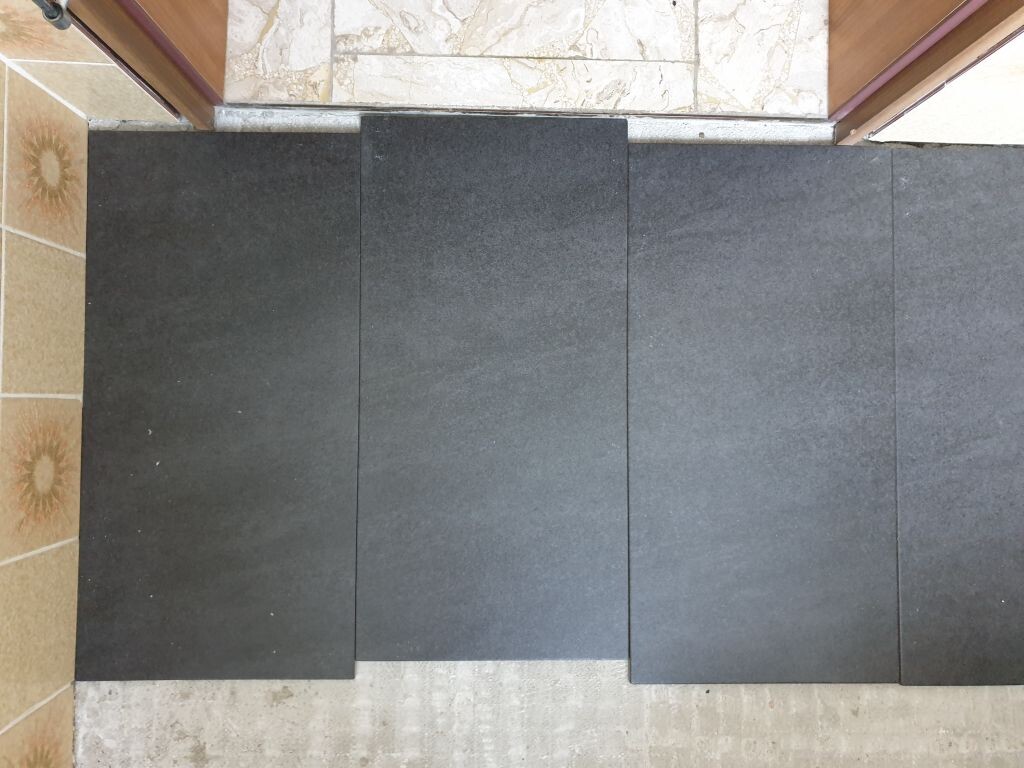
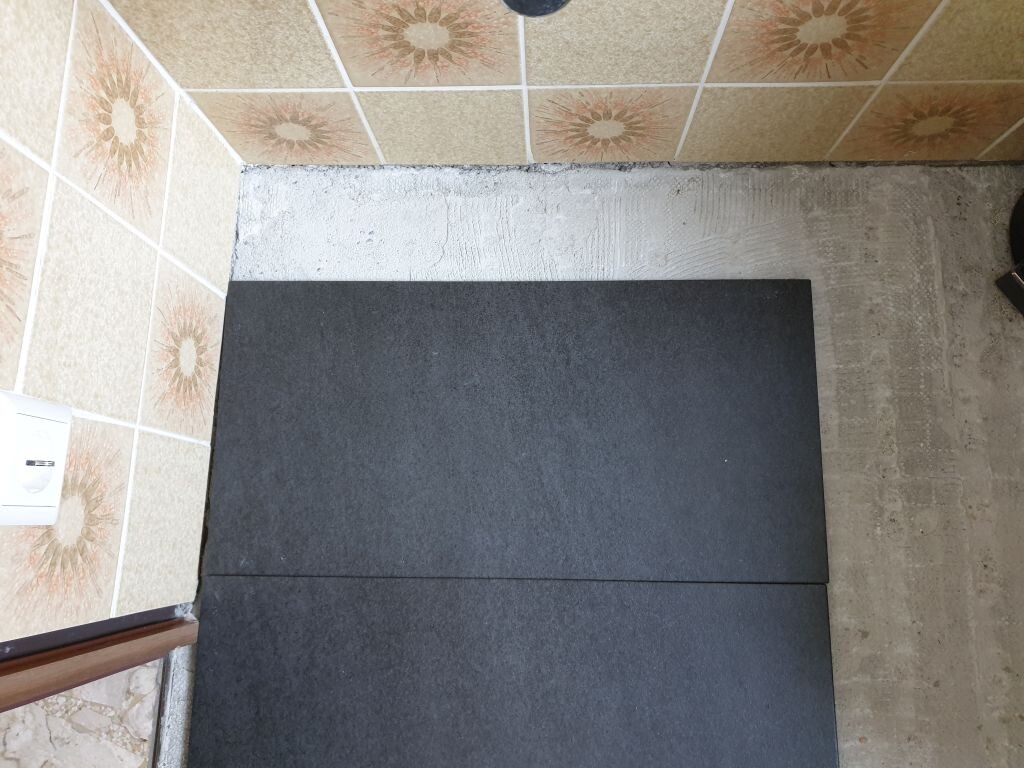
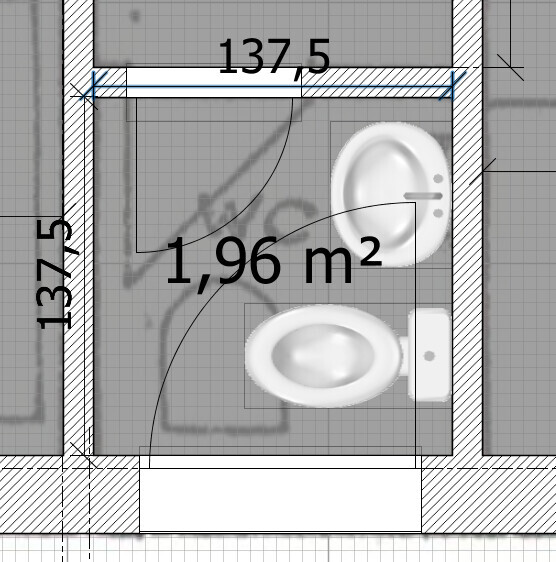
I am currently renovating my toilet.
The old close-coupled toilet with a vertical outlet will be replaced by a Duravit DuraStyle Basic Rimless model.
The wall tiles will be painted white with a two-component (2K) paint, and the floor will get new tiles:
The tiles are already purchased (30x60cm (12x24 inches)).
I also have tile adhesive and primer.
I have basic DIY skills.
Now, as a beginner tiler, I’m wondering how to start.
I plan to lay the tiles starting from the door towards the window. In this orientation, I would lay the tiles from right to left. After laying the first row, I’d wait for it to set before continuing further back – I have the time and a backup toilet for that.
My biggest question is: where should I compensate for angle deviations against the wall? Or rather, where should I cut the tiles?
And what tool should I use to cut about a 5° angle off the tile?
I have a manual tile cutter and a multitool with a diamond blade (for door openings etc.).
I’m afraid I might need a wet tile saw, as the manual cutter only works if there’s enough tile left to snap cleanly.
The subfloor is slightly uneven, as you can see a bit in the pictures. I’m considering leveling the entire floor with about 3mm (0.1 inch) of leveling compound.
Does this make sense, or can I compensate for the unevenness with the tile adhesive?
Maybe someone here could kindly share one or two tips.
Thanks in advance!
I find the tiles in this small bathroom far too dark and unattractive, and it seems that installing them is quite a challenge. There are really great sheet materials available (for example, with these Moroccan patterns) that you only need to cut to size. I once saw this in the restroom of a lovely café and thought it looked fantastic.
Thank you for the suggestion.
Taste is, of course, subjective, and the example with the Moroccan patterns is not to my liking. In general, I’m not a fan of tile mesh sheets.
However, I don’t imagine rolls of material to be easier to install. Certainly, there are other factors to consider compared to my tiles.
There are challenges in every aspect of life.
If you have experience installing tiles, I would greatly appreciate any advice regarding my issue. Everything else is off-topic.
Taste is, of course, subjective, and the example with the Moroccan patterns is not to my liking. In general, I’m not a fan of tile mesh sheets.
However, I don’t imagine rolls of material to be easier to install. Certainly, there are other factors to consider compared to my tiles.
There are challenges in every aspect of life.
If you have experience installing tiles, I would greatly appreciate any advice regarding my issue. Everything else is off-topic.
The tiles are too dark. The size is okay, but there are better options!
Regarding your questions:
Tiles are cut using an angle grinder with a diamond blade, and then you’re good to go. The rest can be snapped apart easily with a tile cutter. Baseboards cover any rough edges.
Use a 2-meter (6.5-foot) straightedge to check how large the unevenness is. Up to about 3mm (1/8 inch), you can still level it with tile adhesive; if it’s more than that, use a leveling compound!
You should carefully plan how you lay the tiles beforehand. Measuring and sketching on plain paper is enough. The grout width should ideally be 3mm (1/8 inch) up to a maximum of 5mm (3/16 inch).
I’ve tiled a lot in my life; if you have more questions, feel free to ask again.
For beginners, I always recommend using a tile leveling system to ensure evenness. Otherwise, you’ll likely end up with uneven grout lines and height differences. Later on, you can work without it using a rubber mallet and spirit level.
Regarding your questions:
Tiles are cut using an angle grinder with a diamond blade, and then you’re good to go. The rest can be snapped apart easily with a tile cutter. Baseboards cover any rough edges.
Use a 2-meter (6.5-foot) straightedge to check how large the unevenness is. Up to about 3mm (1/8 inch), you can still level it with tile adhesive; if it’s more than that, use a leveling compound!
You should carefully plan how you lay the tiles beforehand. Measuring and sketching on plain paper is enough. The grout width should ideally be 3mm (1/8 inch) up to a maximum of 5mm (3/16 inch).
I’ve tiled a lot in my life; if you have more questions, feel free to ask again.
For beginners, I always recommend using a tile leveling system to ensure evenness. Otherwise, you’ll likely end up with uneven grout lines and height differences. Later on, you can work without it using a rubber mallet and spirit level.
Hello Bookstar,
thank you for your tips. The tiles had already been selected and purchased. You learn as you go...
I bought an angle grinder with a diamond cutting disc. The cutting worked really well, especially when you have to cut the 60cm (24 inches) tile lengthwise.
I still cut the short side of the tile with a standard tile cutter. The dust generated by the angle grinder is quite significant.
I tried the tile leveling system, but somehow it felt too unstable to me. When tightening the wedges, for example, it pushed the joint open again, and I had to push it back together. Sometimes I installed tiles without the leveling system and only used tile spacers from above.

thank you for your tips. The tiles had already been selected and purchased. You learn as you go...
I bought an angle grinder with a diamond cutting disc. The cutting worked really well, especially when you have to cut the 60cm (24 inches) tile lengthwise.
I still cut the short side of the tile with a standard tile cutter. The dust generated by the angle grinder is quite significant.
I tried the tile leveling system, but somehow it felt too unstable to me. When tightening the wedges, for example, it pushed the joint open again, and I had to push it back together. Sometimes I installed tiles without the leveling system and only used tile spacers from above.