
ᐅ Heating costs for KfW55 – electricity costs seem too high to me
Created on: 7 Nov 2018 19:56
D
Der-w
Hello everyone,
In the energy performance calculation of the house we are interested in buying, the following is stated:
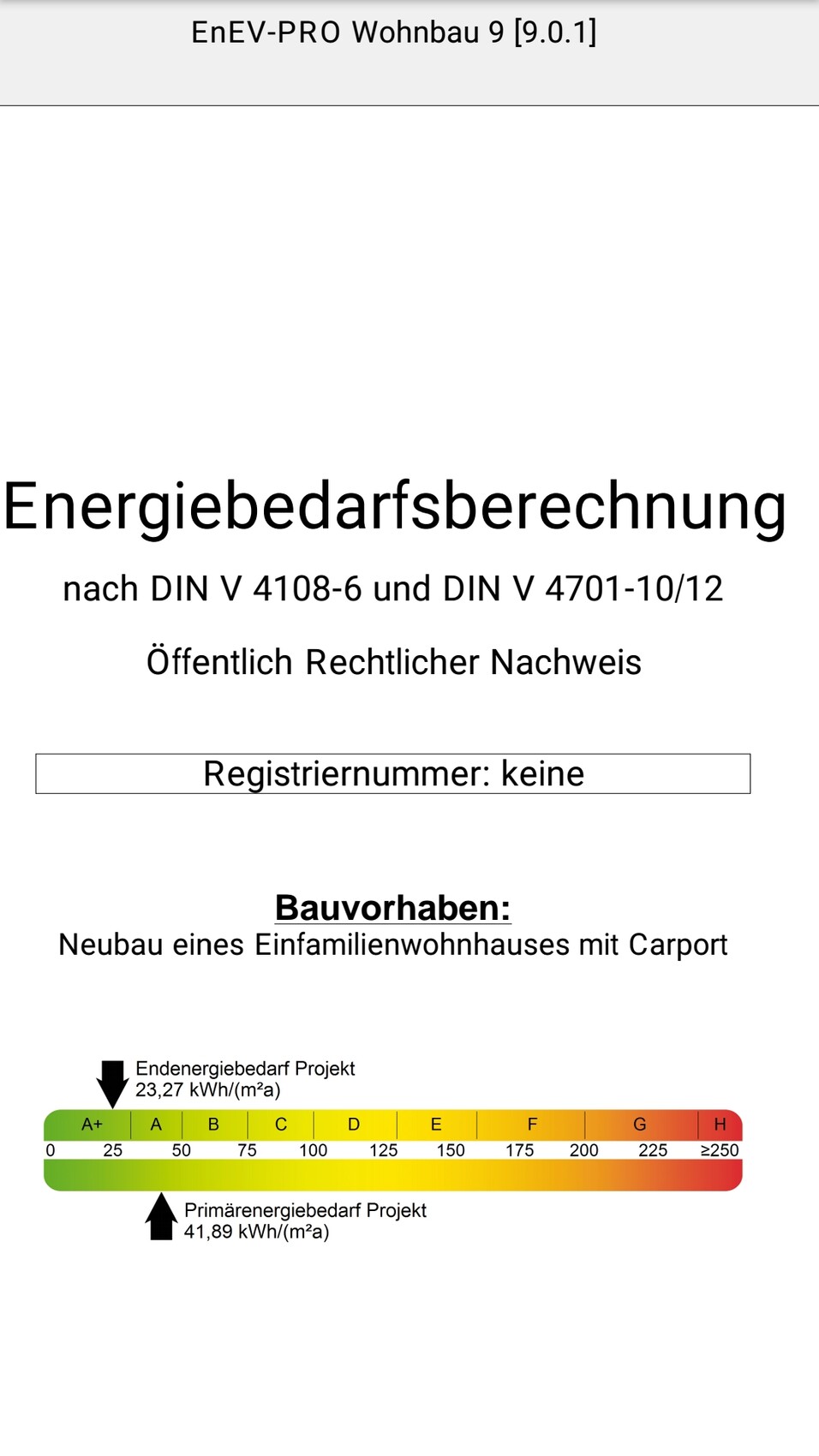
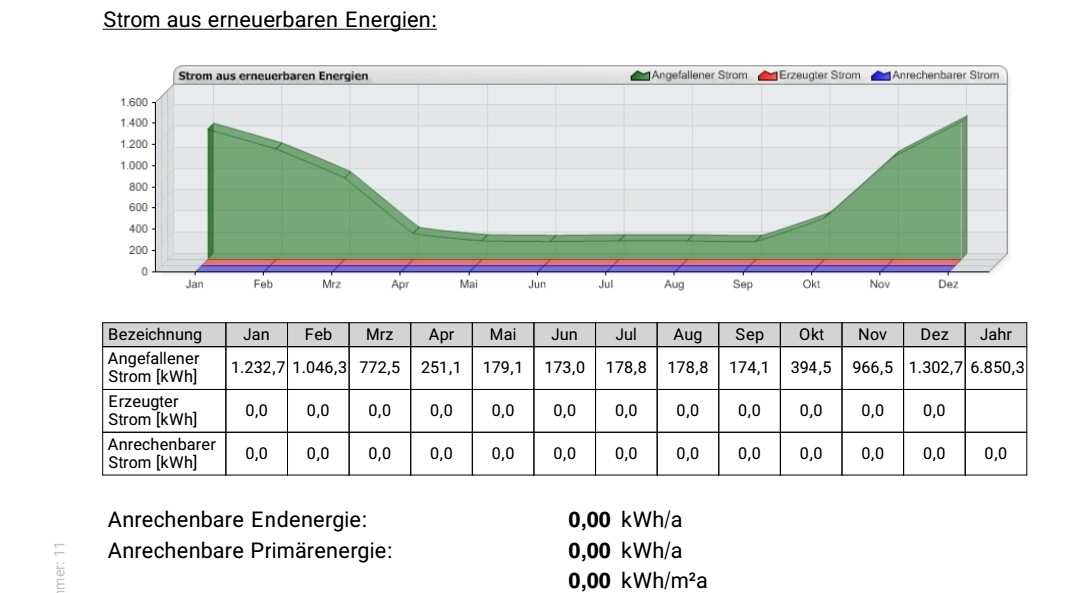
I think the energy demand is relatively low. The living area is estimated at approximately 145m² (1560 sq ft) in the specifications.
However, the heating costs of about 1200 euros per year seem quite high to me for such a good demand value, since I often read on this forum that many only need around 600 euros.
The heating system is a Rotex HPSU Compact.
Am I missing something?
Thank you.
In the energy performance calculation of the house we are interested in buying, the following is stated:
I think the energy demand is relatively low. The living area is estimated at approximately 145m² (1560 sq ft) in the specifications.
However, the heating costs of about 1200 euros per year seem quite high to me for such a good demand value, since I often read on this forum that many only need around 600 euros.
The heating system is a Rotex HPSU Compact.
Am I missing something?
Thank you.
K
Karlstraße17 Nov 2018 12:23Interesting, I’m also from AB and know the developer by sight/hearing or through others’ experiences. Are these the houses on Haidstr.? Where is it specified that they comply with KFW 55? Usually, these projects are handled through the savings bank, so I would be surprised if they advertise it but don’t actually meet the standard in the end (on paper).
M
Mottenhausen19 Nov 2018 20:28It really looks better. However, now I’m skeptical:
1. The client becomes suspicious and suddenly a better energy calculation is presented out of nowhere.
2. KfW55 standard is usually built to qualify for the KfW funding. However, this requires that the energy calculation is done and the KfW55 standard confirmed by the energy consultant before construction starts. This means the documents submitted for the building permit / planning permission couldn’t have been the final ones. Unless construction started right away, meeting the minimum standard of the Energy Saving Ordinance, and afterwards: surprise, it actually meets KfW55. But I find that unlikely.
1. The client becomes suspicious and suddenly a better energy calculation is presented out of nowhere.
2. KfW55 standard is usually built to qualify for the KfW funding. However, this requires that the energy calculation is done and the KfW55 standard confirmed by the energy consultant before construction starts. This means the documents submitted for the building permit / planning permission couldn’t have been the final ones. Unless construction started right away, meeting the minimum standard of the Energy Saving Ordinance, and afterwards: surprise, it actually meets KfW55. But I find that unlikely.
Regarding point 1: I called the architect directly, but he has nothing to do with the developer.
Regarding point 2:
There was already a potential buyer at the time who wanted a KfW 55 house. As a result, for example, ventilation was included in the planning. However, the buyer backed out back then.
The plan was originally for a house complying with the Energy Saving Ordinance.
Regarding point 2:
There was already a potential buyer at the time who wanted a KfW 55 house. As a result, for example, ventilation was included in the planning. However, the buyer backed out back then.
The plan was originally for a house complying with the Energy Saving Ordinance.
B
boxandroof19 Nov 2018 20:46Yes, the H’t value is better. From a distance, it seems to be planned exactly around the H’t value, not better. Effort was made to calculate the thermal bridges, possibly to save on expensive materials or insulation. However, it should be accurate! Most likely, several houses were planned simultaneously.
For context: we also have 0.026 listed in the energy certificate, but this includes a 0.05 thermal bridge allowance, so the real value is probably better. No one calculated the thermal bridges for us.
In the end, though, it’s not important. I think the insulation is sufficient; more insulation is rarely economical.
The values given in kWh/m2a (kWh per square meter per year) are based on the usable floor area, not the living area. The area should also be indicated somewhere in the calculations.
The heat pump should still be properly sized, and the hydraulics, especially the underfloor heating, should be well planned for very low consumption. But you already know this; on the other hand, you probably have no influence on it anymore. Possibly check later if valves or buffers can be removed again.
What you consume later, you will only know later.
For context: we also have 0.026 listed in the energy certificate, but this includes a 0.05 thermal bridge allowance, so the real value is probably better. No one calculated the thermal bridges for us.
In the end, though, it’s not important. I think the insulation is sufficient; more insulation is rarely economical.
The values given in kWh/m2a (kWh per square meter per year) are based on the usable floor area, not the living area. The area should also be indicated somewhere in the calculations.
The heat pump should still be properly sized, and the hydraulics, especially the underfloor heating, should be well planned for very low consumption. But you already know this; on the other hand, you probably have no influence on it anymore. Possibly check later if valves or buffers can be removed again.
What you consume later, you will only know later.
Similar topics