
Hello everyone, a few hours ago, professionals used an endoscope to inspect the wastewater pipes in our house. They had a professional-grade device.
This service will cost several hundred euros... but it was successful (an overview of which pipe goes where, which ones are no longer in use, a small root ball that needs to be removed, and similar findings).
I liked how well it worked, and I would like to have such a camera myself... of course, it won’t be nearly as perfect, but it might still be very helpful.
Prices start at 30€ and can go up to — of course — very high amounts.
I would be willing to spend around 100€ if the difference to a 30€ device is clear, but without being able to compare them directly, I can’t really tell.
What I know so far:
There are devices with and without a built-in screen.
It seems sensible to me to buy just the camera with a cable and use a smartphone or tablet as the display. Devices without a screen usually seem rather basic (also in terms of camera technology).
Cable lengths vary a lot. Today, 4 meters (13 feet) would probably have been enough, but that was needed as well, and often they only have 1 meter (3.3 feet) length.
I think 5 meters (16 feet) would be ideal.
What is rarely mentioned in the descriptions is the flexibility or controllability of the cable. With the professional device, the camera could be rotated at the end. With simple versions, I assume you can only try to turn the camera by twisting the cable from the back end. That probably won’t work very well, but you have to live with it.
Some devices have two cameras: one facing forward and one to the side (alternatively usable). That might help compensate for camera rotation.
The longer the cable is, the more cumbersome the device is probably to use?
What functions should be electronically controllable? (Brightness? Lens focus?)
My question to the group is:
Does anyone have experience with this and can give me some tips on what to look out for?
This service will cost several hundred euros... but it was successful (an overview of which pipe goes where, which ones are no longer in use, a small root ball that needs to be removed, and similar findings).
I liked how well it worked, and I would like to have such a camera myself... of course, it won’t be nearly as perfect, but it might still be very helpful.
Prices start at 30€ and can go up to — of course — very high amounts.
I would be willing to spend around 100€ if the difference to a 30€ device is clear, but without being able to compare them directly, I can’t really tell.
What I know so far:
There are devices with and without a built-in screen.
It seems sensible to me to buy just the camera with a cable and use a smartphone or tablet as the display. Devices without a screen usually seem rather basic (also in terms of camera technology).
Cable lengths vary a lot. Today, 4 meters (13 feet) would probably have been enough, but that was needed as well, and often they only have 1 meter (3.3 feet) length.
I think 5 meters (16 feet) would be ideal.
What is rarely mentioned in the descriptions is the flexibility or controllability of the cable. With the professional device, the camera could be rotated at the end. With simple versions, I assume you can only try to turn the camera by twisting the cable from the back end. That probably won’t work very well, but you have to live with it.
Some devices have two cameras: one facing forward and one to the side (alternatively usable). That might help compensate for camera rotation.
The longer the cable is, the more cumbersome the device is probably to use?
What functions should be electronically controllable? (Brightness? Lens focus?)
My question to the group is:
Does anyone have experience with this and can give me some tips on what to look out for?

To get off the original topic for a moment.
I wanted to run a doorbell wire through my conduit between the house and garage—about 7 meters (23 feet) long and 110 mm (4.3 inches) in diameter. Unfortunately, it wasn’t possible. To find out why, I bought a €30 endoscope from the supplier.
As mentioned before, the cable is rigid, but once it comes to a bend, it’s not really suitable anymore.
Here are a few pictures.


You can decide for yourself if this quality is sufficient.
This is how it looked from the outside when I excavated the damaged section.

Then, a few days ago, I also checked the infiltration system of my septic tank to see if sewage sludge had settled in the gravel there.
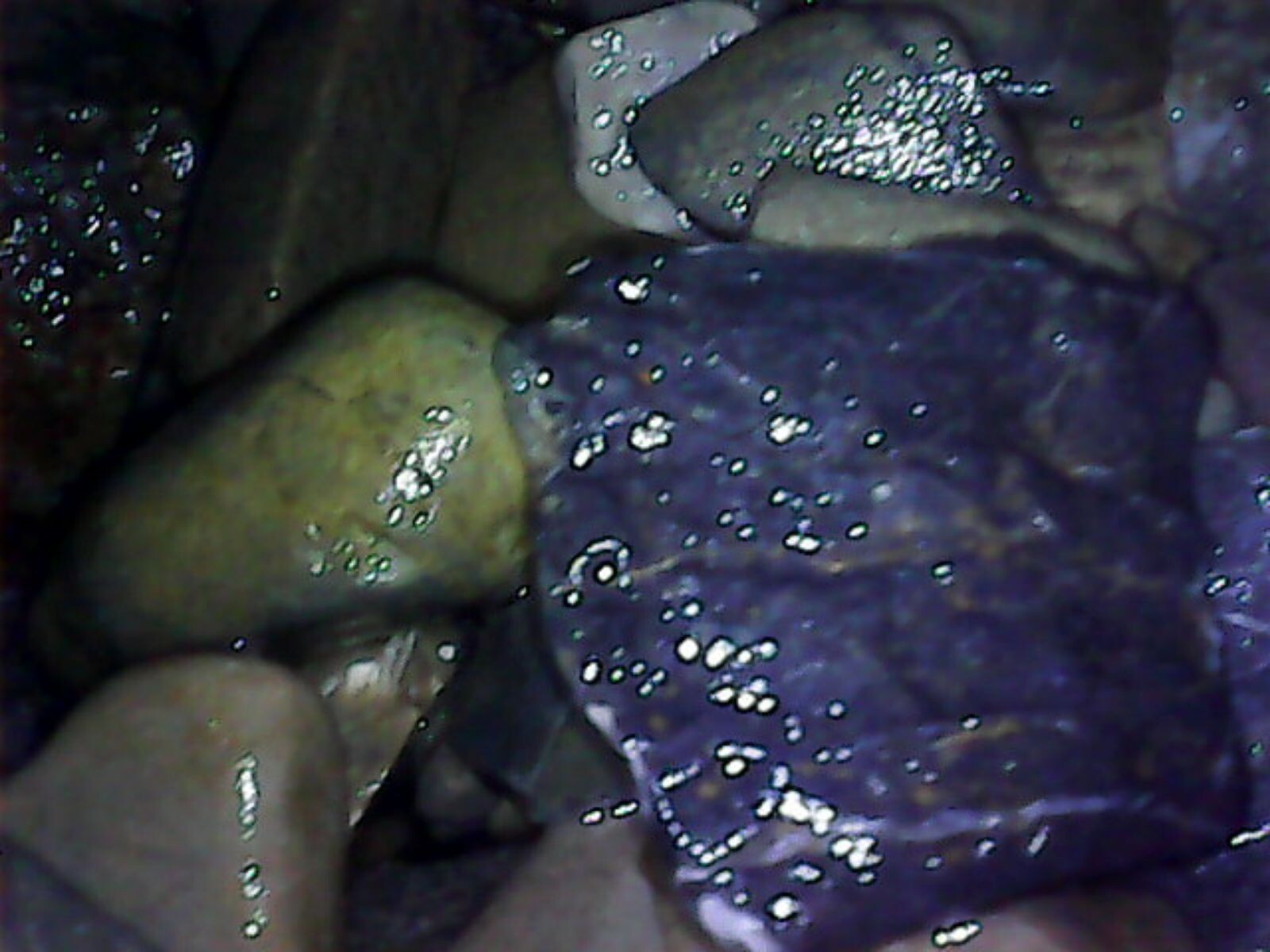
I wanted to run a doorbell wire through my conduit between the house and garage—about 7 meters (23 feet) long and 110 mm (4.3 inches) in diameter. Unfortunately, it wasn’t possible. To find out why, I bought a €30 endoscope from the supplier.
As mentioned before, the cable is rigid, but once it comes to a bend, it’s not really suitable anymore.
Here are a few pictures.
You can decide for yourself if this quality is sufficient.
This is how it looked from the outside when I excavated the damaged section.
Then, a few days ago, I also checked the infiltration system of my septic tank to see if sewage sludge had settled in the gravel there.

25€ Amazon.
As described, there are difficulties with bends and curves, etc. However, I was still successful. Thanks to the length of the cable, I was able to pinpoint exactly where my empty conduit is damaged. (M25 here)
I used it less to identify the exact damage and more to determine if there was damage anywhere at all.

As described, there are difficulties with bends and curves, etc. However, I was still successful. Thanks to the length of the cable, I was able to pinpoint exactly where my empty conduit is damaged. (M25 here)
I used it less to identify the exact damage and more to determine if there was damage anywhere at all.
manohara schrieb:
[QUOTE="gmt94, post: 431977, member: 32331"
This is how it looked from the outside when I excavated the damaged area.And did you locate the spot you had to dig with the camera?That would already be a success.
[/QUOTE]
Well, I actually wanted to first find out if something was broken or why I couldn’t pull a small signal cable through this huge pipe despite using a pull line.
Based on the approximate length I pushed in, I could roughly tell where the problem had to be. Unfortunately, I still had to dig and search. ;-(
The question is what kind of image quality a cheap borescope provides and how long it lasts. I have worked with professional devices in the aerospace sector, which can cost from four to sometimes five figures. If you can accept that the cheap version might break after the fifth use, go ahead with it — if not, consider renting one or hiring a specialist when needed. In my opinion, “decent” devices are too expensive for private use unless you have specific hobbies, such as regularly inspecting engines or similar tasks.