
Hello,
for years I have been thinking about how to design the problem area of my house.
I have a long narrow strip along the public pathway that I would like to plant. The strip is about 75 cm (30 inches) wide and 10.5 meters (34.5 feet) long. It faces south and gets full sun. Two gardens away, the neighbor has cut down all the tall and old trees, which means that since this year, our house is fully exposed to the sun. Therefore, we really want some sort of protection to prevent the ground from heating up excessively and possibly something that will protect at least the lower part of our facade from the direct sun in the future.
Trees probably won’t work due to the limited space available.
I like plants that are useful to wildlife throughout the year.
The fence must stay because otherwise the area would become a dog toilet, even now with just the stones. The privacy screen on the fence is more of a splash guard since the whole area is on an unpaved path, which is officially a dead end but apparently many people have a key to lower the bollards, and the footpath is frequently used by vehicles, often at high speed. It’s a disaster when it rains.
So, I’m looking forward to your suggestions.
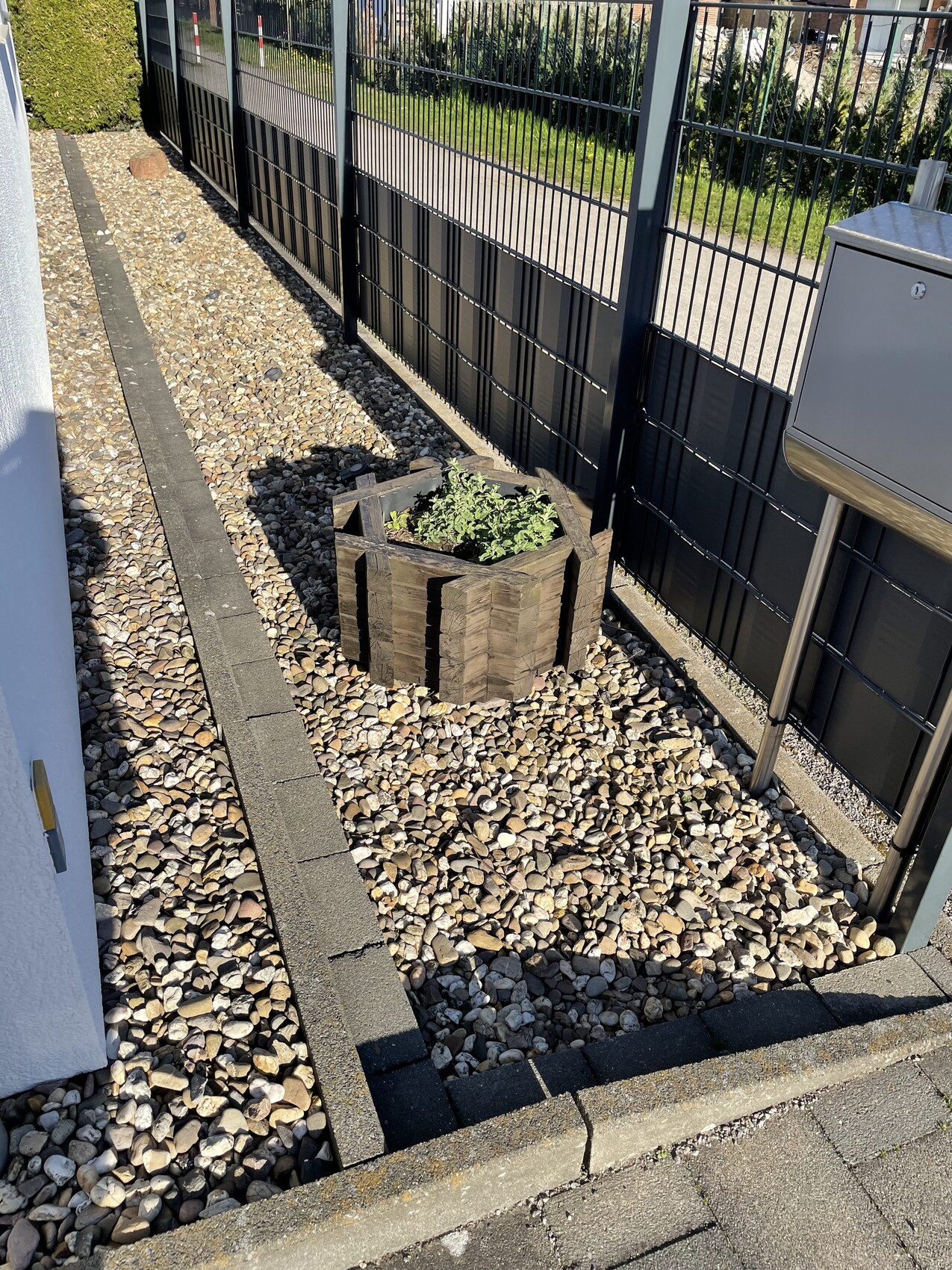

for years I have been thinking about how to design the problem area of my house.
I have a long narrow strip along the public pathway that I would like to plant. The strip is about 75 cm (30 inches) wide and 10.5 meters (34.5 feet) long. It faces south and gets full sun. Two gardens away, the neighbor has cut down all the tall and old trees, which means that since this year, our house is fully exposed to the sun. Therefore, we really want some sort of protection to prevent the ground from heating up excessively and possibly something that will protect at least the lower part of our facade from the direct sun in the future.
Trees probably won’t work due to the limited space available.
I like plants that are useful to wildlife throughout the year.
The fence must stay because otherwise the area would become a dog toilet, even now with just the stones. The privacy screen on the fence is more of a splash guard since the whole area is on an unpaved path, which is officially a dead end but apparently many people have a key to lower the bollards, and the footpath is frequently used by vehicles, often at high speed. It’s a disaster when it rains.
So, I’m looking forward to your suggestions.
G
Gartenfreund21 Apr 2022 01:31Müllerin schrieb:
Hibiscus requires a lot of water during flowering, so it can be labor-intensive if you don’t want to install an irrigation system. We have two hibiscus hedges. We only water them occasionally, even during very dry years, and they still bloom profusely. So I haven’t noticed that they need a lot of water.
That was just a suggestion regarding the usefulness for wildlife, as the original poster preferred. The other option would be the wildflower meadow I proposed. I would much rather have that here than lawn, but unfortunately that’s not possible.