
Hello everyone
I am new to the forum and hope this is the right section.
We are renovating a house built in 1955 and, like many others, we found a black layer beneath the parquet flooring. An initial lab analysis showed that it is a tar-containing layer with PAHs (polycyclic aromatic hydrocarbons).
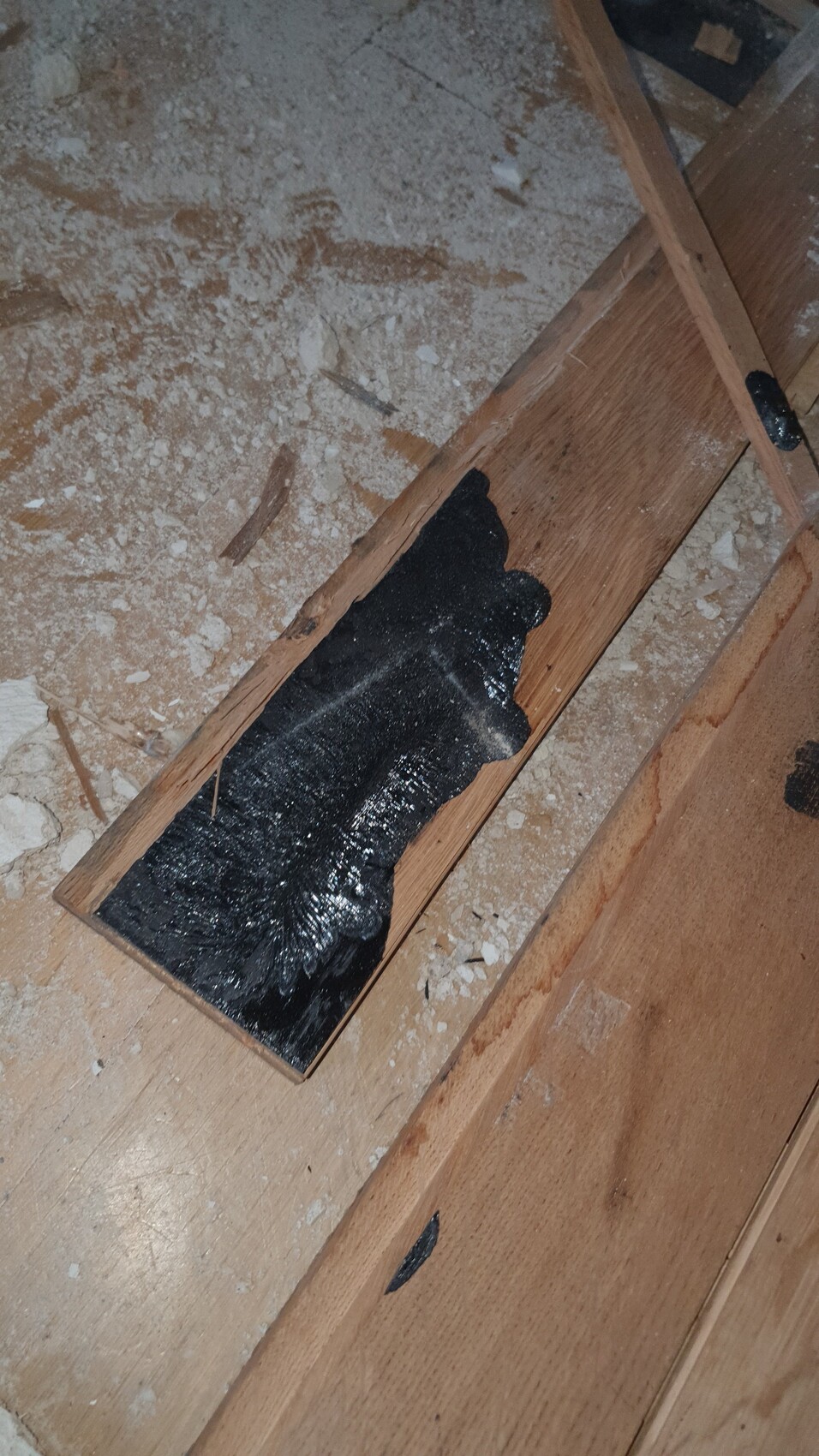
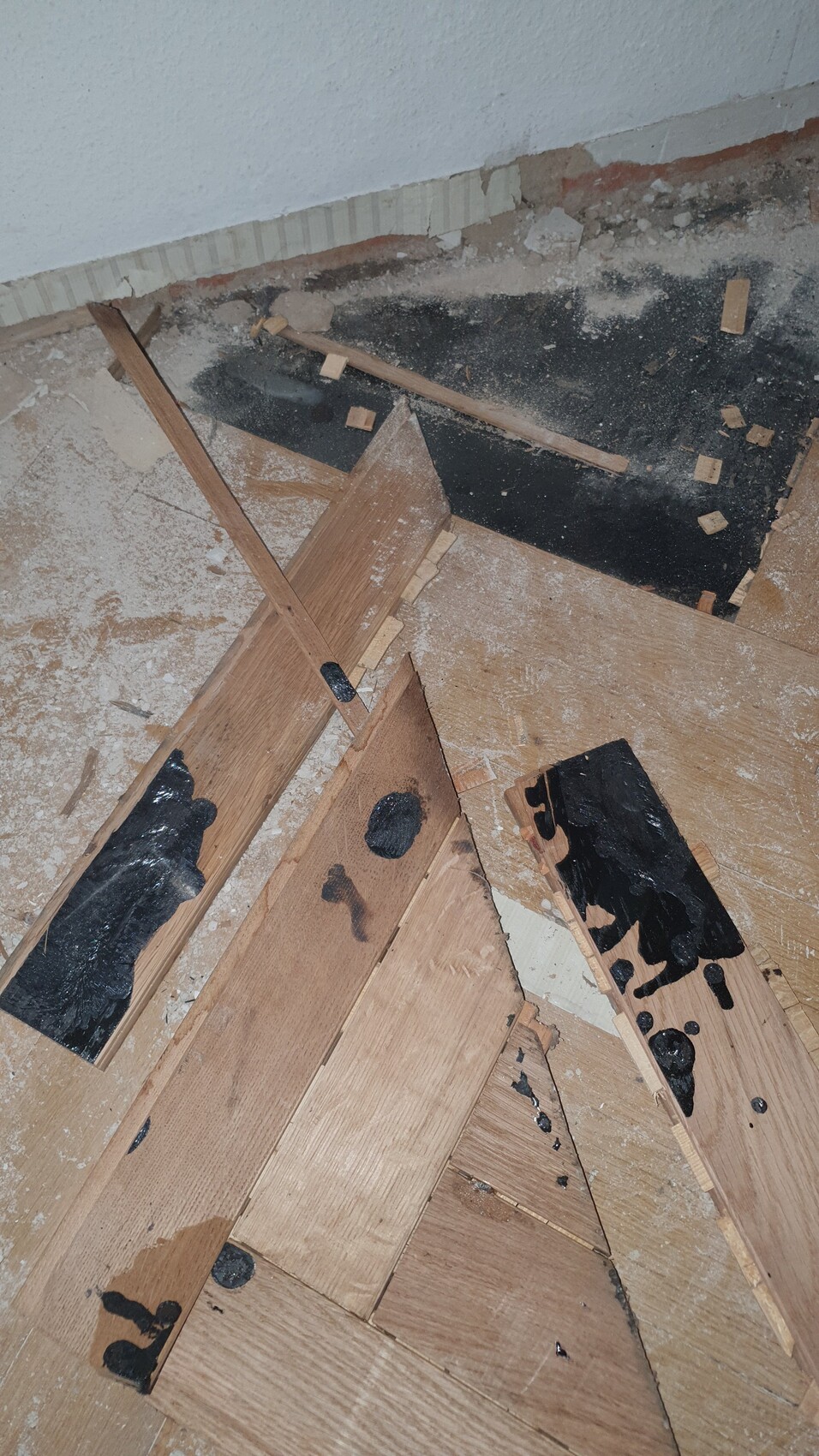
However, this is not just a thin adhesive layer. The floor structure is as follows:
1) Concrete slab
2) Single layer of newspaper, loosely placed as a separation between the black material and the concrete
3) Black material (about 2cm (0.8 inches) thick, not sticky but glassy hard, similar to stone)
4) Parquet laid directly on top
The black material weighs roughly as much as stone and rests floating on the concrete. It can be completely levered up and removed without affecting the concrete below or needing to grind it. I suspect this black material was used as a substitute for screed.
Has anyone encountered something like this before?
I have three questions:
1) Can you tell me what this material might be and if it could have any positive properties regarding insulation or impact sound reduction?
2) If that is the case, could the material be left in place and covered with a vapor barrier, underfloor heating, screed, and vinyl flooring, effectively sealing it and making use of it rather than disposing of it?
3) Or would there be significant disadvantages concerning health risks or outdated properties?
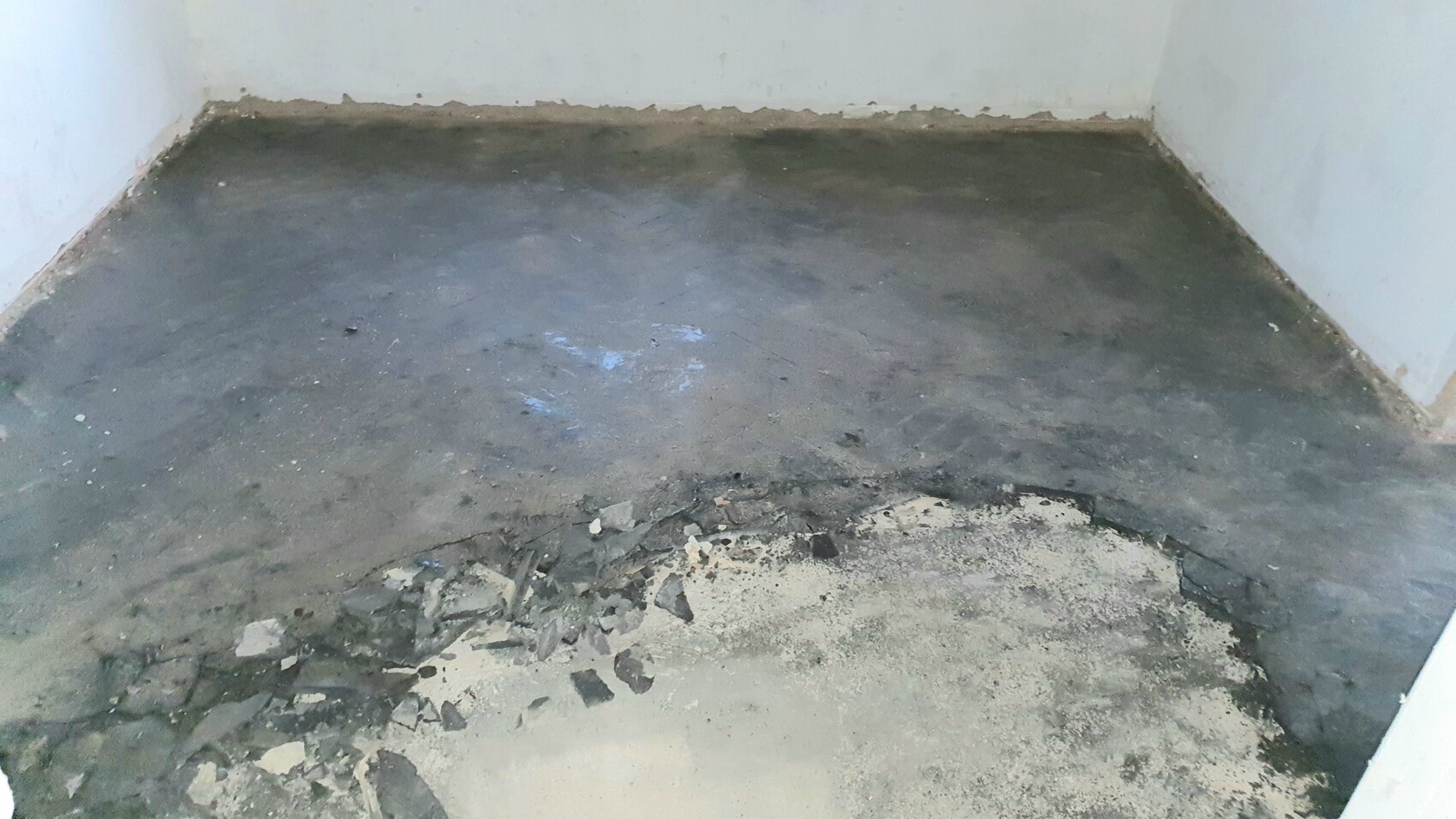
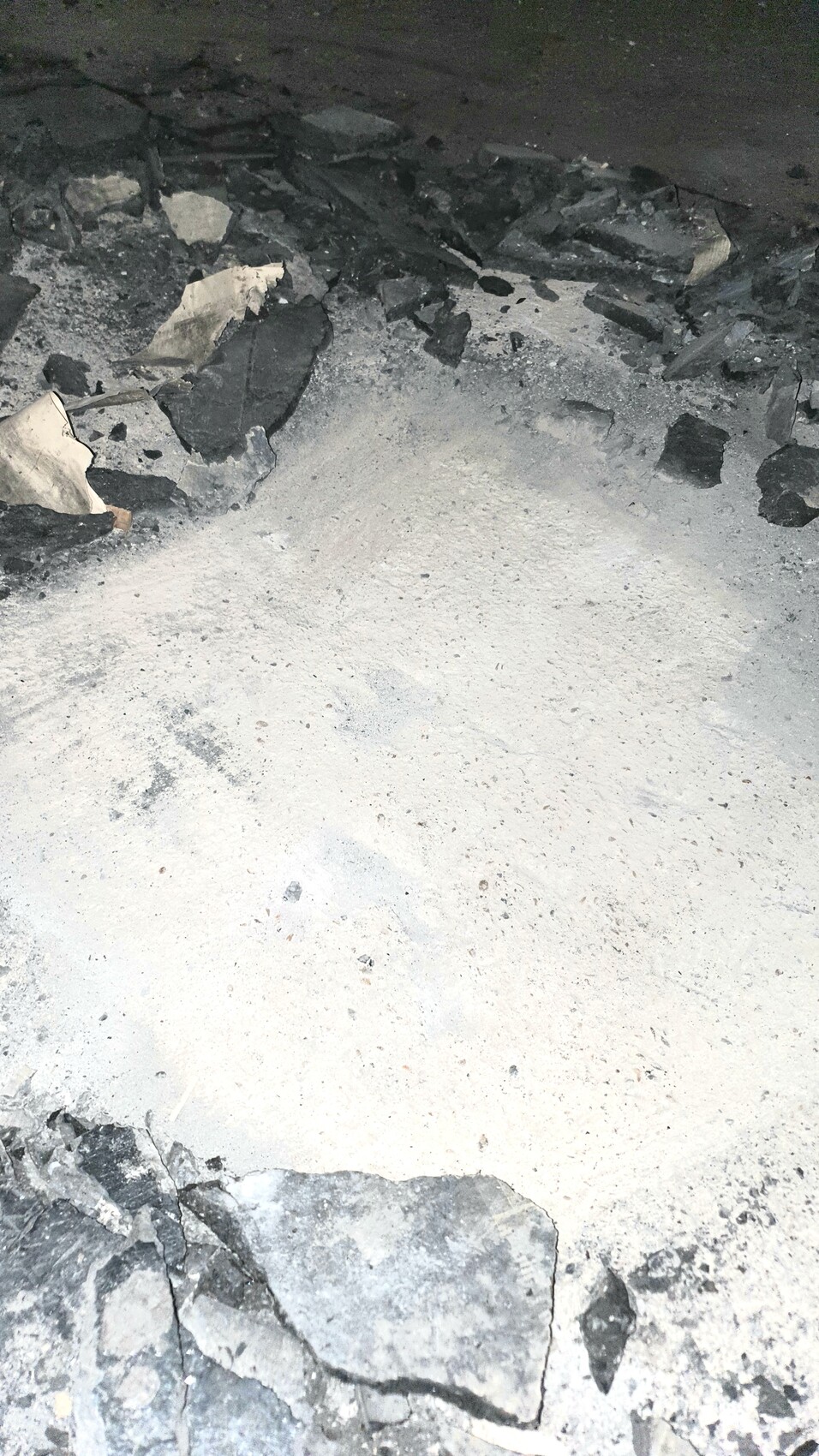
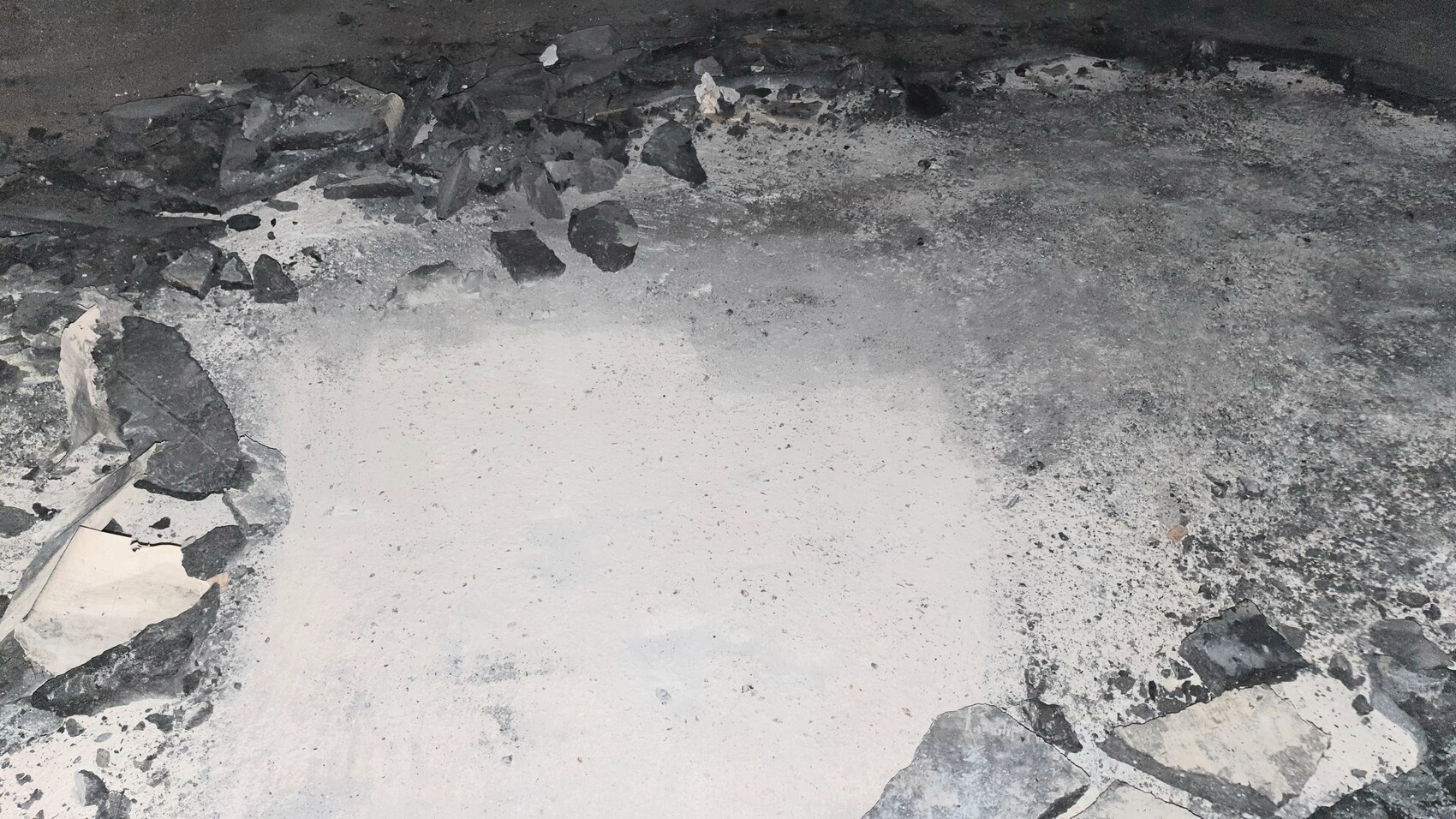
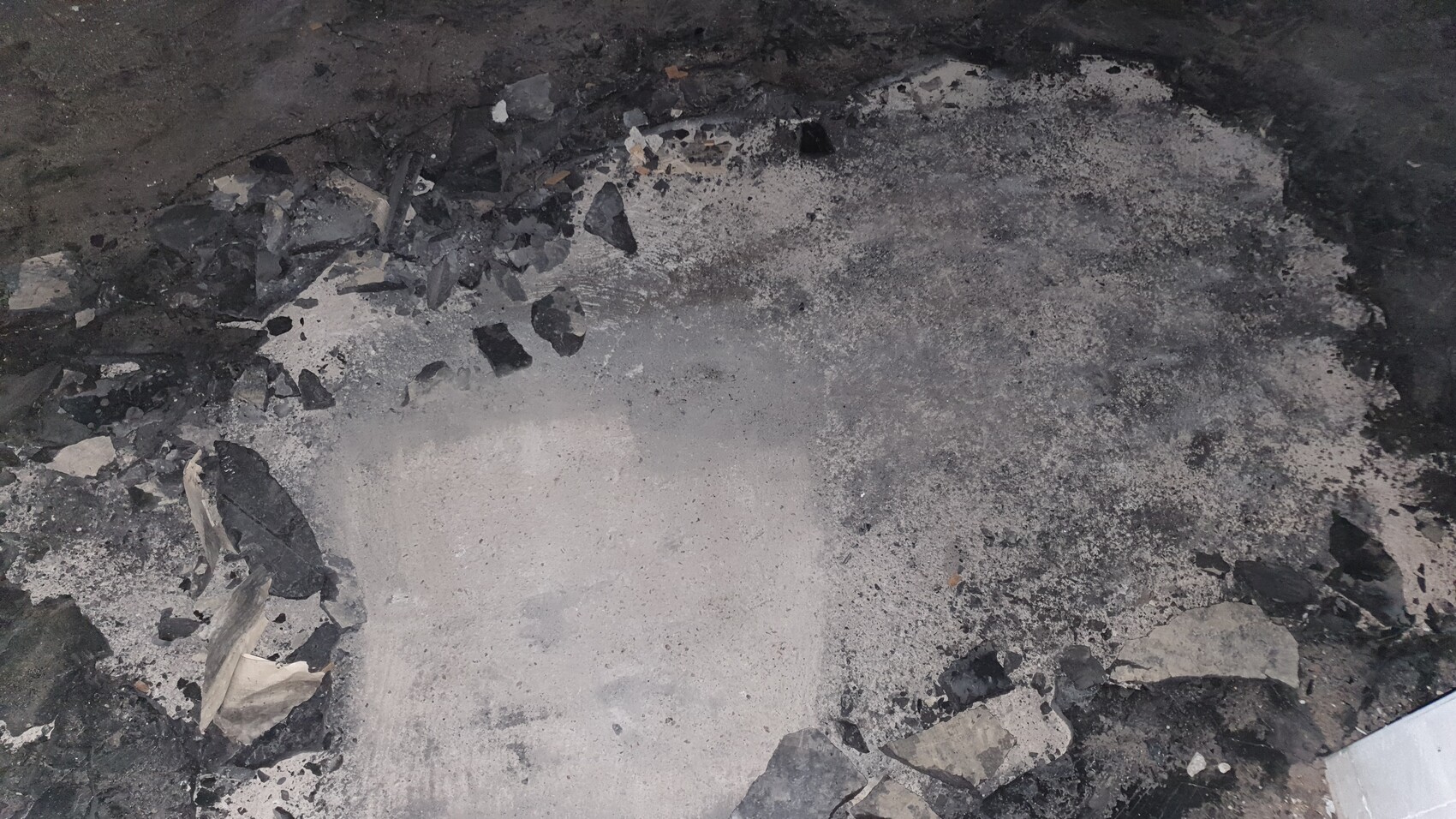
Attached are some pictures. The clean light surface is the concrete slab.
I am new to the forum and hope this is the right section.
We are renovating a house built in 1955 and, like many others, we found a black layer beneath the parquet flooring. An initial lab analysis showed that it is a tar-containing layer with PAHs (polycyclic aromatic hydrocarbons).
However, this is not just a thin adhesive layer. The floor structure is as follows:
1) Concrete slab
2) Single layer of newspaper, loosely placed as a separation between the black material and the concrete
3) Black material (about 2cm (0.8 inches) thick, not sticky but glassy hard, similar to stone)
4) Parquet laid directly on top
The black material weighs roughly as much as stone and rests floating on the concrete. It can be completely levered up and removed without affecting the concrete below or needing to grind it. I suspect this black material was used as a substitute for screed.
Has anyone encountered something like this before?
I have three questions:
1) Can you tell me what this material might be and if it could have any positive properties regarding insulation or impact sound reduction?
2) If that is the case, could the material be left in place and covered with a vapor barrier, underfloor heating, screed, and vinyl flooring, effectively sealing it and making use of it rather than disposing of it?
3) Or would there be significant disadvantages concerning health risks or outdated properties?
Attached are some pictures. The clean light surface is the concrete slab.

Att1985 schrieb:
By the way, it was an asphalt screed. A record from 1955 hidden under the wallpaper provided the answer 🙂 Well, then it must be correct if it was written under the wallpaper!!
Just keep in mind: bituminous screeds were rare in the post-war years—also considering the prices at the time—and furthermore, terminology from 1955 should not confuse us or lead us astray today, since (also) the nomenclature and terms used in construction have changed since then.