
ᐅ Heat Pump Capacity and Buffer Tank Size(s) for New Single-Family Home
Created on: 25 Sep 2023 20:45
D
Dachshund90D
Dachshund9025 Sep 2023 20:45Hello everyone,
We would like to order the components for our heating system soon.
The following information is the basis:
- New detached house built according to legal standards
- Heated living area: 193 m² (2077 sq ft) (floor plans attached)
- Planned heat pump: ground source heat pump Bosch CS 7800iLW 8 F 8 kW
- Planned buffer tank: Stora WH 370 LP1B
- Drilling depth to be determined according to the system
- Designed for a household of 4 people
Questions: Do you consider the 8 kW ground source heat pump sufficient? Is the 350 L (92 gallons) buffer tank adequate? Is a second buffer tank for the heating water necessary?
Thank you very much and best regards
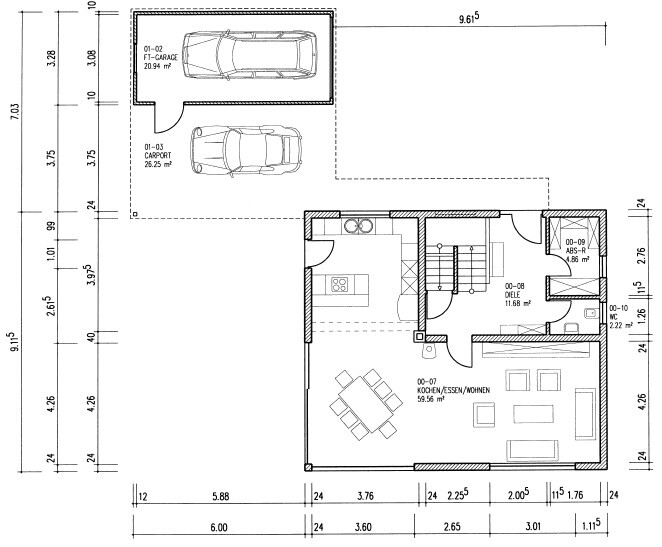
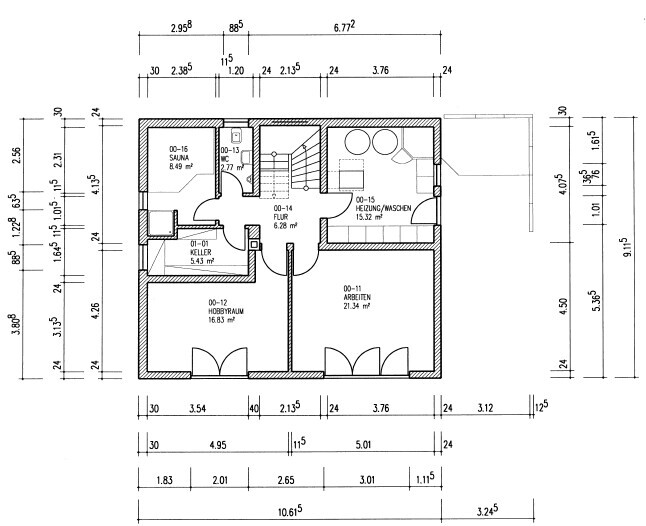
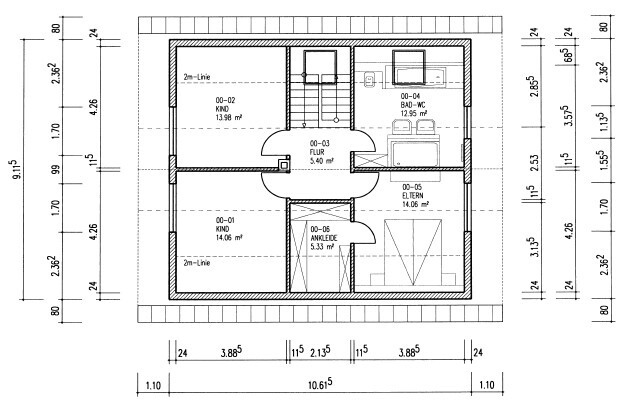
We would like to order the components for our heating system soon.
The following information is the basis:
- New detached house built according to legal standards
- Heated living area: 193 m² (2077 sq ft) (floor plans attached)
- Planned heat pump: ground source heat pump Bosch CS 7800iLW 8 F 8 kW
- Planned buffer tank: Stora WH 370 LP1B
- Drilling depth to be determined according to the system
- Designed for a household of 4 people
Questions: Do you consider the 8 kW ground source heat pump sufficient? Is the 350 L (92 gallons) buffer tank adequate? Is a second buffer tank for the heating water necessary?
Thank you very much and best regards
Remove the buffer tank if one is planned. What you mean is the domestic hot water tank.
Have a room-by-room heating load calculation done, designed for a maximum supply temperature of 32°C (90°F). Then adjust the heat pump capacity to the heating load, preferably choosing the smaller heat pump. After that, determine the required drilling depth, using improved grout material. Ideally, only one borehole is needed instead of several—it can be deeper than 100 meters (330 feet).
Do not install or disable individual room controls.
Congratulations on your cost-efficient heat pump system.
Have a room-by-room heating load calculation done, designed for a maximum supply temperature of 32°C (90°F). Then adjust the heat pump capacity to the heating load, preferably choosing the smaller heat pump. After that, determine the required drilling depth, using improved grout material. Ideally, only one borehole is needed instead of several—it can be deeper than 100 meters (330 feet).
Do not install or disable individual room controls.
Congratulations on your cost-efficient heat pump system.
W
WilderSueden25 Sep 2023 22:19Dachshund90 schrieb:
Isn't a second buffer tank needed for the heating water? That used to be common when oil or gas burners ran at full capacity for a while and were then switched off. The thermostat on the radiator controlled how much water flowed through the heating system.
Today, the supply temperature is controlled by an outdoor temperature sensor, and the heat pump modulates accordingly. Smaller interruptions are buffered by the screed. Wall thermostats react far too slowly to be really effective. I have most heating circuits set to manual open for this reason. That’s better anyway, as there are people in this household who keep adjusting them and then come back after 10 minutes...
The critical point has already been mentioned: don’t have your heating system designed cheaply for just 35°C (95°F).
D
Dachshund9026 Sep 2023 10:40Hello everyone,
thank you for your replies, that means we are on the right track.
How do you set different temperatures for the rooms if you don’t have a thermostat? Manually open/close?
Good luck
thank you for your replies, that means we are on the right track.
How do you set different temperatures for the rooms if you don’t have a thermostat? Manually open/close?
Good luck
You won’t achieve huge temperature differences in a new building anyway. A hydraulic balancing is performed, meaning that through the flow rate and the control of the heat pump, the rooms are brought to the desired temperature level and the setting is then maintained as is.
R
RotorMotor26 Sep 2023 11:00Dachshund90 schrieb:
Hello everyone,
thanks for your answers, that means we are on the right track.
And how do you set different temperatures for the rooms if you don’t have a thermostat? Manually open/close?
Good luckWhat does the path look like then?Instead of room-by-room heating load calculations, I only see floor plans. ;-)
Similar topics