
ᐅ How to seal a large wastewater pipe penetration in a masonry wall?
Created on: 2 Apr 2019 14:04
R
Reini1234R
Reini12342 Apr 2019 14:04Hello,
Two wide and deep channels were cut into the masonry in my basement for wastewater pipes. One actually received a pipe, but for the other, the plan changed and the work was unnecessary. Both channels now need to be closed again.
What is the best material to use for this? For the channel without a pipe, should it even be fully bricked up again? Also, a small wastewater pipe was pushed through the airtight barrier here because there is an unheated room behind the rear wall under the garage (visible in the picture below). How should I seal this?
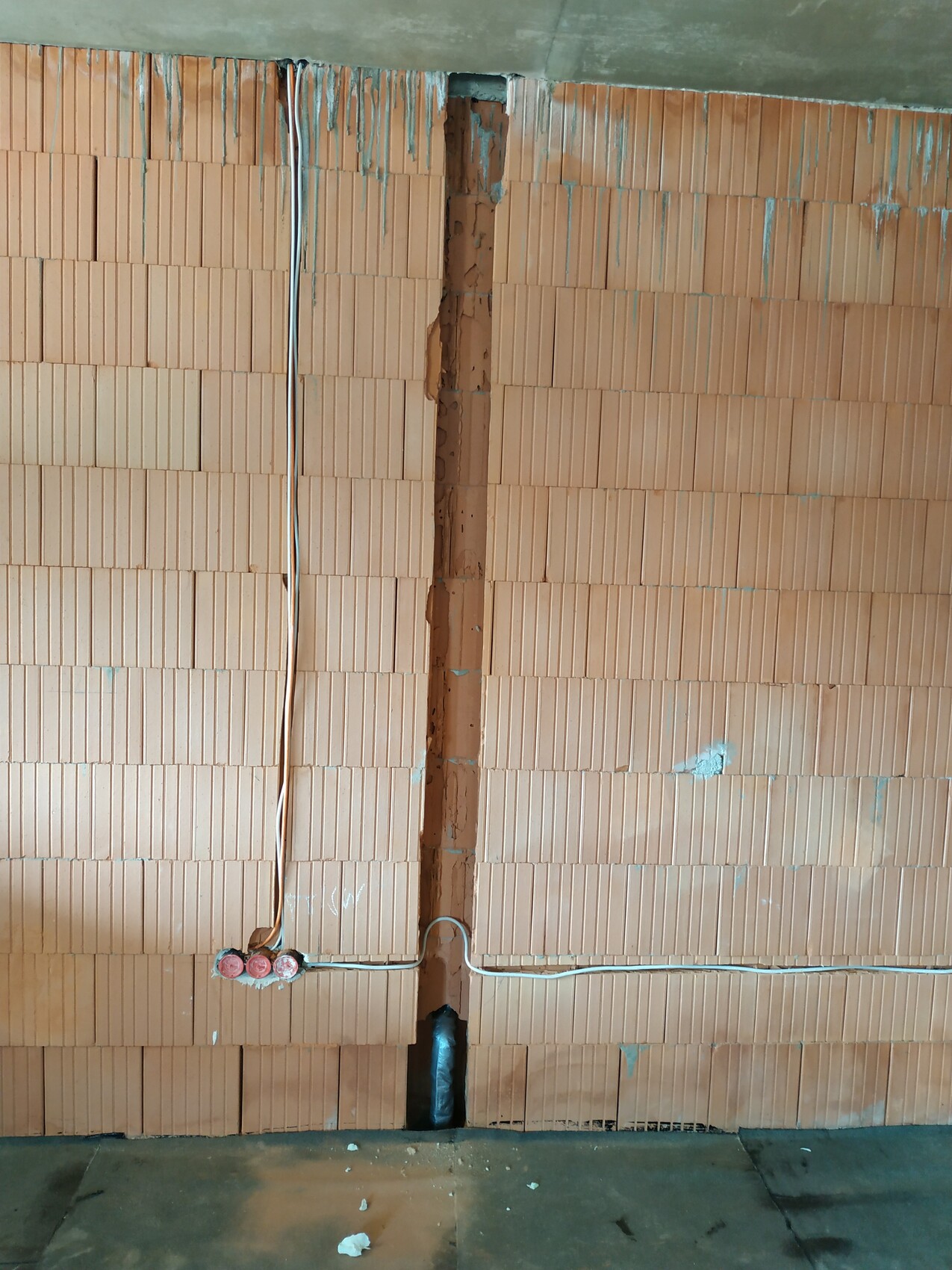

Two wide and deep channels were cut into the masonry in my basement for wastewater pipes. One actually received a pipe, but for the other, the plan changed and the work was unnecessary. Both channels now need to be closed again.
What is the best material to use for this? For the channel without a pipe, should it even be fully bricked up again? Also, a small wastewater pipe was pushed through the airtight barrier here because there is an unheated room behind the rear wall under the garage (visible in the picture below). How should I seal this?
Reini1234 schrieb:
In my basement ... A small wastewater pipe also penetrates the airtight building envelope here, because there is an unheated room under the garage on the back wall (as shown in the picture below). How can I seal this properly?Take a look at Doyma seals.
R
Reini12344 Apr 2019 10:17Are all the sleeves, for example from Doyma, designed only for concrete?

I would probably just backfill the wastewater pipe with mineral wool, not mortar (to avoid a thermal bridge), and cover the front with expanded metal mesh or something similar. You can seal the opening for the small pipe with mortar. It’s best to fill the "gap" itself using broken pieces of bricks and mortar (using only mortar takes too long because, given the amount, you will likely have to work layer by layer).
I’m quite meticulous about the "airtight layer" myself, but when you look at the cost of all the fancy seals and gaskets, the second or third best solutions often seem much more practical. Especially since these seals are primarily designed to keep out water, which doesn’t appear to be an issue in this case. Besides, these seals usually require core drilling, which is obviously too late here.
I’m quite meticulous about the "airtight layer" myself, but when you look at the cost of all the fancy seals and gaskets, the second or third best solutions often seem much more practical. Especially since these seals are primarily designed to keep out water, which doesn’t appear to be an issue in this case. Besides, these seals usually require core drilling, which is obviously too late here.