
Hello,
we have a bathroom (built in 2005) that we would like to renovate. After a lot of research (vinyl, concrete, epoxy), we are practically back at the beginning, meaning the tiles will be replaced.
We thought it would be a good idea to relocate the drain at the same time. This would allow us to use slightly larger tiles, since the slope would only go in one direction. Instead of having the drain in the middle, we would like to install a channel drain along the front wall (there is an installation shaft at the front).
Is this even possible, and what kind of construction can we expect here?
Thank you.
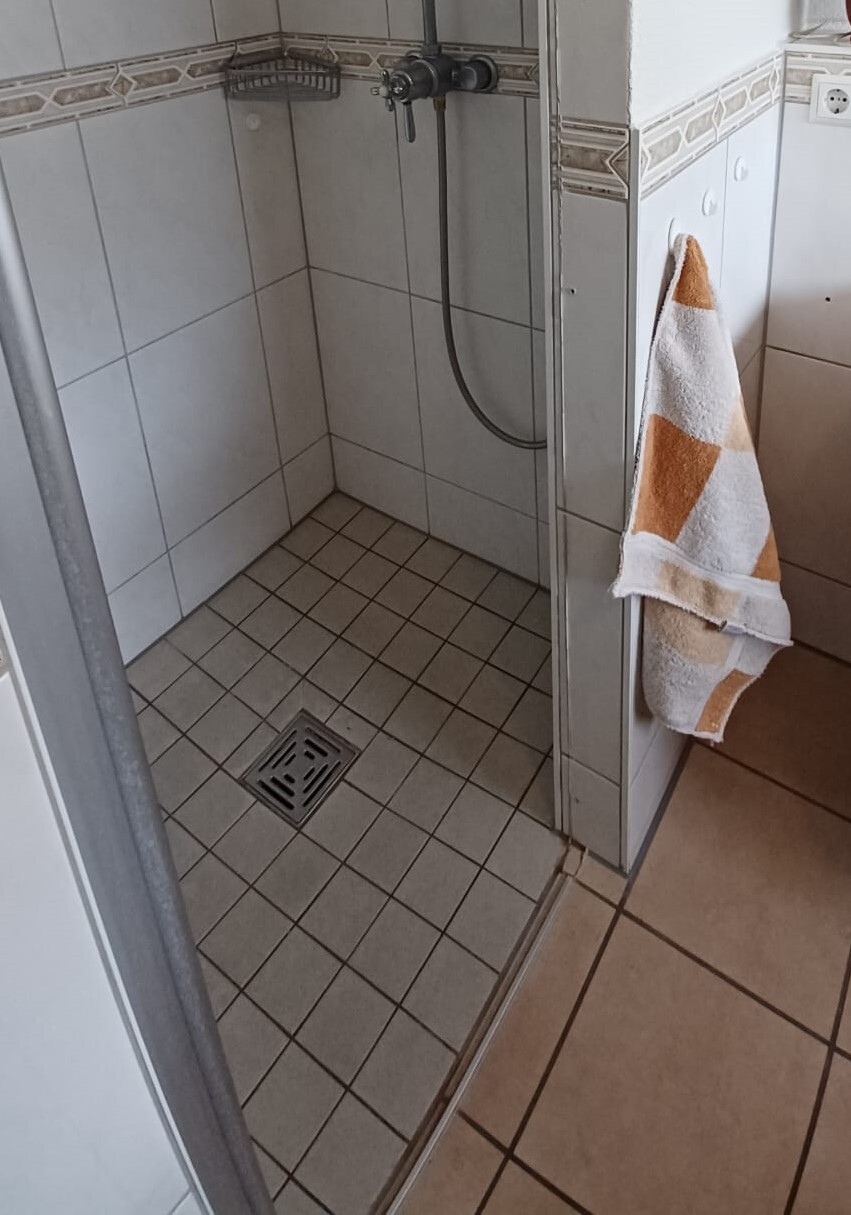
we have a bathroom (built in 2005) that we would like to renovate. After a lot of research (vinyl, concrete, epoxy), we are practically back at the beginning, meaning the tiles will be replaced.
We thought it would be a good idea to relocate the drain at the same time. This would allow us to use slightly larger tiles, since the slope would only go in one direction. Instead of having the drain in the middle, we would like to install a channel drain along the front wall (there is an installation shaft at the front).
Is this even possible, and what kind of construction can we expect here?
Thank you.
W
WilderSueden7 Mar 2024 14:07That is a different question. However, in sports halls, swimming pools, and hospitals (places where level-access showers have been common for a long time), you will mostly see mosaic tiles. There are certainly good reasons for this.

WilderSueden schrieb:
But in sports halls, swimming pools, and hospitals (places where level-access showers have been common for a long time), you mostly see mosaic tiles. So there must be good reasons for that. In our family, we had a slip that caused a pelvic ring fracture, which is why we chose mosaic tiles.
This is almost a standard feature for accessible design.