
ᐅ Gypsum plaster in the bathroom (including areas exposed to splashing) – How to proceed?
Created on: 5 May 2026 14:44
M
Malle1904M
Malle19045 May 2026 14:44Hello everyone,
I’m currently in the process of repainting my bathroom in an older building. (At least, that was the plan.)
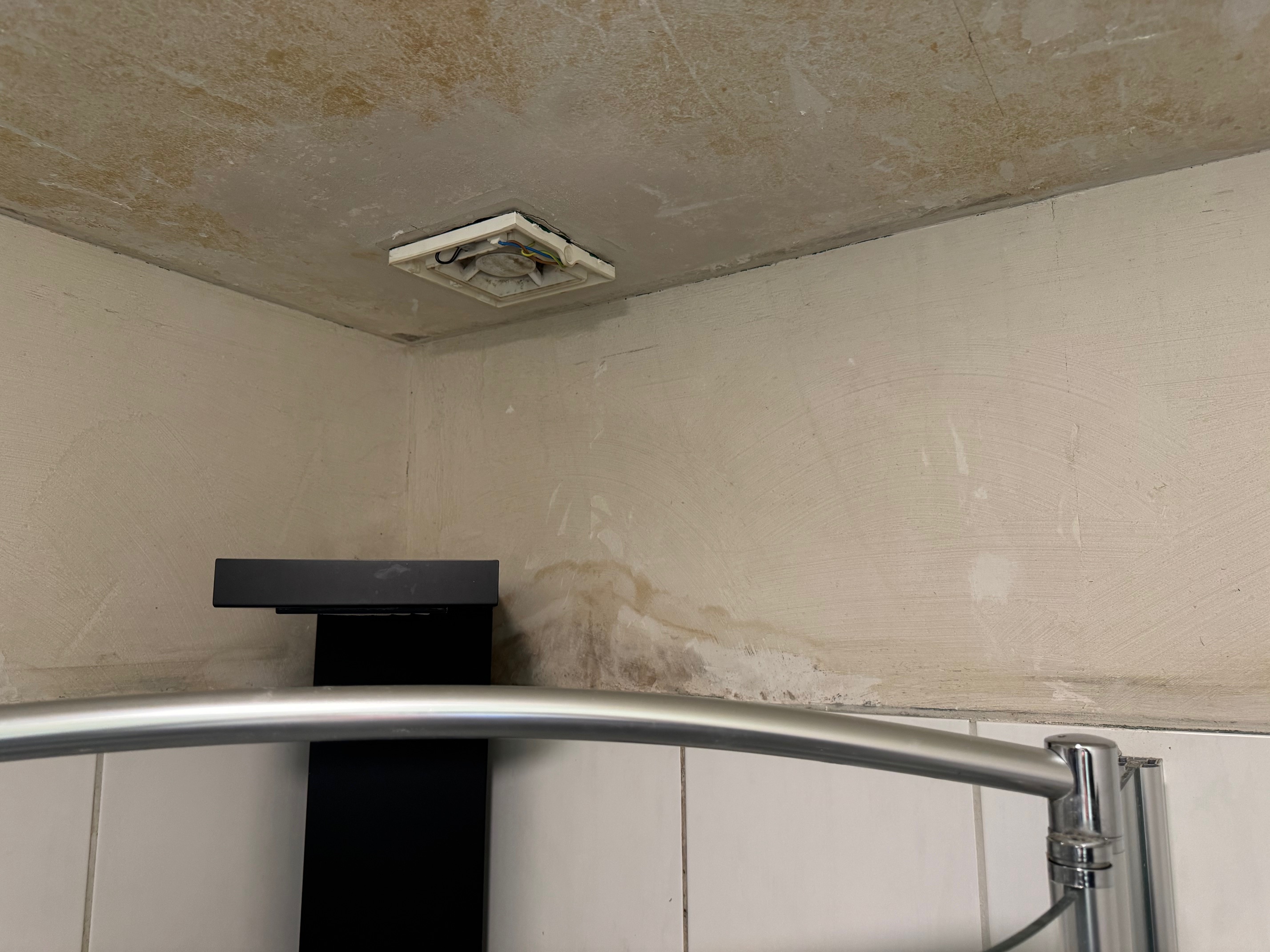
I removed the wallpaper because it started to bubble in the splash zone above the shower, where it meets the tiles. The photo clearly shows where the plaster absorbed moisture. Luckily, I didn’t have significant mold, just a little on the wallpaper and very little on the actual wall. I guess having an exhaust fan at that spot has been really valuable.
Here’s my question: What is the best way to proceed? I would prefer not to completely remove the gypsum plaster. But applying a skim coat with, for example, lime plaster isn’t really an option either. Am I correct in assuming it’s gypsum plaster because it turned “slimy” when sprayed with water?
My main concern is the area inside the shower enclosure. I’m 2 meters (6 ft 7 in) tall, so the water splashes pretty high on the wall, which I probably can’t avoid.
How would you approach this?
I’m not the most skilled DIYer, but I’m not clueless either. I’m willing to learn everything. I also don’t have the budget to just pay someone to do it easily.
I’d appreciate any advice!!
Best regards
I’m currently in the process of repainting my bathroom in an older building. (At least, that was the plan.)
I removed the wallpaper because it started to bubble in the splash zone above the shower, where it meets the tiles. The photo clearly shows where the plaster absorbed moisture. Luckily, I didn’t have significant mold, just a little on the wallpaper and very little on the actual wall. I guess having an exhaust fan at that spot has been really valuable.
Here’s my question: What is the best way to proceed? I would prefer not to completely remove the gypsum plaster. But applying a skim coat with, for example, lime plaster isn’t really an option either. Am I correct in assuming it’s gypsum plaster because it turned “slimy” when sprayed with water?
My main concern is the area inside the shower enclosure. I’m 2 meters (6 ft 7 in) tall, so the water splashes pretty high on the wall, which I probably can’t avoid.
How would you approach this?
- Does it make sense to apply a liquid waterproofing or sealing layer to the wall before painting?
- What type of paint would you recommend?
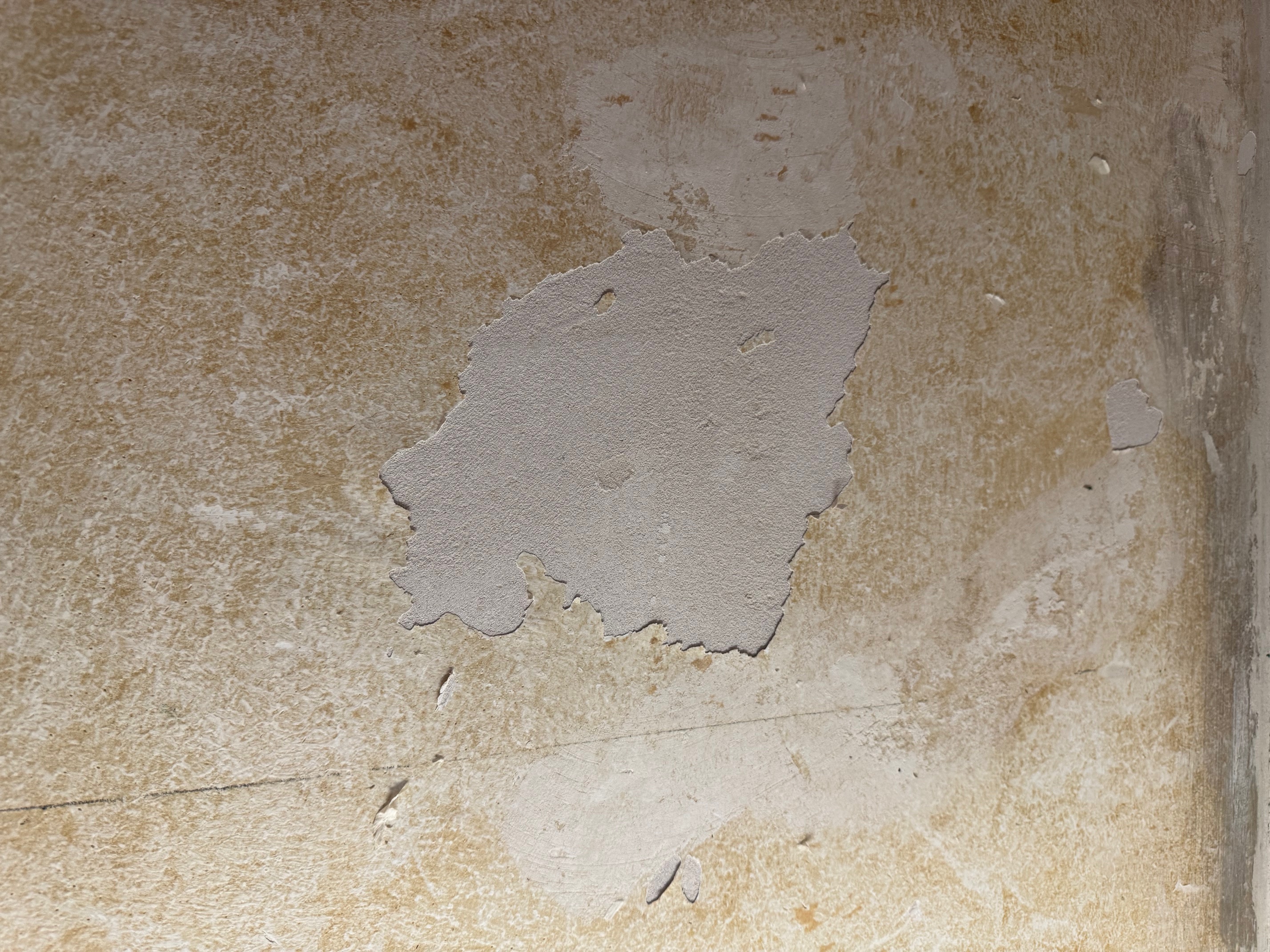
- Does anyone know what the layer on the ceiling is that’s crumbling in some places? I assume that will have to be removed as well?
I’m not the most skilled DIYer, but I’m not clueless either. I’m willing to learn everything. I also don’t have the budget to just pay someone to do it easily.
I’d appreciate any advice!!
Best regards
Simply painting over it is not ideal in splash water areas because gypsum plaster absorbs moisture, as you have already seen, and if you now apply any kind of sealant without a clean surface, it will only last until the next longer shower session.
The flaking layer on top looks like old dispersion paint or even distemper, which needs to be removed; otherwise, nothing will adhere permanently. In the shower area itself, I would honestly avoid using paint altogether. Instead, use at least a waterproofing system according to current standards, such as liquid membrane plus an appropriate primer. On top of that, you can apply either tiles or a special wet room coating, although the latter often deteriorates after a few years, even if it sounds different at the hardware store.
Lime plaster on gypsum is a combination that rarely works well, mainly due to the different vapor diffusion characteristics. Also, check how deep the plaster was really saturated or if it was just surface dampness.
The flaking layer on top looks like old dispersion paint or even distemper, which needs to be removed; otherwise, nothing will adhere permanently. In the shower area itself, I would honestly avoid using paint altogether. Instead, use at least a waterproofing system according to current standards, such as liquid membrane plus an appropriate primer. On top of that, you can apply either tiles or a special wet room coating, although the latter often deteriorates after a few years, even if it sounds different at the hardware store.
Lime plaster on gypsum is a combination that rarely works well, mainly due to the different vapor diffusion characteristics. Also, check how deep the plaster was really saturated or if it was just surface dampness.