
ᐅ Blocking access to utility connections or the electrical panel?
Created on: 2 Dec 2022 08:23
S
Stefan001
In our utility room, next to the heating system, we have our main connections, fuse box, inverter, etc., arranged in an area of about 3 x 1.5 meters (10 x 5 feet). We would really like to install a kitchen unit with base cabinets there to gain additional storage space.
However, I keep wondering whether it’s a good idea to permanently block access to this area or if it would be better to have a solution that allows quick removal, for example, drawers that can be easily taken out.
What do you think? Do you perhaps have good ideas for solutions that allow quick access?
At the moment, I’m trying to design the base cabinets in a way that after removing drawers or shelves, there is reasonably free access to the connections. I would also leave the countertop about 10–15 cm (4–6 inches) away from the wall.
Fully mobile cabinets on casters, like workshop trolleys, seem somewhat excessive to me, but in case of damage or maintenance, they would probably be very useful.
However, I keep wondering whether it’s a good idea to permanently block access to this area or if it would be better to have a solution that allows quick removal, for example, drawers that can be easily taken out.
What do you think? Do you perhaps have good ideas for solutions that allow quick access?
At the moment, I’m trying to design the base cabinets in a way that after removing drawers or shelves, there is reasonably free access to the connections. I would also leave the countertop about 10–15 cm (4–6 inches) away from the wall.
Fully mobile cabinets on casters, like workshop trolleys, seem somewhat excessive to me, but in case of damage or maintenance, they would probably be very useful.

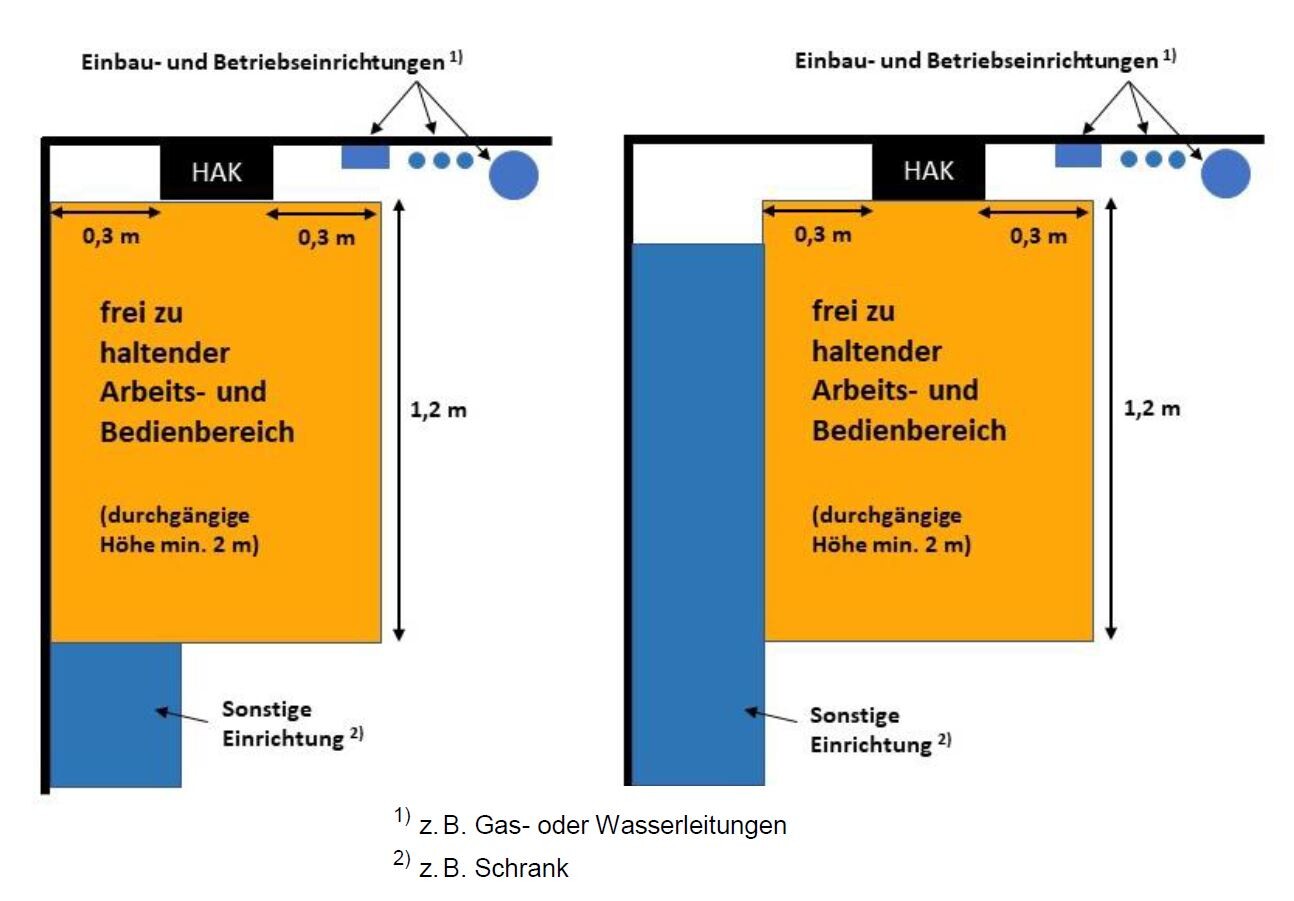
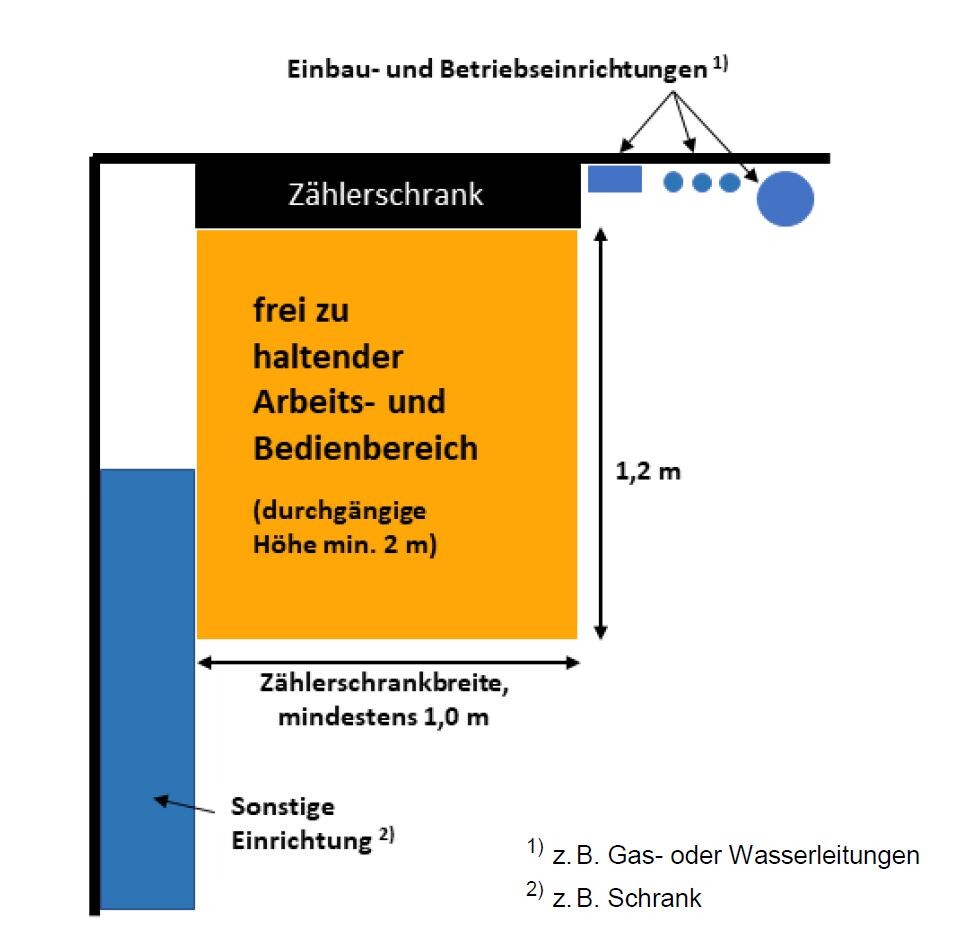
There are specific clearance areas specified in the technical guidelines (TAB) in front of connections and meter cabinets that must be observed. You cannot simply build over everything. Placing movable items in front of these areas is likely at your discretion. Just try searching for TAB 2019 for more details.
X
xMisterDx3 Dec 2022 13:29Yes, such areas do exist. However, based on experience, nobody really follows the rules.
In the area that is supposed to be kept clear at my place, there are:
the main service entrance (MSH)
gas meter
water meter
telecommunications box
This did not prevent the local utility company from installing the connection and putting in a meter for me this week.
I wouldn’t have major concerns about the house connection box either. What could happen there? If a fuse blows, you just need to clear the area; the operational fuse is located in the distribution board.
What I definitely would not block or obstruct, however, is the inverter, as it requires ventilation.
In the area that is supposed to be kept clear at my place, there are:
the main service entrance (MSH)
gas meter
water meter
telecommunications box
This did not prevent the local utility company from installing the connection and putting in a meter for me this week.
I wouldn’t have major concerns about the house connection box either. What could happen there? If a fuse blows, you just need to clear the area; the operational fuse is located in the distribution board.
What I definitely would not block or obstruct, however, is the inverter, as it requires ventilation.
M
Myrna_Loy3 Dec 2022 13:33xMisterDx schrieb:
I wouldn’t really have major concerns about the house connection box either. What could go wrong? If a fuse blows, you just have to clear it out; the 'service' fuse is in the distribution board.
Try telling that to the fire department if they can’t access the fuse box during a fire. Or when you yourself need to get to the fuse box QUICKLY in the event of a fire or water damage.X
xMisterDx3 Dec 2022 14:17The difference between the service connection box and the fuse box is known, right? It doesn’t seem that way to me.
PS:
The service connection box is sealed and contains NH fuses. As a layperson, and even as a professional without the proper protective equipment, you should not touch anything inside. Even the fire department avoids it in case of fire...
PS:
The service connection box is sealed and contains NH fuses. As a layperson, and even as a professional without the proper protective equipment, you should not touch anything inside. Even the fire department avoids it in case of fire...
M
Myrna_Loy3 Dec 2022 14:31xMisterDx schrieb:
The difference between the main service panel and the distribution board is known, right? It doesn't seem like it.
PS:
The main service panel is sealed and contains NH fuses. As a layperson, and even as a professional without the proper protective equipment, you should not touch anything inside. Even the fire department does not approach it during a fire incident... Sorry, I read that carelessly. I was referring to the standard distribution board that the original poster also wants to install.
S
Stefan0013 Dec 2022 17:14"Installed" is a bit of an exaggeration; a base cabinet would still allow full access to the circuit breakers. At least for me, my wife would probably find it a bit more difficult 😉
But I’m still considering the roller solution.
But I’m still considering the roller solution.