
ᐅ Garden Irrigation – Pipes Installed Beneath Planned Paving Surface
Created on: 12 Mar 2023 22:57
A
Appel2000
Good evening everyone,
before we start with the outdoor landscaping in spring,
I want to take care early on of a small but essential part of the planned garden irrigation.
At first, I want to get this done before the paving work. The rest of the pipes will be installed later when convenient.
Situation description:
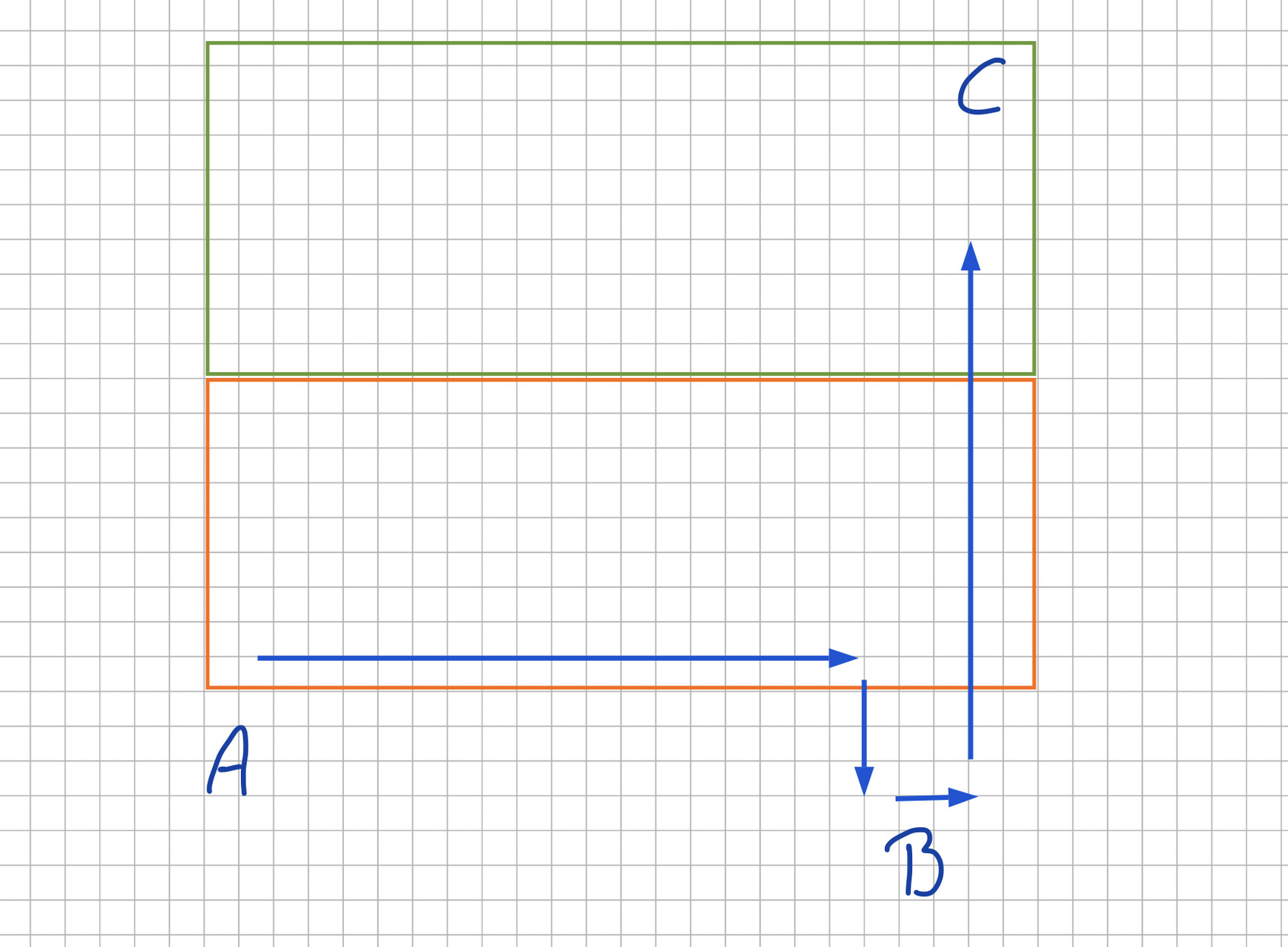
- The area marked in orange will be paved
- The green area is a small part of the garden (overall property around 1000sqm (10760 sq ft))
- At position “A” the supply connection is planned: there is an outdoor water tap, and a pump will be installed there to draw water from the existing cistern
- At position “B” I’m thinking about installing a valve to be able to drain the system for winter
- “C” is the garden entrance, and the garden at point C is significantly higher than the paved area, so there is an incline
Thoughts so far:
- I would like to lay the water pipe inside a kind of protective conduit under the area to be paved. Off the top of my head, I was thinking about an HT pipe (drainage pipe).
- This concerns the route from A via B to C
- Position “B” is suitable for the valve, but to get into that corner I would need to lay both the pipe and the protective conduit as shown (gravel bed under the air-to-water heat pump, which is easily accessible)
- Due to the slope towards “C,” draining the system in winter should work well
Questions
- Which water pipe should I use here? PE pipe 32mm (1¼ inch)? Is that sufficient? Do you have any manufacturer recommendations?
- At position “A,” I would need to install some kind of connection box in the paving so that I can connect a hose both from the outdoor tap and from the pump. Of course, it should look neat. Does something like that exist?
- Does the idea of using an HT pipe as additional mechanical protection make sense?
- Can I really fit everything together neatly in such a tight space at position “B,” or is that wishful thinking? Should I go with a clean 90-degree corner there and think of a different solution for winter draining?
I believe @rick2018 is quite knowledgeable about this topic,
maybe you could give me a few tips?
Thanks in advance and best regards
before we start with the outdoor landscaping in spring,
I want to take care early on of a small but essential part of the planned garden irrigation.
At first, I want to get this done before the paving work. The rest of the pipes will be installed later when convenient.
Situation description:
- The area marked in orange will be paved
- The green area is a small part of the garden (overall property around 1000sqm (10760 sq ft))
- At position “A” the supply connection is planned: there is an outdoor water tap, and a pump will be installed there to draw water from the existing cistern
- At position “B” I’m thinking about installing a valve to be able to drain the system for winter
- “C” is the garden entrance, and the garden at point C is significantly higher than the paved area, so there is an incline
Thoughts so far:
- I would like to lay the water pipe inside a kind of protective conduit under the area to be paved. Off the top of my head, I was thinking about an HT pipe (drainage pipe).
- This concerns the route from A via B to C
- Position “B” is suitable for the valve, but to get into that corner I would need to lay both the pipe and the protective conduit as shown (gravel bed under the air-to-water heat pump, which is easily accessible)
- Due to the slope towards “C,” draining the system in winter should work well
Questions
- Which water pipe should I use here? PE pipe 32mm (1¼ inch)? Is that sufficient? Do you have any manufacturer recommendations?
- At position “A,” I would need to install some kind of connection box in the paving so that I can connect a hose both from the outdoor tap and from the pump. Of course, it should look neat. Does something like that exist?
- Does the idea of using an HT pipe as additional mechanical protection make sense?
- Can I really fit everything together neatly in such a tight space at position “B,” or is that wishful thinking? Should I go with a clean 90-degree corner there and think of a different solution for winter draining?
I believe @rick2018 is quite knowledgeable about this topic,
maybe you could give me a few tips?
Thanks in advance and best regards
W
WilderSueden16 Mar 2023 08:55I was actually waiting for Rick since I am mainly a theorist here. We’re not planning much irrigation either; I just wanted to lay a water pipe to the vegetable garden. Under gravel or paved areas, I would definitely use a protective pipe. You don’t want to have to tear up the driveway again if there’s an issue with the pipe. Under green areas without trees, a pipe is probably not necessary but wouldn’t hurt in case of doubt.
If you come up in the middle of the green area, it’s basically not a problem. You’ll be running the pipe underground anyway to all the outlets.
If you come up in the middle of the green area, it’s basically not a problem. You’ll be running the pipe underground anyway to all the outlets.

Sorry, just saw this now. Hope it’s not too late.
Simply use a PE-HD pipe. Since the distances aren’t that long, a DN32 pipe is sufficient.
A protective conduit is not necessary with this pipe. Also, it’s not fun to pull a DN32 and a KG100 pipe together over even a few meters.
Point B (drainage) is also unnecessary. You can simply blow it out with a compressor in the fall.
Supplying water through a faucet doesn’t make sense. Refill the cistern using a faucet and operate the system with a cistern pump. A faucet doesn’t provide enough pressure or flow. There are already several posts in this forum about irrigation systems, including pump recommendations and tips.
At your outlet point, the valve box should be installed. From there, the individual irrigation zones branch off.
The control lines from the controller also go to the valve box.
Install the entire system as part of the garden layout. It doesn’t get easier than that.
Beforehand, determine the positions of the sprinklers based on the plan and calculate the number of zones. For flower beds and trees, it’s enough to end a separate zone there. You can also easily add drip or root watering afterward.
The elevation difference is not an issue with the right pump and sprinkler housings.
Simply use a PE-HD pipe. Since the distances aren’t that long, a DN32 pipe is sufficient.
A protective conduit is not necessary with this pipe. Also, it’s not fun to pull a DN32 and a KG100 pipe together over even a few meters.
Point B (drainage) is also unnecessary. You can simply blow it out with a compressor in the fall.
Supplying water through a faucet doesn’t make sense. Refill the cistern using a faucet and operate the system with a cistern pump. A faucet doesn’t provide enough pressure or flow. There are already several posts in this forum about irrigation systems, including pump recommendations and tips.
At your outlet point, the valve box should be installed. From there, the individual irrigation zones branch off.
The control lines from the controller also go to the valve box.
Install the entire system as part of the garden layout. It doesn’t get easier than that.
Beforehand, determine the positions of the sprinklers based on the plan and calculate the number of zones. For flower beds and trees, it’s enough to end a separate zone there. You can also easily add drip or root watering afterward.
The elevation difference is not an issue with the right pump and sprinkler housings.
Similar topics