
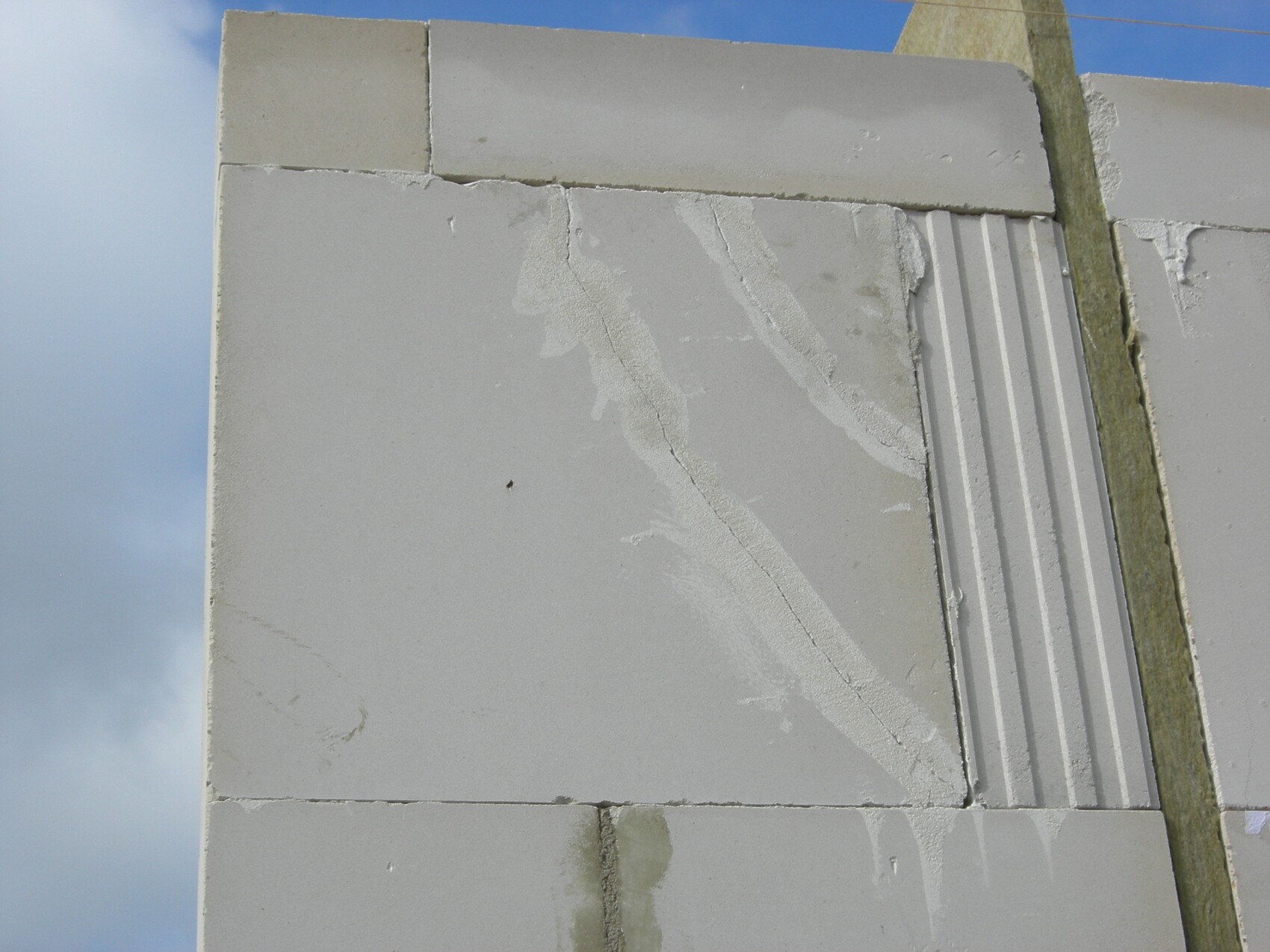
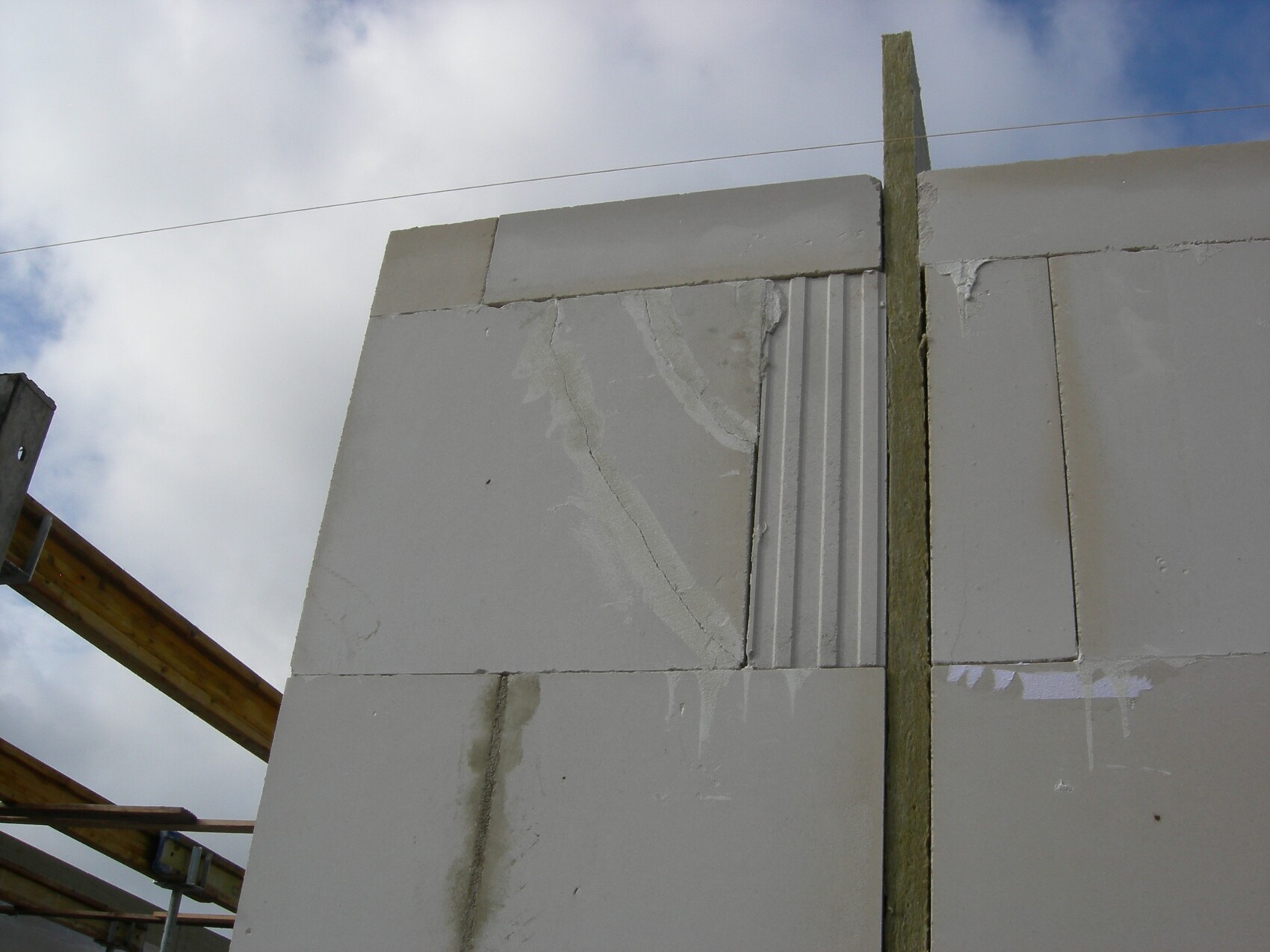
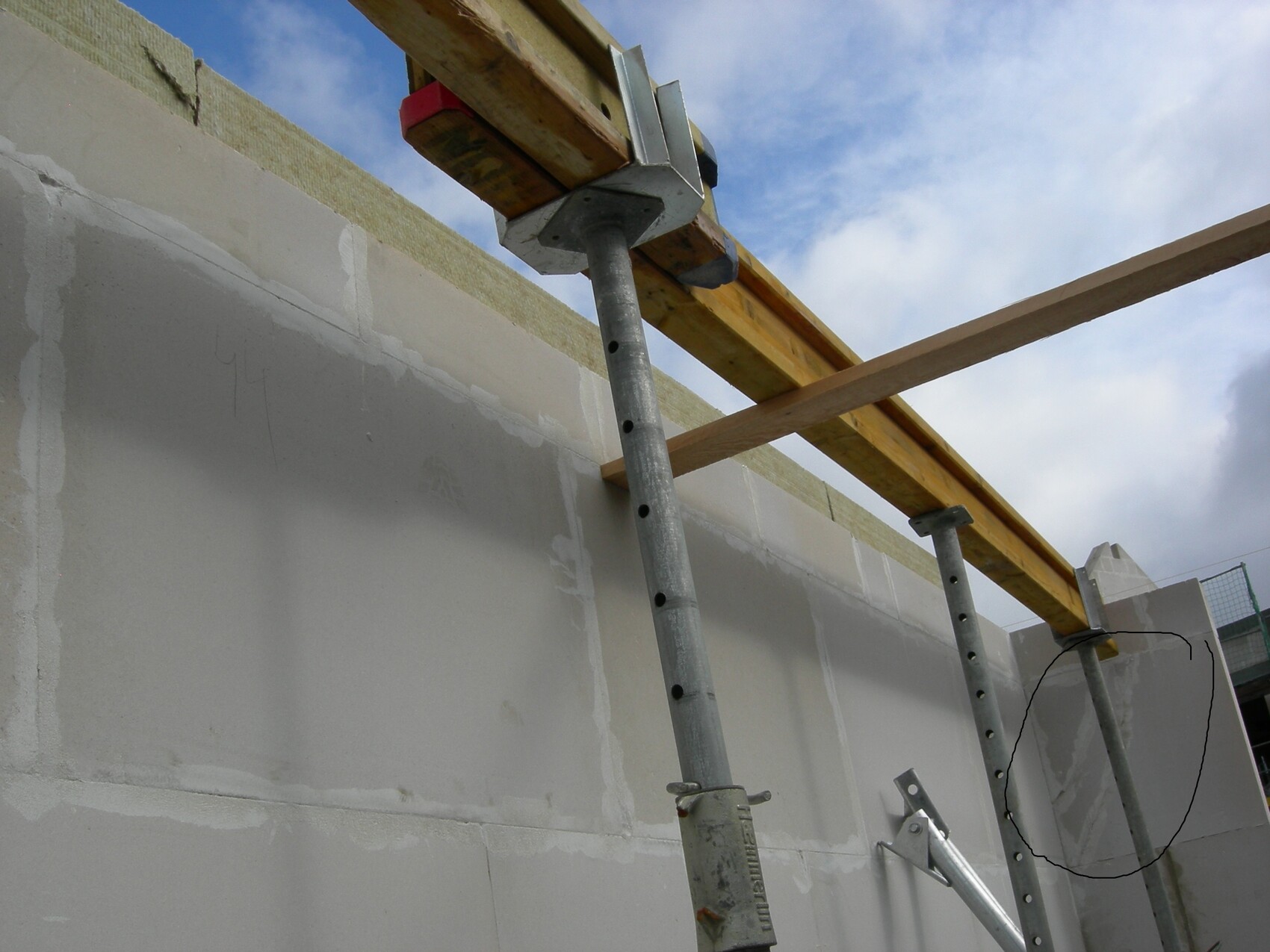
Hello forum. I would like to ask for your help. During today’s site inspection, I noticed that a damaged (cracked) calcium silicate brick had been installed. The crack is visible from both sides and was only filled with white adhesive mortar. Is this considered proper practice, or should we insist on replacing the defective brick? Thank you in advance.

toxicmolotow schrieb:
There are probably gay bricklayers as well. At least there are very good-looking bricklayers, not just in diet soda commercials. However, I still estimate that the percentage of heterosexuals in this profession is above average. In this respect, whether the world ends because of a cunning brick would most likely be seen as a girl’s issue from a bricklayer’s point of view.
https://www.instagram.com/11antgmxde/
https://www.linkedin.com/company/bauen-jetzt/
B
bleibt_alles10 Oct 2017 13:4211ant schrieb:
Since exterior walls have been built with large-format blocks, meaning purely running bond patterns without headers, and statistically each individual block carries more of the overall structural load, it has remained true that "Einstürzende Neubauten" is still just the name of a band from my youth 🙂.My concern was not that the house would collapse, but that a cracked block might not provide the required load-bearing capacity, causing the load to be transferred elsewhere, which in turn could lead to cracking in other areas. However, it seems that my considerations were mistaken, as several forum members have explained to me. Now I understand better. Thank you.
bleibt_alles schrieb:
But apparently, all my considerations are nonsense, They are completely understandable based on classical school physics, but in practice, thousands of cracks form in the masonry that you are unaware of, yet despite these cracks, the resulting concerns become less significant. If you
bleibt_alles schrieb:
and the load is thus distributed over other areas, which could, however, lead to cracking in other places "think it through consistently," you would expect higher crack frequency in houses where (at least larger) window openings in the upper floor and ground floor are not aligned. But that is not the case. Such a house is more resilient than one might think. And even if no one notices it, construction workers improvise very regularly. More precisely: they improvise so consistently that, over time, it becomes just standard practice :-)
https://www.instagram.com/11antgmxde/
https://www.linkedin.com/company/bauen-jetzt/