
Hello,
I hope I'm in the right subforum and that you might be able to help me.
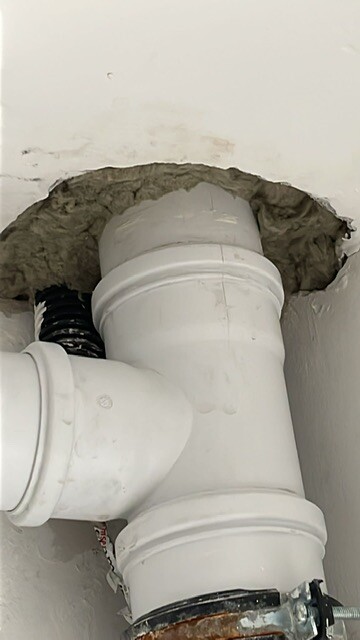
In our house, there is a ceiling opening from the upper floor to the ground floor in an outer corner. The main bathroom is on the upper floor, and the utility room is on the ground floor.
The wastewater pipe from the bathtub and the toilet runs through this opening. Additionally, there is a flexible pipe for a potential future photovoltaic system. The opening is sealed with what I believe is gypsum and painted white in the usual way.
In September, we first noticed water accumulating in the floor of the utility room. This comes through the ceiling opening and runs down the pipe.
Since the house is still under warranty (new house), condensation water was suspected. The roof (hip roof), bathroom, and pipes in the attic were inspected — everything was dry except for the utility room.
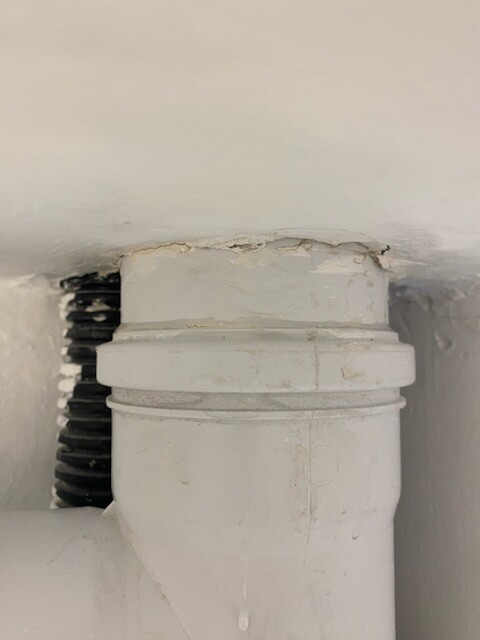
By now, the area with the "gypsum" has become really soft and is starting to develop mold. The assumption is that moisture-laden air is reaching this spot, passes through the gypsum (thermal bridge), comes down, and is pushed from above.
Therefore, today the gypsum was completely removed and the area lined with insulation wool. This reportedly helped in another house.
Coincidentally, today I had a client at my company who runs a plumbing business.
He said that using insulation wool is generally the right approach. However, he would mix Rotband (gypsum plaster) with a product called Fit and re-plaster the area. Fit to make the plaster no longer vapor-permeable. He would do this to prevent moisture from reaching the insulation wool in the first place.
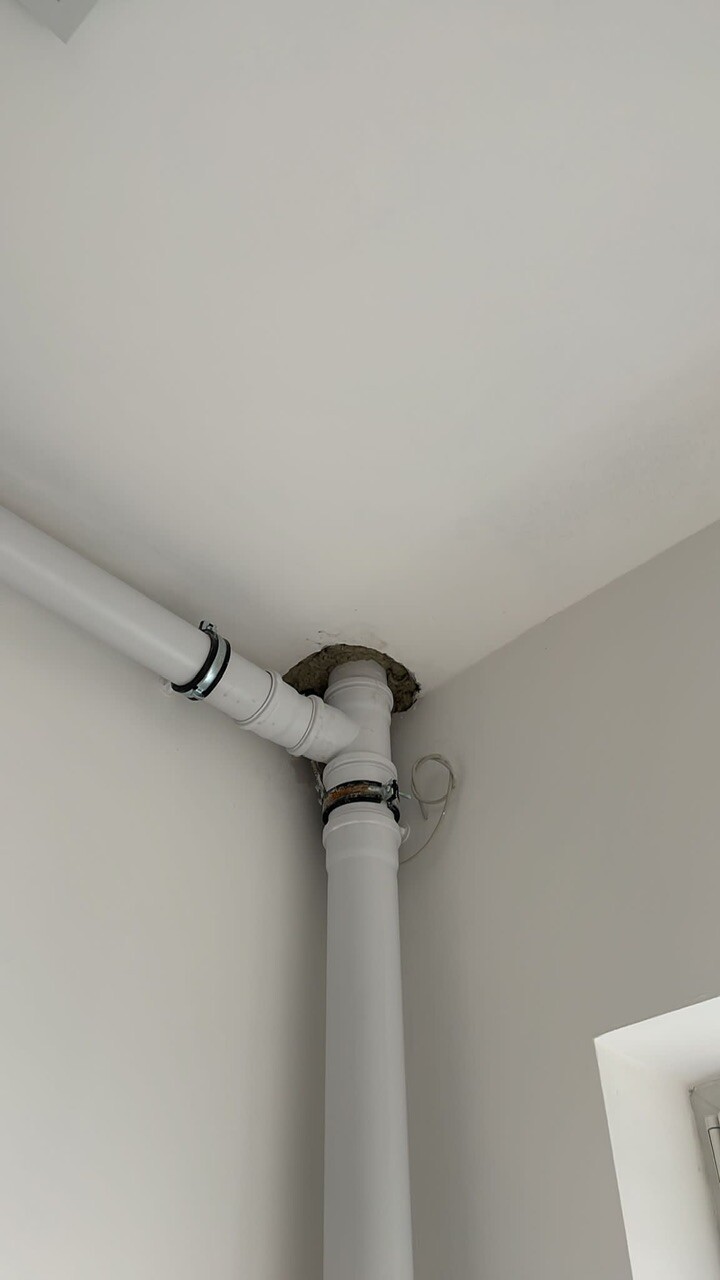
What do you think? What can be done? If the insulation wool helps, that is already good. But it also looks quite bad, because now you can see the insulation wool in the ceiling.
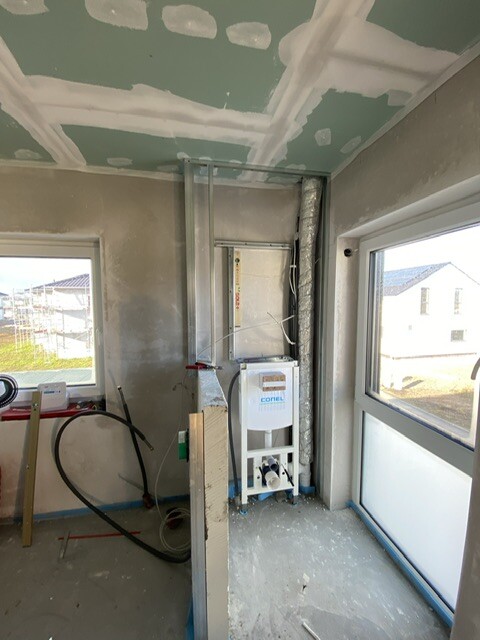
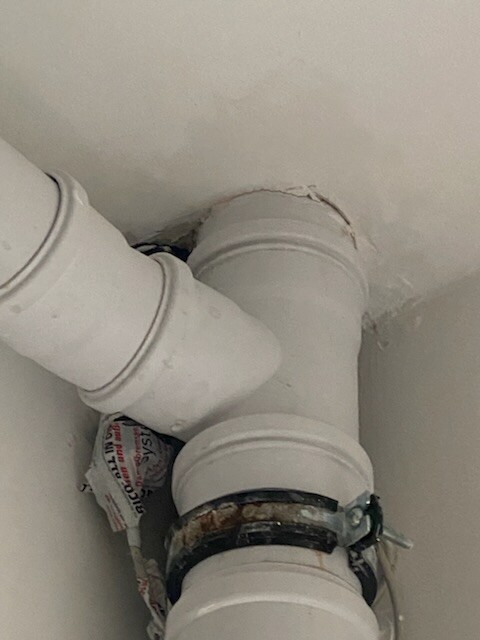
Attached are some pictures, first from the bathroom above the utility room, then from the utility room itself, showing the pipe…
Thank you very much for your help
I hope I'm in the right subforum and that you might be able to help me.
In our house, there is a ceiling opening from the upper floor to the ground floor in an outer corner. The main bathroom is on the upper floor, and the utility room is on the ground floor.
The wastewater pipe from the bathtub and the toilet runs through this opening. Additionally, there is a flexible pipe for a potential future photovoltaic system. The opening is sealed with what I believe is gypsum and painted white in the usual way.
In September, we first noticed water accumulating in the floor of the utility room. This comes through the ceiling opening and runs down the pipe.
Since the house is still under warranty (new house), condensation water was suspected. The roof (hip roof), bathroom, and pipes in the attic were inspected — everything was dry except for the utility room.
By now, the area with the "gypsum" has become really soft and is starting to develop mold. The assumption is that moisture-laden air is reaching this spot, passes through the gypsum (thermal bridge), comes down, and is pushed from above.
Therefore, today the gypsum was completely removed and the area lined with insulation wool. This reportedly helped in another house.
Coincidentally, today I had a client at my company who runs a plumbing business.
He said that using insulation wool is generally the right approach. However, he would mix Rotband (gypsum plaster) with a product called Fit and re-plaster the area. Fit to make the plaster no longer vapor-permeable. He would do this to prevent moisture from reaching the insulation wool in the first place.
What do you think? What can be done? If the insulation wool helps, that is already good. But it also looks quite bad, because now you can see the insulation wool in the ceiling.
Attached are some pictures, first from the bathroom above the utility room, then from the utility room itself, showing the pipe…
Thank you very much for your help
C
Coletrickle_78088 Nov 2022 08:04Yes, newly built or commissioned. He is also taking care of it. I just want to help, partly to possibly prevent having to break open the bathroom.
The crucial question is whether it is condensation forming somewhere or if there is a leak somewhere, for example, a displaced seal.
We only noticed the phenomenon in autumn. On the other hand, the top clamp is so heavily rusted that it is more likely to be the case or can be the cause.
The crucial question is whether it is condensation forming somewhere or if there is a leak somewhere, for example, a displaced seal.
We only noticed the phenomenon in autumn. On the other hand, the top clamp is so heavily rusted that it is more likely to be the case or can be the cause.