
ᐅ General contractor’s estimate vs. final invoice – a nightmare
Created on: 8 Dec 2021 21:41
W
Wurzelxquadrat
Hi everyone,
I’d like to ask for your advice because my general contractor (GC) is really testing my patience—and my budget 🙂
After the price lock period ended, the GC submitted a change order with significant, partly understandable, cost increases.
OK, under pressure, we agreed to a 15% extra cost.
Then, shortly before the start of the excavation work, we were informed that additional excavation was necessary based on the soil survey report.
OK, the wound was still fresh, so we agreed to an additional 14,000 € (about 15,500 USD).
And now we have the problem:
The offer is basically structured as follows:
Item 1) 100 m³ (130 cubic yards) of foundation cushion fill with MG FS 0/45 as a base for the construction of the terrace, at a price of €59.60 (about $65) per m³ = €5,960 (about $6,500)
Item 2) 50 m³ (65 cubic yards) of foundation cushion fill with MG FS 0/45 as a base for the construction of the driveway, at a price of €59.60 (about $65) per m³ = €2,980 (about $3,250)
and so on, each with the note: Billing based on weighbridge tickets at 2t/m³ (2 tons per cubic meter)
However, in the invoice, he charges:
Item 1) 115 m³ (150 cubic yards) × €59.60
Item 2) 60 m³ (78 cubic yards) × €59.60
and refers to the fact that more material was delivered, which is also reflected in the weighbridge tickets.
So, he ultimately dug deeper and wider, used more material, and charges me accordingly.
Since this way of making money rubs me the wrong way, I have of course disputed the invoice.
In my opinion, it is the GC’s responsibility to perform a proper measurement and then submit an offer accordingly.
Alternatively, he could provide a quote for supplying the frost protection layer on a “per ton” basis.
Of course, the note is included, but to me, there are too many variables in this offer.
Basically, he can now calculate whatever he likes, no matter how much he actually installs.
What is your opinion on this case?
Am I mistaken here? Do I have to accept this?
Thanks in advance for your feedback.
Best regards,
x
I’d like to ask for your advice because my general contractor (GC) is really testing my patience—and my budget 🙂
After the price lock period ended, the GC submitted a change order with significant, partly understandable, cost increases.
OK, under pressure, we agreed to a 15% extra cost.
Then, shortly before the start of the excavation work, we were informed that additional excavation was necessary based on the soil survey report.
OK, the wound was still fresh, so we agreed to an additional 14,000 € (about 15,500 USD).
And now we have the problem:
The offer is basically structured as follows:
Item 1) 100 m³ (130 cubic yards) of foundation cushion fill with MG FS 0/45 as a base for the construction of the terrace, at a price of €59.60 (about $65) per m³ = €5,960 (about $6,500)
Item 2) 50 m³ (65 cubic yards) of foundation cushion fill with MG FS 0/45 as a base for the construction of the driveway, at a price of €59.60 (about $65) per m³ = €2,980 (about $3,250)
and so on, each with the note: Billing based on weighbridge tickets at 2t/m³ (2 tons per cubic meter)
However, in the invoice, he charges:
Item 1) 115 m³ (150 cubic yards) × €59.60
Item 2) 60 m³ (78 cubic yards) × €59.60
and refers to the fact that more material was delivered, which is also reflected in the weighbridge tickets.
So, he ultimately dug deeper and wider, used more material, and charges me accordingly.
Since this way of making money rubs me the wrong way, I have of course disputed the invoice.
In my opinion, it is the GC’s responsibility to perform a proper measurement and then submit an offer accordingly.
Alternatively, he could provide a quote for supplying the frost protection layer on a “per ton” basis.
Of course, the note is included, but to me, there are too many variables in this offer.
Basically, he can now calculate whatever he likes, no matter how much he actually installs.
What is your opinion on this case?
Am I mistaken here? Do I have to accept this?
Thanks in advance for your feedback.
Best regards,
x
H
Hausbautraum209 Dec 2021 12:47During our earthworks, the initial estimates were lower than the actual amounts needed. The same applied for the neighbors and also for the landscaping. Contractors often tend to estimate slightly smaller quantities to keep the quoted price lower. However, in the end, you will still have to pay for the actual volume of work carried out, unless you can prove that the excavation was unnecessarily excessive in width or depth.

Hausbautraum20 schrieb:
Contractors often tend to estimate a lower quantity to keep the bid price more competitive. Secondly, the contractor did not underestimate in this case; he is not responsible for the recommendation from the geotechnical engineer. And first of all, a contractor is only required to make an estimate if the client does not provide properly measured quantities in the tender documents.
https://www.instagram.com/11antgmxde/
https://www.linkedin.com/company/bauen-jetzt/
T
Trademark9 Dec 2021 14:3611ant schrieb:
2) The geotechnical engineer then recommended excavating deeper and adding more material. Additional costs only arose here and nowhere else – the contractor’s price in the final invoice exactly matches the amount quoted in the offer. The contractor had to haul not 300, but 350 tons. Each time, the truck drove to the gravel pit empty. The truck is weighed upon entry and again upon exit. This does not happen on Baleks’ scale – every year, an official from the calibration authority comes to verify that the scale is still accurate. The weighing slips are electronic receipts like those from emissions testing, even showing the inspection number of the latest calibration. Everything is transparent and verifiable.
3) You can’t load 350 tons onto the truck in one trip. On site, the construction workers measured after each delivery and layered compaction, instructing the driver to load only about half full on the eighteenth trip. If I understood the original poster correctly, the general contractor’s offer came after the geotechnical engineer’s recommendation. Still, I believe that some deviations naturally occur despite experience, as you described in point 3.
Or would you change your opinion if the offer had only been made after the report was already available?
Trademark schrieb:
If I understood the thread starter correctly, the general contractor’s offer came after the recommendation from the geotechnical engineer. Nevertheless, I think that certain deviations simply occur despite experience, which corresponds to what you describe in point 3. The "experience" is reflected here in the two tons that are supposed to produce one cubic meter when installed, and "deviations" occur in connection with the grading (the distribution of particle sizes in the mix). Variations caused by whether Stefan or Michael compacts today should be minimal.
Trademark schrieb:
Or would you change your opinion if the offer was made only after the report was available? However: for an offer made after the expert recommendation is available, the corresponding quantities should be included in the offered amount.
https://www.instagram.com/11antgmxde/
https://www.linkedin.com/company/bauen-jetzt/
W
Wurzelxquadrat9 Dec 2021 22:53Hello everyone,
That’s exactly how it was.
I requested a quote for the additional foundation work that was deemed necessary according to the geotechnical report.
I then placed the order for it.
NO ONE asked to dig deeper or wider. Apparently, the subcontractor of the general contractor decided that was necessary, and now the general contractor is charging me for it.
As a result, the cubic meters calculated in the initial offer do not match the invoice because the length and width of the excavation are smaller in the offer. By the way, I did not provide the dimensions for the offer.
The general contractor determined those themselves.
Meanwhile, he even adjusted the new invoice by changing the units from cubic meters (m³) to tons (t).
Best regards
x
If I understood the original poster correctly, the general contractor’s offer came after the recommendation of the geotechnical engineer.
That’s exactly how it was.
I requested a quote for the additional foundation work that was deemed necessary according to the geotechnical report.
I then placed the order for it.
NO ONE asked to dig deeper or wider. Apparently, the subcontractor of the general contractor decided that was necessary, and now the general contractor is charging me for it.
As a result, the cubic meters calculated in the initial offer do not match the invoice because the length and width of the excavation are smaller in the offer. By the way, I did not provide the dimensions for the offer.
The general contractor determined those themselves.
Meanwhile, he even adjusted the new invoice by changing the units from cubic meters (m³) to tons (t).
Best regards
x
H
hampshire9 Dec 2021 23:37You have the choice of how to approach this. Do you have photos and an explanation, or do you still have to assume?
Based on my experience with civil engineering and geotechnical surveys involving multiple boreholes, even the report cannot provide absolute certainty—and it never can if you think about it. The soil conditions combined with a slope required a deviation from the original plan to safely construct the foundations for our house. Although the additional costs were frustrating, I am glad the deviations were explained to me clearly and I was not contacted for every extra scoop of excavation or chisel work. In the end, I received a clean and well-documented service with accurate billing.
A complex situation on several levels…
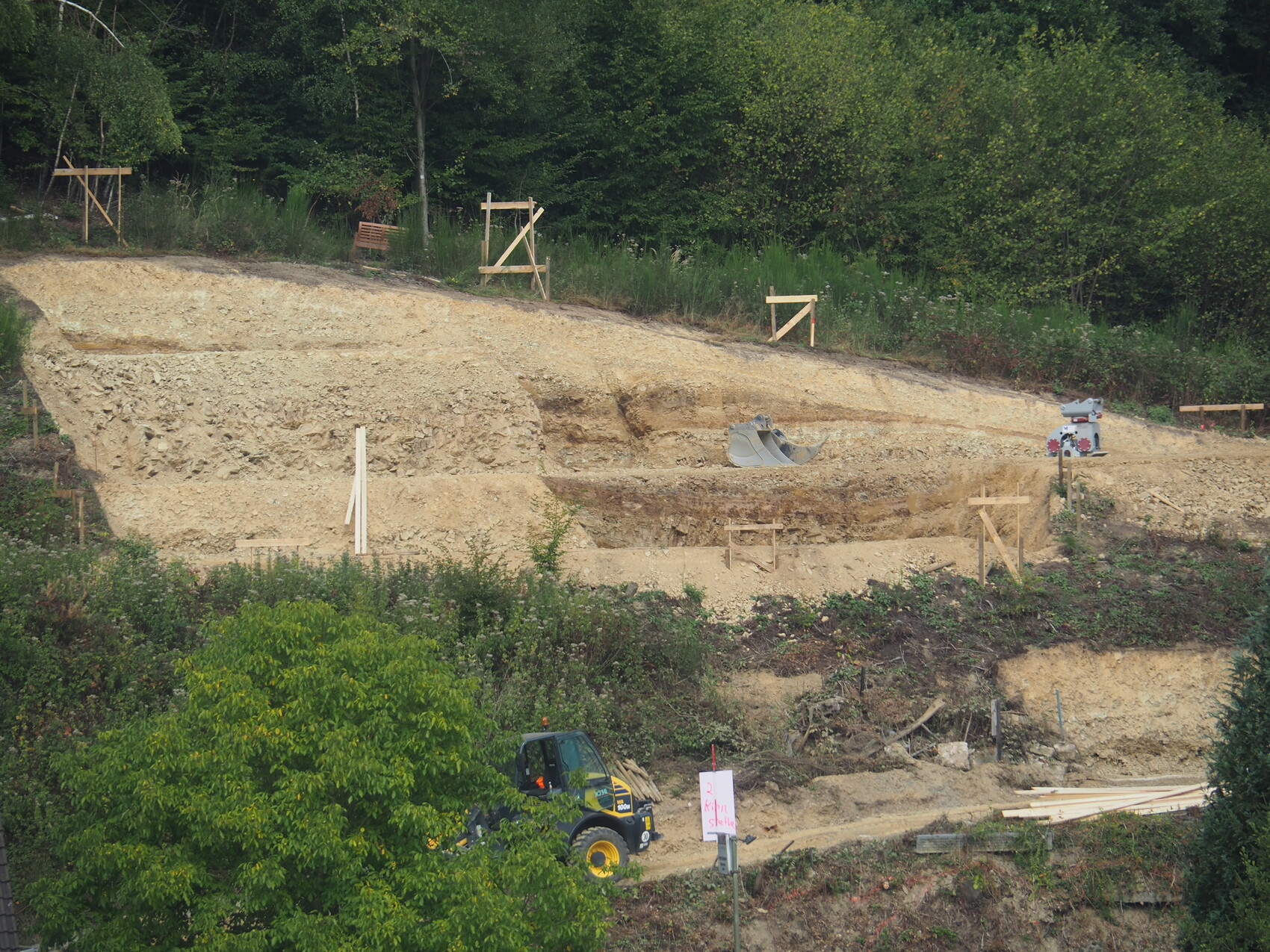
This is tough going for the excavator; this is what soil class 7 can look like.
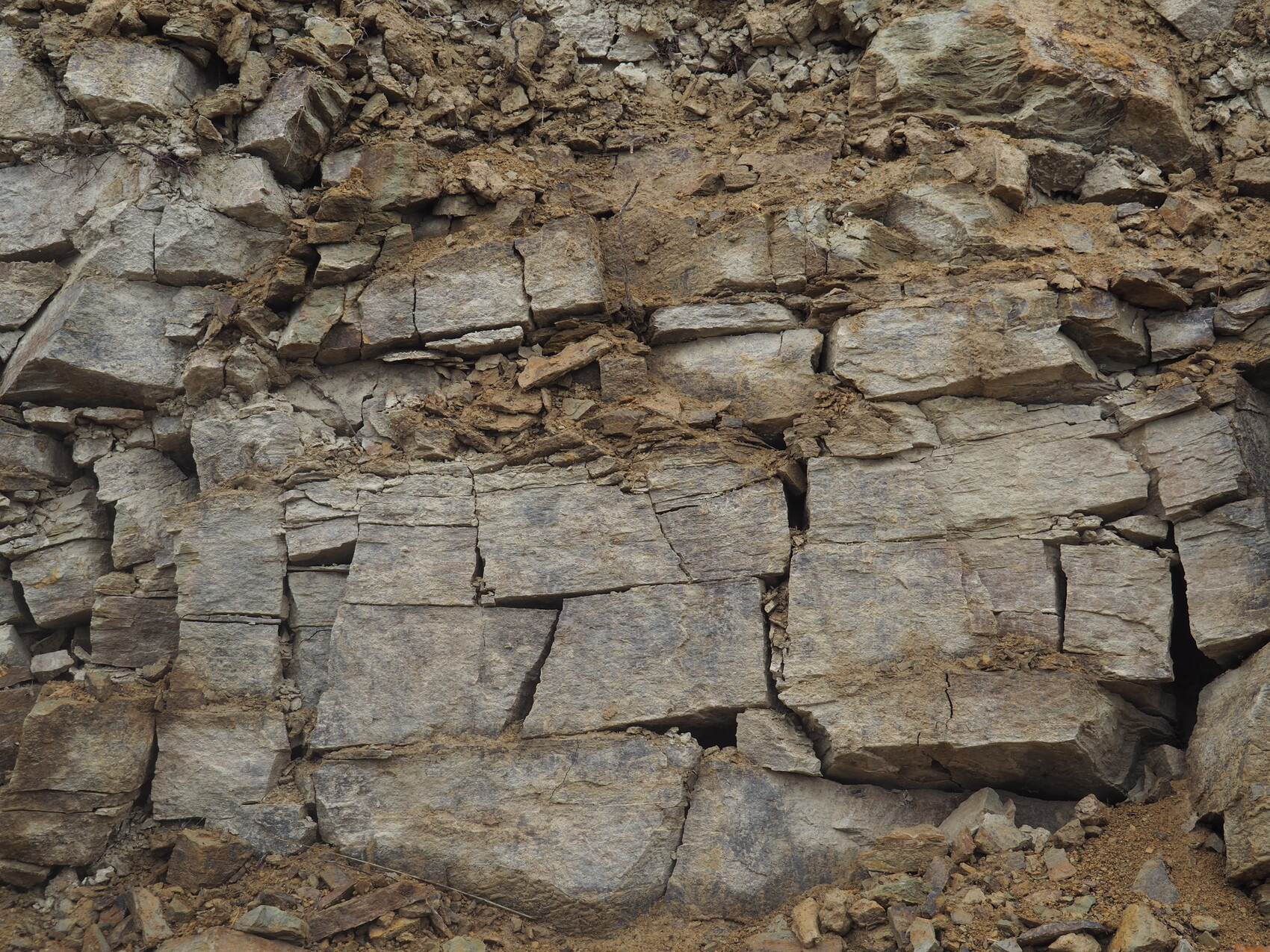
The ground is heavily chiselled solid rock, which the geotechnical engineer did not find but did not rule out.

Based on my experience with civil engineering and geotechnical surveys involving multiple boreholes, even the report cannot provide absolute certainty—and it never can if you think about it. The soil conditions combined with a slope required a deviation from the original plan to safely construct the foundations for our house. Although the additional costs were frustrating, I am glad the deviations were explained to me clearly and I was not contacted for every extra scoop of excavation or chisel work. In the end, I received a clean and well-documented service with accurate billing.
A complex situation on several levels…
This is tough going for the excavator; this is what soil class 7 can look like.
The ground is heavily chiselled solid rock, which the geotechnical engineer did not find but did not rule out.