
ᐅ Columns above windows and front door – Which material to use?
Created on: 25 Jul 2017 08:33
B
Benebrue
Good morning everyone,
First, we would like to briefly explain our situation. Since June 2017, we have been living in our single-family house in the district of Borken, NRW. We had it built as a turnkey project through a developer, and the final inspection is still pending. So far so good, but we have noticed in some places that the work does not always appear to be flawless in our opinion.
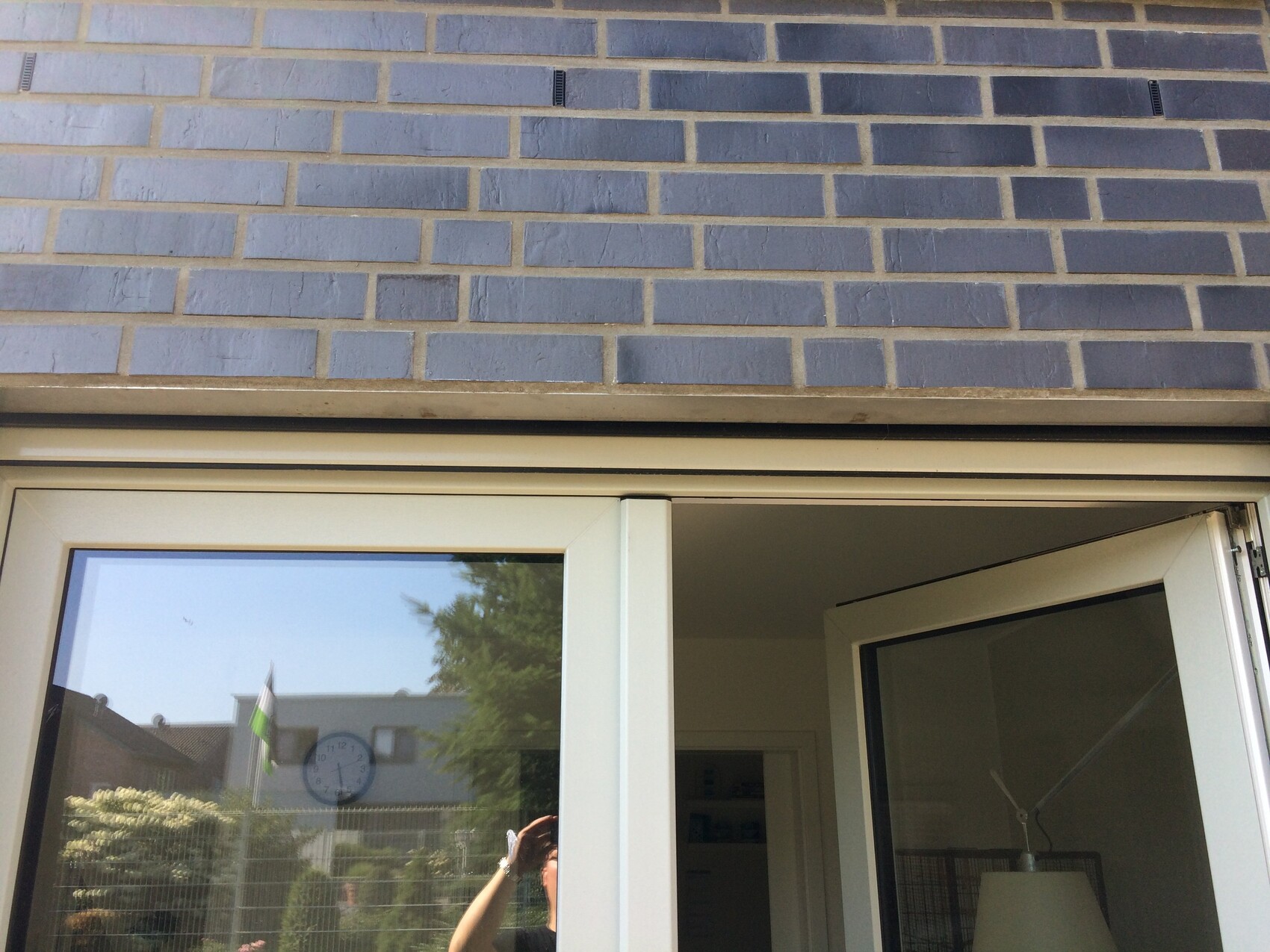
Above the windows and the front door of our house, the facing brickwork is supported by posts or rails anchored in the floor slab. Overall this is basically fine, except for the following points:

Thank you very much for your help and best regards.
Benedikt
First, we would like to briefly explain our situation. Since June 2017, we have been living in our single-family house in the district of Borken, NRW. We had it built as a turnkey project through a developer, and the final inspection is still pending. So far so good, but we have noticed in some places that the work does not always appear to be flawless in our opinion.
Above the windows and the front door of our house, the facing brickwork is supported by posts or rails anchored in the floor slab. Overall this is basically fine, except for the following points:
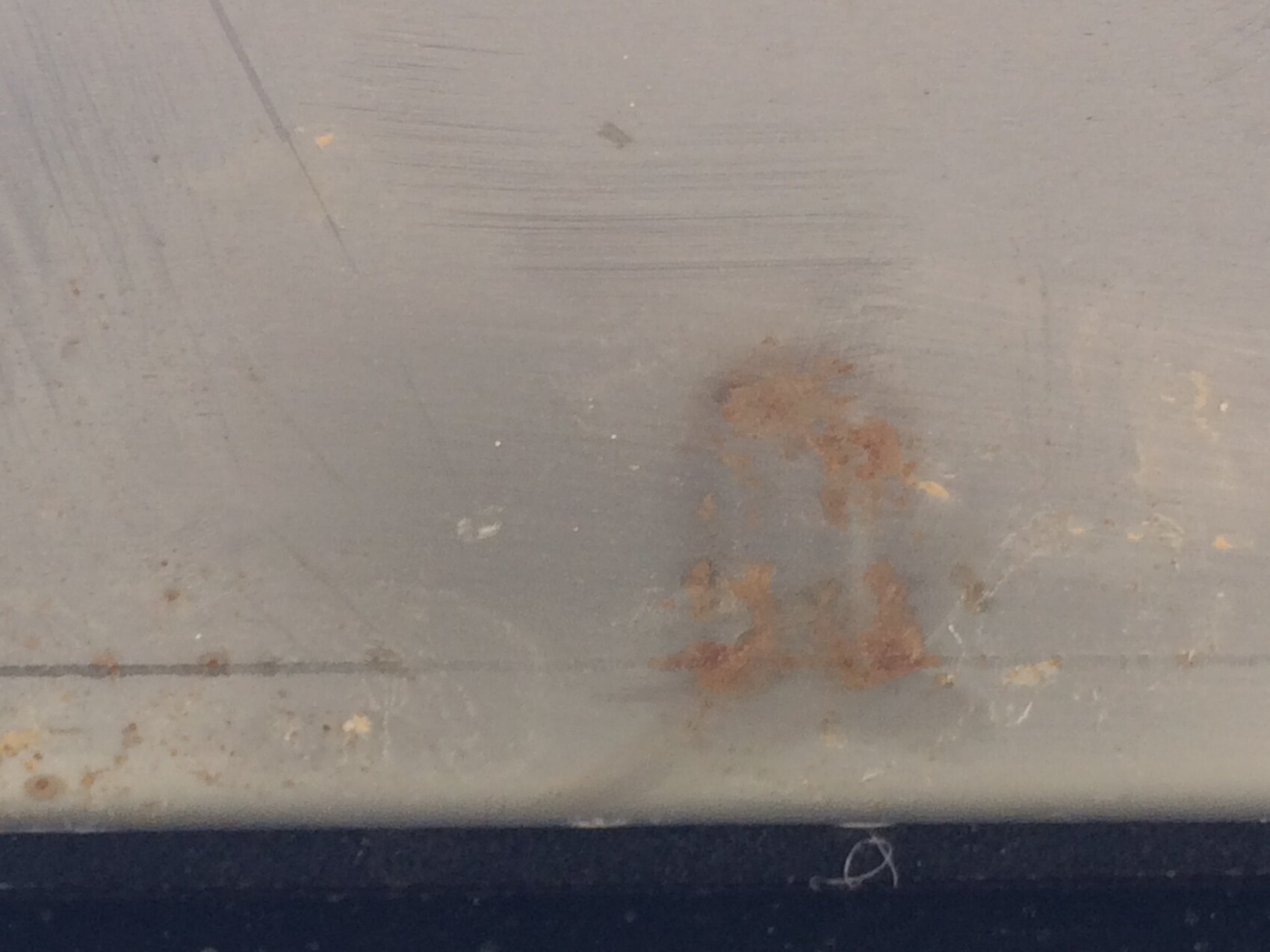
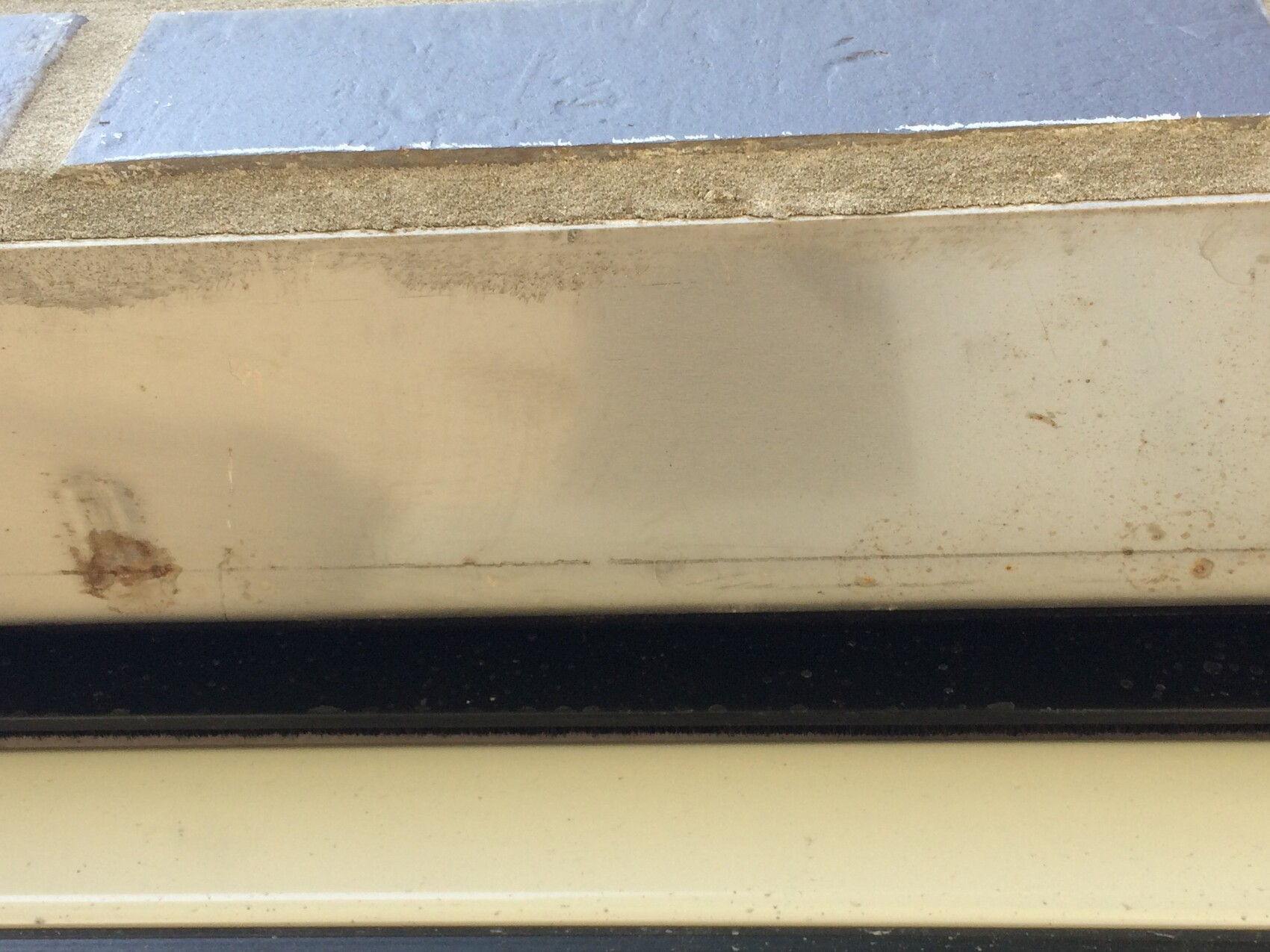
- The posts used are rusting, although according to the developer they are supposed to be stainless steel (V2A).
- The installed strips are 3mm (1/8 inch) thick and are not magnetic.
- The weld seams where the brackets are welded can be clearly seen through the strip – and this is exactly where the strips are rusting.
- A total of 19 of these elements have been installed.
- In the neighborhood, much more solid, thicker posts are used. Also, the color of the posts installed elsewhere looks more like stainless steel and simply of higher quality.
Thank you very much for your help and best regards.
Benedikt
This is V2A, but unpolished. People often say V2A is stainless steel. Well, to put it this way, it is largely stainless, but if the surface is rough, it can develop surface rust. Harmless, but not perfect aesthetically. The better material is V4A. Whether you need that for your house is another question. After all, we’re not talking about handrails on fishing boats here.
If you want a perfect appearance, you can improve it by getting Unipol and a cotton polishing wheel for a drill, then go for it.
Or you just accept it as it is and sit on the terrace. Karsten
If you want a perfect appearance, you can improve it by getting Unipol and a cotton polishing wheel for a drill, then go for it.
Or you just accept it as it is and sit on the terrace. Karsten
Hello Nordlys,
thank you for your quick response. Well, the option with the cotton polishing pad is a good idea. I hadn’t heard of Unipol before, but it sounds very promising. It definitely improves the appearance quite a bit. Do you think it’s advisable to treat the surface in another way beforehand?
These are just small details in the house that you start to notice when living in it – guests hardly noticed them so far.
We were just surprised that the material is so light in color and thin. Hopefully, its durability will still hold up after the five-year warranty period, and the masonry above won’t settle... Cracks would be unfortunate.
Best regards,
Benedikt
thank you for your quick response. Well, the option with the cotton polishing pad is a good idea. I hadn’t heard of Unipol before, but it sounds very promising. It definitely improves the appearance quite a bit. Do you think it’s advisable to treat the surface in another way beforehand?
These are just small details in the house that you start to notice when living in it – guests hardly noticed them so far.
We were just surprised that the material is so light in color and thin. Hopefully, its durability will still hold up after the five-year warranty period, and the masonry above won’t settle... Cracks would be unfortunate.
Best regards,
Benedikt
No, if using Unipol, apply it directly—don’t use anything beforehand. Unipol is really strong.
Well, you can lightly sand off the surface rust first with 600-grit wet sandpaper. That makes Unipol work faster.
We use it to polish bronze ship propellers to a high shine. They then look like gold, after that we apply winch grease—and they hardly get fouled anymore. Karsten
Well, you can lightly sand off the surface rust first with 600-grit wet sandpaper. That makes Unipol work faster.
We use it to polish bronze ship propellers to a high shine. They then look like gold, after that we apply winch grease—and they hardly get fouled anymore. Karsten
K
Knallkörper25 Jul 2017 11:26Hello,
1. The weld seams were not executed properly, and the post-treatment was insufficient. The seams are rusting because they were not polished or pickled after welding. If you want to be thorough, ask the contractor to show you the so-called Welding Procedure Specification (WPS). It must define how the weld seams should be treated afterward. You can polish the visible side, but not the top side anymore.
2. Is the 3 mm (1/8 inch) sheet metal really supposed to be load-bearing? I find that hard to believe... Have you ever placed a straightedge or spirit level under the profile? Does it not bend?
1. The weld seams were not executed properly, and the post-treatment was insufficient. The seams are rusting because they were not polished or pickled after welding. If you want to be thorough, ask the contractor to show you the so-called Welding Procedure Specification (WPS). It must define how the weld seams should be treated afterward. You can polish the visible side, but not the top side anymore.
2. Is the 3 mm (1/8 inch) sheet metal really supposed to be load-bearing? I find that hard to believe... Have you ever placed a straightedge or spirit level under the profile? Does it not bend?
Hello Knallkörper,
Regarding point 1)
The thing is, we bought the turnkey house through the developer and have no idea which company actually carried out the work. Unfortunately, we didn’t witness everything. Your suggestion is great and should be easy to present clearly to the developer.
Could you explain why the welds are not proper?
Regarding point 2)
The sheet metal is attached to the floor slab with brackets and is surely resting on the facing brickwork on the sides. We have the feeling that the whole setup is not really secure for the long term. It seems as if it was only built to meet the five-year warranty period. Especially above the garage door, it appears that the strip gives way a bit...
Best regards,
Benedikt
Regarding point 1)
The thing is, we bought the turnkey house through the developer and have no idea which company actually carried out the work. Unfortunately, we didn’t witness everything. Your suggestion is great and should be easy to present clearly to the developer.
Could you explain why the welds are not proper?
Regarding point 2)
The sheet metal is attached to the floor slab with brackets and is surely resting on the facing brickwork on the sides. We have the feeling that the whole setup is not really secure for the long term. It seems as if it was only built to meet the five-year warranty period. Especially above the garage door, it appears that the strip gives way a bit...
Best regards,
Benedikt
Similar topics