
ᐅ Drilling into a waterproof concrete structure (white tank) from the inside?
Created on: 29 Jul 2020 12:09
H
HermanTheGH
HermanTheG29 Jul 2020 12:09Hello experts and other readers!
I have a terraced house with a basement constructed as a waterproof concrete shell ("white tank"), probably in the simplest version, so 200 mm (8 inches) thick. The basement window wells also have drainage. Now, water pipes, cable ducts, grounding bars, etc., from both the heating/water and electrical installers have been attached to the concrete wall through drill holes for anchor bolts. Mistakes like drill holes about 65 mm (2.5 inches) deep have not been sealed. The main connections for water, electricity, and telecommunications also pass through the waterproof concrete shell.
For about a year now, there has been no moisture in the basement. But could issues still arise?
Is this a proper installation practice?
Are holes above the window sill level unproblematic?
Kind regards,
Herman
I have a terraced house with a basement constructed as a waterproof concrete shell ("white tank"), probably in the simplest version, so 200 mm (8 inches) thick. The basement window wells also have drainage. Now, water pipes, cable ducts, grounding bars, etc., from both the heating/water and electrical installers have been attached to the concrete wall through drill holes for anchor bolts. Mistakes like drill holes about 65 mm (2.5 inches) deep have not been sealed. The main connections for water, electricity, and telecommunications also pass through the waterproof concrete shell.
For about a year now, there has been no moisture in the basement. But could issues still arise?
Is this a proper installation practice?
Are holes above the window sill level unproblematic?
Kind regards,
Herman
As far as I know, waterproof concrete (WU concrete) requires a minimum thickness of 24 cm (9.5 inches) for in-situ concrete (foundation slab) and 20 cm (8 inches) for precast elements (likely the walls). You should always ensure these thicknesses. Check your building plan and also the cross-section!
A thickness of 20 cm (8 inches) should always be continuous without any drilling, see the "Cement Data Sheet for Building Construction H 10 5.2019," chapter 4.
For a 25 cm (10 inches) wall thickness and 15 mm (0.6 inches) plaster, drill holes up to 65 mm (2.6 inches) deep would still be acceptable.
The utility connection is probably made as a multi-utility entry, which includes its own sealing system.
A thickness of 20 cm (8 inches) should always be continuous without any drilling, see the "Cement Data Sheet for Building Construction H 10 5.2019," chapter 4.
For a 25 cm (10 inches) wall thickness and 15 mm (0.6 inches) plaster, drill holes up to 65 mm (2.6 inches) deep would still be acceptable.
The utility connection is probably made as a multi-utility entry, which includes its own sealing system.
H
HermanTheG29 Jul 2020 18:27Thanks in advance for the response!
In 2018, I bought from a builder in the Rhein-Main area — a complete seller’s market, so I hardly have any documentation. In the building specification: "... either as a waterproof concrete shell according to the WU guideline or with ..."; the waterproof concrete shell was chosen. According to the building permit / planning permission plans, the basement wall should be 38cm (15 inches), and I have photos from the shell construction phase showing concrete and external insulation but nothing black.
I now measure about 38.5cm (15 inches) through the basement window including exterior and interior plaster. The exterior side is about 13cm (5 inches). I think that is 12cm (5 inches) insulation. That would leave the concrete at almost 24cm (9 inches).
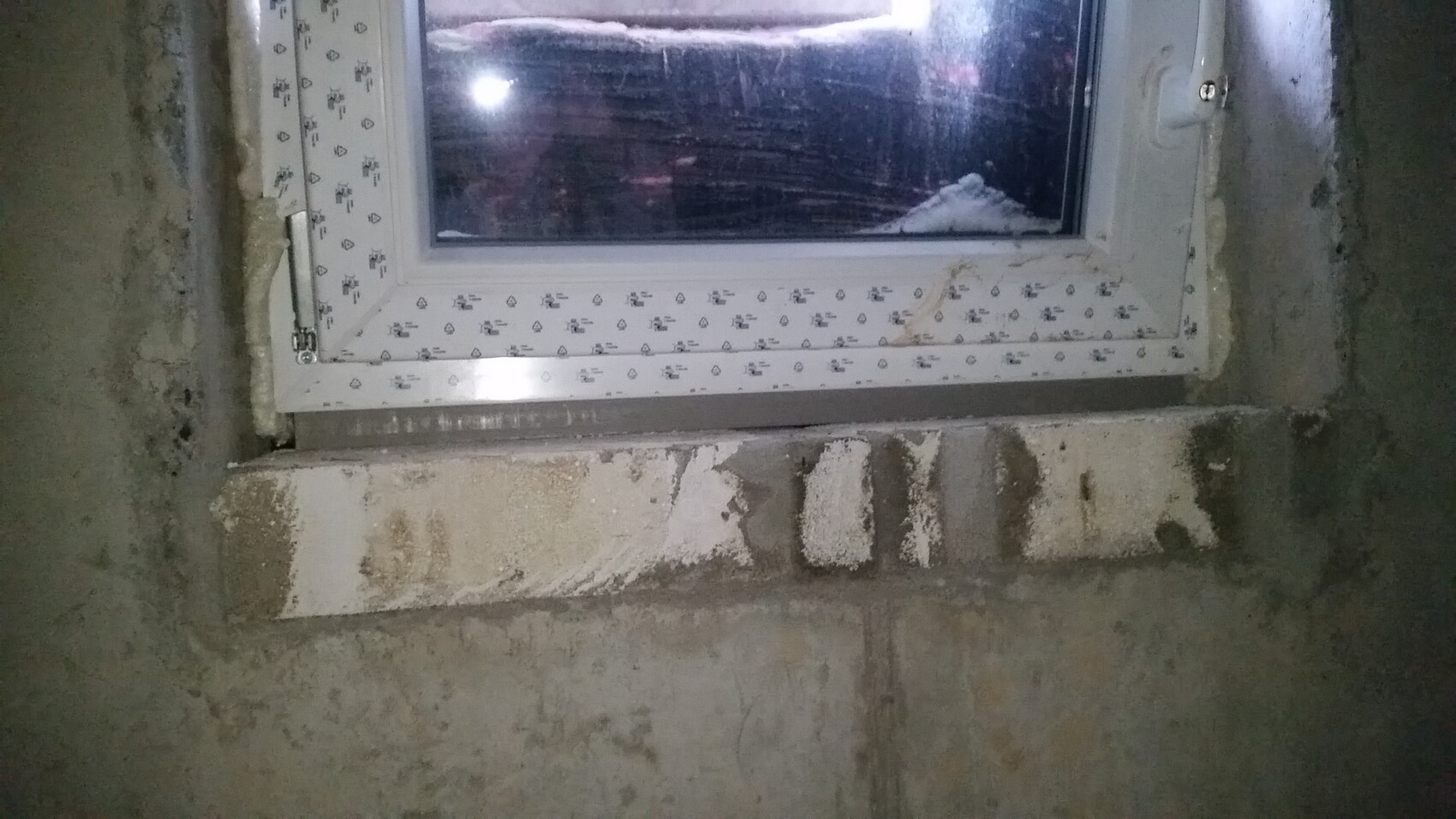
Then the specialists, either the shell builder or the window installer, managed something special — see picture. So below the window, 10cm (4 inches) of bricks were mortared in. The joints of the external insulation were blackened with some kind of sealant. If the plastic light well were properly sealed to the insulation?
In 2018, I bought from a builder in the Rhein-Main area — a complete seller’s market, so I hardly have any documentation. In the building specification: "... either as a waterproof concrete shell according to the WU guideline or with ..."; the waterproof concrete shell was chosen. According to the building permit / planning permission plans, the basement wall should be 38cm (15 inches), and I have photos from the shell construction phase showing concrete and external insulation but nothing black.
I now measure about 38.5cm (15 inches) through the basement window including exterior and interior plaster. The exterior side is about 13cm (5 inches). I think that is 12cm (5 inches) insulation. That would leave the concrete at almost 24cm (9 inches).
Then the specialists, either the shell builder or the window installer, managed something special — see picture. So below the window, 10cm (4 inches) of bricks were mortared in. The joints of the external insulation were blackened with some kind of sealant. If the plastic light well were properly sealed to the insulation?
H
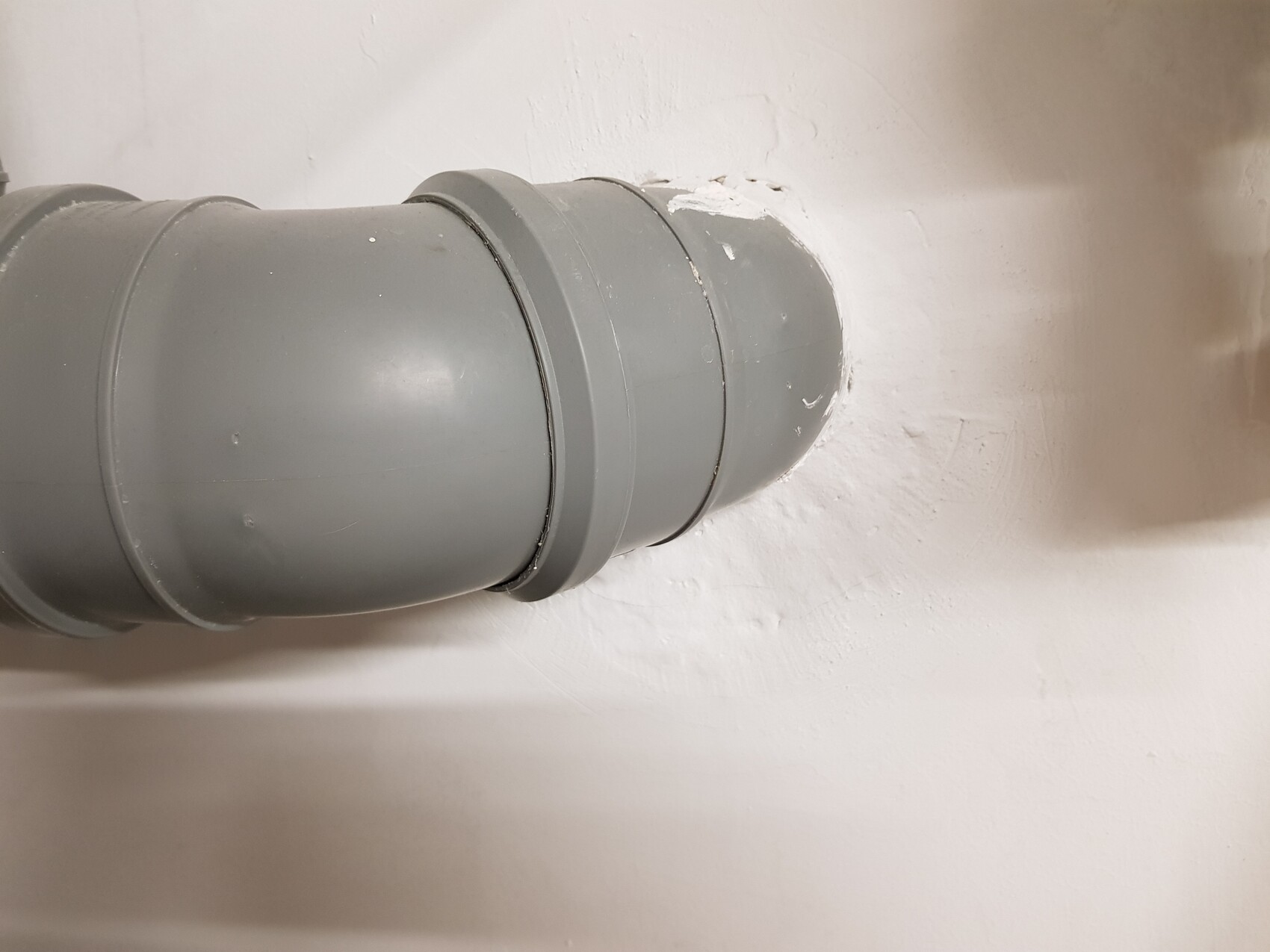
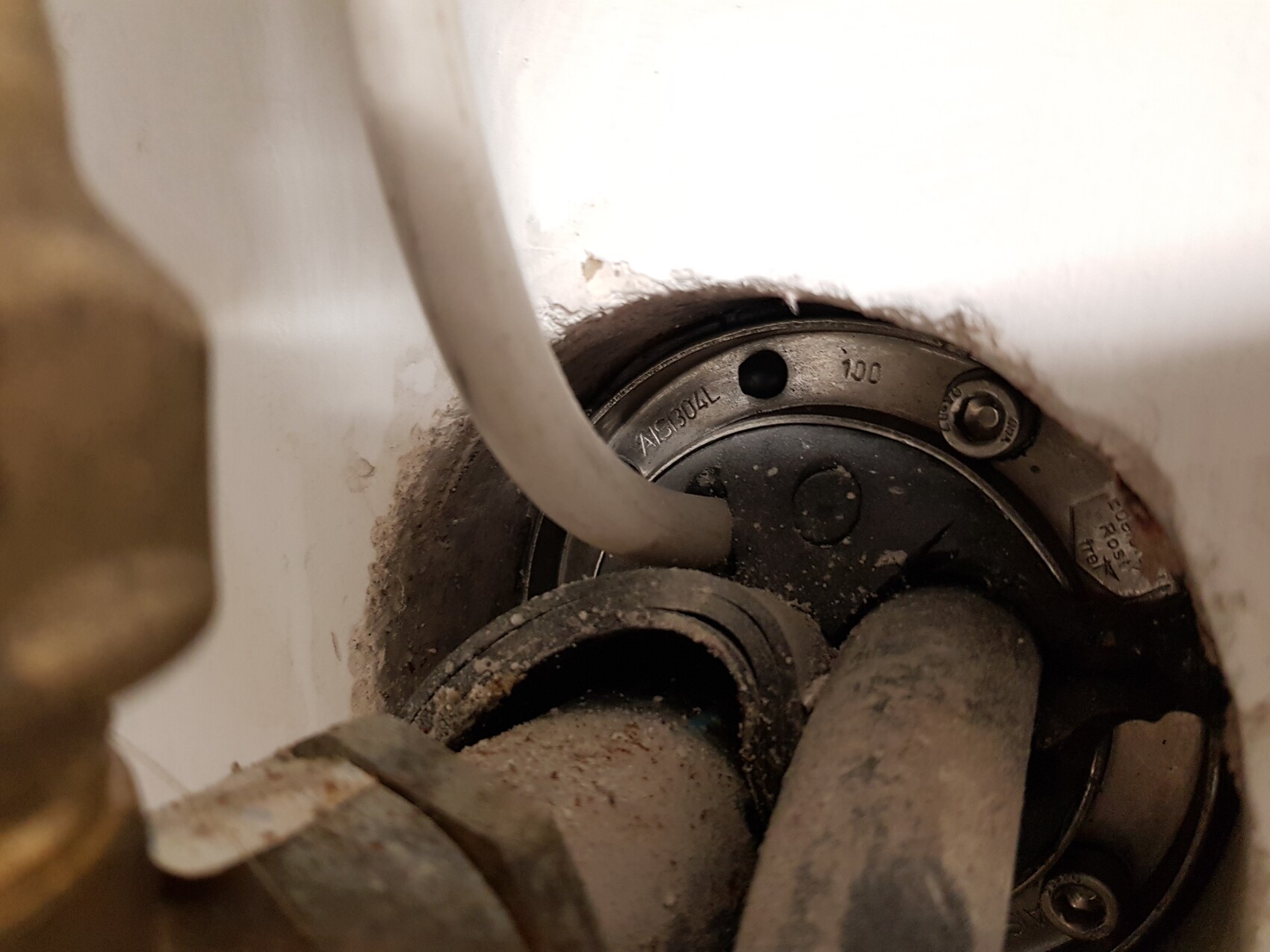
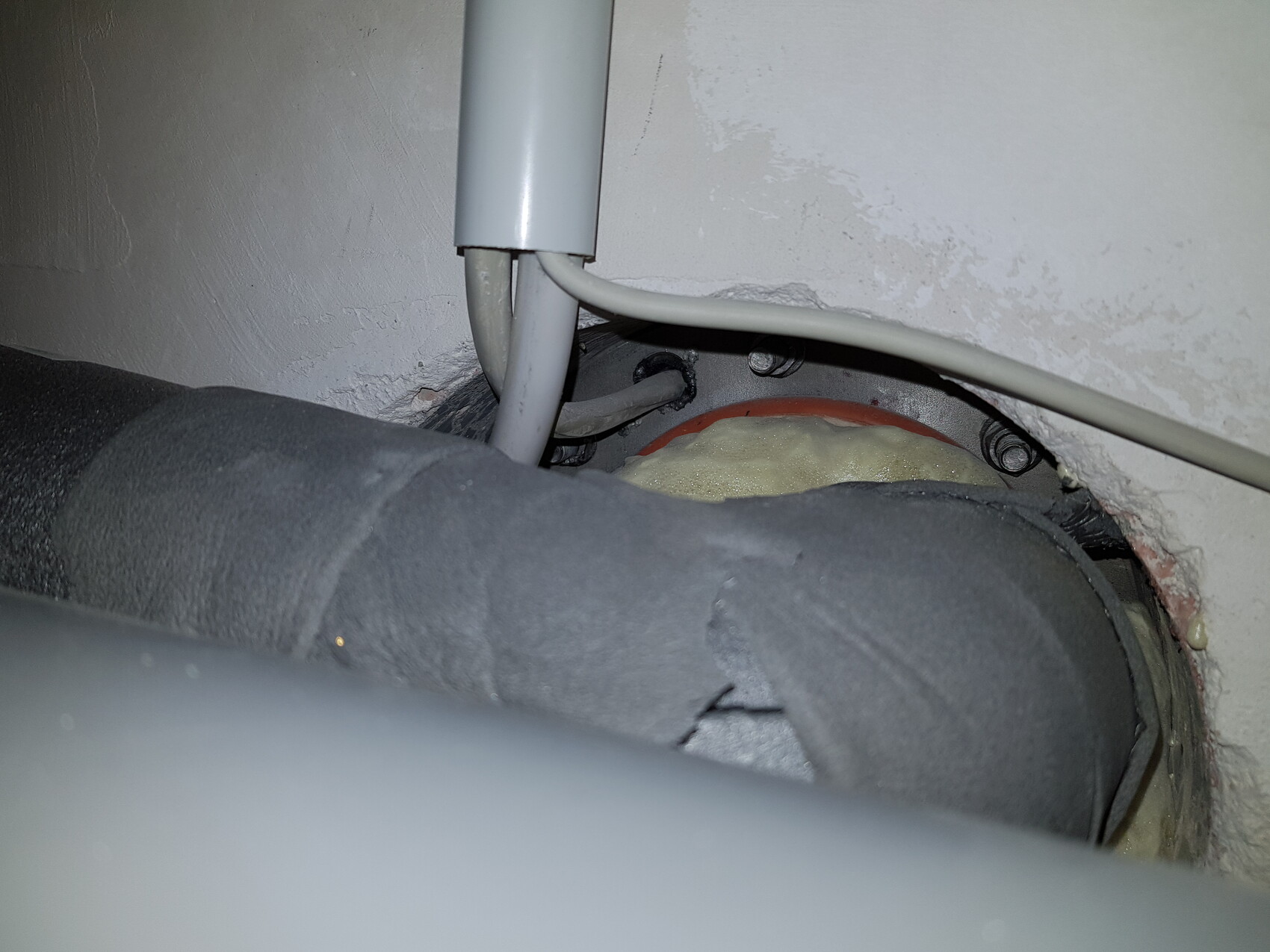
HermanTheG30 Jul 2020 11:59One more question: please see attached for wastewater, water supply, electricity, and heating module inlet/outlet (heat pump). All penetrating the waterproof concrete shell— is this secure?

Similar topics