
Hello everyone,
We have a steel terrace structure on our raised ground floor. There is a 10cm (4 inch) height difference between the steel beams and the top edge of the structure. We would like to install WPC decking here.
Assuming the decking boards are about 2cm (0.8 inch) thick, approximately 8cm (3 inch) of height needs to be "filled" on the substructure above the steel beams.
- What kind of substructure would you recommend for this purpose? So far, I haven’t come across anything with a thickness of 8cm (3 inch).
- What would be the ideal way to fasten this substructure to the steel beams? Using self-drilling screws into the steel beams?
Regards,
N
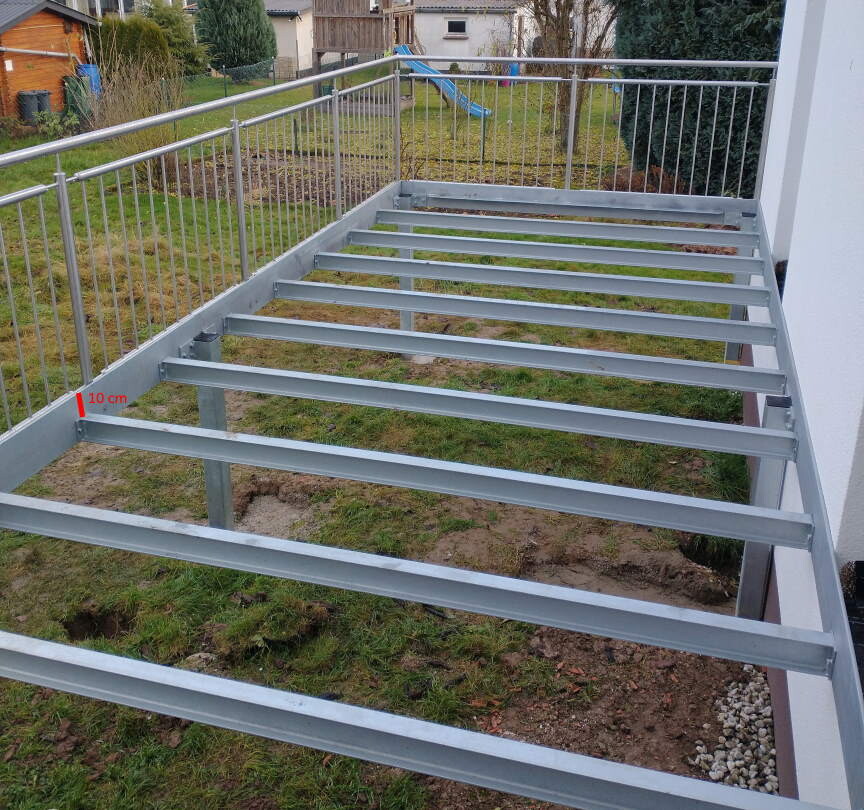
We have a steel terrace structure on our raised ground floor. There is a 10cm (4 inch) height difference between the steel beams and the top edge of the structure. We would like to install WPC decking here.
Assuming the decking boards are about 2cm (0.8 inch) thick, approximately 8cm (3 inch) of height needs to be "filled" on the substructure above the steel beams.
- What kind of substructure would you recommend for this purpose? So far, I haven’t come across anything with a thickness of 8cm (3 inch).
- What would be the ideal way to fasten this substructure to the steel beams? Using self-drilling screws into the steel beams?
Regards,
N
N
Nanopixel25 Apr 2021 15:48First of all, thanks for all your replies, they have already helped me a lot.
Now I have one more question: What do you usually do with door recesses? (visible on the right edge in the photo)
Install WPC flooring there as well, even though there is no proper substructure—so you would have to do some kind of workaround.
Or are there ready-made solutions for this purpose that should be used here?
Regards
N
Now I have one more question: What do you usually do with door recesses? (visible on the right edge in the photo)
Install WPC flooring there as well, even though there is no proper substructure—so you would have to do some kind of workaround.
Or are there ready-made solutions for this purpose that should be used here?
Regards
N

N
Nanopixel25 Apr 2021 22:49I would like to, but how and where am I supposed to fix the substructure there? At least 20 cm (8 inches) deep in the first two door recesses is insulation. Besides, it’s probably best not to drill into this sealing membrane.
The door recess in the third picture is on the old building; directly underneath is solid masonry.
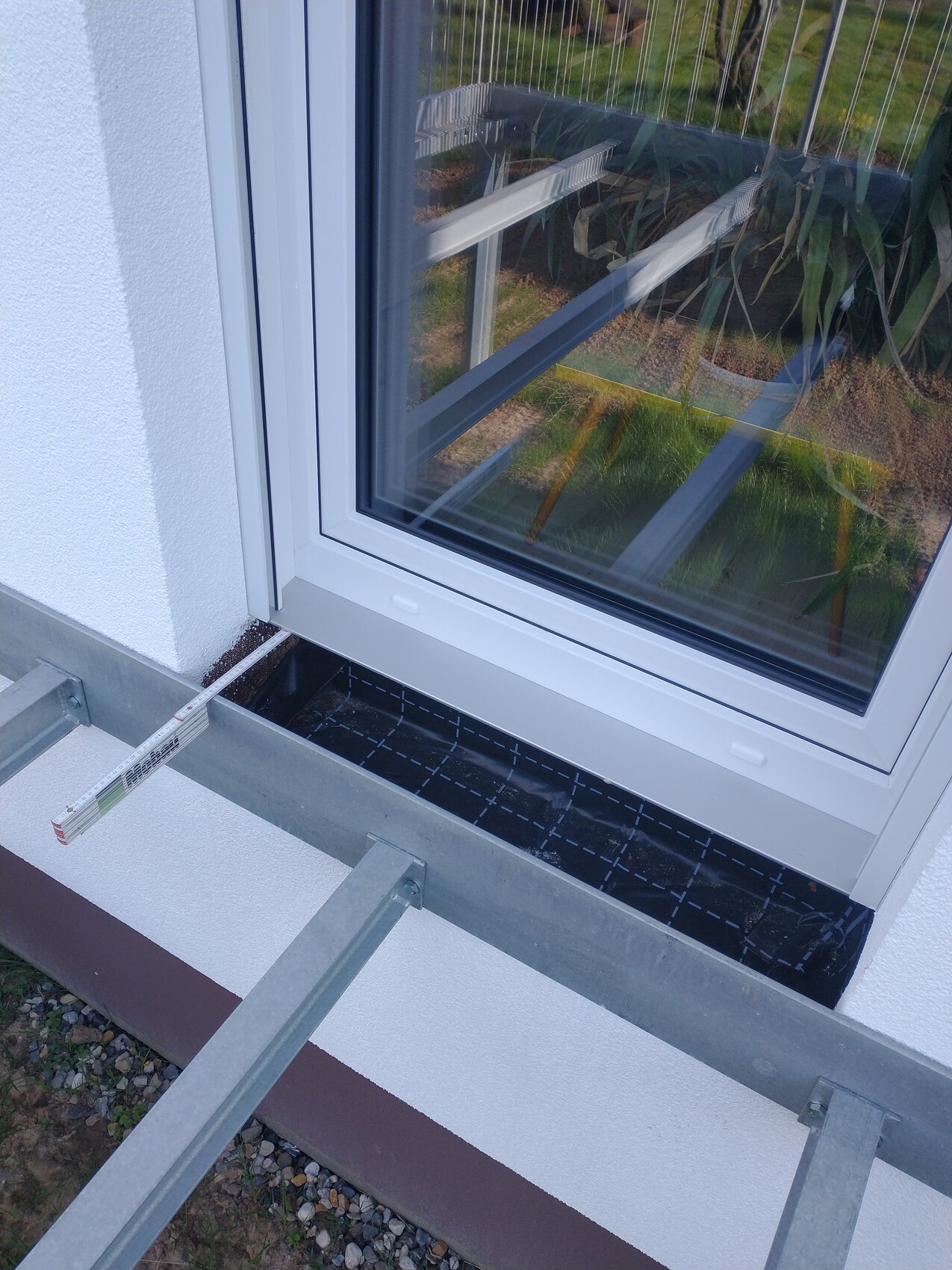
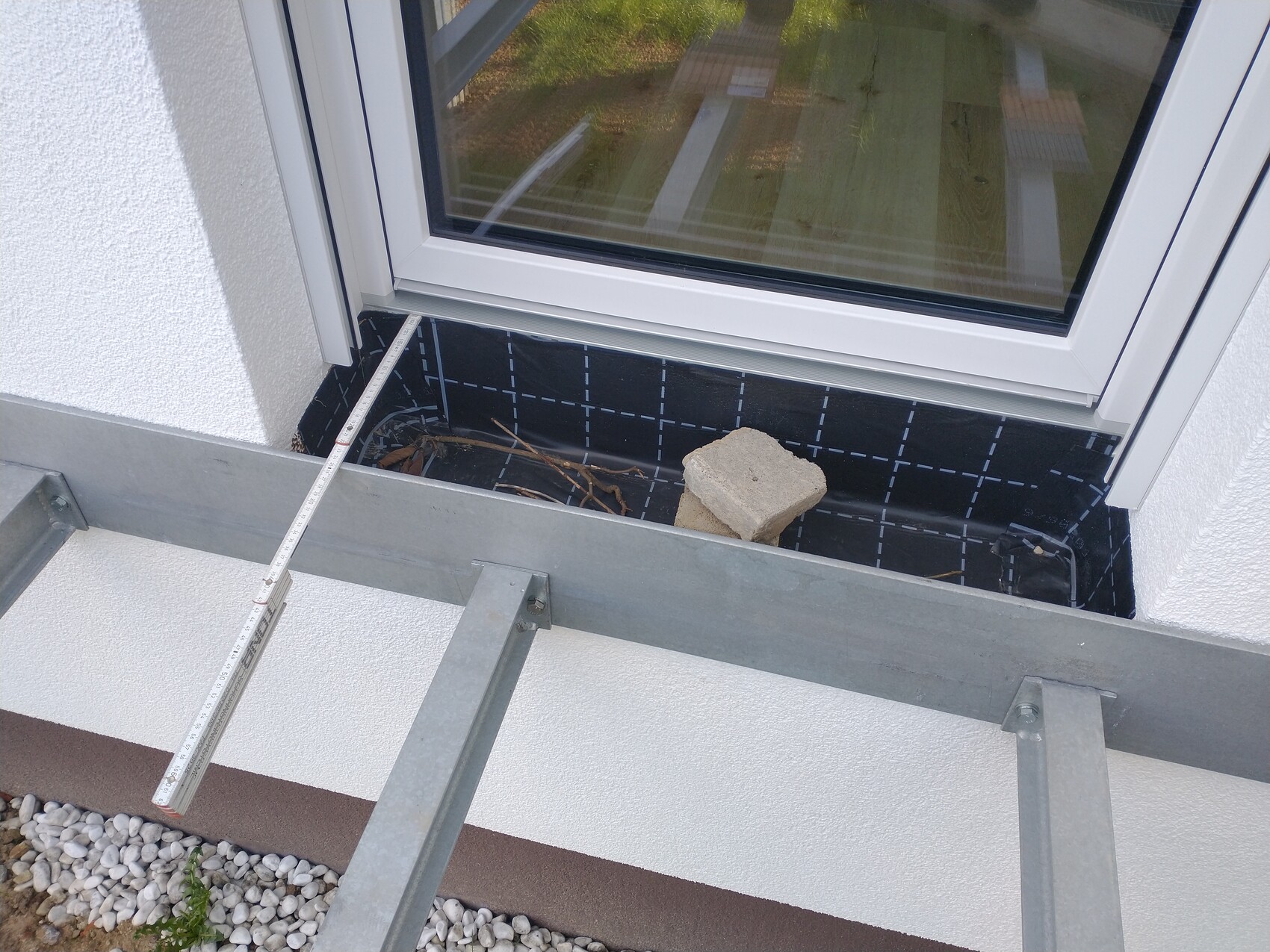
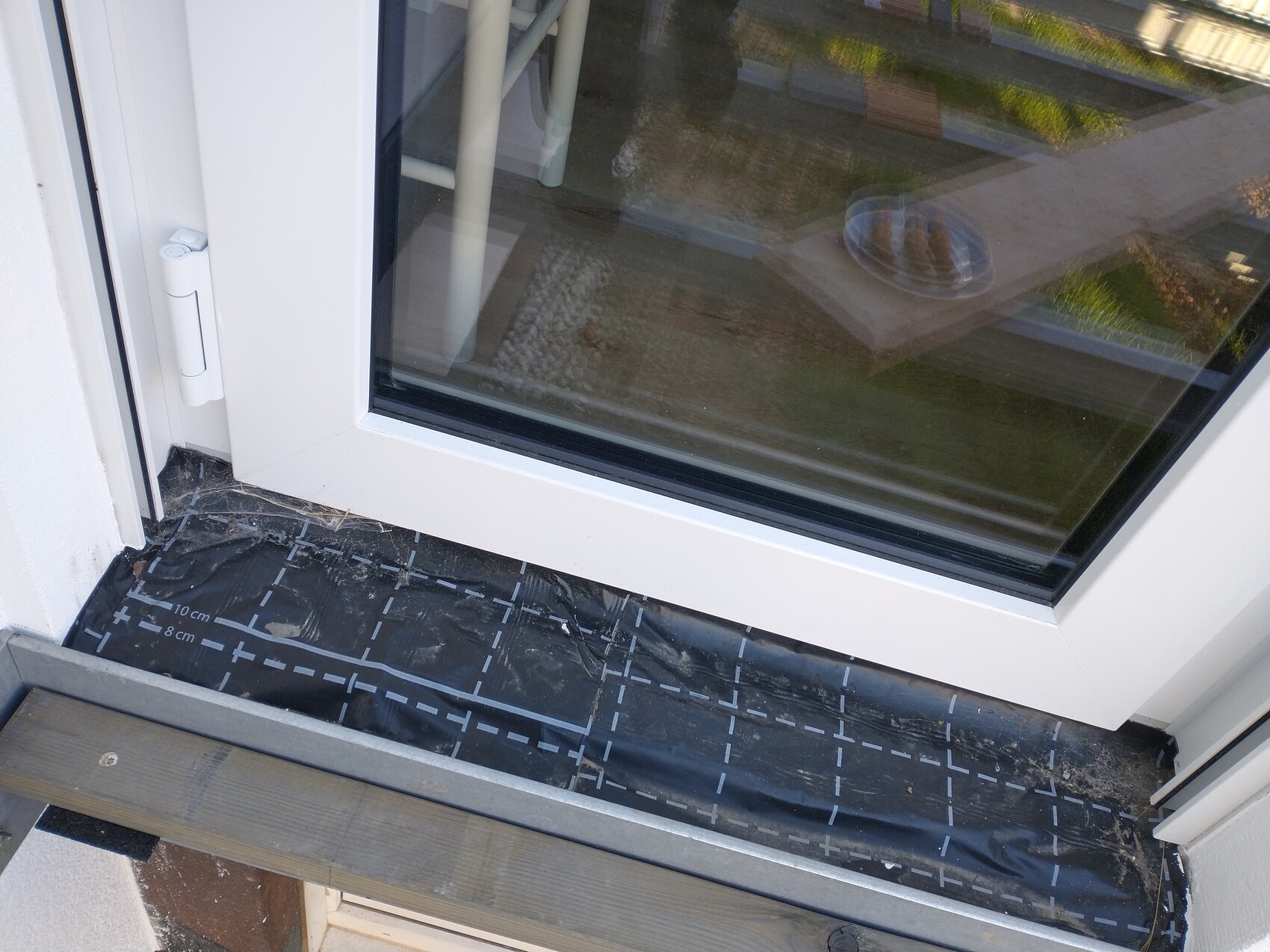
The door recess in the third picture is on the old building; directly underneath is solid masonry.
Do not drill under any circumstances.
Is there drainage for heavy rain directing water away from the terrace and door?
It looks like the decking boards are installed within a frame, creating a step in front of the door?
I would place paving stones (4, 6, 8, or 10cm thick) on the sealing membrane at three points, and then use rubber pads measuring 10x10cm (approximately 4x4 inches) with thicknesses of 1, 3, 5, or 10mm on top of the paving stones to adjust the height and slope.
Cut the step board with a saw and place it loosely with small wedges.
Others might level this board using a mixture with the consistency of damp earth, applied with three trowels and adjusted with a rubber mallet.
Is there drainage for heavy rain directing water away from the terrace and door?
It looks like the decking boards are installed within a frame, creating a step in front of the door?
I would place paving stones (4, 6, 8, or 10cm thick) on the sealing membrane at three points, and then use rubber pads measuring 10x10cm (approximately 4x4 inches) with thicknesses of 1, 3, 5, or 10mm on top of the paving stones to adjust the height and slope.
Cut the step board with a saw and place it loosely with small wedges.
Others might level this board using a mixture with the consistency of damp earth, applied with three trowels and adjusted with a rubber mallet.
N
Nanopixel26 Apr 2021 00:30Drainage? If you mean something like a channel or a drain, there isn’t one. However, that step there has a slope leading outward, and this steel frame does not seal completely, so water can drain behind it.
There is no step: the substructure is built high enough so that the top edge of the decking aligns with the steel frame. I would lay the decking inside the door recess at the same height.
Your suggestion sounds simple but effective. Should the decking in the recess be oriented the same way as the rest? That would mean I have to fit in six short pieces there. Laying the decking widthwise in the door threshold would certainly be easier, but rotated 90° compared to the rest, it would probably look ... problematic.
There is no step: the substructure is built high enough so that the top edge of the decking aligns with the steel frame. I would lay the decking inside the door recess at the same height.
Your suggestion sounds simple but effective. Should the decking in the recess be oriented the same way as the rest? That would mean I have to fit in six short pieces there. Laying the decking widthwise in the door threshold would certainly be easier, but rotated 90° compared to the rest, it would probably look ... problematic.
Nanopixel schrieb:
The substructure is built so high that the top edge of the decking board is flush with the steel frameSo the steel frame will always be visible? Then buy an extra-wide decking board and make the recess from a single piece; that looks intentional.
Or use six small boards, which looks makeshift.
Do not use hollow decking boards, only solid ones.
Similar topics