
ᐅ Countertop with concrete-look finish – applied plaster, not a printed film
Created on: 19 Nov 2023 13:14
L
LostWolfFor my new kitchen, I am considering a concrete countertop. Unfortunately, due to the structural calculations (and probably the load-bearing capacity of the furniture), a solid concrete countertop is not feasible.
My current solution is to use a wooden board (MDF?) and cover it with a concrete-look filler or coating.
Does anyone have experience with how durable and sensitive this kind of surface is? And can anyone recommend a suitable product?
Attached is a rough idea of what I have in mind.
(possibly a slightly thicker countertop on the island)
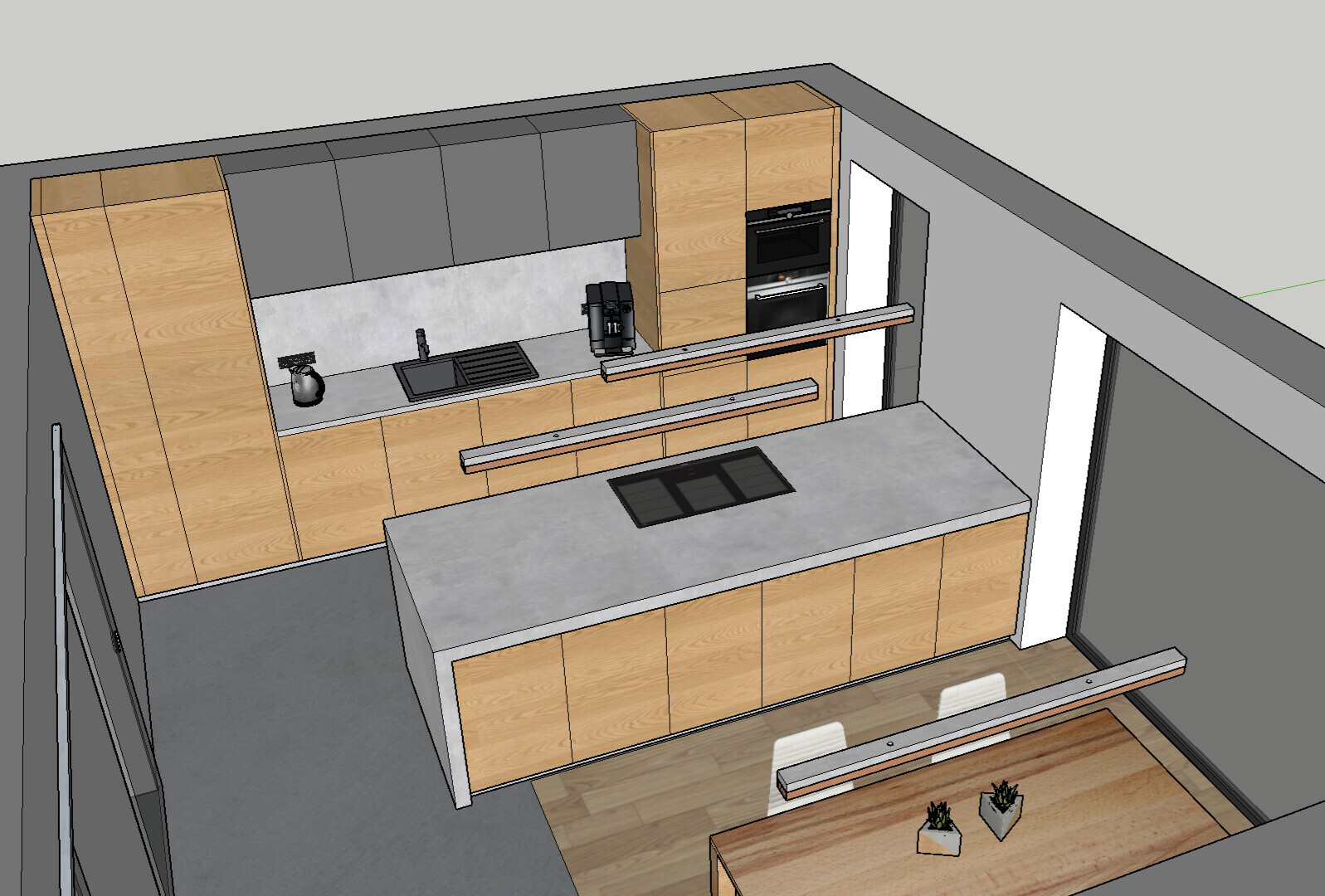
My current solution is to use a wooden board (MDF?) and cover it with a concrete-look filler or coating.
Does anyone have experience with how durable and sensitive this kind of surface is? And can anyone recommend a suitable product?
Attached is a rough idea of what I have in mind.
(possibly a slightly thicker countertop on the island)
J
Jesse Custer19 Nov 2023 13:58I admit I tried it, but I can imagine that the natural behavior of MDF and the filler compound do not allow for an easy coexistence.
Otherwise, we had a similar question and decided on DEKTON – it works perfectly and is unbreakable.
Otherwise, we had a similar question and decided on DEKTON – it works perfectly and is unbreakable.

Hi, we did this in our old apartment and wanted to do it again in the new house once we're really motivated to do some DIY (right now there's just an inexpensive Ikea countertop on it).
Great tips, including how to reduce weight using materials like Styrofoam, can be found at Dr. Backstein’s Concrete Consultation—just use a search engine and browse through the projects there 🙂
Great tips, including how to reduce weight using materials like Styrofoam, can be found at Dr. Backstein’s Concrete Consultation—just use a search engine and browse through the projects there 🙂
The picture isn’t loading quickly right now, I would have to find it first. We also don’t live there anymore.
The basic structure was roughly like this: formwork in the desired shape, then filled about halfway up with Styrofoam panels (similar to what is used for bathtub installation), followed by reinforcement, and then concrete was poured in. We poured the slab in situ, meaning it wasn’t flipped over, which resulted in some grinding irregularities that we could live with. For example, weighing was easier on the stove than on the slab.
I thought the load-bearing capacity was excellent. Heat was not an issue at all, but you do need to be careful with acids. However, with regular oiling and reasonably quick responses, that wasn’t a problem either. After around three years, we had a few small stains that didn’t bother me or my partner and were never noticed by our family.
That’s why we want to do it again 🙂
On Dr. Backstein’s concrete consultation forum, there are many projects described with details about construction, costs, pictures, and experiences.
The basic structure was roughly like this: formwork in the desired shape, then filled about halfway up with Styrofoam panels (similar to what is used for bathtub installation), followed by reinforcement, and then concrete was poured in. We poured the slab in situ, meaning it wasn’t flipped over, which resulted in some grinding irregularities that we could live with. For example, weighing was easier on the stove than on the slab.
I thought the load-bearing capacity was excellent. Heat was not an issue at all, but you do need to be careful with acids. However, with regular oiling and reasonably quick responses, that wasn’t a problem either. After around three years, we had a few small stains that didn’t bother me or my partner and were never noticed by our family.
That’s why we want to do it again 🙂
On Dr. Backstein’s concrete consultation forum, there are many projects described with details about construction, costs, pictures, and experiences.
Similar topics