
ᐅ Wood fiber insulation, mineral wool, or expanded polystyrene (EPS) insulation
Created on: 20 Oct 2023 09:57
D
DHH-SanierungD
DHH-Sanierung20 Oct 2023 09:57Hello forum,
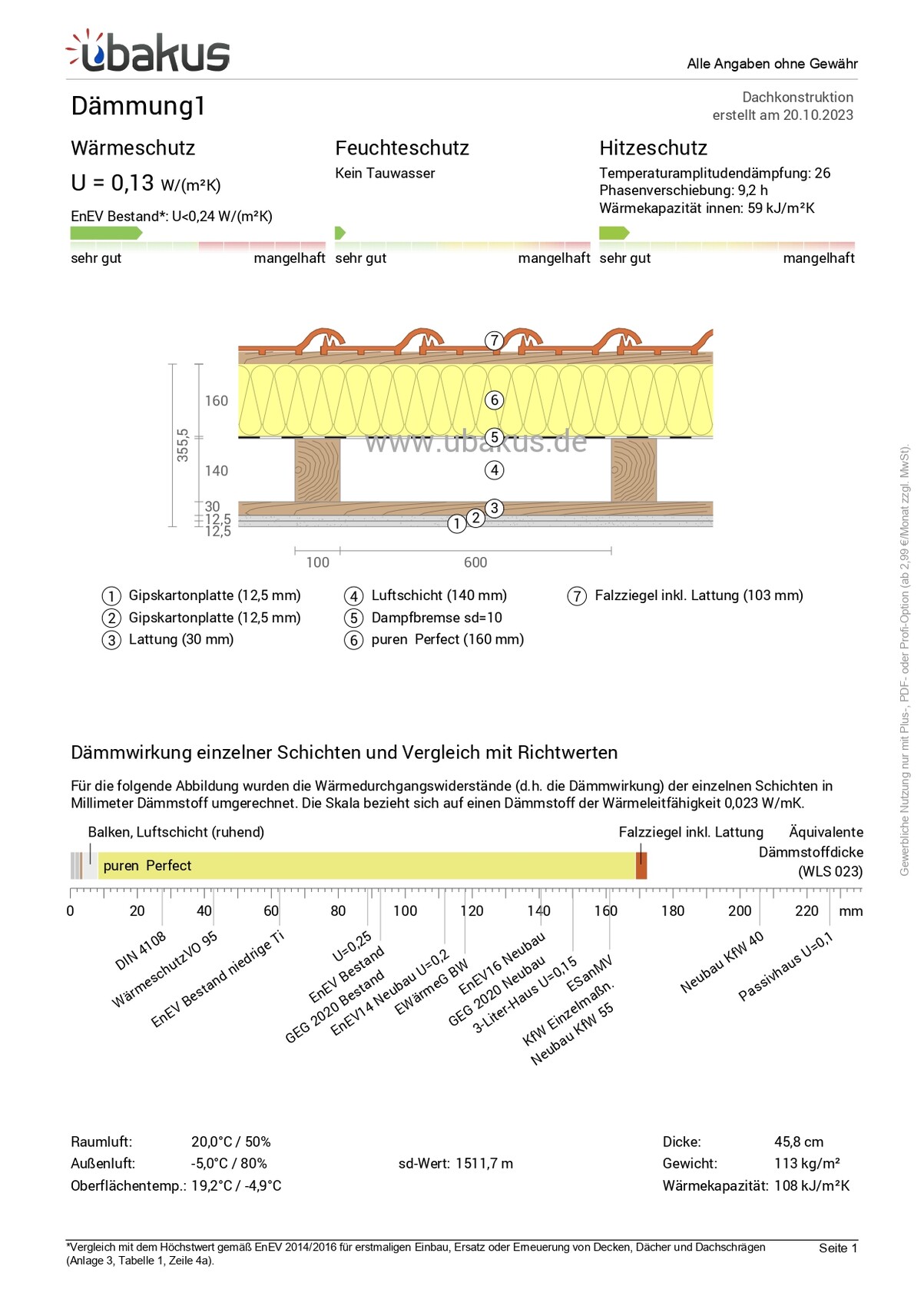
We are renovating a semi-detached house built in 1963 and aim to achieve KFW70EE standard. For this, we need a U-value below 0.14 W/m²K.
The roof needs to be renovated and re-covered for this purpose. We have spoken with several roofers and obtained quotes.
There are significant differences between the quotes, depending on the insulation used. The most affordable option is 160 mm (6.3 inches) of PUR foam installed above the rafters or a comparable material.
While some roofers strongly recommend this, others advise against it. Supporters emphasize good insulation properties and easy installation. Opponents of polystyrene point to poor heat protection and weak sound insulation. They also criticize its environmental impact.
I then ran some simulations with a U-value calculator. My initial goal was to experiment with which insulation combinations provide the best performance in both cold and heat protection, as poor heat protection was a major concern for me, especially since an office is planned under the roof.
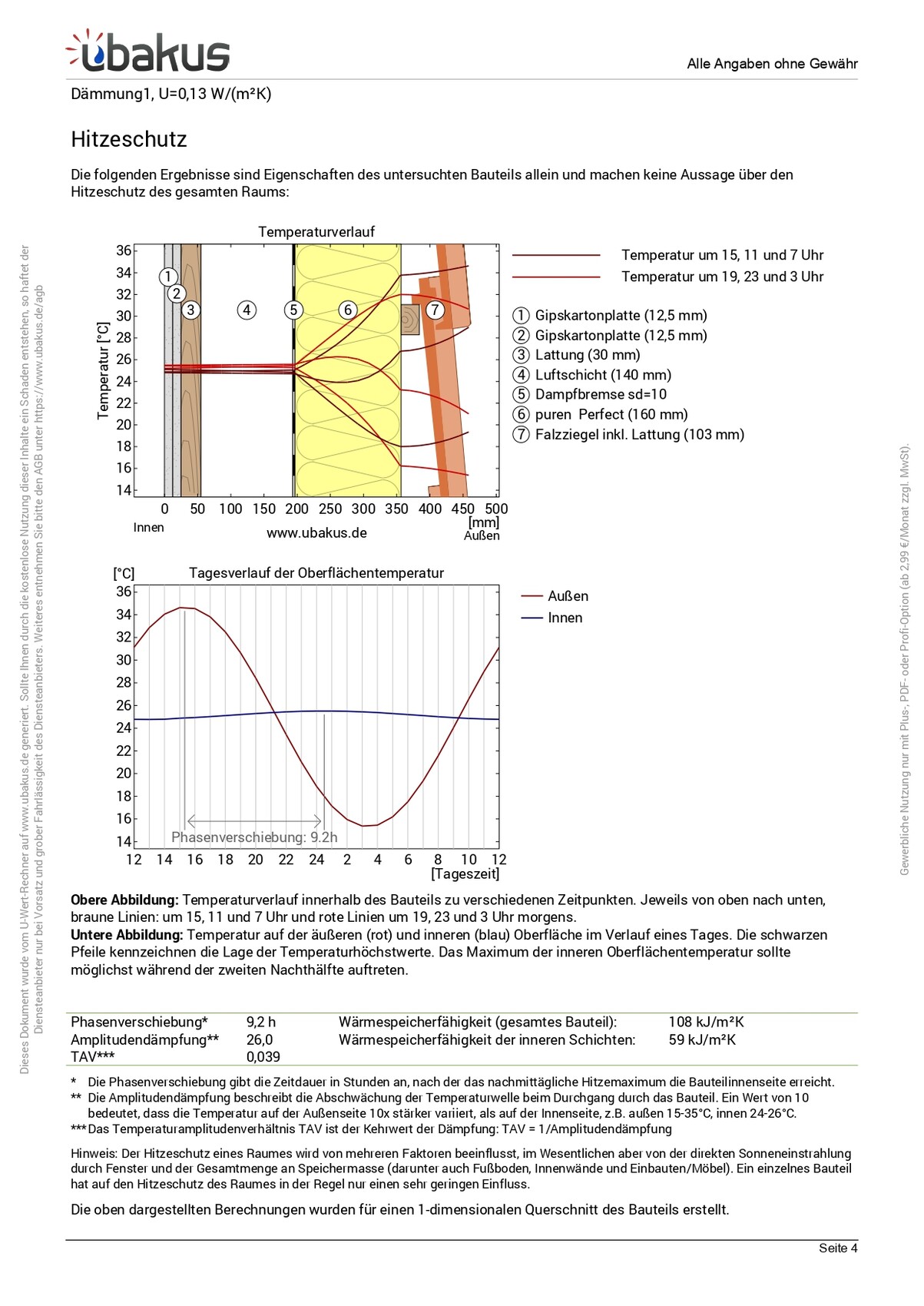
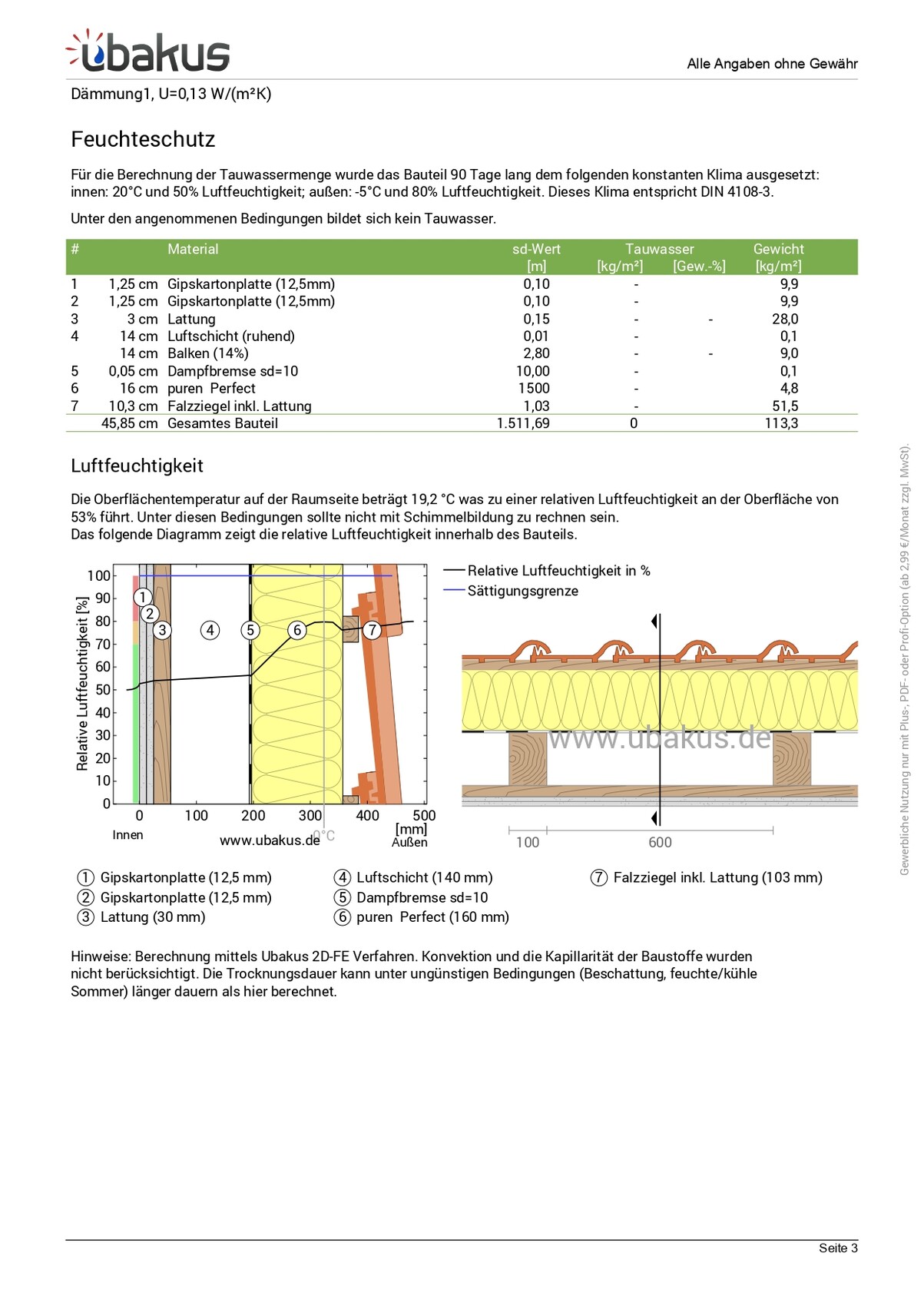
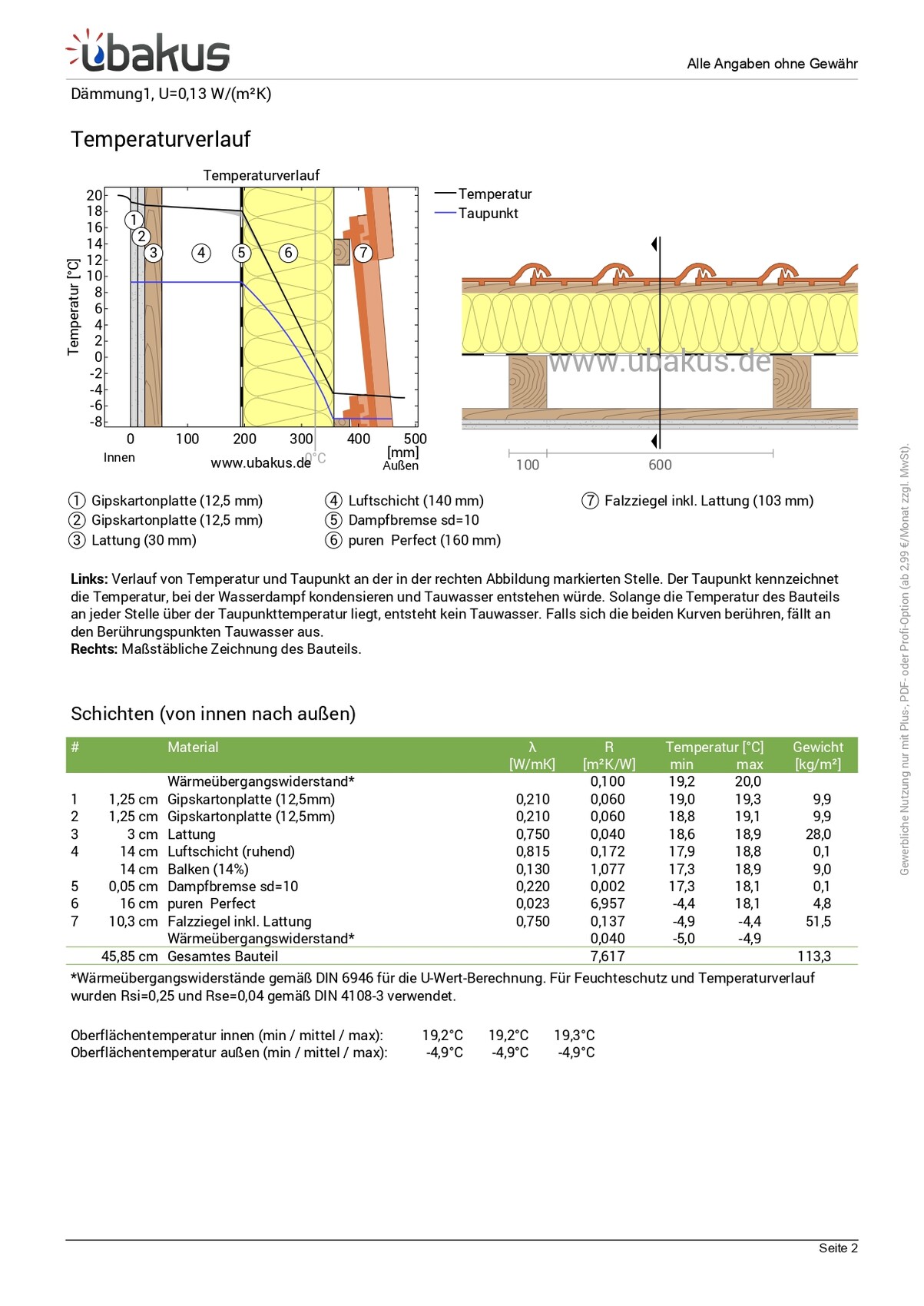
By chance, I found that a 160 mm (6.3 inches) PUR foam insulation above the rafters can also offer good heat protection if a still air layer is added between the rafters and two layers of gypsum boards are installed underneath.
This design would largely refute the argument of poor heat protection, and I actually like this insulation setup. It is also much cheaper than wood fiber insulation, which is known for better heat protection.
Have I forgotten something?
We are renovating a semi-detached house built in 1963 and aim to achieve KFW70EE standard. For this, we need a U-value below 0.14 W/m²K.
The roof needs to be renovated and re-covered for this purpose. We have spoken with several roofers and obtained quotes.
There are significant differences between the quotes, depending on the insulation used. The most affordable option is 160 mm (6.3 inches) of PUR foam installed above the rafters or a comparable material.
While some roofers strongly recommend this, others advise against it. Supporters emphasize good insulation properties and easy installation. Opponents of polystyrene point to poor heat protection and weak sound insulation. They also criticize its environmental impact.
I then ran some simulations with a U-value calculator. My initial goal was to experiment with which insulation combinations provide the best performance in both cold and heat protection, as poor heat protection was a major concern for me, especially since an office is planned under the roof.
By chance, I found that a 160 mm (6.3 inches) PUR foam insulation above the rafters can also offer good heat protection if a still air layer is added between the rafters and two layers of gypsum boards are installed underneath.
This design would largely refute the argument of poor heat protection, and I actually like this insulation setup. It is also much cheaper than wood fiber insulation, which is known for better heat protection.
Have I forgotten something?

We had a semi-detached house.
I would focus the insulation more on cold and noise protection.
In summer, with 35°C (95°F) during the day and 28°C (82°F) at night, the upstairs becomes uncomfortably warm after three days, despite shading.
We have always dreamed of a split air conditioning system but never installed one.
I would focus the insulation more on cold and noise protection.
In summer, with 35°C (95°F) during the day and 28°C (82°F) at night, the upstairs becomes uncomfortably warm after three days, despite shading.
We have always dreamed of a split air conditioning system but never installed one.
Puren is not expanded polystyrene (EPS).
It would be even better if, instead of an air gap, you combine Puren with an intermediate insulation layer of high density, such as wood fiber. This way, you achieve the perfect combination in terms of heat insulation (and especially soundproofing). This might also allow you to optimize the total thicknesses, keeping the additional costs reasonably low.
However, the vapor barrier must then be sealed very carefully.
It would be even better if, instead of an air gap, you combine Puren with an intermediate insulation layer of high density, such as wood fiber. This way, you achieve the perfect combination in terms of heat insulation (and especially soundproofing). This might also allow you to optimize the total thicknesses, keeping the additional costs reasonably low.
However, the vapor barrier must then be sealed very carefully.
K
KarstenausNRW20 Oct 2023 10:58Puren (which is just the manufacturer) is a PU insulation. It is the most expensive material you can get (excluding Resol and vacuum insulation panels) but by far (except for the aforementioned materials) the most effective insulation. It has a thermal conductivity rating (WLG) of 0.023 in the aluminum foil-faced version that you were offered. The 160mm (6.3 inches) thickness corresponds roughly to 245mm (9.6 inches) of mineral wool with a WLG of 0.035 in terms of insulation performance.
With that, you should already be at KfW 55, right?
I would confidently build the roof as you have planned.
With that, you should already be at KfW 55, right?
I would confidently build the roof as you have planned.
Similar topics