
ᐅ Withholding Payments for Defects in the Shell Construction Phase
Created on: 9 Feb 2021 16:57
K
Kishihmen
Hello everyone,
The ceiling above the ground floor has just been concreted on our site. According to the payment schedule, a partial payment of approximately €30,000 is due.
However, our expert has identified several defects. These were formally reported to the general contractor (GC) with deadlines. The first deadline (2 weeks) passed without the defects being resolved; the second deadline is still running until Thursday (also 2 weeks).
So far, we have withheld about €17,000 of the €30,000. Our GC considers this amount far too high and insists on payment.
Since we are currently concerned about the potential insolvency of the GC (the structural builder, brick supplier, steel supplier, and light well supplier have not been paid), we want to keep the deduction as high as possible. However, since we are not construction professionals and want to avoid the risk that withholding too much for defects could backfire, I hope that some experts here can provide us with a rough cost estimate.
P.S. Our lawyer has been contacted, but the appointment is only scheduled for 17.02, and I fear we cannot hold off the GC until then.
Defect 1:
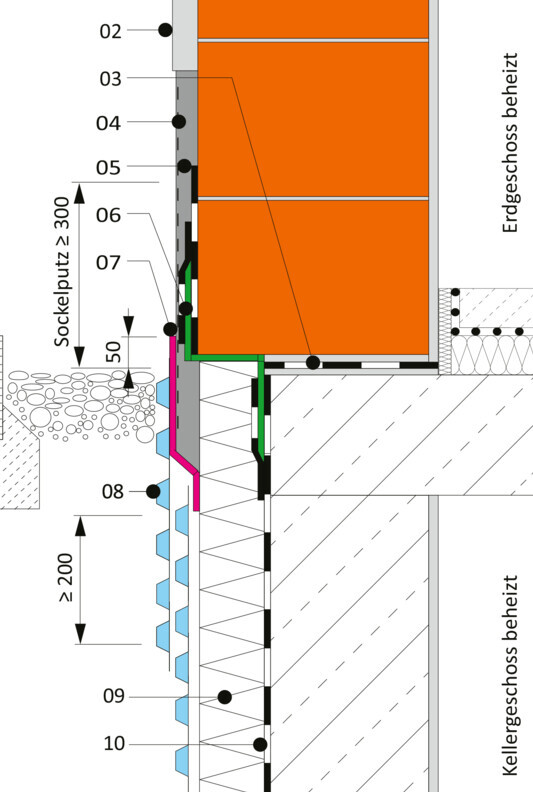
At the transition between the basement and the ground floor, no damp-proof course was installed at the base of the first course of blocks.
The basement is already fully lined with Styrodur insulation, and the excavation pit has been backfilled.
Defect 2:
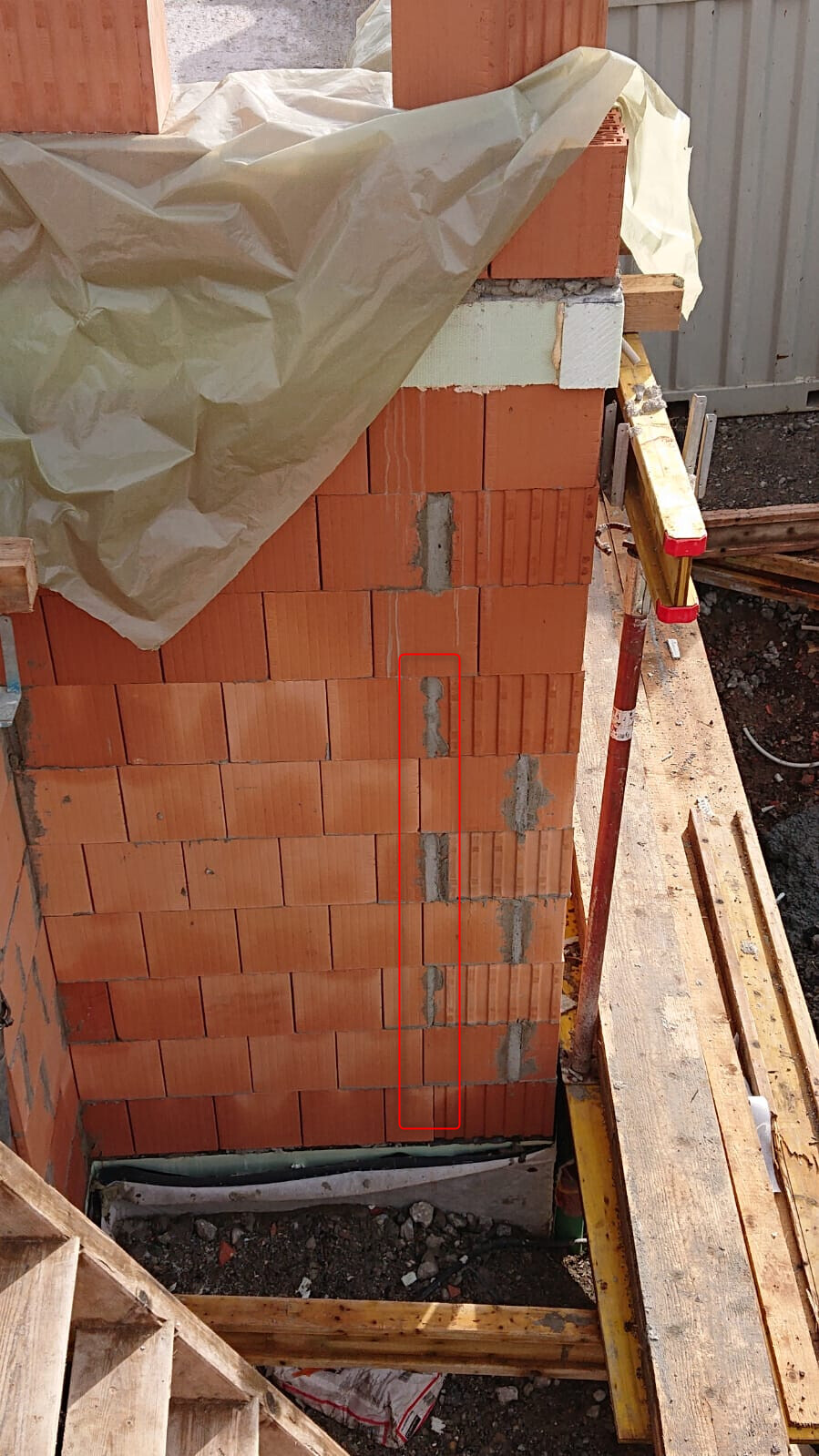
In some areas of the structural shell, the minimum offset of the bricks was not observed; in places, up to 7 courses of bricks were laid directly on top of each other.
Defect 3:
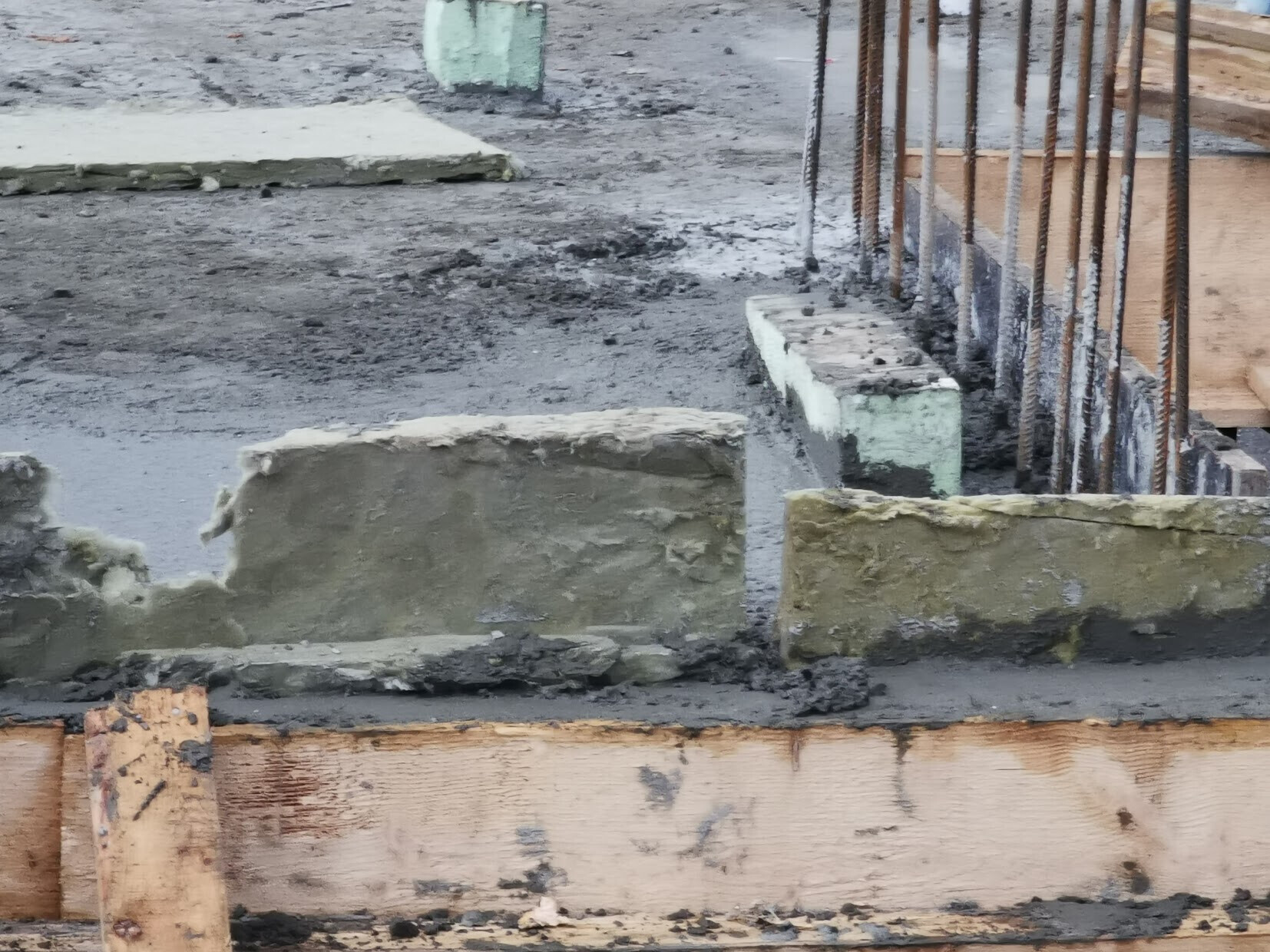
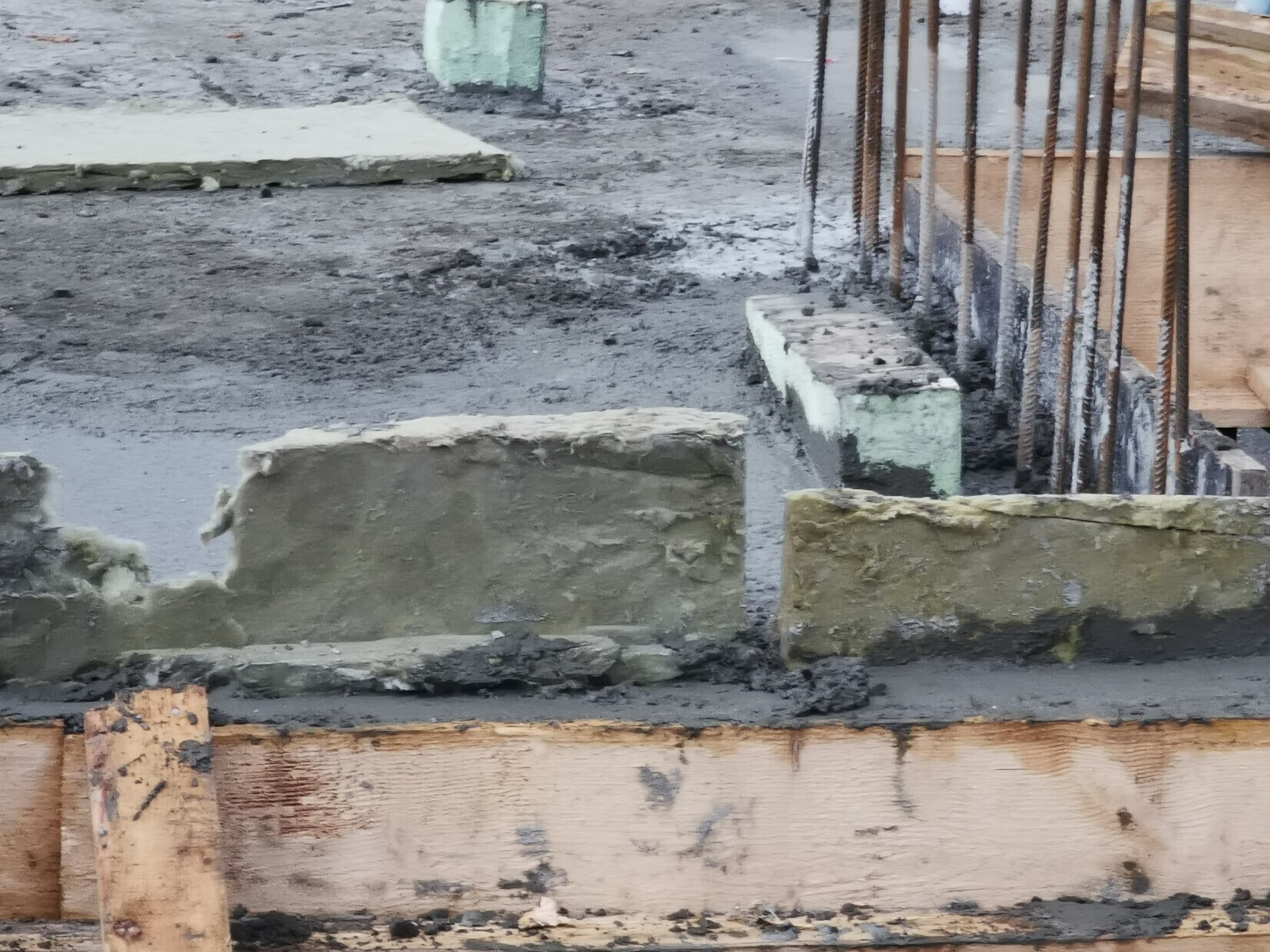
This is a row house. Mineral wool boards were installed between the buildings for sound insulation. At one externally visible spot, there is a gap of about 80cm (31.5 inches) depth and approximately 20cm (8 inches) height between the boards. After reporting the defect, the structural builder just “stuffed” mineral wool boards into the hole. According to our lawyer, this does not reliably ensure soundproofing.
Defect 4:
The area where the patio doors will later be installed was cast in concrete. Here, the reinforcing steel protrudes from the wall. According to the expert: This means that a proper bond between the reinforcing steel and concrete is not sufficiently ensured. It is assumed that adequate long-term corrosion protection of the reinforcement steel is not established. Furthermore, with insufficient concrete cover over the reinforcing steel, adequate fire protection is not guaranteed.
Defect 5:
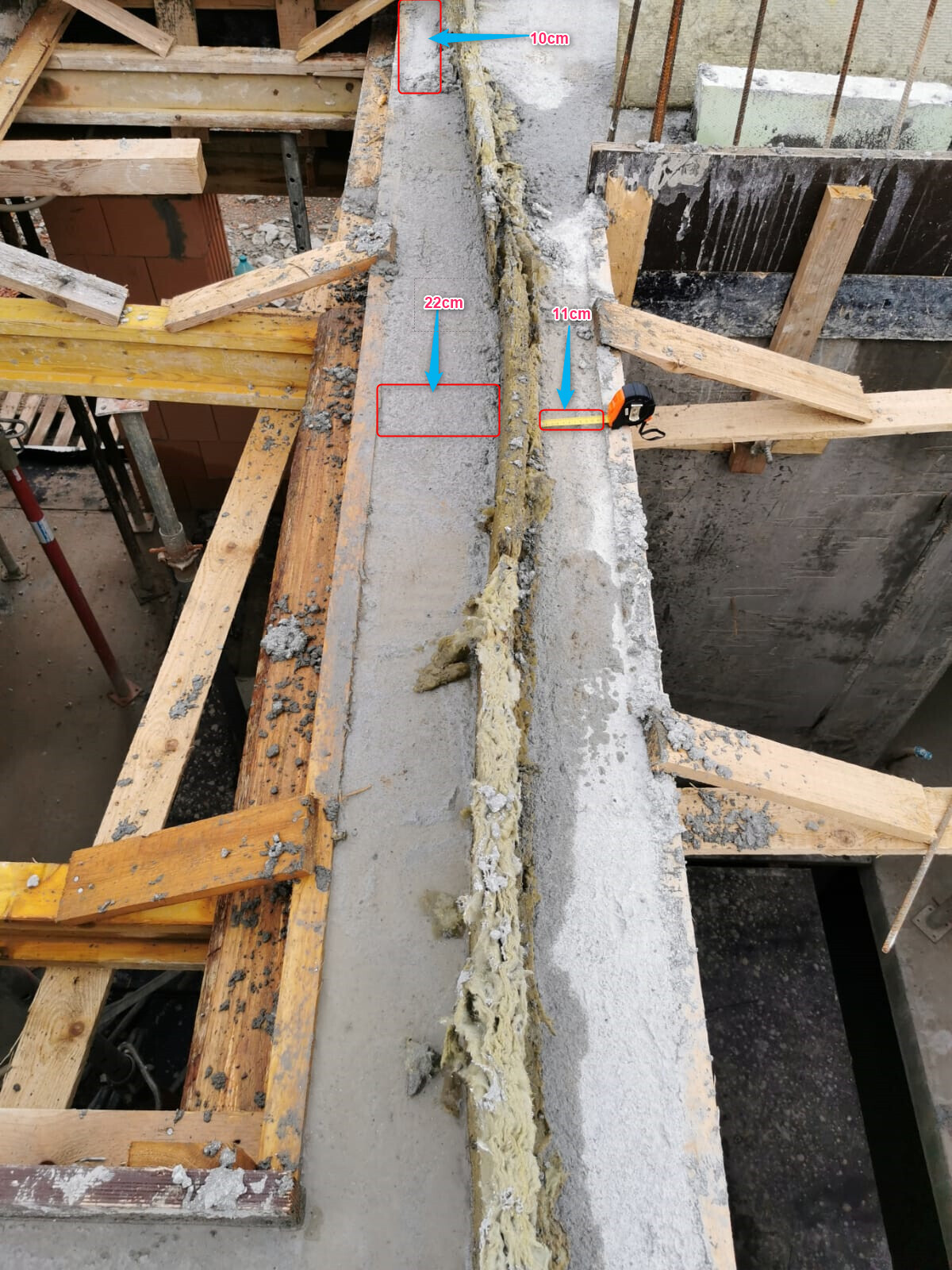
In the floor slab area, the mineral wool board was not properly secured. As a result, it is quite wavy. This is particularly problematic in the stairwell area, where in some places only 10cm (4 inches) of concrete remain above the mineral wool board. The partition wall bricks have a thickness of 17.5cm (7 inches), though.
Defect 6:
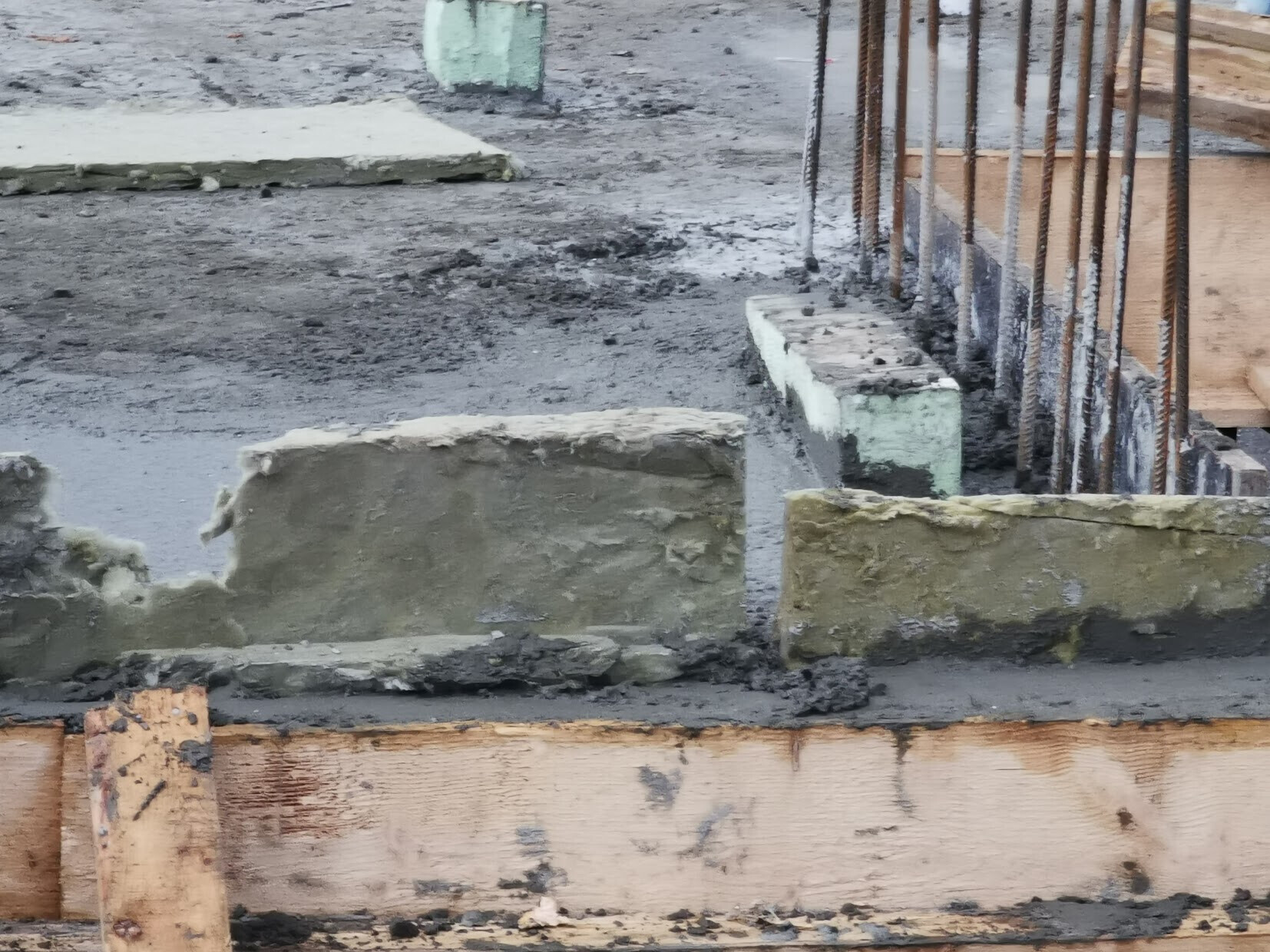
The mineral wool boards were not installed tightly enough in some areas, allowing concrete to seep between the boards and create a sound bridge.
These are the (known) defects so far. I would greatly appreciate it if anyone could roughly estimate the costs associated with these defects.
Thank you very much in advance.
The ceiling above the ground floor has just been concreted on our site. According to the payment schedule, a partial payment of approximately €30,000 is due.
However, our expert has identified several defects. These were formally reported to the general contractor (GC) with deadlines. The first deadline (2 weeks) passed without the defects being resolved; the second deadline is still running until Thursday (also 2 weeks).
So far, we have withheld about €17,000 of the €30,000. Our GC considers this amount far too high and insists on payment.
Since we are currently concerned about the potential insolvency of the GC (the structural builder, brick supplier, steel supplier, and light well supplier have not been paid), we want to keep the deduction as high as possible. However, since we are not construction professionals and want to avoid the risk that withholding too much for defects could backfire, I hope that some experts here can provide us with a rough cost estimate.
P.S. Our lawyer has been contacted, but the appointment is only scheduled for 17.02, and I fear we cannot hold off the GC until then.
Defect 1:
At the transition between the basement and the ground floor, no damp-proof course was installed at the base of the first course of blocks.
The basement is already fully lined with Styrodur insulation, and the excavation pit has been backfilled.
Defect 2:
In some areas of the structural shell, the minimum offset of the bricks was not observed; in places, up to 7 courses of bricks were laid directly on top of each other.
Defect 3:
This is a row house. Mineral wool boards were installed between the buildings for sound insulation. At one externally visible spot, there is a gap of about 80cm (31.5 inches) depth and approximately 20cm (8 inches) height between the boards. After reporting the defect, the structural builder just “stuffed” mineral wool boards into the hole. According to our lawyer, this does not reliably ensure soundproofing.
Defect 4:
The area where the patio doors will later be installed was cast in concrete. Here, the reinforcing steel protrudes from the wall. According to the expert: This means that a proper bond between the reinforcing steel and concrete is not sufficiently ensured. It is assumed that adequate long-term corrosion protection of the reinforcement steel is not established. Furthermore, with insufficient concrete cover over the reinforcing steel, adequate fire protection is not guaranteed.
Defect 5:
In the floor slab area, the mineral wool board was not properly secured. As a result, it is quite wavy. This is particularly problematic in the stairwell area, where in some places only 10cm (4 inches) of concrete remain above the mineral wool board. The partition wall bricks have a thickness of 17.5cm (7 inches), though.
Defect 6:
The mineral wool boards were not installed tightly enough in some areas, allowing concrete to seep between the boards and create a sound bridge.
These are the (known) defects so far. I would greatly appreciate it if anyone could roughly estimate the costs associated with these defects.
Thank you very much in advance.


Tolentino schrieb:
Mine is even worse. 43% completed up to the load-bearing walls on the ground floor, so still before the intermediate ceiling.Look at it this way: then the payment schedule always keeps the general contractor liquid ;-)But the original poster's payment plan probably also has no real reason to pay their subcontractors slowly.
https://www.instagram.com/11antgmxde/
https://www.linkedin.com/company/bauen-jetzt/
 Hausbau081511 Feb 2021 16:21
Oh dear. You are already at 67% just for the shell construction. You have paid for the windows, but they are not even installed yet. That’s really excessive. The first installment is huge, 9% for the building permit / planning permission! My general contractor 1 was already a crook, and I can say that here because it is true and the public prosecutor is now investigating him, but this situation is also quite serious.
Yes, it’s getting even more complicated because by handling many tasks myself, I effectively reduce the total contract amount of the general contractor. However, these credits are not deducted from the overall contract sum (and thus do not reduce each interim payment invoice), but instead are applied only to the interim payments scheduled at the appropriate times. As a result, by the time we reach the window installation phase (which also coincides with an interim payment milestone), I am still at 81%. To be fair, it should be noted that change orders do not increase the contract sum for interim payments but only become due upon completion of the additional work. Nevertheless, I will now always worry about whether the defect remediation will go smoothly, as my leverage in this regard is rather limited.
Hausbau0815 schrieb:
So my main contractor was already a criminal, and I can say that here because it is true and the public prosecutor is now investigating him, As long as the investigation is ongoing, actually no. Only after a final conviction.
https://www.instagram.com/11antgmxde/
https://www.linkedin.com/company/bauen-jetzt/
It should be legally prohibited for any overpayment to be possible at all. Likewise, an expert assessor should always be required, who can quickly obtain a court decision through an expedited hearing.
The process in Germany is extremely inefficient and destroys livelihoods unnecessarily.
The process in Germany is extremely inefficient and destroys livelihoods unnecessarily.