
Hello everyone,
I am currently expanding my workshop. For the walls, I used 60mm (2.4 inches) sandwich panels. Now I would like to install 2-3 individual windows to avoid the room being too dark. When searching online, I found several companies offering windows, but they usually come integrated with the sandwich panels. Does anyone know what kind of windows I should use for this? I am still unsure about the window size, somewhere between 800 - 1000mm (31.5 - 39.4 inches) per side. Tilt function is completely sufficient, and double glazing is preferred. The window frame can be made of plastic.
Regards,
bolle01
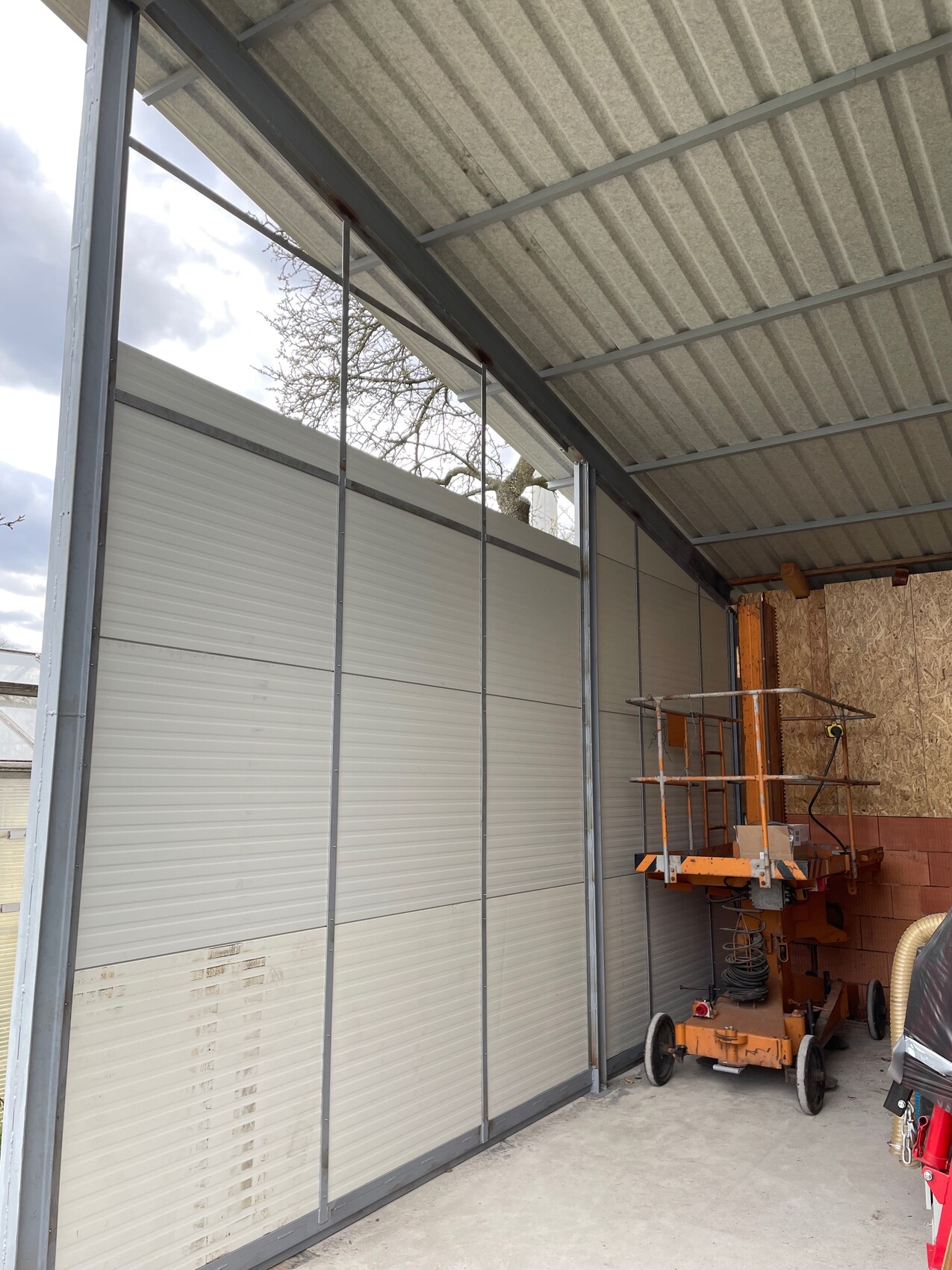
I am currently expanding my workshop. For the walls, I used 60mm (2.4 inches) sandwich panels. Now I would like to install 2-3 individual windows to avoid the room being too dark. When searching online, I found several companies offering windows, but they usually come integrated with the sandwich panels. Does anyone know what kind of windows I should use for this? I am still unsure about the window size, somewhere between 800 - 1000mm (31.5 - 39.4 inches) per side. Tilt function is completely sufficient, and double glazing is preferred. The window frame can be made of plastic.
Regards,
bolle01
S
Simon-1899 Apr 2025 07:02Hello,
Typically, and for simplicity, windows and doors are installed behind the sandwich panels. For this, you will need two horizontal wall studs serving as a lintel and a sill, with vertical wall studs in between for the reveals. It then looks similar to a horizontal ladder. Depending on the distance between the two supports, you size the necessary profile thicknesses according to structural requirements.
I still don’t understand the purpose of the vertically welded flat irons. What function are they supposed to serve? The wall studs would need to be installed slightly further back, with a few millimeters (inches) of clearance.
Regarding the window frame material, I would also tend to recommend uPVC (plastic) windows. Anything else would be overdoing it in this case.
Best regards,
Simon
Typically, and for simplicity, windows and doors are installed behind the sandwich panels. For this, you will need two horizontal wall studs serving as a lintel and a sill, with vertical wall studs in between for the reveals. It then looks similar to a horizontal ladder. Depending on the distance between the two supports, you size the necessary profile thicknesses according to structural requirements.
I still don’t understand the purpose of the vertically welded flat irons. What function are they supposed to serve? The wall studs would need to be installed slightly further back, with a few millimeters (inches) of clearance.
Regarding the window frame material, I would also tend to recommend uPVC (plastic) windows. Anything else would be overdoing it in this case.
Best regards,
Simon

Hi,
if you only need a few simple windows for daylighting, I would recommend using standard plastic windows – preferably tilt-and-turn sashes, so you can ventilate even when it gets dusty in the workshop.
Installation is basically straightforward: you cut the correct opening in the sandwich panel (measure carefully beforehand and ideally build a frame), insert the window from behind, and seal it properly. Unless you need full structural certification, you can order windows in custom sizes, for example 900 × 900 mm (35 × 35 inches), which is a good middle size for light and installation effort.
If you want something more elegant or durable, there are also special industrial or warehouse windows, but these tend to be more expensive and more complex to install.
Important: fasten the frame securely and ensure good sealing, otherwise drafts or water ingress can occur.
Good luck with your build!
if you only need a few simple windows for daylighting, I would recommend using standard plastic windows – preferably tilt-and-turn sashes, so you can ventilate even when it gets dusty in the workshop.
Installation is basically straightforward: you cut the correct opening in the sandwich panel (measure carefully beforehand and ideally build a frame), insert the window from behind, and seal it properly. Unless you need full structural certification, you can order windows in custom sizes, for example 900 × 900 mm (35 × 35 inches), which is a good middle size for light and installation effort.
If you want something more elegant or durable, there are also special industrial or warehouse windows, but these tend to be more expensive and more complex to install.
Important: fasten the frame securely and ensure good sealing, otherwise drafts or water ingress can occur.
Good luck with your build!
Similar topics