
ᐅ Windows – Installation / Insulation / Sealing / Execution
Created on: 4 Dec 2019 13:03
A
alive&kicking
A friendly hello to everyone,
we are currently building a single-family house (100% concrete construction with external thermal insulation composite system, ETICS), the shell and roof are finished, windows and doors on the ground floor are already installed.
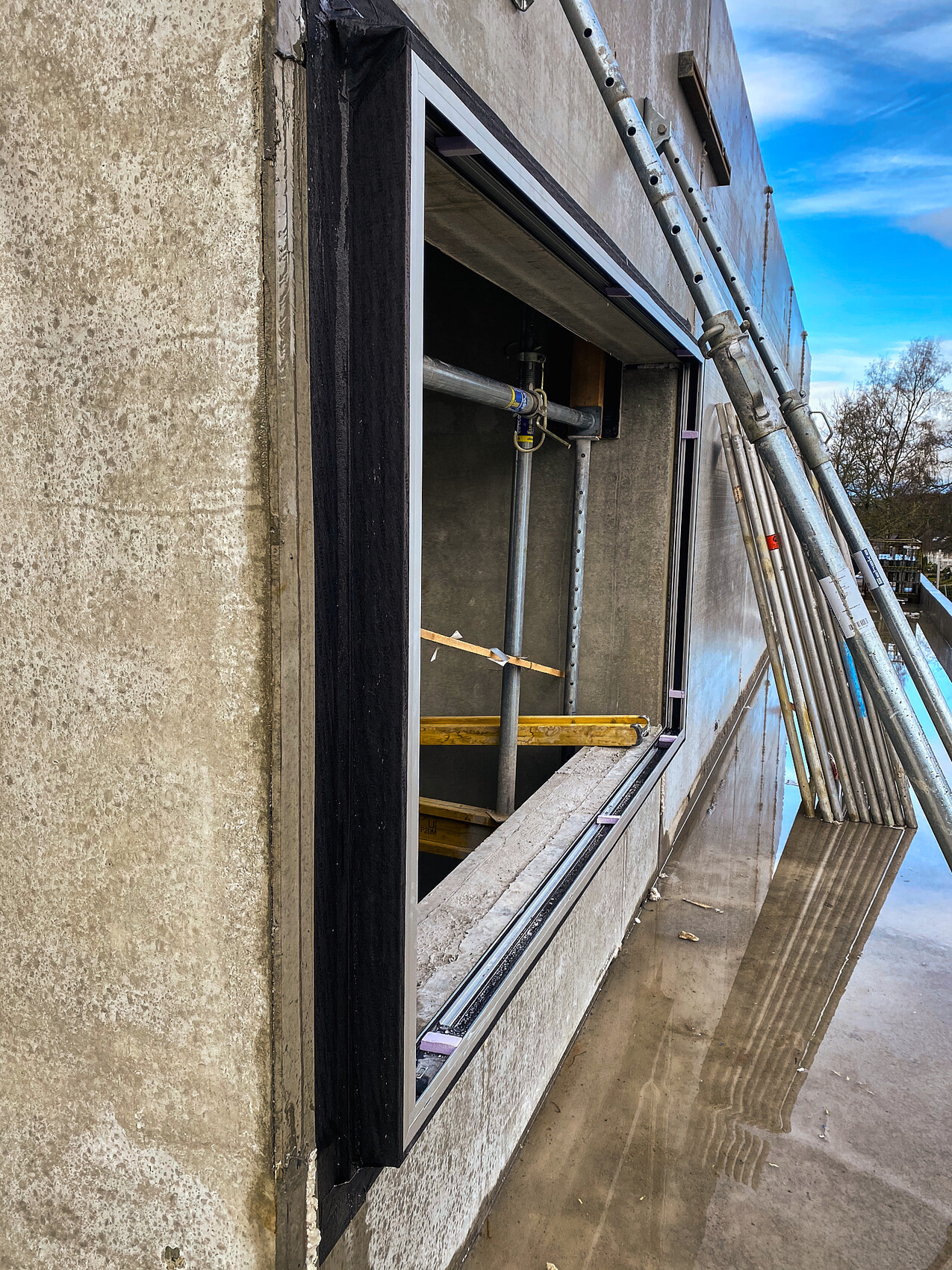
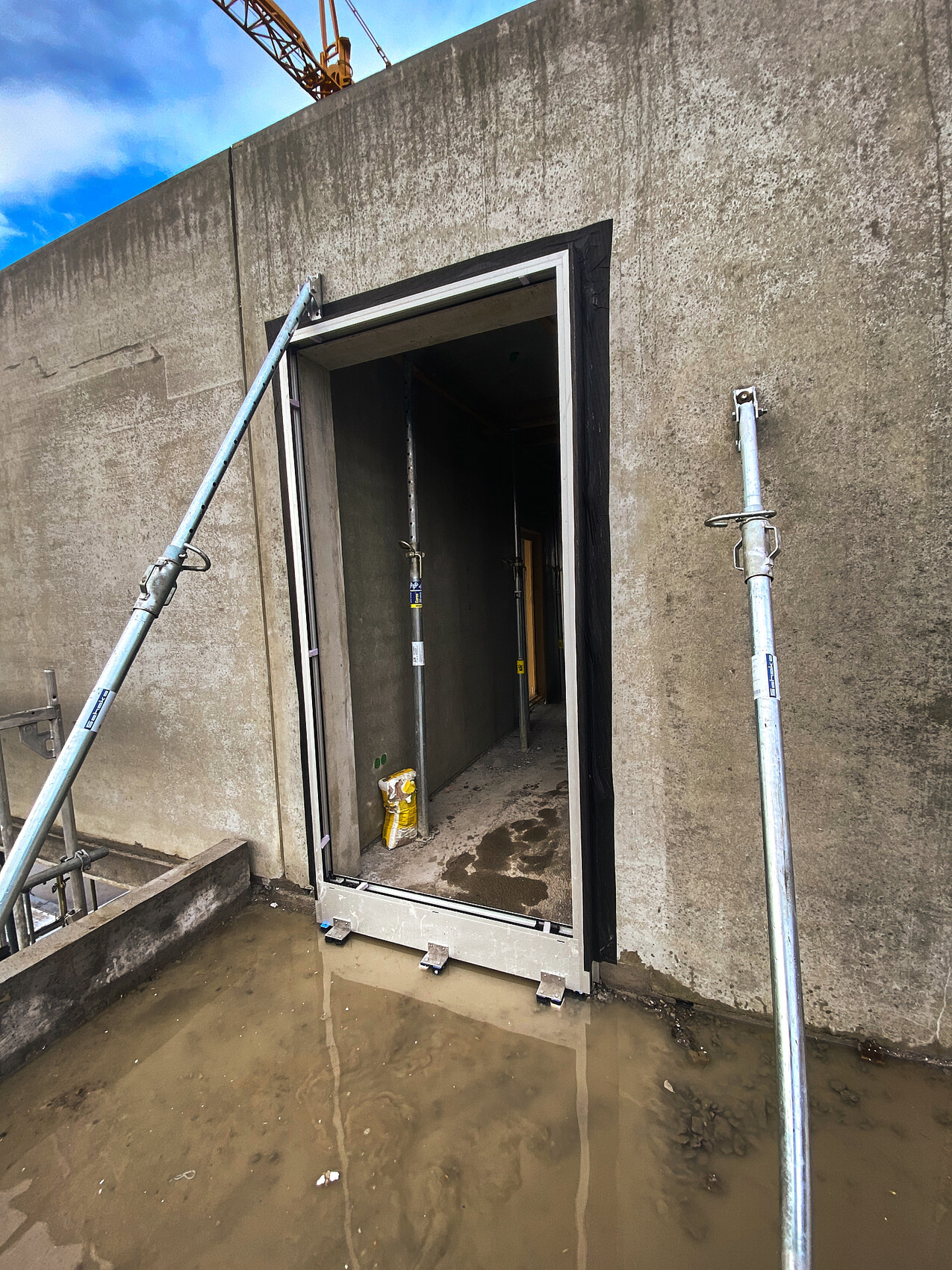
Yesterday, I took the time to check the installation of the floor-to-ceiling windows (aluminum frames, some with frame extensions). Regarding the heights (to the planned floor level) and vertical/horizontal alignment, the company has generally done a really good job, I must say. However, the entrance door threshold seems too high to me; I have a question about that later.
When it comes to sealing and insulation, I am honestly shocked. In addition, in some places the frames touch the reveal and/or the floor.
Some of these "deficiencies" are somewhat clear to me, but confirmation or assessment from you would still be helpful before I ask the company for corrections or involve an expert.
My questions:
1. In some cases, the frame extensions of the floor-to-ceiling windows/doors rest on the raw floor or almost touch the reveal at the top. I have read that window frames can expand due to temperature changes; in the case of aluminum, I calculated: over a temperature range from -20°C to +40°C (4°F to 104°F) on 2.5m (8 ft 2 in), this would be 3.5 mm (0.14 inches).
Can frame extensions compensate for length changes due to temperature?
Even with an exterior ETICS, shouldn’t the “functional plane” be insulated? (How else would that be done?)
2. For a lift-and-slide door element (about 18 cm (7 inches) deep), compressible tape was used on both the outer and inner areas (permissible?), but there is a cavity in between; shouldn’t that also be insulated?
On one side of this element, a gap of about 3.5 cm (1.4 inches) was bridged with compressible tape. Is that still correct?
3. The entrance door threshold will be about 3.5 cm (1.4 inches) high unless some of it is raised above the screed. According to the plan, it should be 1.8 cm (0.7 inches). That seems like quite a big deviation, doesn’t it?
4. The sealing tapes on the inside and outside were applied very poorly. There was no smooth layer (skim coat) at the floor no, my site manager says it’s not a problem... the adhesive and tape will handle it! But it doesn’t look like it. Just for my understanding: the inner sealing tape is supposed to provide airtightness. Does that mean 100% airtightness, or am I mistaken?
The outer sealing tape is meant to provide protection against driving rain, which to me means not 100% waterproof. Correct? But shouldn’t it still be installed so that no water can enter from above, despite the ETICS?
In some places, the foil adhesive (greenteq) has not set and is still sticky. What could be the reason for this?
5. Insulation of the functional plane. Does this have to be fully foamed? Or is a certain dimension sufficient?
I found PE foam cords on site. I assume these were inserted into the frame extensions, as these do not have their own sealing lip. Is this a correct method?
I would be very grateful for any answers.
(still) alive&kicking
we are currently building a single-family house (100% concrete construction with external thermal insulation composite system, ETICS), the shell and roof are finished, windows and doors on the ground floor are already installed.
Yesterday, I took the time to check the installation of the floor-to-ceiling windows (aluminum frames, some with frame extensions). Regarding the heights (to the planned floor level) and vertical/horizontal alignment, the company has generally done a really good job, I must say. However, the entrance door threshold seems too high to me; I have a question about that later.
When it comes to sealing and insulation, I am honestly shocked. In addition, in some places the frames touch the reveal and/or the floor.
Some of these "deficiencies" are somewhat clear to me, but confirmation or assessment from you would still be helpful before I ask the company for corrections or involve an expert.
My questions:
1. In some cases, the frame extensions of the floor-to-ceiling windows/doors rest on the raw floor or almost touch the reveal at the top. I have read that window frames can expand due to temperature changes; in the case of aluminum, I calculated: over a temperature range from -20°C to +40°C (4°F to 104°F) on 2.5m (8 ft 2 in), this would be 3.5 mm (0.14 inches).
Can frame extensions compensate for length changes due to temperature?
Even with an exterior ETICS, shouldn’t the “functional plane” be insulated? (How else would that be done?)
2. For a lift-and-slide door element (about 18 cm (7 inches) deep), compressible tape was used on both the outer and inner areas (permissible?), but there is a cavity in between; shouldn’t that also be insulated?
On one side of this element, a gap of about 3.5 cm (1.4 inches) was bridged with compressible tape. Is that still correct?
3. The entrance door threshold will be about 3.5 cm (1.4 inches) high unless some of it is raised above the screed. According to the plan, it should be 1.8 cm (0.7 inches). That seems like quite a big deviation, doesn’t it?
4. The sealing tapes on the inside and outside were applied very poorly. There was no smooth layer (skim coat) at the floor no, my site manager says it’s not a problem... the adhesive and tape will handle it! But it doesn’t look like it. Just for my understanding: the inner sealing tape is supposed to provide airtightness. Does that mean 100% airtightness, or am I mistaken?
The outer sealing tape is meant to provide protection against driving rain, which to me means not 100% waterproof. Correct? But shouldn’t it still be installed so that no water can enter from above, despite the ETICS?
In some places, the foil adhesive (greenteq) has not set and is still sticky. What could be the reason for this?
5. Insulation of the functional plane. Does this have to be fully foamed? Or is a certain dimension sufficient?
I found PE foam cords on site. I assume these were inserted into the frame extensions, as these do not have their own sealing lip. Is this a correct method?
I would be very grateful for any answers.
(still) alive&kicking

alive&kicking schrieb:
because it's hard to see much in the photos.This is related to the unfortunately very popular photography style "zoom instead of context" :-(https://www.instagram.com/11antgmxde/
https://www.linkedin.com/company/bauen-jetzt/

@alive&kicking As others have already mentioned, this looks like poor workmanship.
You should file a formal (written) complaint and request corrections.
I would like to see pictures, plans, or other details of your construction project. We are also building with concrete but not using an external thermal insulation composite system; instead, we have a ventilated curtain wall facade made of aluminum CuBond panels.
We also use a different glazing system, and maybe the Swiss team is more meticulous, but for my smaller glass areas, it looks like this:
You should file a formal (written) complaint and request corrections.
I would like to see pictures, plans, or other details of your construction project. We are also building with concrete but not using an external thermal insulation composite system; instead, we have a ventilated curtain wall facade made of aluminum CuBond panels.
We also use a different glazing system, and maybe the Swiss team is more meticulous, but for my smaller glass areas, it looks like this:
Yes, those are proper sealing tapes from Rick, which are even better than membranes.
I don’t think much of compressible tapes at the window, but they seem to be standard nowadays. The photos clearly show how not to do it (wrapping around corners), and as Hix mentioned, a layperson can no longer tell if the tape has basically exhausted itself, meaning it has lost its properties due to excessive expansion.
Always order membrane installation!
I don’t think much of compressible tapes at the window, but they seem to be standard nowadays. The photos clearly show how not to do it (wrapping around corners), and as Hix mentioned, a layperson can no longer tell if the tape has basically exhausted itself, meaning it has lost its properties due to excessive expansion.
Always order membrane installation!

This should be the Siga Fentrim IS2. The (Swiss) Mercedes of sealing tapes.
As you can clearly see with @rick2018, with a little patience you can really seal the corners properly. Another nice feature: the three (thermally broken!) angles at the base. Two might have been enough there, but in general, it’s probably hard to find a company that pays attention to such details at all. But given the (likely) price, I wouldn’t expect anything less.
As you can clearly see with @rick2018, with a little patience you can really seal the corners properly. Another nice feature: the three (thermally broken!) angles at the base. Two might have been enough there, but in general, it’s probably hard to find a company that pays attention to such details at all. But given the (likely) price, I wouldn’t expect anything less.
A
alive&kicking13 Dec 2019 11:37Thanks in advance for your answers.
Since my site manager downplayed the issues a bit to calm us down, I contacted the well-known Institut in Rosenheim. I actually wanted an on-site inspection, but they had no availability at short notice, so I sent photos and used their paid phone service. Of course, all errors/defects were confirmed. (I can highly recommend the service—precise and easy to understand.)
After confronting our site manager with the facts and mentioning the institute’s abbreviation, the matter quickly started moving.
The errors will, of course, all be corrected, and of course, it was just misunderstandings and communication errors. What I liked was that the managing director of the window company personally got in touch and promised to fix everything. We will see how they handle it.
Specifically:
- Minimum joint widths (we still have some margin downward) will be realized with thinner frame extensions at the bottom. The affected elements will be slightly lowered. I’m curious how they will deal with the existing drill holes.
- According to the phone service, two narrower compression tapes on a 20cm (8 inch) window element are not allowed, and the joint cavity must be almost completely “filled.” Window foam is permitted. Two compression tapes stuck on top of each other to fill a wide joint are not acceptable.
- Sealing tapes will be corrected or redone. Compression tapes wrapped around corners are not allowed either.
- In principle, special compression tapes are permitted (with exposed concrete walls, sealing tapes don’t look so good anyway).
Yesterday, they started installing the upper windows, and two new topics came up.
As mentioned before, we have large aluminum window elements. According to the window company, there are no thin frame extensions made of aluminum (I have my doubts!!). They are now implementing it with plastic extensions. These are not visible as they are covered by the screed and external thermal insulation composite system (ETICS), so it wouldn’t bother us, but we’re not fully comfortable with it either. How does this affect load bearing? Can they handle it?
It was also found that the raw subfloor is outside tolerance. It rises about 1.5cm (0.6 inch) from the staircase (fixed point) to the window over a length of 5.4m (17.7 feet). Our site manager wants to correct this with the screed, with a maximum of 5mm (0.2 inch) over this length. Is this acceptable?
Since my site manager downplayed the issues a bit to calm us down, I contacted the well-known Institut in Rosenheim. I actually wanted an on-site inspection, but they had no availability at short notice, so I sent photos and used their paid phone service. Of course, all errors/defects were confirmed. (I can highly recommend the service—precise and easy to understand.)
After confronting our site manager with the facts and mentioning the institute’s abbreviation, the matter quickly started moving.
The errors will, of course, all be corrected, and of course, it was just misunderstandings and communication errors. What I liked was that the managing director of the window company personally got in touch and promised to fix everything. We will see how they handle it.
Specifically:
- Minimum joint widths (we still have some margin downward) will be realized with thinner frame extensions at the bottom. The affected elements will be slightly lowered. I’m curious how they will deal with the existing drill holes.
- According to the phone service, two narrower compression tapes on a 20cm (8 inch) window element are not allowed, and the joint cavity must be almost completely “filled.” Window foam is permitted. Two compression tapes stuck on top of each other to fill a wide joint are not acceptable.
- Sealing tapes will be corrected or redone. Compression tapes wrapped around corners are not allowed either.
- In principle, special compression tapes are permitted (with exposed concrete walls, sealing tapes don’t look so good anyway).
Yesterday, they started installing the upper windows, and two new topics came up.
As mentioned before, we have large aluminum window elements. According to the window company, there are no thin frame extensions made of aluminum (I have my doubts!!). They are now implementing it with plastic extensions. These are not visible as they are covered by the screed and external thermal insulation composite system (ETICS), so it wouldn’t bother us, but we’re not fully comfortable with it either. How does this affect load bearing? Can they handle it?
It was also found that the raw subfloor is outside tolerance. It rises about 1.5cm (0.6 inch) from the staircase (fixed point) to the window over a length of 5.4m (17.7 feet). Our site manager wants to correct this with the screed, with a maximum of 5mm (0.2 inch) over this length. Is this acceptable?
A
alive&kicking13 Dec 2019 11:44@ Rick2018
This has been done very neatly at your place.
I assume you will leave all the interior concrete exposed; if it looks inside as it does outside, it will look great! Not too sterile, a bit rough around the edges!
This has been done very neatly at your place.
I assume you will leave all the interior concrete exposed; if it looks inside as it does outside, it will look great! Not too sterile, a bit rough around the edges!
Similar topics