
Hello everyone,
I have a question – how was the window frame connected to the reveal on the inside in your case? For us, it was done with acrylic sealant, but unfortunately, it is now cracking around the front door and sliding patio door. It’s not a major problem, but it doesn’t look very neat either.
Good luck
I have a question – how was the window frame connected to the reveal on the inside in your case? For us, it was done with acrylic sealant, but unfortunately, it is now cracking around the front door and sliding patio door. It’s not a major problem, but it doesn’t look very neat either.
Good luck
S
Sebastian792 Sep 2016 19:53It is correct to use acrylic – it can crack (to some extent) as well... especially with such large elements that naturally have some movement.
However: Does the acrylic itself crack, or just the paint on it?
However: Does the acrylic itself crack, or just the paint on it?
I believe the acrylic itself is affected too – at least for the elements that have to withstand greater forces (front door, which is often slammed shut) and lift-and-slide doors, which have a high mass. Should you just leave it as is, or can it be repainted occasionally if needed?
S
Sebastian792 Sep 2016 20:05Brushing over it – it’s just for appearance anyway.

In new construction, an APU strip should be installed in the corners between the window frame and the reveal, not acrylic.
The APU strip is attached to the window frame using a foam adhesive tape (about 3mm (1/8 inch) thick) placed parallel to the corner bead.
The mesh of the APU strip is embedded into the plaster of the reveal.
After masking and plastering, the edge is chamfered.
The mesh prevents cracks in the reveal.
The foam adhesive tape compensates for the 3D movement of the window frame.
The same applies to the entrance door.
Attached are two example pictures: one unfinished and one finished.
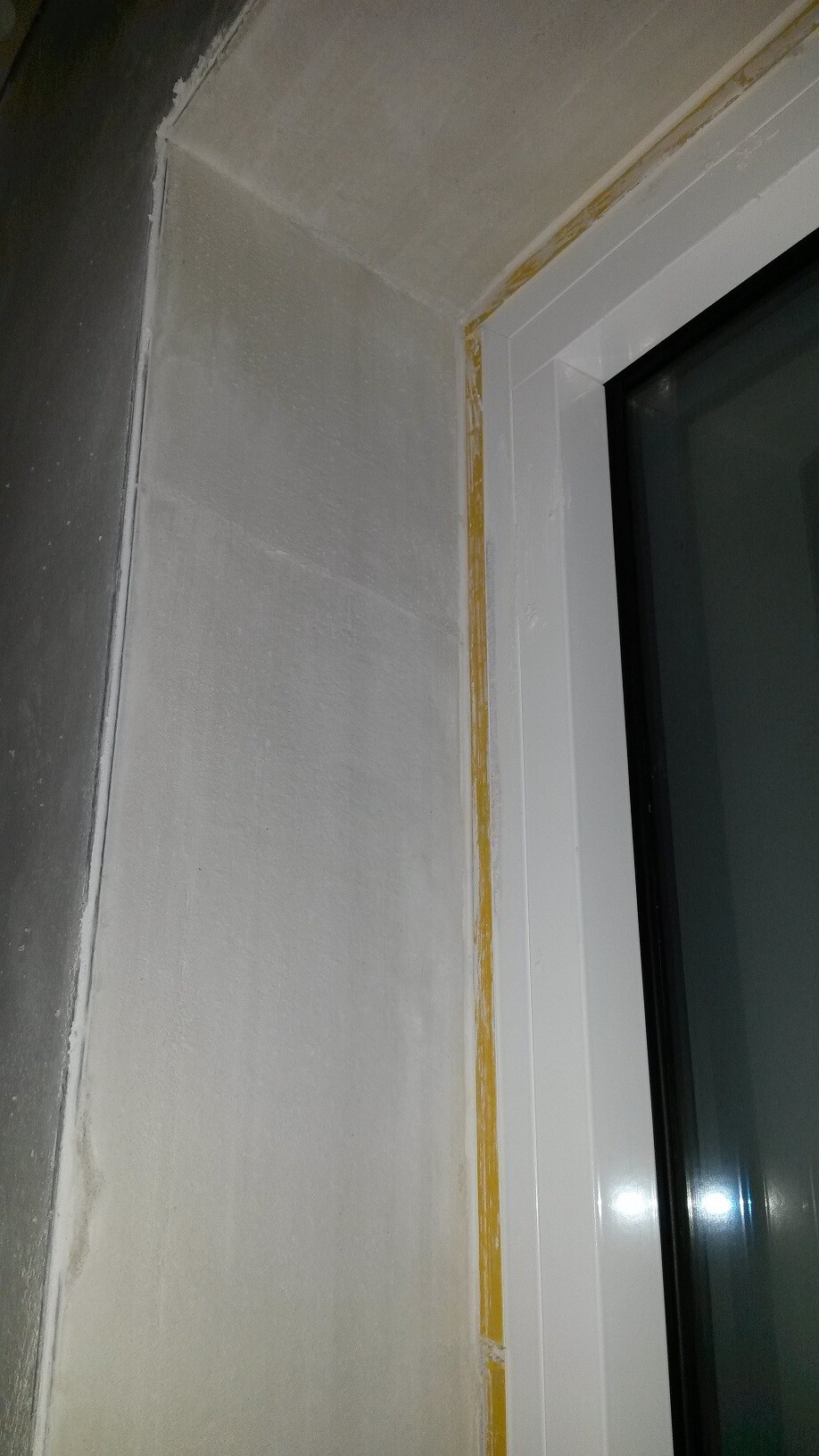
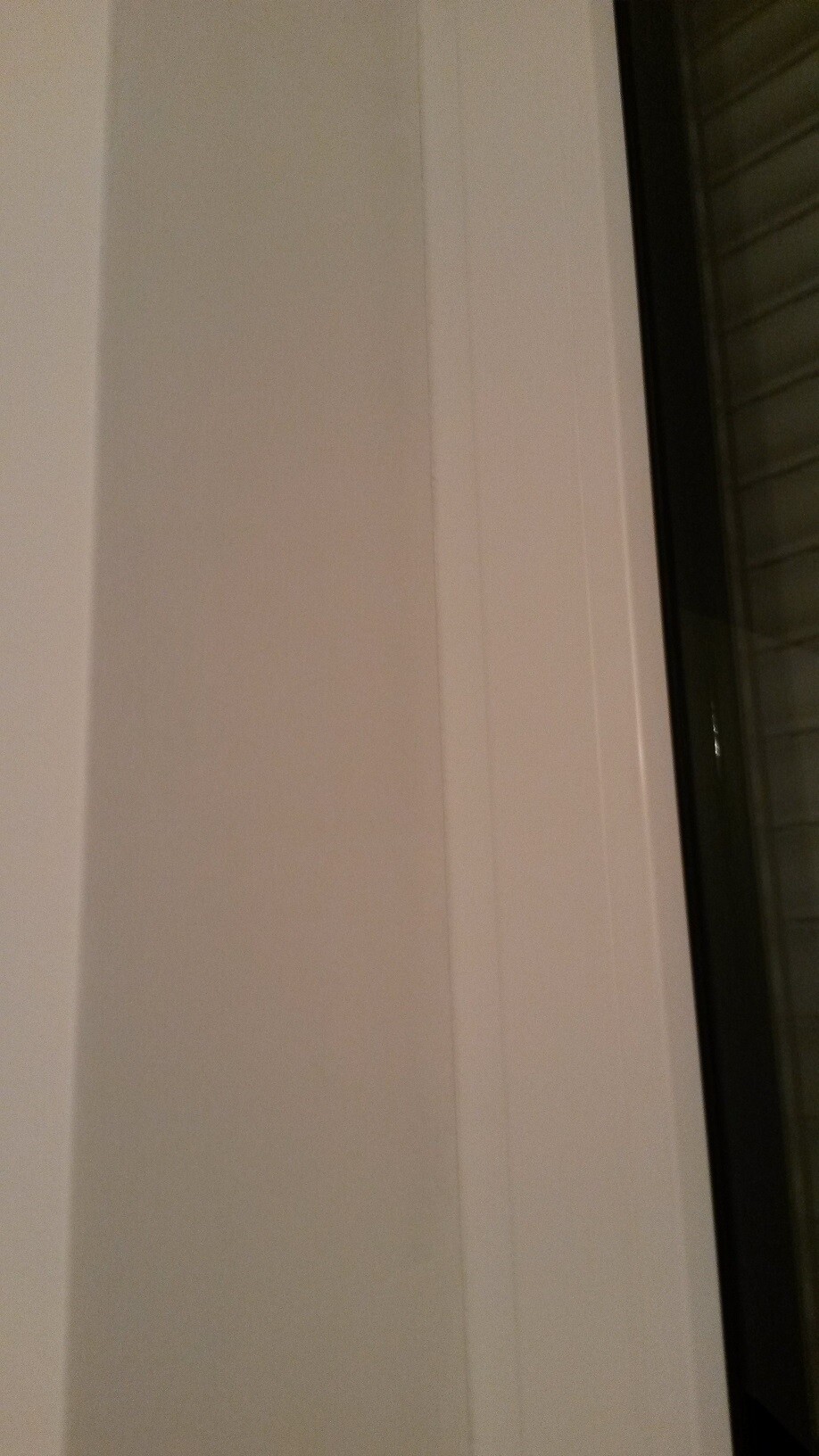
The APU strip is attached to the window frame using a foam adhesive tape (about 3mm (1/8 inch) thick) placed parallel to the corner bead.
The mesh of the APU strip is embedded into the plaster of the reveal.
After masking and plastering, the edge is chamfered.
The mesh prevents cracks in the reveal.
The foam adhesive tape compensates for the 3D movement of the window frame.
The same applies to the entrance door.
Attached are two example pictures: one unfinished and one finished.
S
Sebastian792 Sep 2016 22:16Well, it's a matter of perspective whether that belongs in a new build – the solution is nice but also more complex. By the way, I haven’t seen it in any new builds around here – and some of those were very expensive.
When done properly, acrylic doesn’t look any worse, since you rarely look at it again afterwards anyway 😉
Just paint over it and that’s it...
When done properly, acrylic doesn’t look any worse, since you rarely look at it again afterwards anyway 😉
Just paint over it and that’s it...
Similar topics