
Hello dear forum community,
We are installing two double-leaf patio doors on the ground floor, each 2 meters (6 ft 7 in) wide. However, these are not designed as floor-to-ceiling windows and include a window sill.
We would like them to be floor-to-ceiling with a 2 cm (0.8 in) threshold. Although the window manufacturer will install them this way, they refuse to guarantee rain penetration resistance.
As an alternative, we are also considering having one pane as fixed glazing and the other as an operable door. This option is also refused a warranty for rain penetration resistance.
Is it generally the case that floor-to-ceiling windows with a 2 cm (0.8 in) threshold are not guaranteed to be watertight against driving rain?
Thank you very much!
We are installing two double-leaf patio doors on the ground floor, each 2 meters (6 ft 7 in) wide. However, these are not designed as floor-to-ceiling windows and include a window sill.
We would like them to be floor-to-ceiling with a 2 cm (0.8 in) threshold. Although the window manufacturer will install them this way, they refuse to guarantee rain penetration resistance.
As an alternative, we are also considering having one pane as fixed glazing and the other as an operable door. This option is also refused a warranty for rain penetration resistance.
Is it generally the case that floor-to-ceiling windows with a 2 cm (0.8 in) threshold are not guaranteed to be watertight against driving rain?
Thank you very much!

Chloe83 schrieb:
The gutter is installed by the landscaping contractor, right? Correct. Our home builder didn’t mention anything about that regarding the warranty.
@rick2018, what do you consider floor-to-ceiling windows—completely without a threshold?


Your window sill is generally not designed to be walked on. However, this can vary depending on the material and the method of installation. Exterior window sills in solid construction are sometimes made of granite or finished with clinker bricks as a drip edge. But with almost all walls using external thermal insulation composite systems (ETICS), the window sill is usually made of aluminum. This forms the first water-draining level and, to my knowledge, is not mechanically load-bearing. The sill is typically installed on a tapered insulation layer, behind or beneath which the second water-draining level is located.
In common usage, floor-to-ceiling windows usually mean windows with a threshold only a few centimeters (inches) high, as opposed to non-floor-to-ceiling windows that have a sill height of around 60–80 cm (24–31 inches).
However, @rick is right that the term floor-to-ceiling can be misleading. His threshold-free (frameless?) windows tend to be found in the premium price range (which is unfortunate) and are not affordable for everyone. 🙄
The rain-tightness is ensured during the installation of the window and, in my opinion, according to current recognized technical standards, is part of the contractor’s obligation when installing. How could the warranty be excluded in this case? Even if someone tried to do so and installs it this way, they would lose any legal dispute because, as a professional, they should not have installed it for you as non-experts. (Liability cannot be legally excluded in such a case.)
Presumably, there is concern that ponded water during heavy rainfall might overcome the low threshold and enter the house. Instead of excluding warranty, a drainage channel (connected to a drain or similar) should be required as a condition for this installation type (the landscaper would take care of that...).
As always, amateur knowledge without warranty.
In common usage, floor-to-ceiling windows usually mean windows with a threshold only a few centimeters (inches) high, as opposed to non-floor-to-ceiling windows that have a sill height of around 60–80 cm (24–31 inches).
However, @rick is right that the term floor-to-ceiling can be misleading. His threshold-free (frameless?) windows tend to be found in the premium price range (which is unfortunate) and are not affordable for everyone. 🙄
The rain-tightness is ensured during the installation of the window and, in my opinion, according to current recognized technical standards, is part of the contractor’s obligation when installing. How could the warranty be excluded in this case? Even if someone tried to do so and installs it this way, they would lose any legal dispute because, as a professional, they should not have installed it for you as non-experts. (Liability cannot be legally excluded in such a case.)
Presumably, there is concern that ponded water during heavy rainfall might overcome the low threshold and enter the house. Instead of excluding warranty, a drainage channel (connected to a drain or similar) should be required as a condition for this installation type (the landscaper would take care of that...).
As always, amateur knowledge without warranty.
i_b_n_a_n schrieb:
The resistance to driving rain is ensured during the window installation and, in my opinion, based on current standards (recognized rules of technology), it is part of the installation contractor’s obligations. How could the warranty be excluded in that case?
Even if they tried to exclude it and install the window that way, they would lose any legal case because, as a professional, they should not install it that way in front of laypeople (liability cannot be legally excluded in such cases).
Most likely, they are worried that standing water during a heavy rain event could overcome the low threshold and enter the house. Instead of excluding warranty, they should require a drainage channel (connected to drainage or similar) as a prerequisite for the desired installation method (the landscaper can handle that...) I also think the window needs to be properly sealed during installation. That will definitely require further discussion.
We would definitely have the drainage channel installed as well, especially since we have a lift-and-slide unit between these two double-wing windows.
I’m really wondering how it’s supposed to look… a floor-to-ceiling sliding unit in the middle and steps on both sides as exits…
Yes, the waterproofing around the windows...
A landscape gardener once asked me, "Do you have that much money left over?"
Me: "Why?"
He: "Because you want to have a drainage channel in front of the floor-to-ceiling windows."
Me: "Otherwise, I feel uncertain about it."
Then a reliable roofer confirmed this, explaining that a large amount of water can accumulate there, which might cause the window to fail and allow water to flow inside.
I haven’t done it yet, but I will. The exterior landscaping at our place hasn’t started yet...
A landscape gardener once asked me, "Do you have that much money left over?"
Me: "Why?"
He: "Because you want to have a drainage channel in front of the floor-to-ceiling windows."
Me: "Otherwise, I feel uncertain about it."
Then a reliable roofer confirmed this, explaining that a large amount of water can accumulate there, which might cause the window to fail and allow water to flow inside.
I haven’t done it yet, but I will. The exterior landscaping at our place hasn’t started yet...
H
HoisleBauer225 Apr 2022 23:48Perhaps these two attached options might be helpful. The version with the Birco channel – does anyone know the cost for a floor-to-ceiling door for this setup? – is quite complex. Advantage: level-access terrace. Disadvantage: high costs and the channel may require cleaning. It should also be considered that light wells need different protection since they are often covered only by a sloped, side-open (plexiglass) glass cover. Water would freely flow in there. So, a kind of protective barrier around the light wells is necessary.
Regarding floor-to-ceiling doors with minimal threshold: we were specifically warned that heavy driving rain can push water under the door.
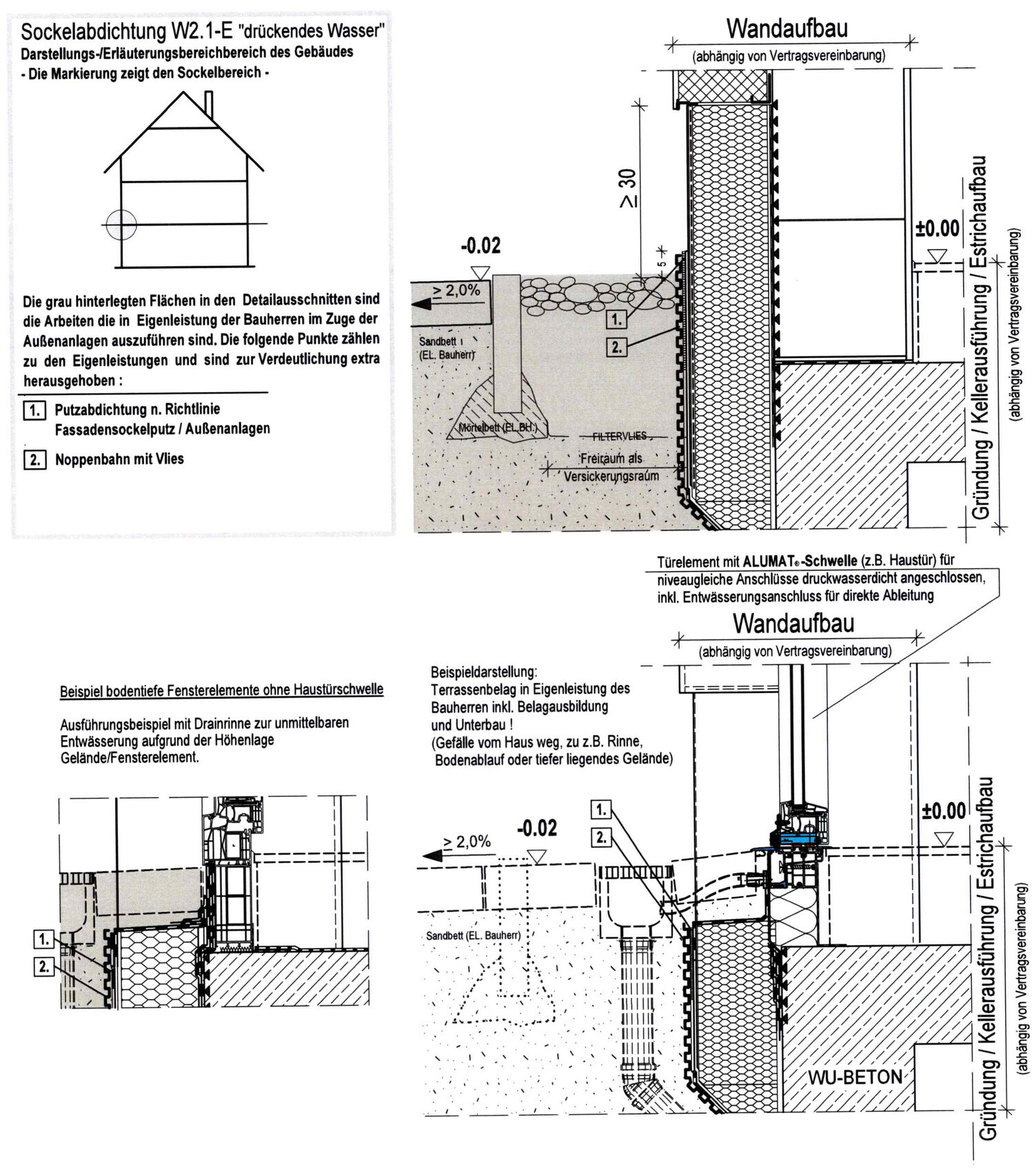
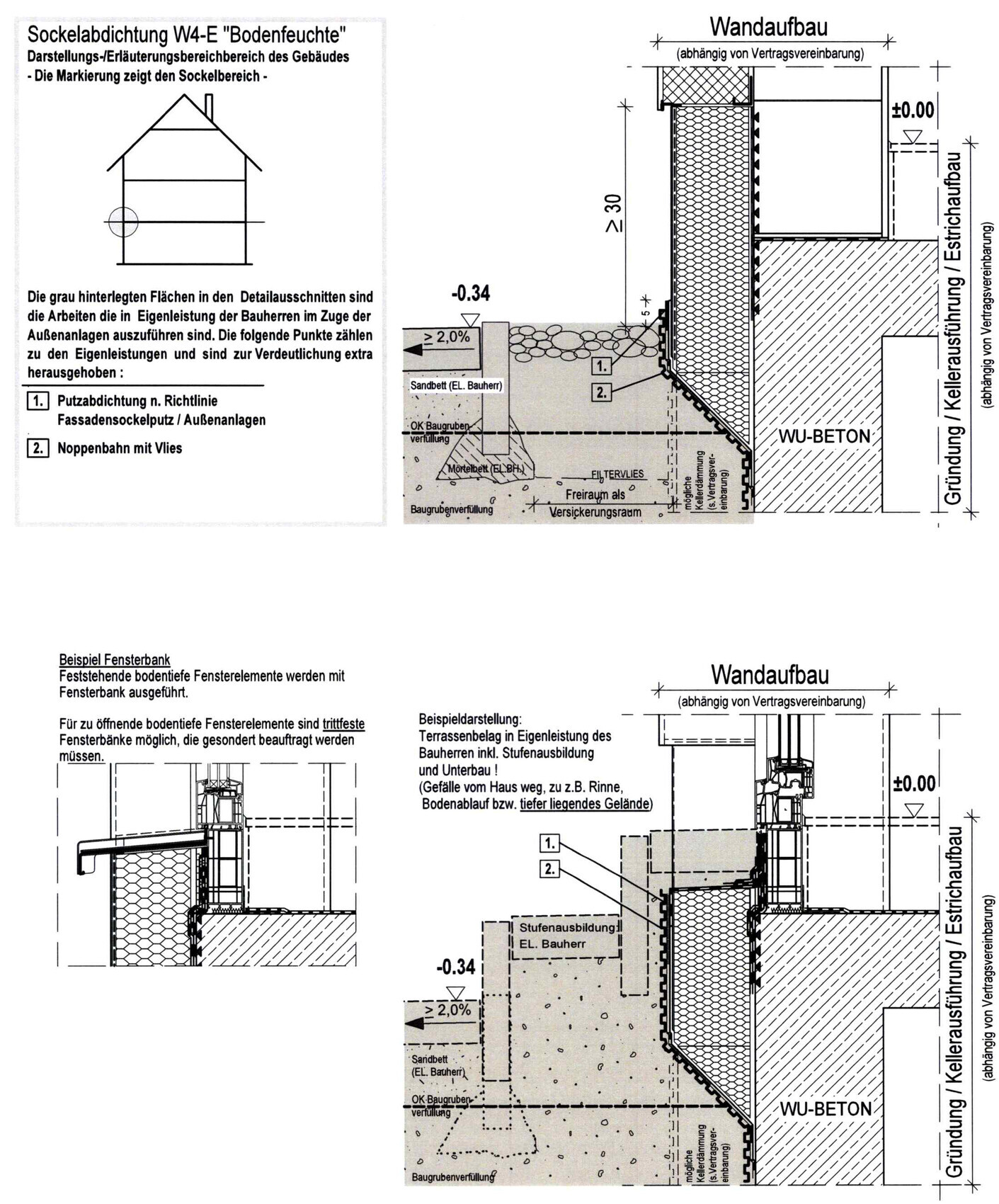
Regarding floor-to-ceiling doors with minimal threshold: we were specifically warned that heavy driving rain can push water under the door.
Similar topics