
ᐅ Who has experience with the Parador Modular One flooring system?
Created on: 10 Feb 2019 21:44
G
Garfield-1978
Hello! Last week, we visited a retailer and looked at the Parador Modular One flooring. It sounds interesting: plasticizer-free; lifetime warranty; integrated cork underlay for sound insulation.
Who has experience with it? During installation? In daily use; cleaning; maintenance; durability?
Who has experience with it? During installation? In daily use; cleaning; maintenance; durability?
I am also interested in long-term experiences regarding durability. My girlfriend has a Parador Modular One with three kids, and it has already suffered some damage from dropped Siku cars (dents, scratches). The area between the terrace and living room also shows signs of wear.
Hello, does anyone have experience with the Modular One flooring that was installed glued down?
In our new build, we had this installed throughout the entire upstairs (bedrooms). The specialist company had planned to glue the floor to ensure the underfloor heating works optimally. They obtained approval from Parador for this method. After installation, we noticed that most of the boards show unattractive compression marks and raised edges, especially on the “short” sides (as if they had been hit with a drive wedge). The company argued that the screed still contains a lot of moisture, causing movement and localized pressure. They said this would settle over time and the raised edges would flatten out if we ventilate well. We should just wait. I don’t believe that... Honestly, with these edges, it looks overall like a basic laminated floor rather than a high-end design floor.
Attached are some photos of the floor.
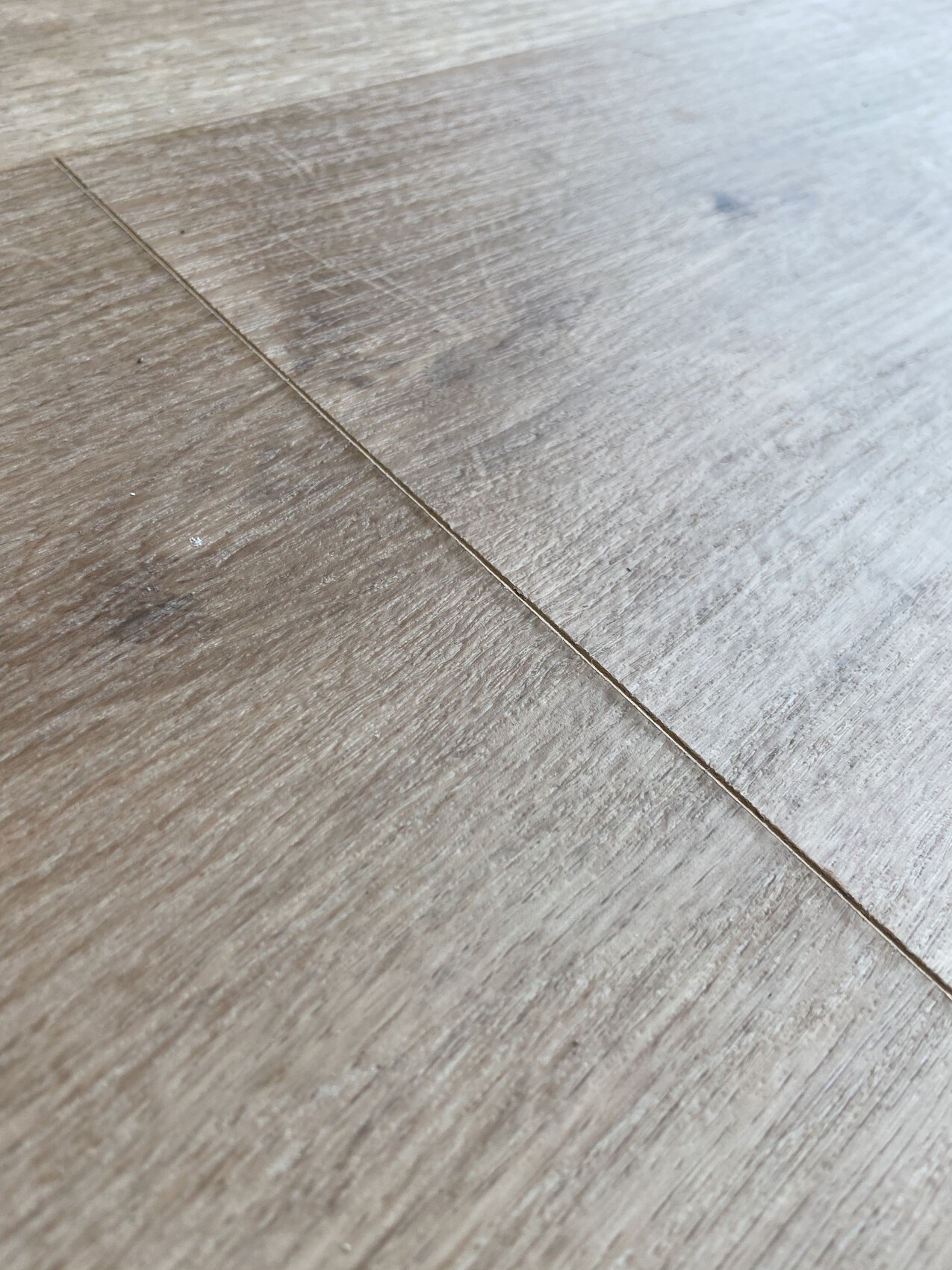
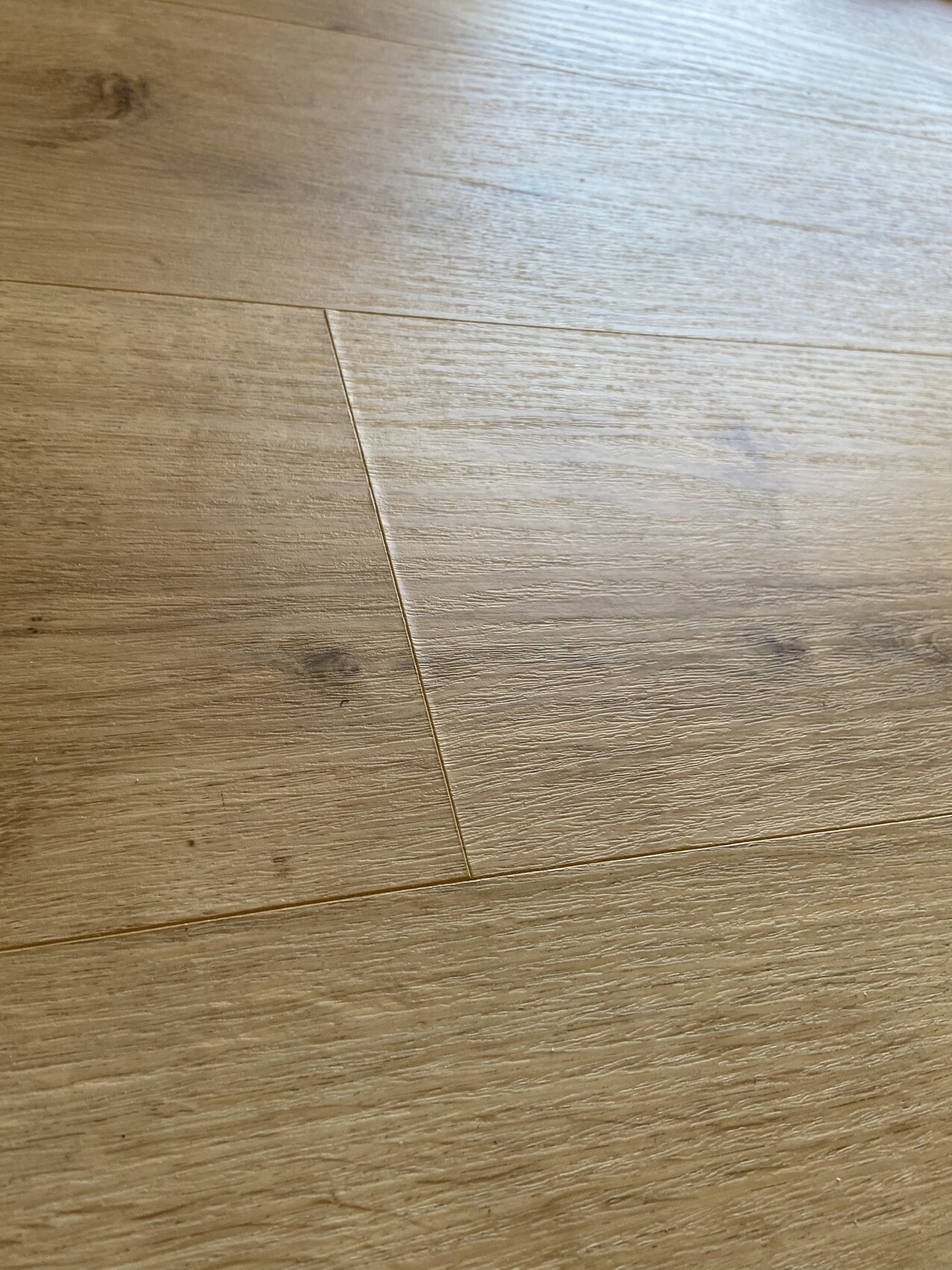
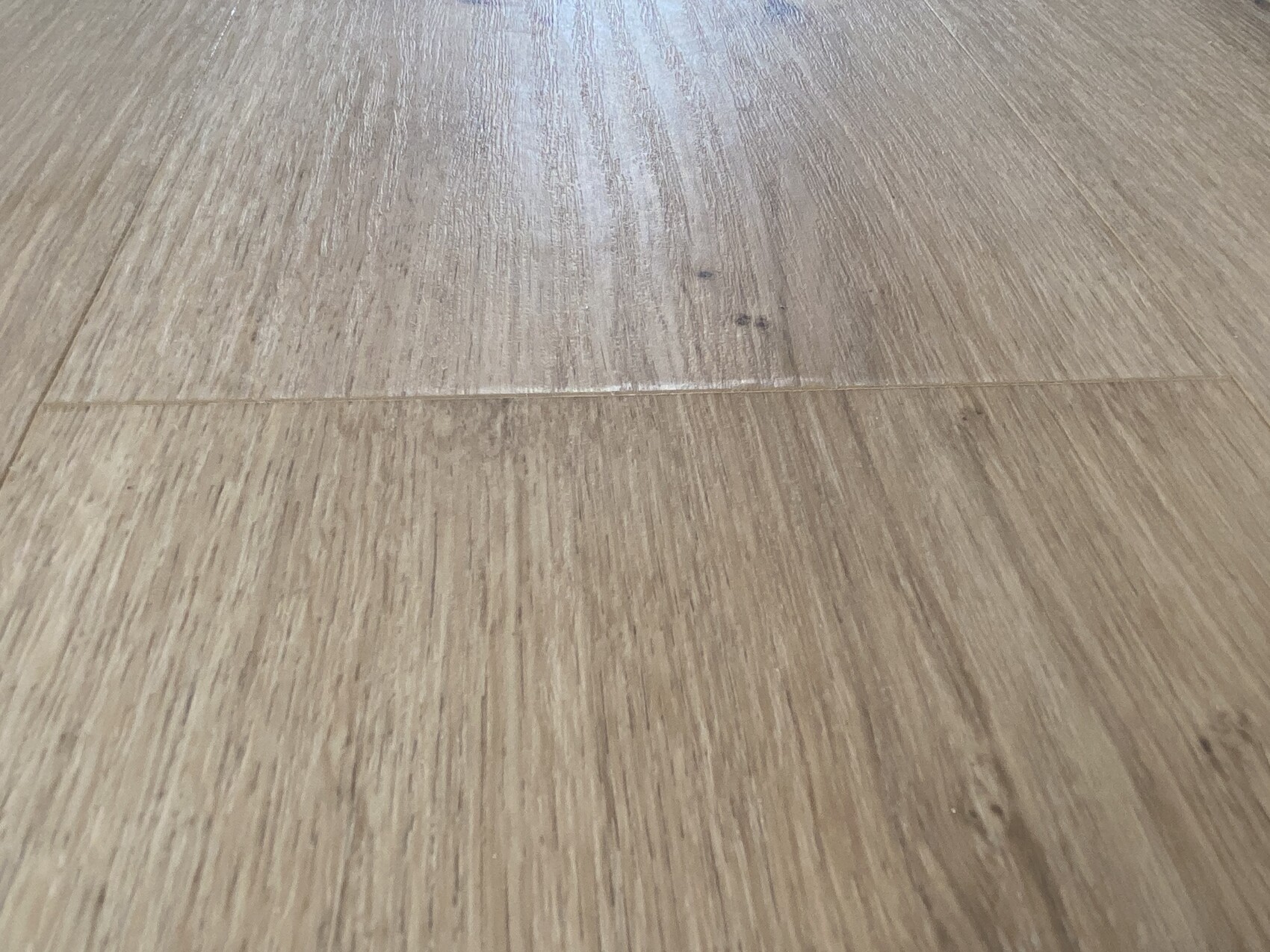
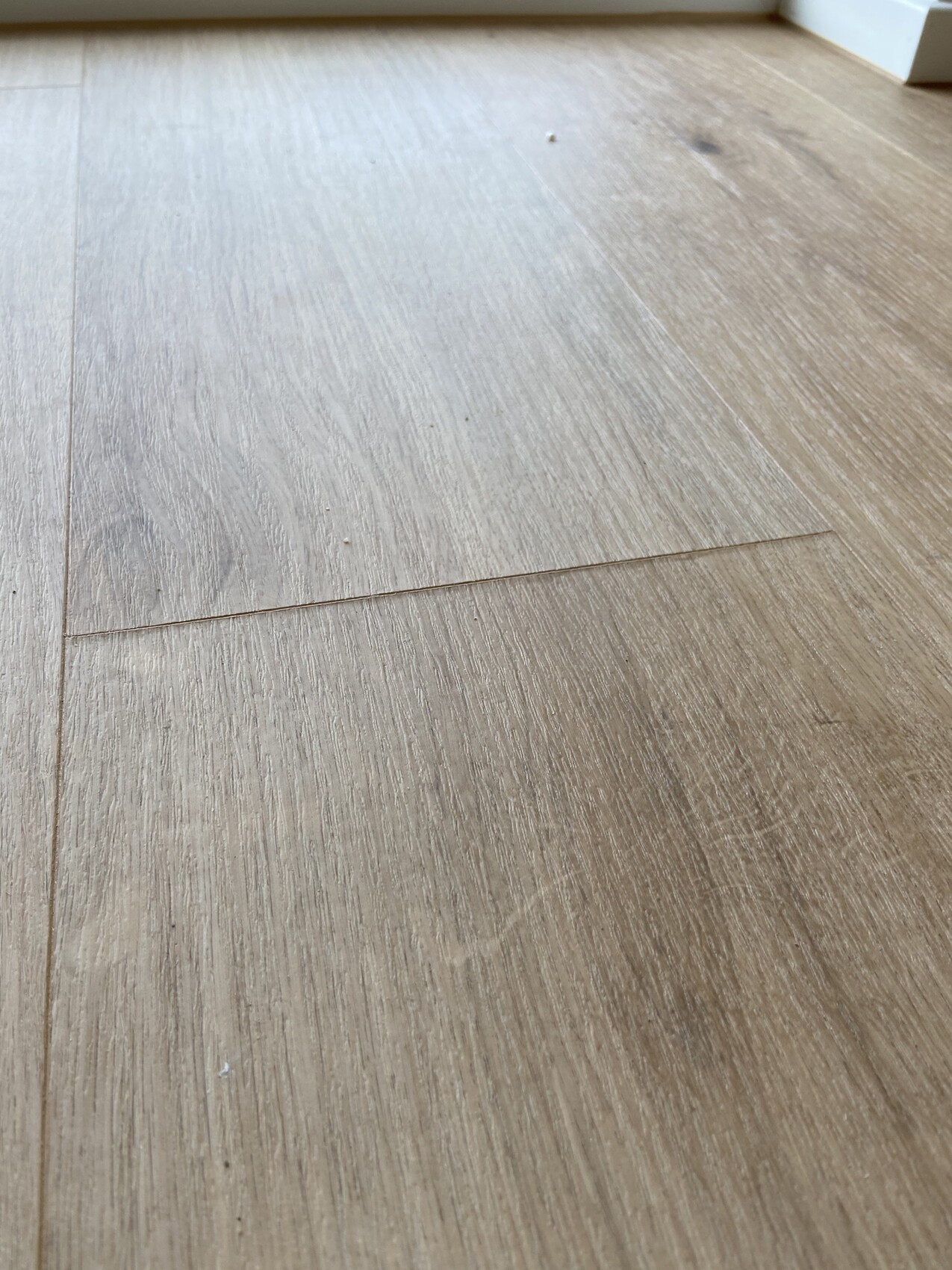
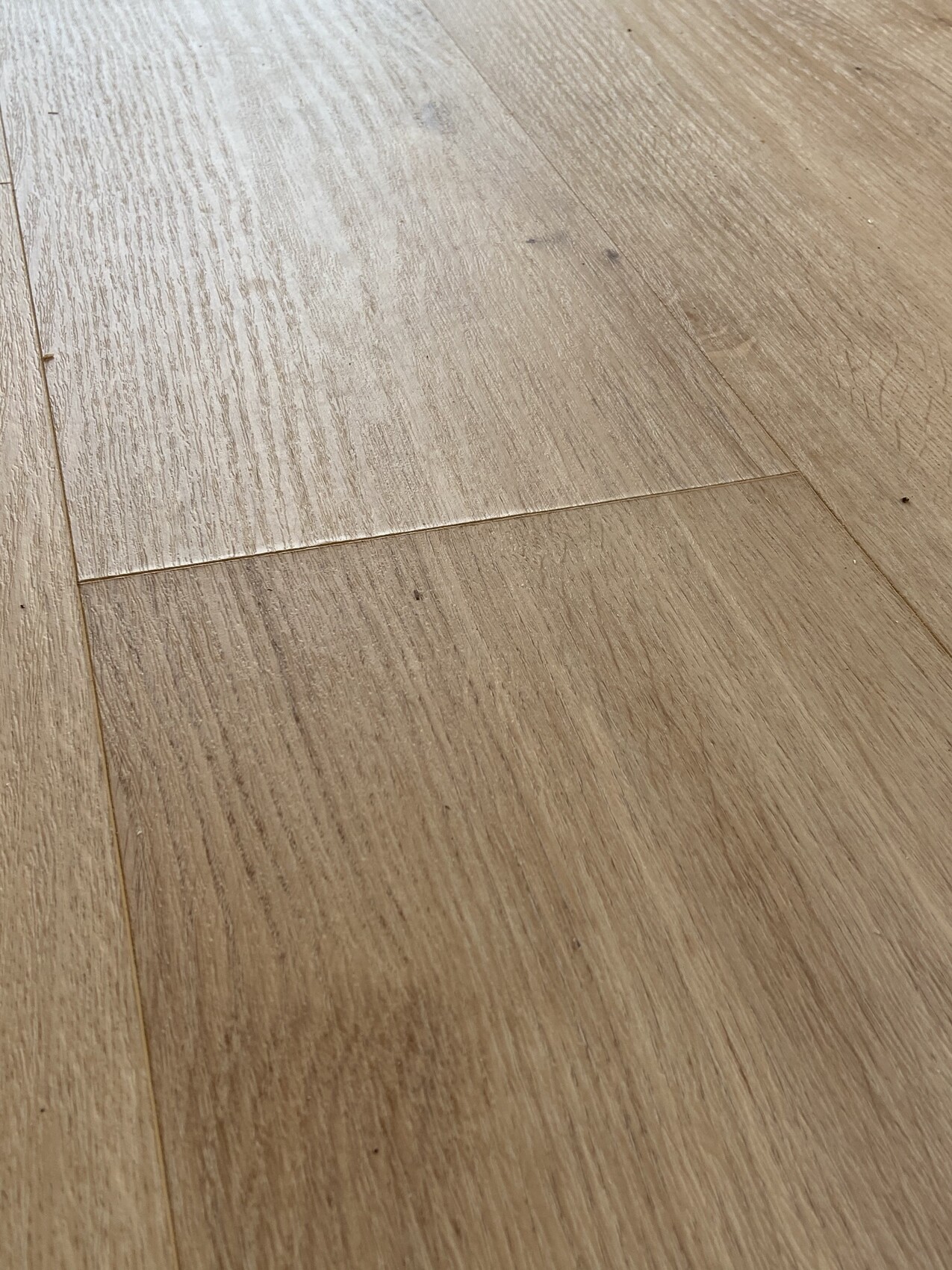
Question: How do your edges look or how should they ideally look? Do you have photos? What experiences have you had with the edges during installation? Has anyone had experience with glued installation?
Overall, I find the floor very pleasing both visually and to the touch (Modular One oak pure natural country plank). I would have preferred a slightly calmer look, but on short showroom displays, you can’t see that well. I can’t yet judge how easy the floor is to clean, whether it scratches easily, or if it is really as durable as the sellers promise, since we haven’t moved in yet.
In our new build, we had this installed throughout the entire upstairs (bedrooms). The specialist company had planned to glue the floor to ensure the underfloor heating works optimally. They obtained approval from Parador for this method. After installation, we noticed that most of the boards show unattractive compression marks and raised edges, especially on the “short” sides (as if they had been hit with a drive wedge). The company argued that the screed still contains a lot of moisture, causing movement and localized pressure. They said this would settle over time and the raised edges would flatten out if we ventilate well. We should just wait. I don’t believe that... Honestly, with these edges, it looks overall like a basic laminated floor rather than a high-end design floor.
Attached are some photos of the floor.
Question: How do your edges look or how should they ideally look? Do you have photos? What experiences have you had with the edges during installation? Has anyone had experience with glued installation?
Overall, I find the floor very pleasing both visually and to the touch (Modular One oak pure natural country plank). I would have preferred a slightly calmer look, but on short showroom displays, you can’t see that well. I can’t yet judge how easy the floor is to clean, whether it scratches easily, or if it is really as durable as the sellers promise, since we haven’t moved in yet.

Hello "HelloCo".
Congratulations on entering the world of half-truths, just like many before you and surely many after.
If, as the "professional company" apparently suggested, the screed still contains a lot of moisture and is therefore moving, that can only cause shaking of the head. The installer, as part of their inspection and duty of care, must check the residual moisture in the screed before installation.
If they did not do this, they breached their duty of care and are liable for all directly related damages as well as consequential damages (e.g., compensation).
If it were actually as claimed, the PVC planks would have partially or fully detached from the subfloor (for example, forming blisters).
You can check this yourself by running your fingernails over the surface of the planks.
If you don’t hear any unusual “chirping” noises, the covering is still firmly attached. Excessive residual moisture? Can be ruled out.
Especially since the carrier material is moisture resistant, so it does not swell when moisture enters.
Now check the end joints with the same fingernail method.
If there is no chirping sound, the end joints are also solid.
Excessive residual moisture: also to be denied.
What very likely happened here is that the delivery (planks) was stored in a cold car or warehouse before it was brought into your home.
Without adequate acclimatization (at least 24 hours in the rooms where the covering will be installed, at the same temperature), the floor covering undergoes natural length expansion when moving from a cold to a warm environment.
If this expansion behavior is not awaited before installation—considering this is an 8mm (0.3 inch) thick system—then it expands after being glued down.
And that is when such dimpling occurs. Or if the manufacturer-approved total area for full-surface glue-down of 20m² (215 sq ft) is significantly exceeded.
"It will settle over time, just ventilate well!"
Complete nonsense, this is only to soothe the homeowner, hoping they get used to the appearance in the coming weeks.
A dimpled PVC covering installed as a modular system, as seen in the photos, remains as it is! No matter how well or often you ventilate.
Unfortunately.
------------------------------------------
Regards: KlaRa
Congratulations on entering the world of half-truths, just like many before you and surely many after.
If, as the "professional company" apparently suggested, the screed still contains a lot of moisture and is therefore moving, that can only cause shaking of the head. The installer, as part of their inspection and duty of care, must check the residual moisture in the screed before installation.
If they did not do this, they breached their duty of care and are liable for all directly related damages as well as consequential damages (e.g., compensation).
If it were actually as claimed, the PVC planks would have partially or fully detached from the subfloor (for example, forming blisters).
You can check this yourself by running your fingernails over the surface of the planks.
If you don’t hear any unusual “chirping” noises, the covering is still firmly attached. Excessive residual moisture? Can be ruled out.
Especially since the carrier material is moisture resistant, so it does not swell when moisture enters.
Now check the end joints with the same fingernail method.
If there is no chirping sound, the end joints are also solid.
Excessive residual moisture: also to be denied.
What very likely happened here is that the delivery (planks) was stored in a cold car or warehouse before it was brought into your home.
Without adequate acclimatization (at least 24 hours in the rooms where the covering will be installed, at the same temperature), the floor covering undergoes natural length expansion when moving from a cold to a warm environment.
If this expansion behavior is not awaited before installation—considering this is an 8mm (0.3 inch) thick system—then it expands after being glued down.
And that is when such dimpling occurs. Or if the manufacturer-approved total area for full-surface glue-down of 20m² (215 sq ft) is significantly exceeded.
"It will settle over time, just ventilate well!"
Complete nonsense, this is only to soothe the homeowner, hoping they get used to the appearance in the coming weeks.
A dimpled PVC covering installed as a modular system, as seen in the photos, remains as it is! No matter how well or often you ventilate.
Unfortunately.
------------------------------------------
Regards: KlaRa
S
Strahleman11 Jun 2021 20:21To those who have installed the Modular One as a floating floor: Did you place a regular vapor barrier (plastic sheet) underneath or a Parador Akustik Protect impact sound insulation? I know that the Modular One has a cork layer for impact sound insulation. However, I thought I once read that it’s better to add an additional impact sound insulation layer underneath.
Similar topics