
ᐅ Watertight concrete basement and perimeter drainage for our house?
Created on: 25 Oct 2020 11:37
B
BerhaneHello everyone,
I have a question about the optimal waterproofing of the basement against water and moisture.
We are currently building a semi-detached house, and the basement is already finished.
Basement dimensions are 8 meters by 12 meters (26 feet by 39 feet).
We have built a waterproof concrete shell (“white tank”) and applied a bitumen layer and thermal insulation on the exterior.
The architect planned a perimeter drain, but the earthworks contractor says it’s not necessary. For the basement window wells, he can install infiltration grids.
What would you recommend?
Thanks and best regards,
Berhane
I have a question about the optimal waterproofing of the basement against water and moisture.
We are currently building a semi-detached house, and the basement is already finished.
Basement dimensions are 8 meters by 12 meters (26 feet by 39 feet).
We have built a waterproof concrete shell (“white tank”) and applied a bitumen layer and thermal insulation on the exterior.
The architect planned a perimeter drain, but the earthworks contractor says it’s not necessary. For the basement window wells, he can install infiltration grids.
What would you recommend?
Thanks and best regards,
Berhane
Hello,
By bitumen layer, you mean a thick coating used to adhere the insulation, right? So not a waterproofing membrane (torch-applied sheet)... (Just to clarify)
Then you also need to know how the waterproof concrete structure (“white tank”) was constructed. There are differences regarding water management here.
From the geometry, I would initially say that there shouldn’t be any major issues. Do you have any photos of how the floor slab to wall connection was made?
In my opinion, a perimeter drainage is not necessary with a proper waterproof concrete construction. What are your groundwater levels?
If you need further help, feel free to reach out. I have some experience in the field of waterproof concrete construction.
Best regards,
Jann St
By bitumen layer, you mean a thick coating used to adhere the insulation, right? So not a waterproofing membrane (torch-applied sheet)... (Just to clarify)
Then you also need to know how the waterproof concrete structure (“white tank”) was constructed. There are differences regarding water management here.
From the geometry, I would initially say that there shouldn’t be any major issues. Do you have any photos of how the floor slab to wall connection was made?
In my opinion, a perimeter drainage is not necessary with a proper waterproof concrete construction. What are your groundwater levels?
If you need further help, feel free to reach out. I have some experience in the field of waterproof concrete construction.
Best regards,
Jann St
Hello Jann, thank you very much for your feedback.
Yes, it is a waterproof concrete shell with a bitumen thick coating, and the thermal insulation is adhered on top of that.
I am sending you some photos as well. The floor-to-wall joint is sealed with a bitumen membrane, see photos.
I have now decided against a perimeter drainage system. Under the light wells, I will have infiltration blocks installed.
The groundwater level is well below the basement floor.
Is my decision correct?
Thanks and best regards,
Daniel
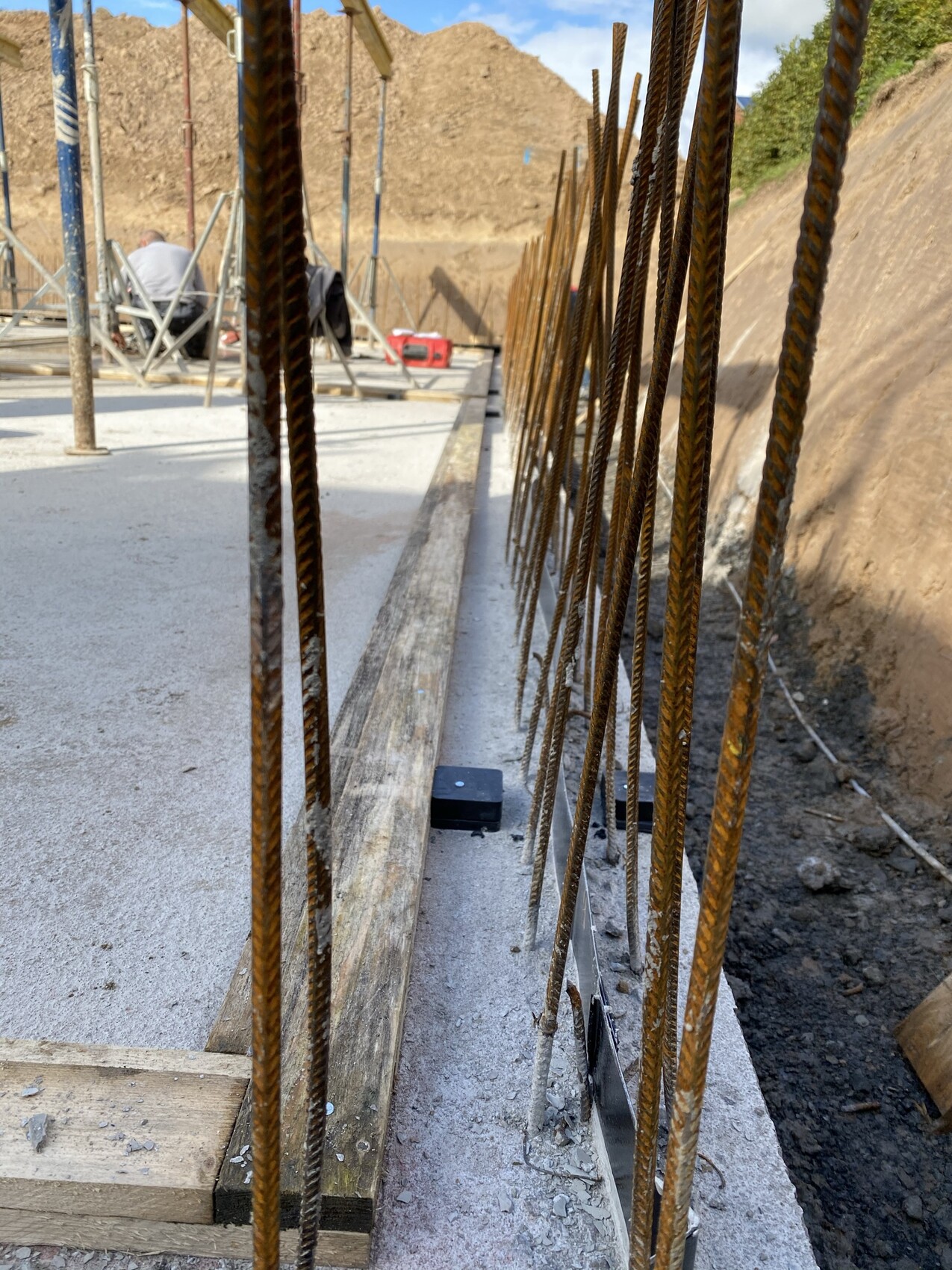
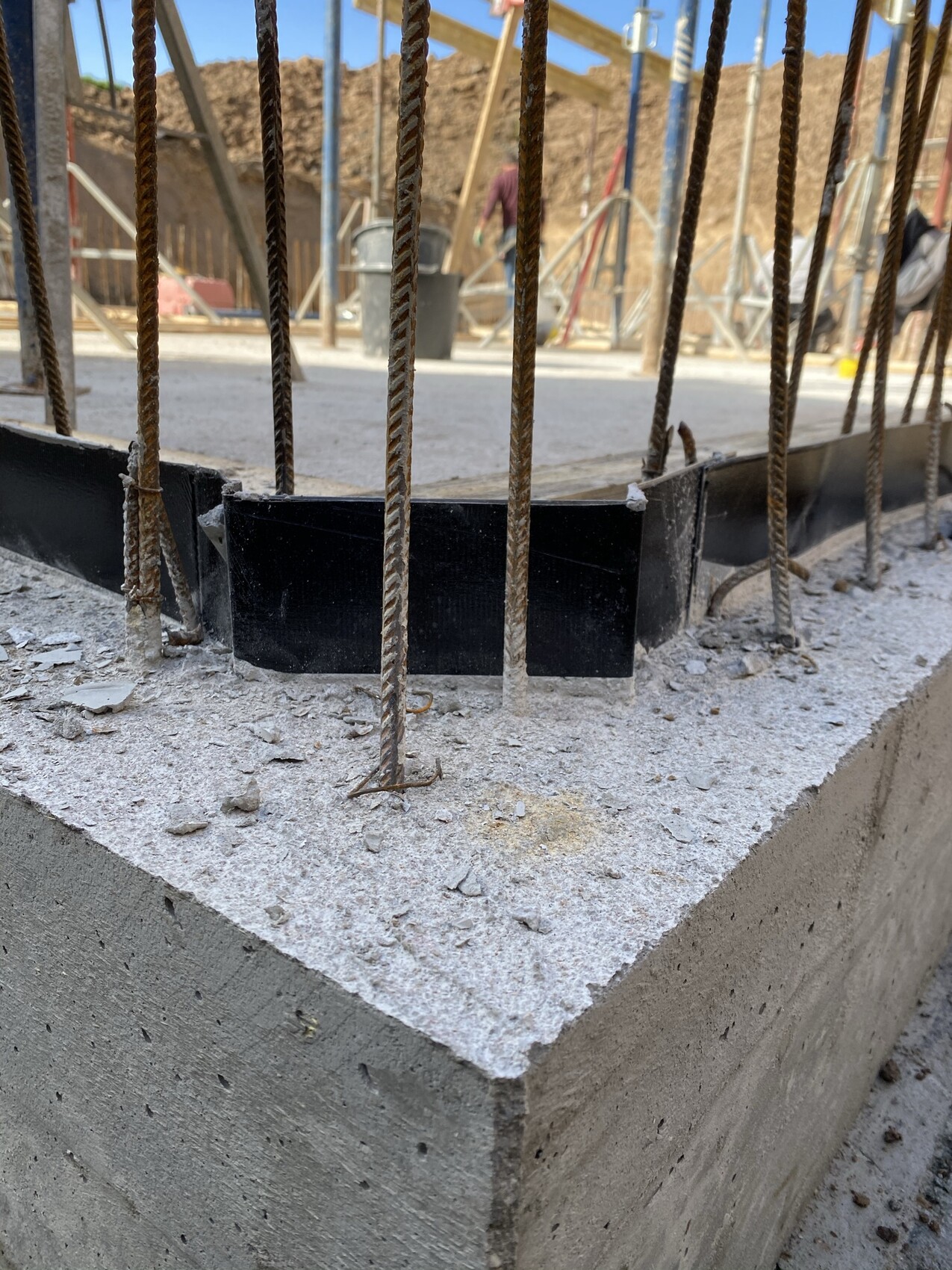
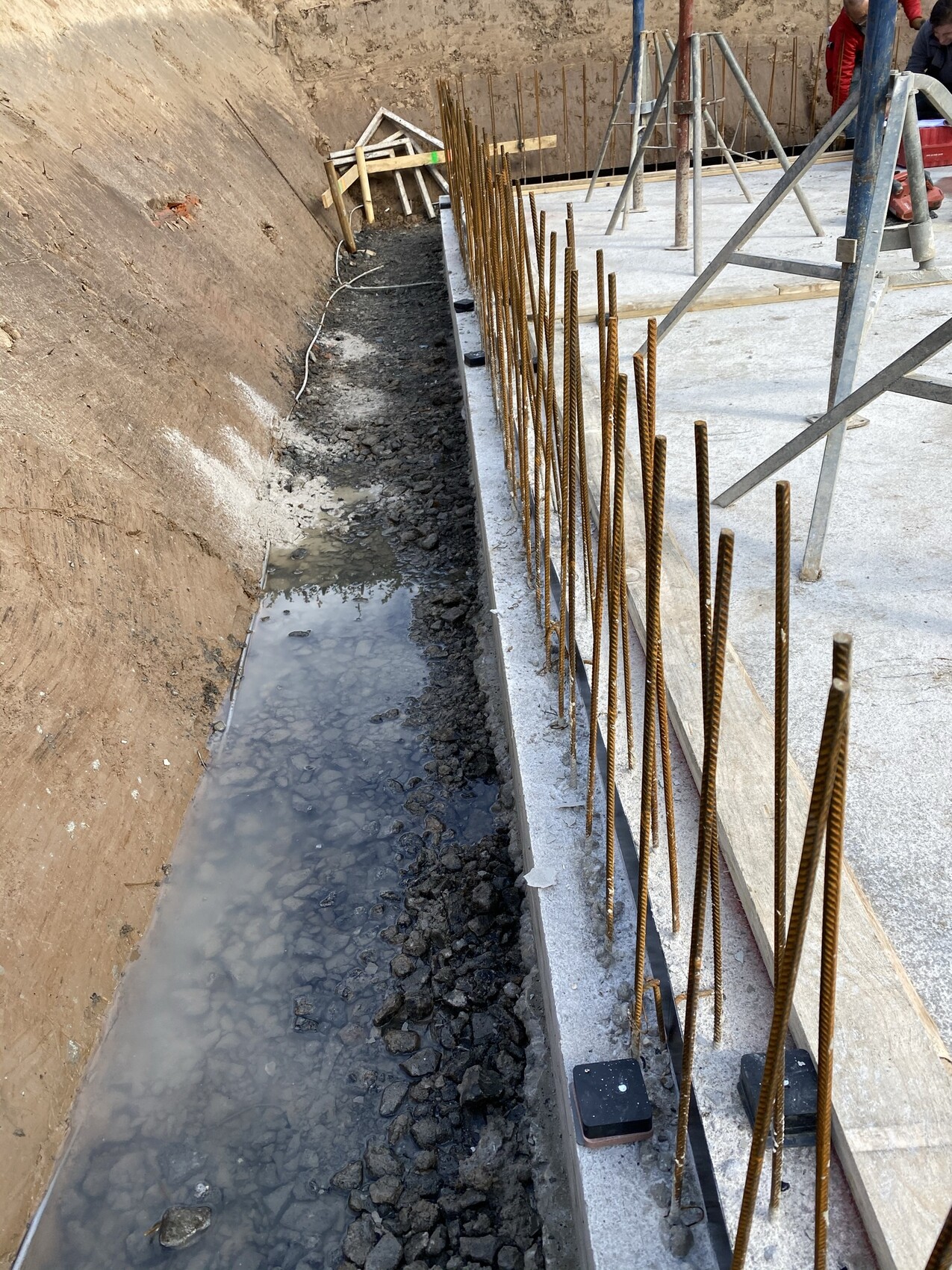
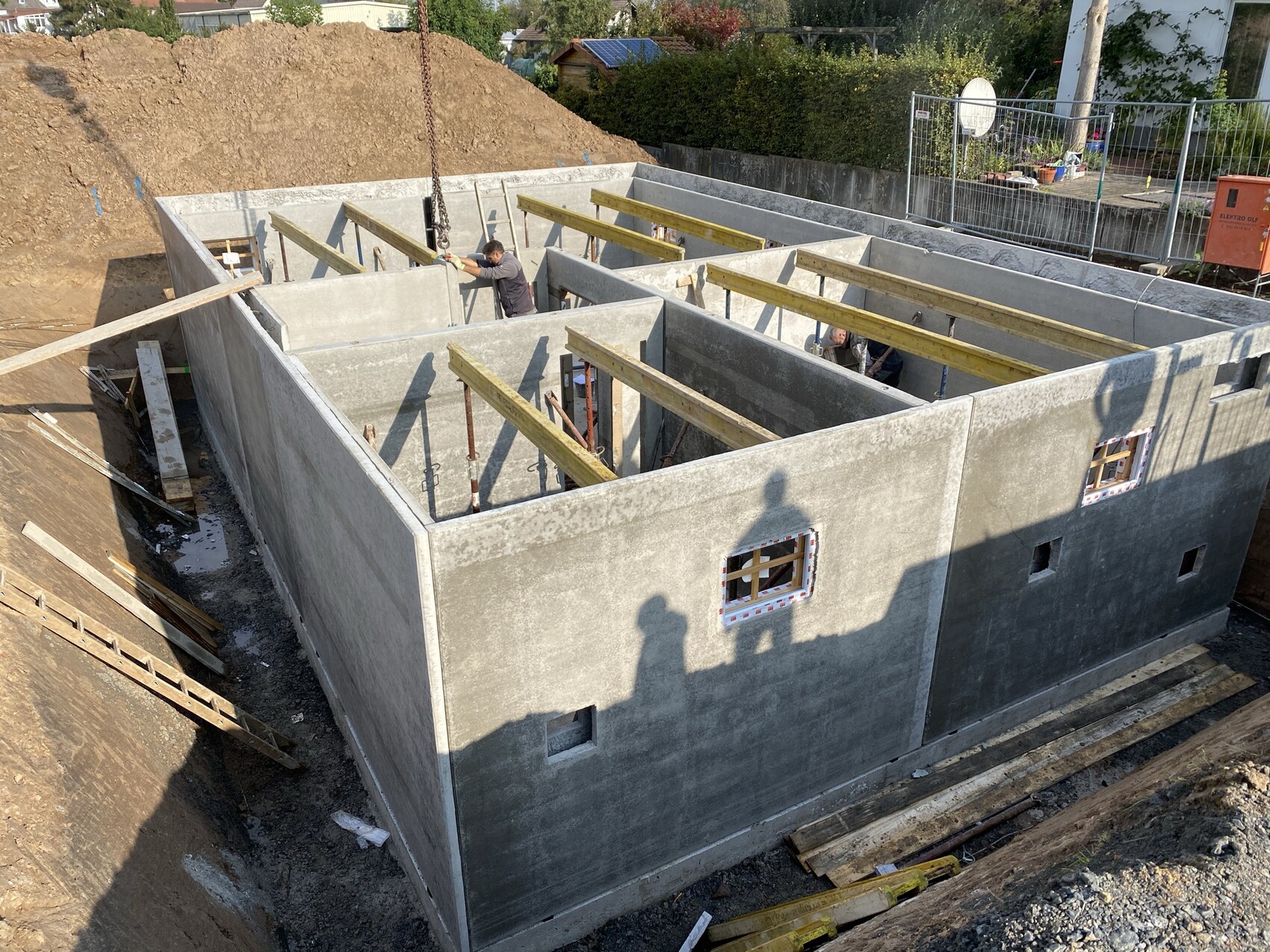
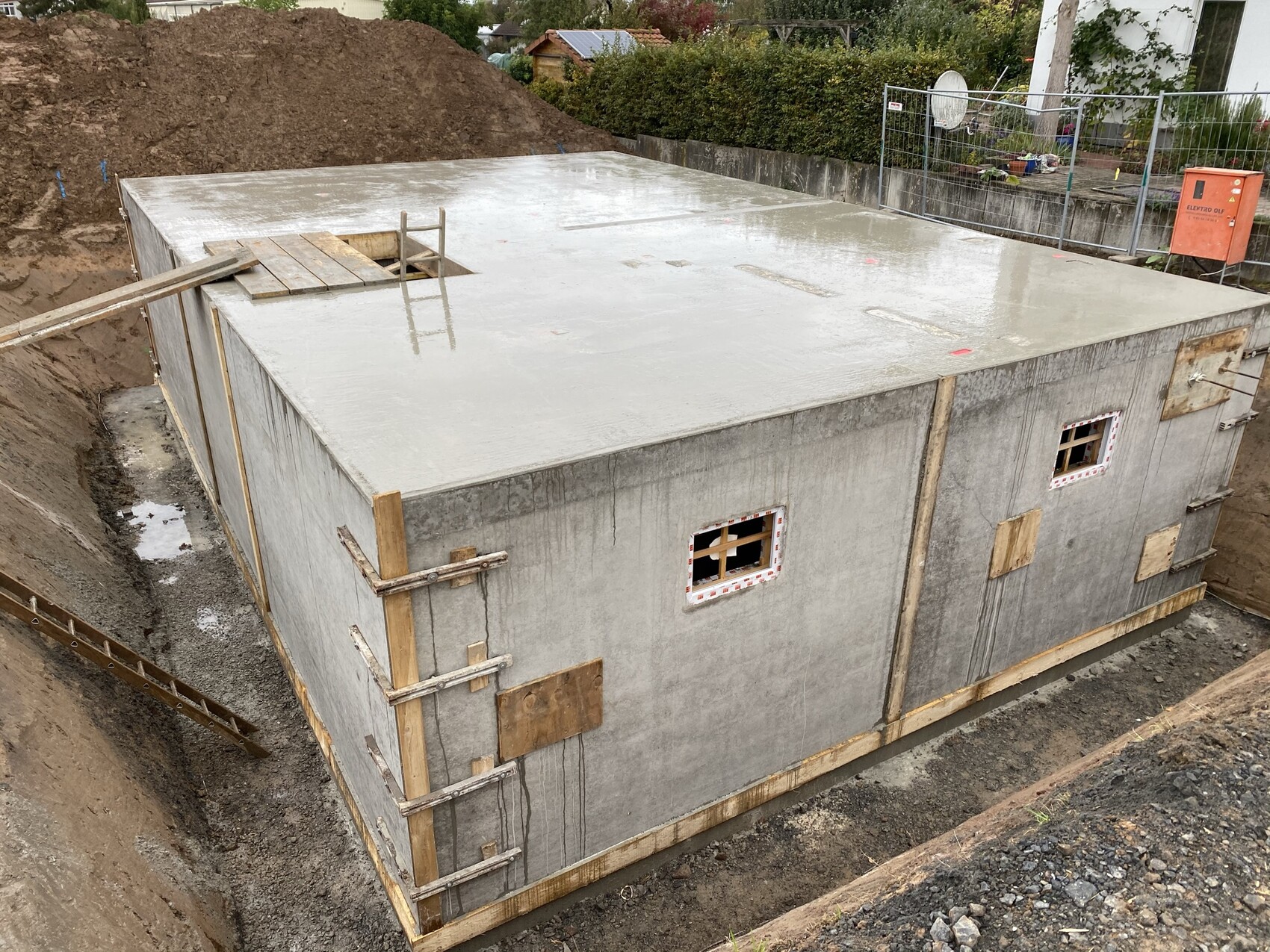
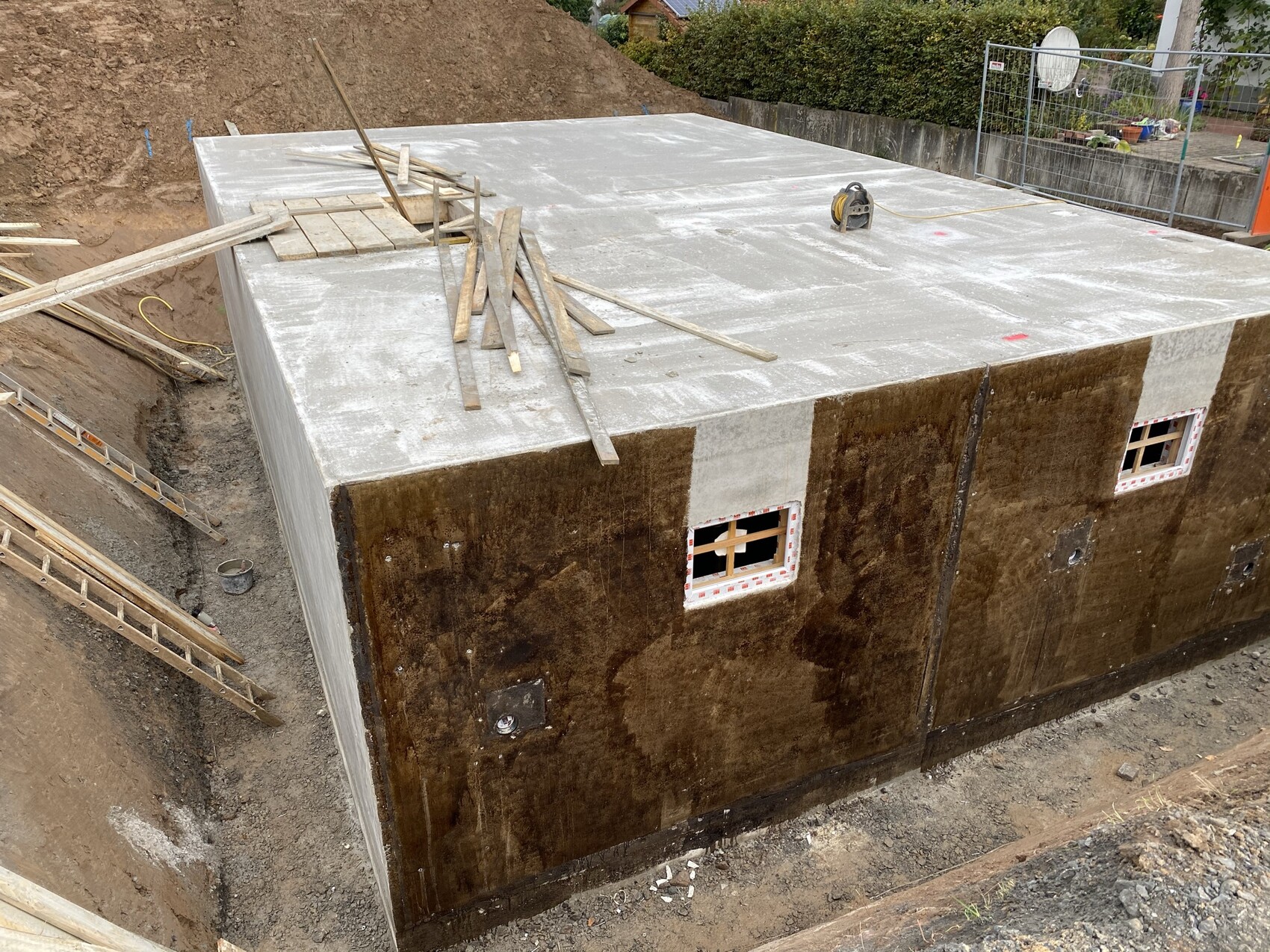
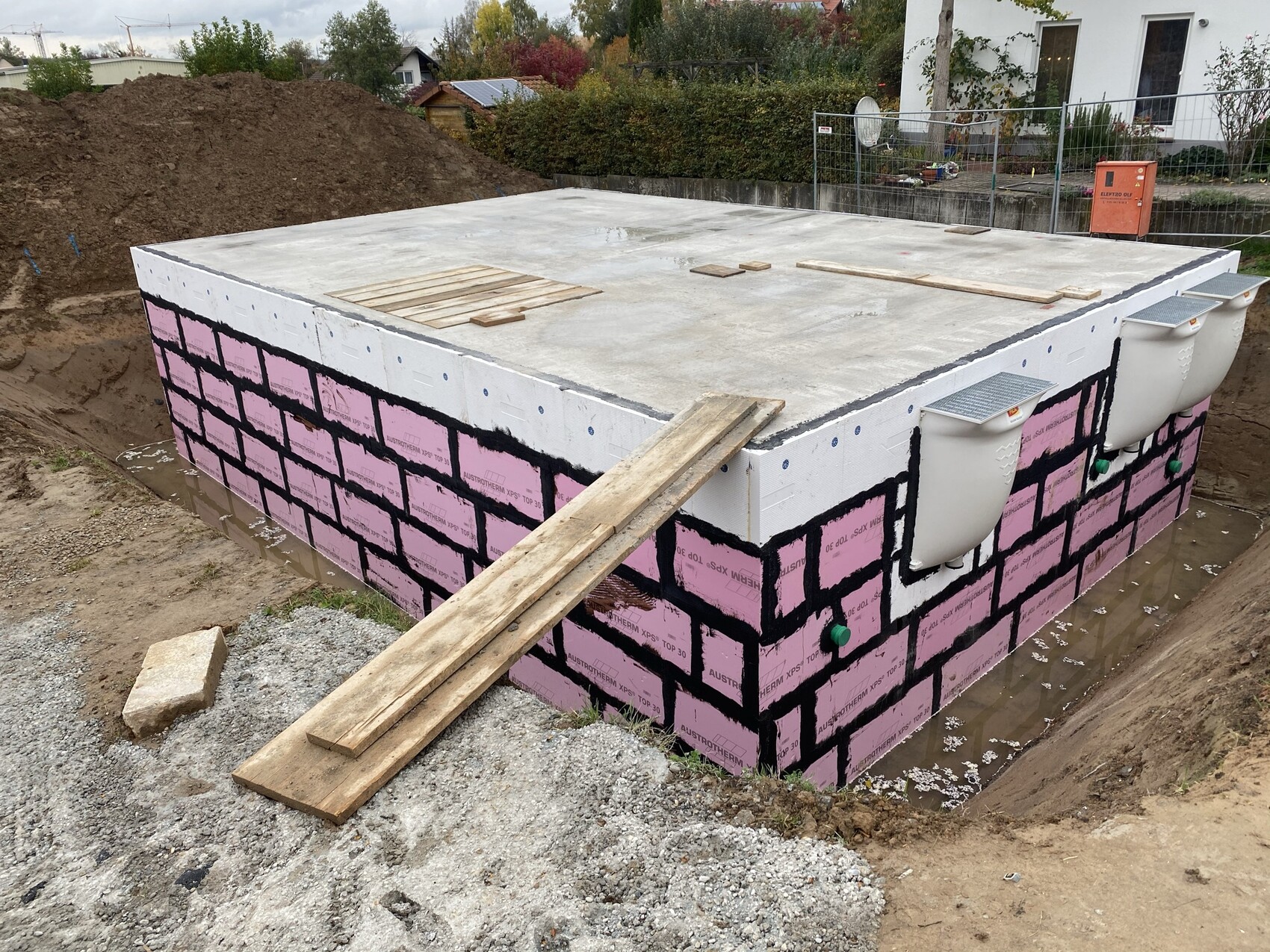
Yes, it is a waterproof concrete shell with a bitumen thick coating, and the thermal insulation is adhered on top of that.
I am sending you some photos as well. The floor-to-wall joint is sealed with a bitumen membrane, see photos.
I have now decided against a perimeter drainage system. Under the light wells, I will have infiltration blocks installed.
The groundwater level is well below the basement floor.
Is my decision correct?
Thanks and best regards,
Daniel
Hi,
Yes, in my opinion that was done correctly. The joints seem to be well executed. The light wells are not connected to the drainage system, so the water is supposed to percolate? Then increasing the infiltration capacity beneath was a sensible measure.
Enjoy it. If you have any other questions, feel free to ask. I do this professionally.
Best regards, Jann
Yes, in my opinion that was done correctly. The joints seem to be well executed. The light wells are not connected to the drainage system, so the water is supposed to percolate? Then increasing the infiltration capacity beneath was a sensible measure.
Enjoy it. If you have any other questions, feel free to ask. I do this professionally.
Best regards, Jann
Similar topics