
Hi,
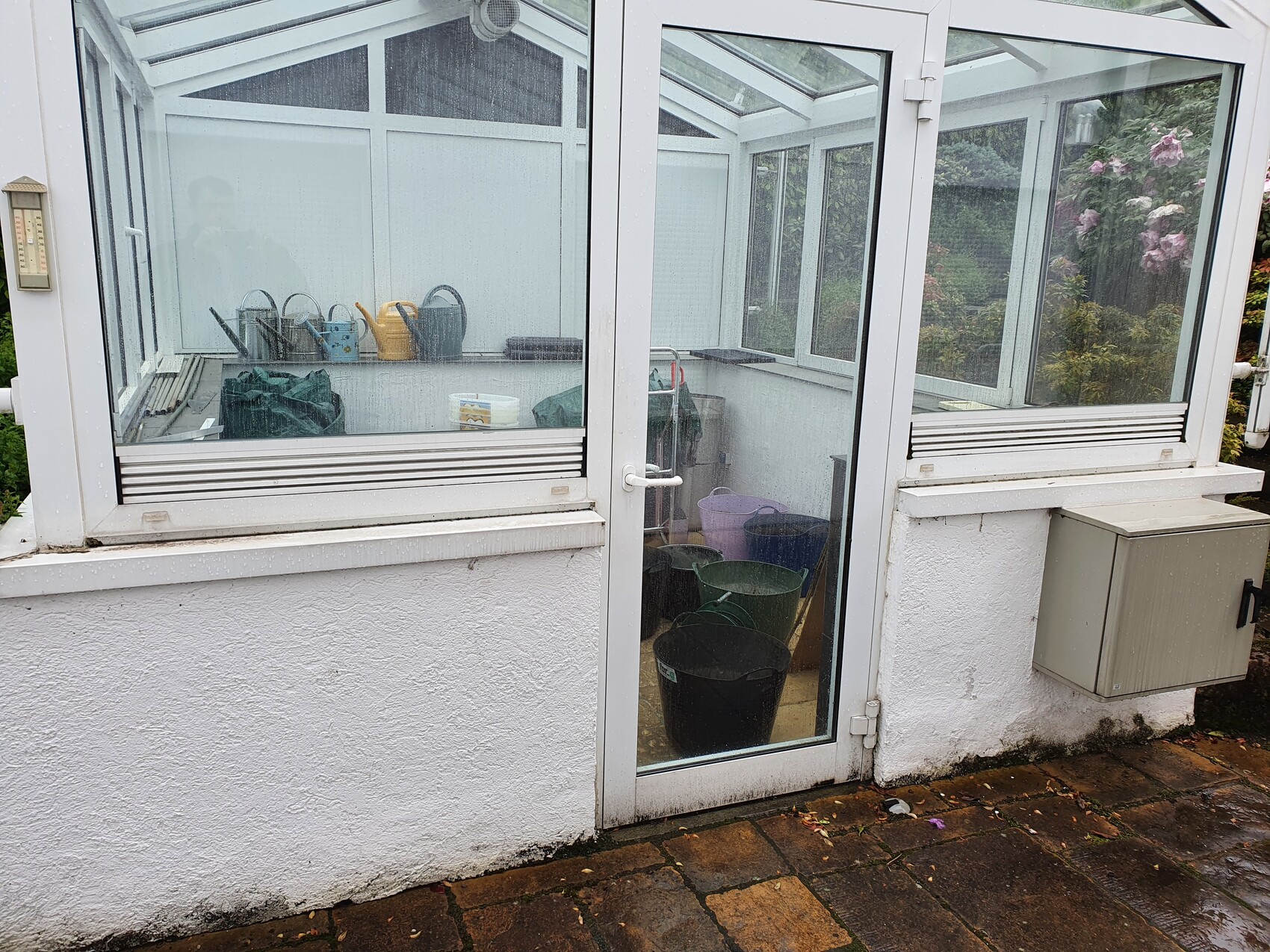
we have a garden shed (formerly a greenhouse) that was previously plastered and painted with silicate paint.
Now I want to apply a smooth plaster finish and repaint it. I plan to apply a bonding primer before the paint. The floor is not waterproofed; it consists of natural stone slabs with paving joint mortar. So, some moisture may rise into the plaster, but I want to leave a small gap between the floor and the plaster.
I am not sure which finishing plaster to use. It should be as easy to smooth as possible.
Looking at Rotband bonding plaster and Rotband surface filler, I can’t see much difference. The surface filler is just significantly more expensive. Or would the BAUMIT fiber-reinforced facade and repair filler be better?
Maybe someone can offer some advice.
we have a garden shed (formerly a greenhouse) that was previously plastered and painted with silicate paint.
Now I want to apply a smooth plaster finish and repaint it. I plan to apply a bonding primer before the paint. The floor is not waterproofed; it consists of natural stone slabs with paving joint mortar. So, some moisture may rise into the plaster, but I want to leave a small gap between the floor and the plaster.
I am not sure which finishing plaster to use. It should be as easy to smooth as possible.
Looking at Rotband bonding plaster and Rotband surface filler, I can’t see much difference. The surface filler is just significantly more expensive. Or would the BAUMIT fiber-reinforced facade and repair filler be better?
Maybe someone can offer some advice.
K
Klappradl26 May 2021 07:20phorris schrieb:
When I look at Rotband bonding plaster and Rotband surface filler, I can’t see what the difference is. The surface filler is just clearly more expensive.You notice the difference during application. Neither is suitable for exterior use.Based on the description, I also assume this concerns the exterior.
The silicate paint should be cleaned with a high-pressure washer to remove any loose particles. Normally, if the substrate is questionable, you can perform a pull-off test: apply a piece of mesh with adhesive reinforcing mortar and leave a portion of the mesh hanging. After it has dried, pull on it to see what happens. If the paint is stable, you can pre-treat with adhesive reinforcing mortar and then apply a finishing render. There are also materials available that can be used both as adhesive mortar and finishing render.
However, I would avoid working too finely. Smooth renders usually do not work well on exteriors if you aim for the smoothness achievable with interior materials. Additionally, moisture typically does not travel upward through the render itself but through the masonry, which is often not properly sealed.
The silicate paint should be cleaned with a high-pressure washer to remove any loose particles. Normally, if the substrate is questionable, you can perform a pull-off test: apply a piece of mesh with adhesive reinforcing mortar and leave a portion of the mesh hanging. After it has dried, pull on it to see what happens. If the paint is stable, you can pre-treat with adhesive reinforcing mortar and then apply a finishing render. There are also materials available that can be used both as adhesive mortar and finishing render.
However, I would avoid working too finely. Smooth renders usually do not work well on exteriors if you aim for the smoothness achievable with interior materials. Additionally, moisture typically does not travel upward through the render itself but through the masonry, which is often not properly sealed.
The actual substrate was bare XPS insulation boards, which I smoothed over using an adhesive mortar and reinforcing mesh. The surface didn’t turn out very well, so I want to try again to achieve a smoother finish.
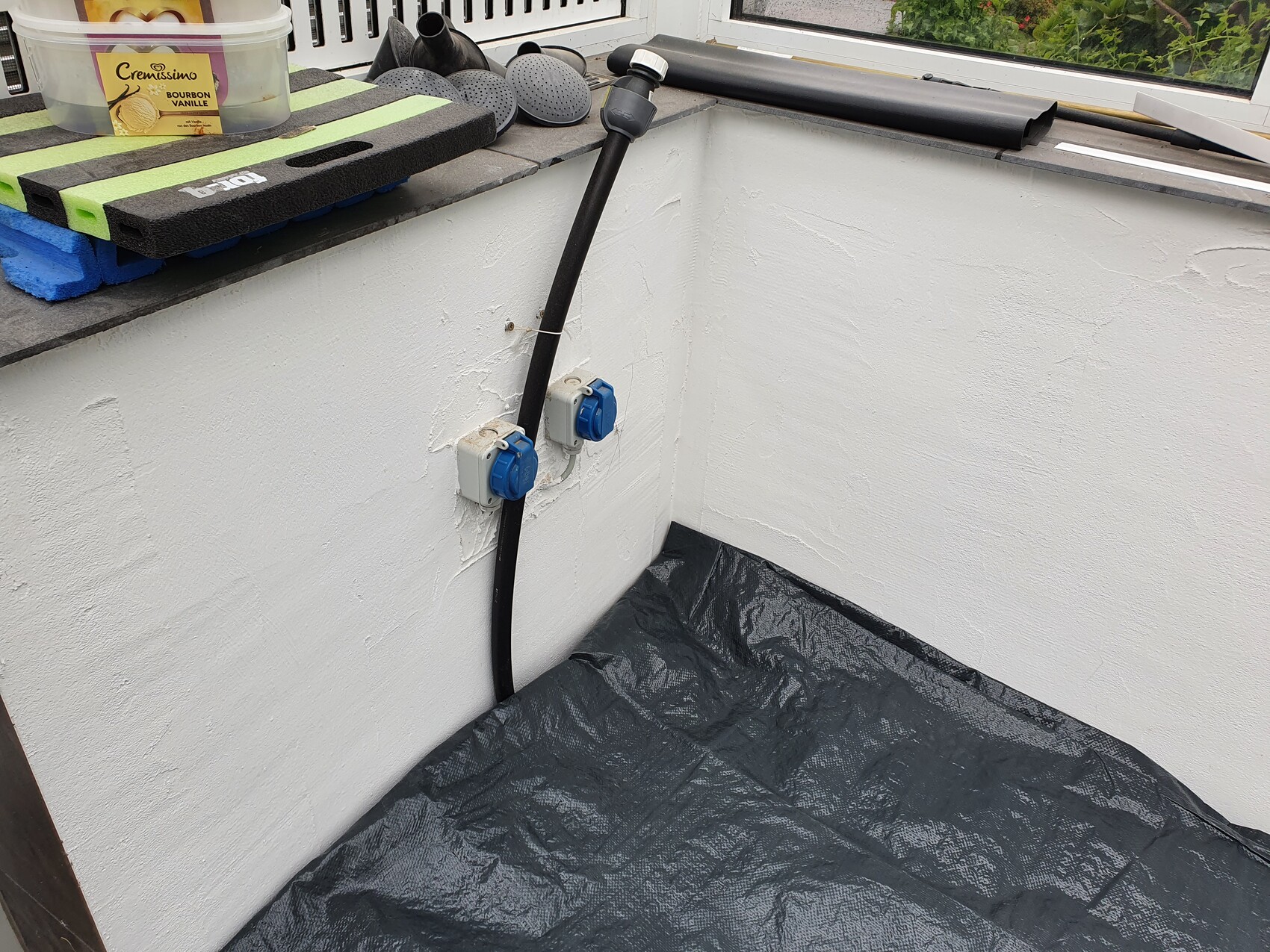
I’ve now got a bonding plaster from Baumit (external plaster Baumit bonding plaster) because it has a grain size up to 0.8mm (0.03 inches) and should be suitable as a smooth top coat. It is also less sensitive than gypsum plaster. I will test it in one spot to see if it’s appropriate.
Here is a picture of the greenhouse and the interior plaster:
I’ve now got a bonding plaster from Baumit (external plaster Baumit bonding plaster) because it has a grain size up to 0.8mm (0.03 inches) and should be suitable as a smooth top coat. It is also less sensitive than gypsum plaster. I will test it in one spot to see if it’s appropriate.
Here is a picture of the greenhouse and the interior plaster:
Similar topics