
ᐅ Which type of flooring is best for the ground floor – experiences?
Created on: 7 Nov 2018 10:07
Z
Zaba12
Hello everyone,
My site manager called me yesterday regarding the basement, and the topic of the flooring on the ground floor came up again. He suggested that we might want to reconsider mixing both types of flooring, mainly because of the feeling of coldness but also for future renovations, especially in the living area.
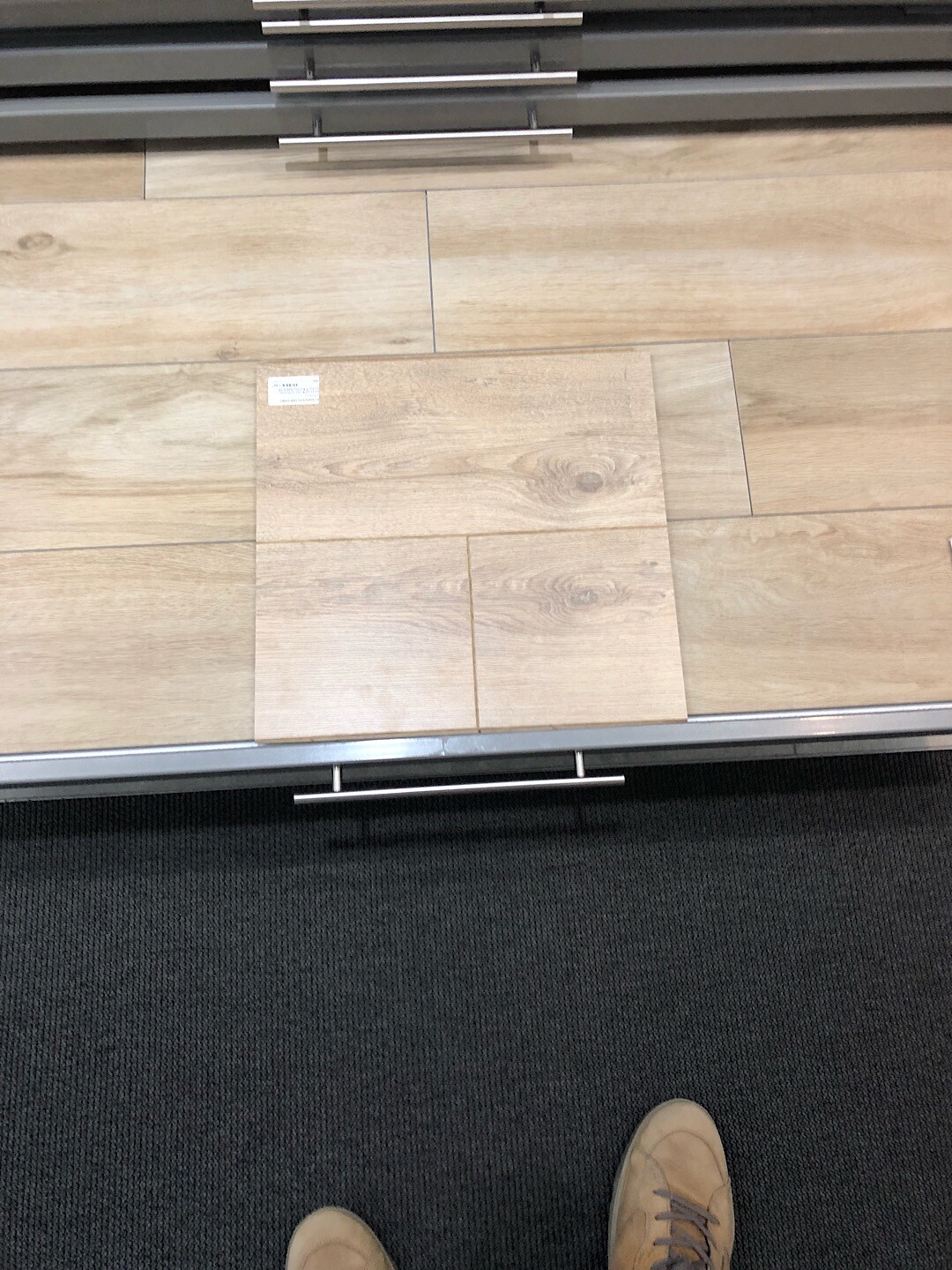
We originally planned to have wood-look tiles throughout the entire ground floor. Everything has already been selected. In the photo, the tile is shown at the bottom, and the laminate is placed on top.
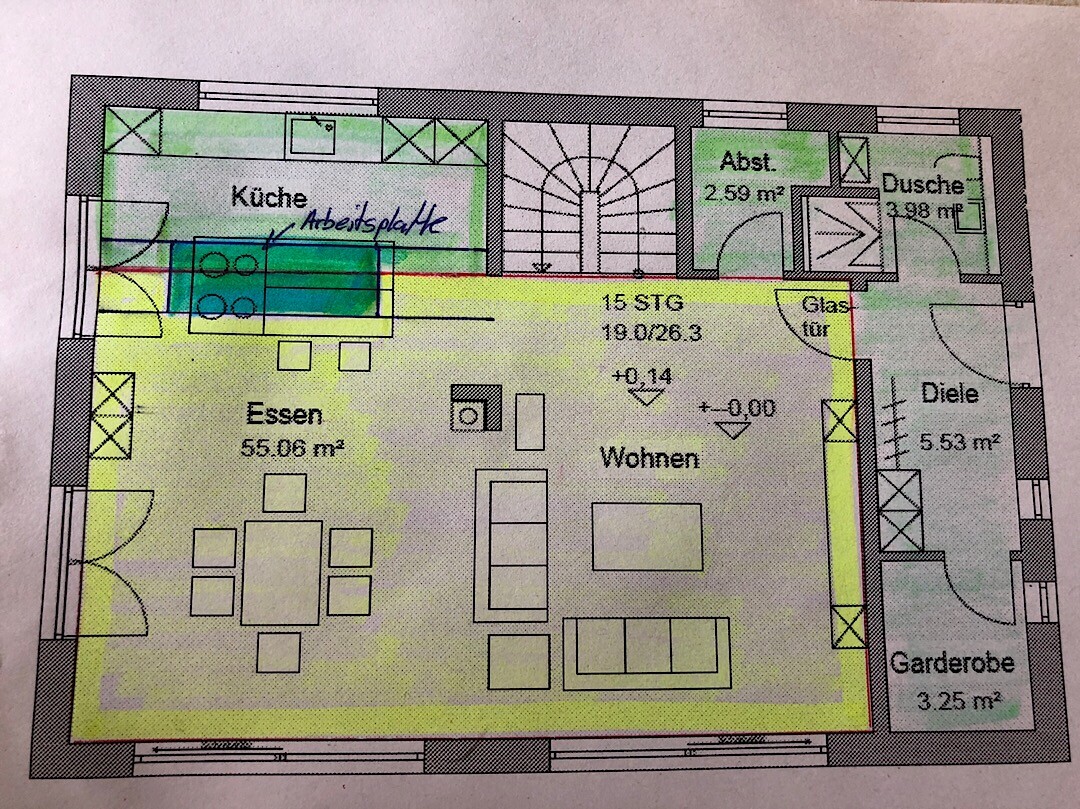
Now I have come up with the following idea. See the picture.
- Yellow is laminate
- Green is tile
- Blue is the island
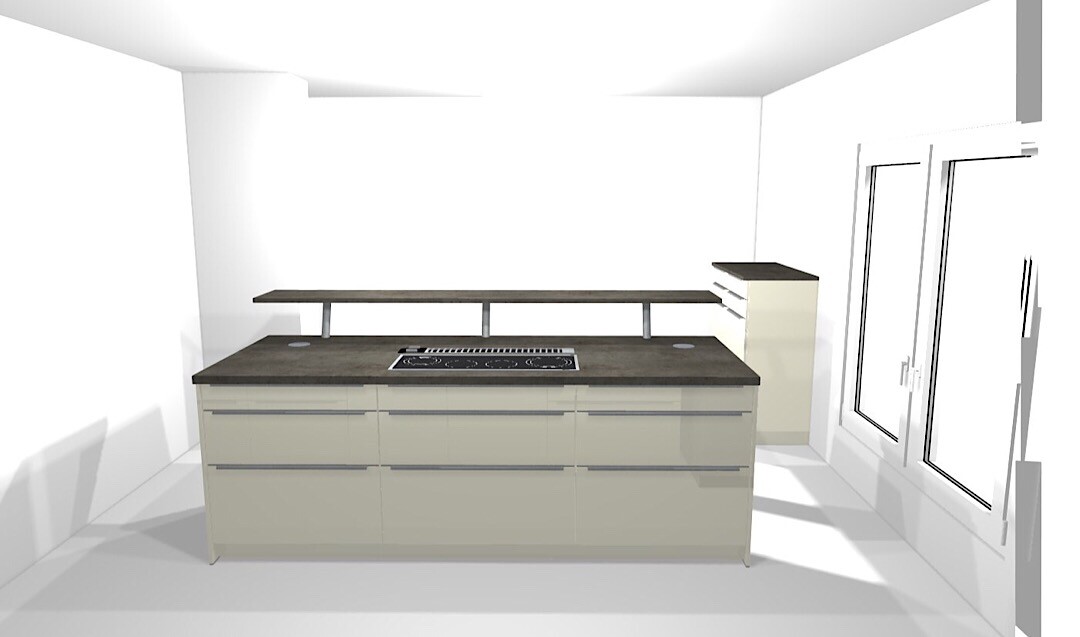
And yes, I have ordered the kitchen exactly as planned :-p
What is your opinion on this mixed approach?
My site manager called me yesterday regarding the basement, and the topic of the flooring on the ground floor came up again. He suggested that we might want to reconsider mixing both types of flooring, mainly because of the feeling of coldness but also for future renovations, especially in the living area.
We originally planned to have wood-look tiles throughout the entire ground floor. Everything has already been selected. In the photo, the tile is shown at the bottom, and the laminate is placed on top.
Now I have come up with the following idea. See the picture.
- Yellow is laminate
- Green is tile
- Blue is the island
And yes, I have ordered the kitchen exactly as planned :-p
What is your opinion on this mixed approach?
chand1986 schrieb:
It has to be clear: The warmer a floor feels when unheated, the worse it conducts heat (which is why it feels warm underfoot) and is therefore less suitable for underfloor heating. Basically, this is also the conclusion from my half-sleepless night.
It’s really a dilemma you can’t avoid. For half the year, the heating is on, so the floor should conduct heat well, but for the other half of the year, it’s the opposite.
I’ve since done some research online and found several sources that clearly advise against cork for underfloor heating.
The intended floor would have had a cork intermediate layer of 2.7mm (0.1 inches), a thickness comparable to the wood layer of the parquet. It’s hard to imagine that this would cause a major problem with the heating, but whatever.
Well, back to the original idea and parquet??
B
benutzer 100421 May 2019 10:19I currently have hardwood flooring in the kitchen. I don't find oil or grease too problematic; it's more about having to wipe everything up and the dents caused by falling pots, knives, etc.
That’s why I’m asking what alternatives are available.
That’s why I’m asking what alternatives are available.
BigFoot schrieb:
Dents from falling pots, knives, etc.How often do knives and pots fall to the floor in your home? With pots, for example, tiles could also get damaged to the point where they need to be replaced entirely. You could also place a transparent mat, like the ones used under office chairs. But it depends if you want to do that.We will probably install vinyl flooring everywhere except in the bathrooms and the utility room. In our current apartment, we have proper parquet flooring in the bedroom and vinyl in the office. My personal impression is that vinyl feels much better. Parquet is noisy and, without underfloor heating, quite cold. With underfloor heating it’s manageable, but vinyl is likely more durable, especially in the kitchen.
Parquet would be great – but I already know that we would have to constantly re-oil and sand it. And if it’s not well maintained, it simply doesn’t look good.
Parquet would be great – but I already know that we would have to constantly re-oil and sand it. And if it’s not well maintained, it simply doesn’t look good.
H
hampshire21 May 2019 10:50There is a big difference between "patina" and "neglect." A well-maintained wooden floor will inevitably develop a patina in the kitchen and gain character. You just need to be aware of this and appreciate it.
Similar topics