
Hello, we like two different floor plans and can’t quite decide.
The plot is 500sqm (5,382 sq ft), without a slope. We plan to have two full stories with concrete ceilings.
We are two adults and two small children. We would like to have at least one office and ideally an additional room in case of another child. In Option 1, the living room could be separated and used as a room. Option 2 generally includes two offices.
Which do you like better?
Option 1
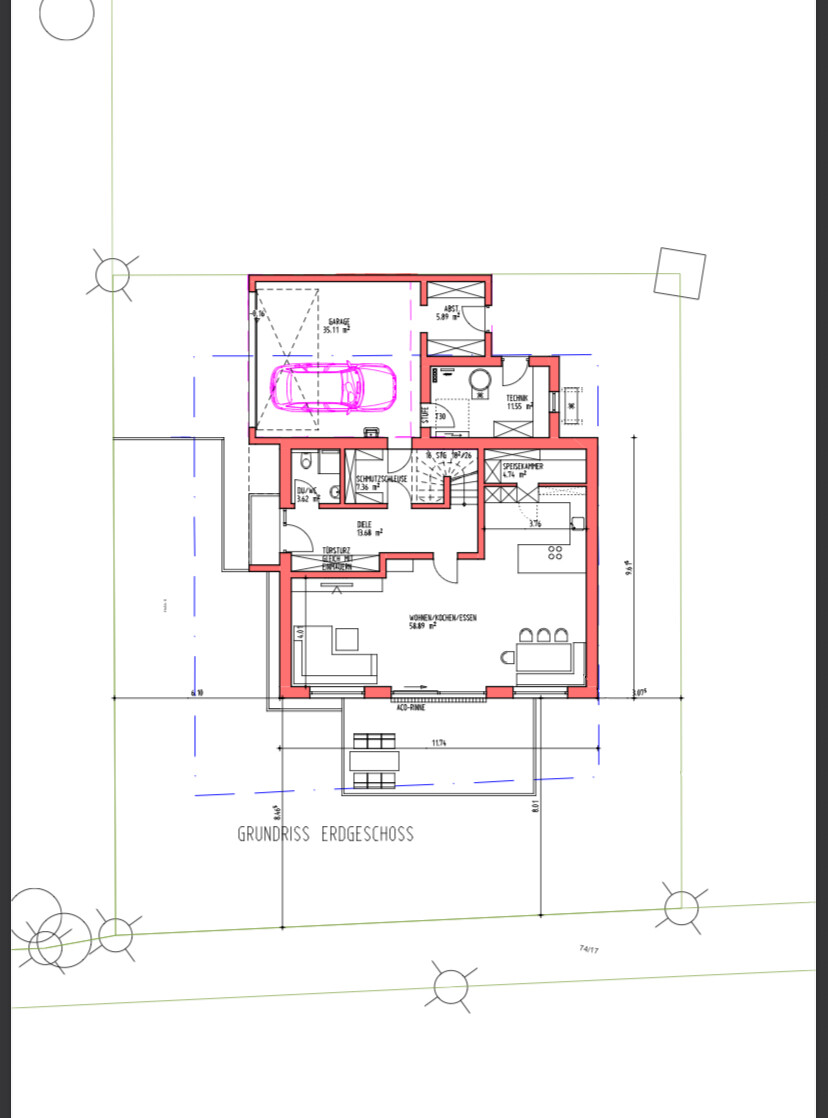
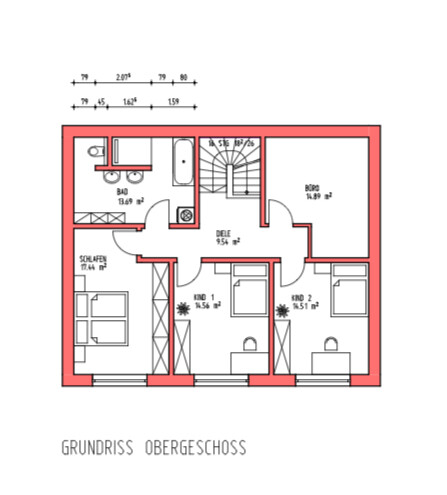
Option 2
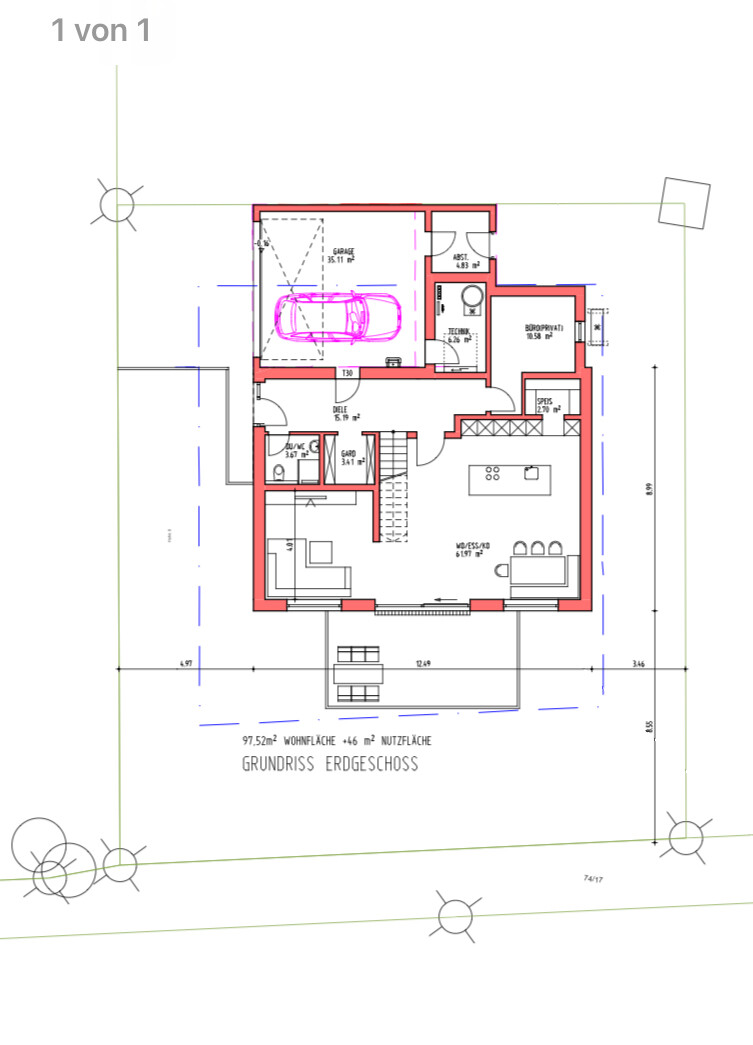
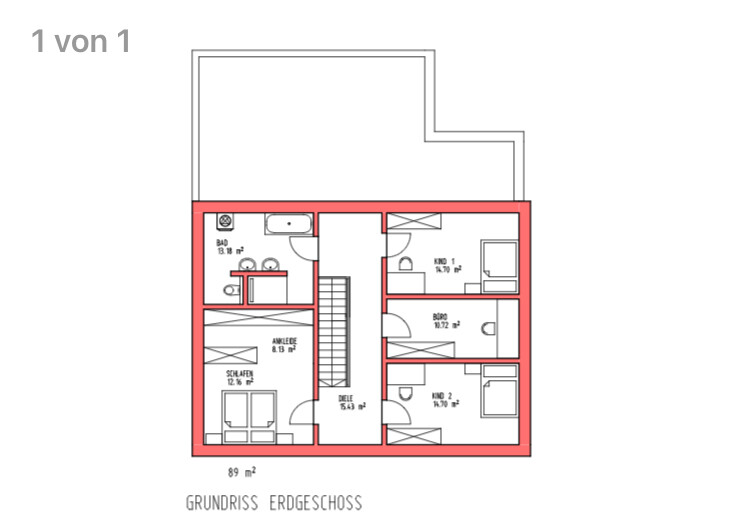
The plot is 500sqm (5,382 sq ft), without a slope. We plan to have two full stories with concrete ceilings.
We are two adults and two small children. We would like to have at least one office and ideally an additional room in case of another child. In Option 1, the living room could be separated and used as a room. Option 2 generally includes two offices.
Which do you like better?
Option 1
Option 2

Should the upper floors have straight walls?
https://www.instagram.com/11antgmxde/
https://www.linkedin.com/company/bauen-jetzt/
https://www.instagram.com/11antgmxde/
https://www.linkedin.com/company/bauen-jetzt/
Hmm… I wonder if the floor plans here are simply copied from existing houses.
In the second version, the upper floor is labeled as "ground floor." I recognize the familiar layout with the three children’s bedrooms from Talbau. I’m somewhat familiar with the ground floor too—I believe it was from Weberhaus.
Also, it’s noticeable that the exterior walls have no windows—is this carelessness or just viewed as unimportant for now? For a floor plan or house design, windows are essential for evaluation. Here, there are dark kitchens, and the side facade (regardless of which compass direction it faces) has no windows at all. How would it feel living in such a house? No natural light comes in except from one side.
Anyway, version 1 certainly does not feature a functional kitchen for a household of four; the pantry needs to go first to make room for a practical kitchen. Overall, I can’t read the dimensions. The photos are too small and therefore blurry.
Placing an office between two children’s bedrooms doesn’t seem very well thought out either. It might eventually become a bedroom, but for now, I would locate it to the outside.
The “second design” at least offers a somewhat more spacious kitchen. The upper floor also appears more thoughtfully corrected. However, I am not convinced by that long, dark corridor at all. How did that come about? It could be much nicer if the kitchen and living area were swapped!
So, I see a lot of potential for improvement in both versions.
At… how much is that? 97 m² (1044 ft²) on one level? Surely more is possible.
And when I look again more closely at variant 2, I wonder where the laundry is done? Laundry and household chores involve more than just placing a washing machine in the bathroom. The utility room can only be accessed from the garage and is simply too small at 6–7 m² (65–75 ft²) to serve as the only storage space. There is almost no storage for suitcases and similar items.
In the second version, the upper floor is labeled as "ground floor." I recognize the familiar layout with the three children’s bedrooms from Talbau. I’m somewhat familiar with the ground floor too—I believe it was from Weberhaus.
Also, it’s noticeable that the exterior walls have no windows—is this carelessness or just viewed as unimportant for now? For a floor plan or house design, windows are essential for evaluation. Here, there are dark kitchens, and the side facade (regardless of which compass direction it faces) has no windows at all. How would it feel living in such a house? No natural light comes in except from one side.
Anyway, version 1 certainly does not feature a functional kitchen for a household of four; the pantry needs to go first to make room for a practical kitchen. Overall, I can’t read the dimensions. The photos are too small and therefore blurry.
Placing an office between two children’s bedrooms doesn’t seem very well thought out either. It might eventually become a bedroom, but for now, I would locate it to the outside.
The “second design” at least offers a somewhat more spacious kitchen. The upper floor also appears more thoughtfully corrected. However, I am not convinced by that long, dark corridor at all. How did that come about? It could be much nicer if the kitchen and living area were swapped!
So, I see a lot of potential for improvement in both versions.
At… how much is that? 97 m² (1044 ft²) on one level? Surely more is possible.
And when I look again more closely at variant 2, I wonder where the laundry is done? Laundry and household chores involve more than just placing a washing machine in the bathroom. The utility room can only be accessed from the garage and is simply too small at 6–7 m² (65–75 ft²) to serve as the only storage space. There is almost no storage for suitcases and similar items.

Neither of them is very attractive.
Without detailed information about the plot, budget, and room layout, it’s difficult to say much more. I find the consistently large area between the dining and living rooms, along with the proposed furniture arrangement including the bench and corner seating, quite amusing. You don’t actually want it like that, do you?
Without detailed information about the plot, budget, and room layout, it’s difficult to say much more. I find the consistently large area between the dining and living rooms, along with the proposed furniture arrangement including the bench and corner seating, quite amusing. You don’t actually want it like that, do you?
 Papierturm21 Sep 2025 18:24
As @ypg already mentioned, both designs somehow seem incomplete. They lack windows and practical usability in various areas.
I also find it difficult that two designs are not being compared based on equivalent space requirements.
For the planning phase, I would proceed as follows:
1. Needs analysis: What do we need ("must-haves"), and what would be nice to have ("nice-to-haves")?
2. What does the site dictate? (Building permit/planning permission, access, slope, special features such as views, surrounding buildings, and much more.)
3. Financial planning: Primarily determines the house size and additional structures (e.g., garage vs. carport vs. gravel parking area).
The space requirements arise from the "must-haves." So the fundamental decision is: Is the additional space necessary? If yes, then design #2. If not, design #1.
However, it should not be that simple. I am almost certain that once the space requirements are clear, the rooms could be arranged differently to create both more practical usability and better living quality. (By this, I mean, for example, the many dark "corridor-like" spaces in design 2.)
I also find it difficult that two designs are not being compared based on equivalent space requirements.
For the planning phase, I would proceed as follows:
1. Needs analysis: What do we need ("must-haves"), and what would be nice to have ("nice-to-haves")?
2. What does the site dictate? (Building permit/planning permission, access, slope, special features such as views, surrounding buildings, and much more.)
3. Financial planning: Primarily determines the house size and additional structures (e.g., garage vs. carport vs. gravel parking area).
The space requirements arise from the "must-haves." So the fundamental decision is: Is the additional space necessary? If yes, then design #2. If not, design #1.
However, it should not be that simple. I am almost certain that once the space requirements are clear, the rooms could be arranged differently to create both more practical usability and better living quality. (By this, I mean, for example, the many dark "corridor-like" spaces in design 2.)
Similar topics