
ᐅ Which Cat cables should be installed on the exterior wall? Issues with moisture?
Created on: 24 Aug 2021 07:47
S
Schimi1791
Hello everyone,
as I already mentioned in another thread, our internet connection in the house is quite basic, relying on Wi-Fi and repeaters. Now I have the following thought:
In a few days, work will begin on the facade. It will receive a new plaster finish. This would be a good opportunity to install additional cables on the exterior wall. The plan is to run wiring for extra lighting on the facade and at least two cables (3 x 2.5 mm2 (3 x 0.01 inch2)) for infrared heaters, which might be installed later under a patio cover. For this, corresponding channels will be cut into the existing facade and then replastered.
Now the question is: is it possible to run Cat cables along the facade to provide internet to all floors through wired connections? We would drill a hole in the exterior wall at the spot where the “router” is located in the living room and run the cables on the outside wall to the respective rooms. I assume moisture protection needs to be considered here? What type of cables would be required? Cat 5 should definitely be sufficient, right? What about potential moisture issues? Running cables along the exterior wall is, of course, not the most elegant solution but certainly the easiest.
Thanks a lot 🙂
as I already mentioned in another thread, our internet connection in the house is quite basic, relying on Wi-Fi and repeaters. Now I have the following thought:
In a few days, work will begin on the facade. It will receive a new plaster finish. This would be a good opportunity to install additional cables on the exterior wall. The plan is to run wiring for extra lighting on the facade and at least two cables (3 x 2.5 mm2 (3 x 0.01 inch2)) for infrared heaters, which might be installed later under a patio cover. For this, corresponding channels will be cut into the existing facade and then replastered.
Now the question is: is it possible to run Cat cables along the facade to provide internet to all floors through wired connections? We would drill a hole in the exterior wall at the spot where the “router” is located in the living room and run the cables on the outside wall to the respective rooms. I assume moisture protection needs to be considered here? What type of cables would be required? Cat 5 should definitely be sufficient, right? What about potential moisture issues? Running cables along the exterior wall is, of course, not the most elegant solution but certainly the easiest.
Thanks a lot 🙂
 Schimi179127 Aug 2021 10:10
konibar schrieb:
Not electrically.
But physically there are differences, which are normally declared:
- Generally, it’s not designed for outdoor installation because it’s not UV-resistant
- There are also versions with rodent protection, which makes assembly more complicated.
- and so on
For indoor installation, this is usually the simplest option. It can be bought on large reels for under 1€/m (under $1 per yard) In our case, it will be installed inside the facade. There won’t be rodents there. So I ordered a direct-burial cable, which hopefully will still be flexible enough. Ideally, I want to run eight cables to the outside. Preferably, this would be done from the main electrical panel, so the wall penetrations wouldn’t have to be in the living room. I think I can better “sell” this idea to my wife, even though she is already familiar with the plan 😀
What would be the best way to make the wall penetrations? Obviously, a long drill bit for the hole(s). Inside, the cables probably wouldn’t just go straight through the wall but rather through some kind of junction box or similar, right?
My preferred solution is like what we used for the satellite system:
Previously, the cables and the distributor protruded directly from the wall. But I don’t think a cabinet like that would fit near the main panel. A small server rack would also be tricky space-wise. That might be more “decorative” in the living room at best... 😎
I just spoke with the contractors to confirm they will actually start the facade work next week. Don’t want to have channels cut into the facade only to find out no one comes to plaster it (or re-plaster it) afterwards... 🙄 😳
I’m also curious how it will turn out. After all, a new power line is still planned for the outdoor lighting, plus two cables (3x2.5 mm² (3x0.01 inch²)) for infrared heaters for the hopefully future terrace roofing.
I would also like to have at least a 300 mm (12 inch) core drill hole for decentralized ventilation, but that probably won’t happen anymore. I’m just glad if we get to the networking part at all.
The scaffolding will be installed today or tomorrow.
hanse987 schrieb:
Make sure the individual conductors are entirely made of copper.
There are also CCA types, where the core is aluminum and the surface is copper-coated aluminum. These wires tend to break more easily, but they are cheaper. Often offered in rivers or bays. I ordered:
DIGITUS Outdoor Network Cable Cat 7 – 100m S-FTP installation cable – Simplex – Eca LSZH-1 – 1200 MHz – AWG 23/1 – Black
I couldn’t find an outdoor-rated duplex cable...
Schimi179130 Aug 2021 08:05So ... the scaffolding was finally erected on Friday. This made it much easier for us to cut the grooves with the router. We have now decided to run the network cables from the main connection outside along the facade.
Keep in mind that cables have a minimum bending radius!
CAT7 cables are more problematic in this regard than older versions. Make sure to read the manufacturer's specifications carefully—otherwise, in the worst case, you could have a cable embedded in the plaster that only reveals after plastering and final installation that it doesn’t work properly or performs worse than a CAT5 cable...
CAT7 cables are more problematic in this regard than older versions. Make sure to read the manufacturer's specifications carefully—otherwise, in the worst case, you could have a cable embedded in the plaster that only reveals after plastering and final installation that it doesn’t work properly or performs worse than a CAT5 cable...
Schimi179110 Sep 2021 10:33Feedback:
We have successfully installed five network cables around three sides of the house, running into four rooms. One room now has a double outlet, while the other rooms have single outlets. This will be sufficient for our needs.
The router and related equipment are now located in the basement. All wall chases have been plastered. There was a scare when the outlet in the living room didn’t work properly at first, but a second inspection was able to fix the issue.
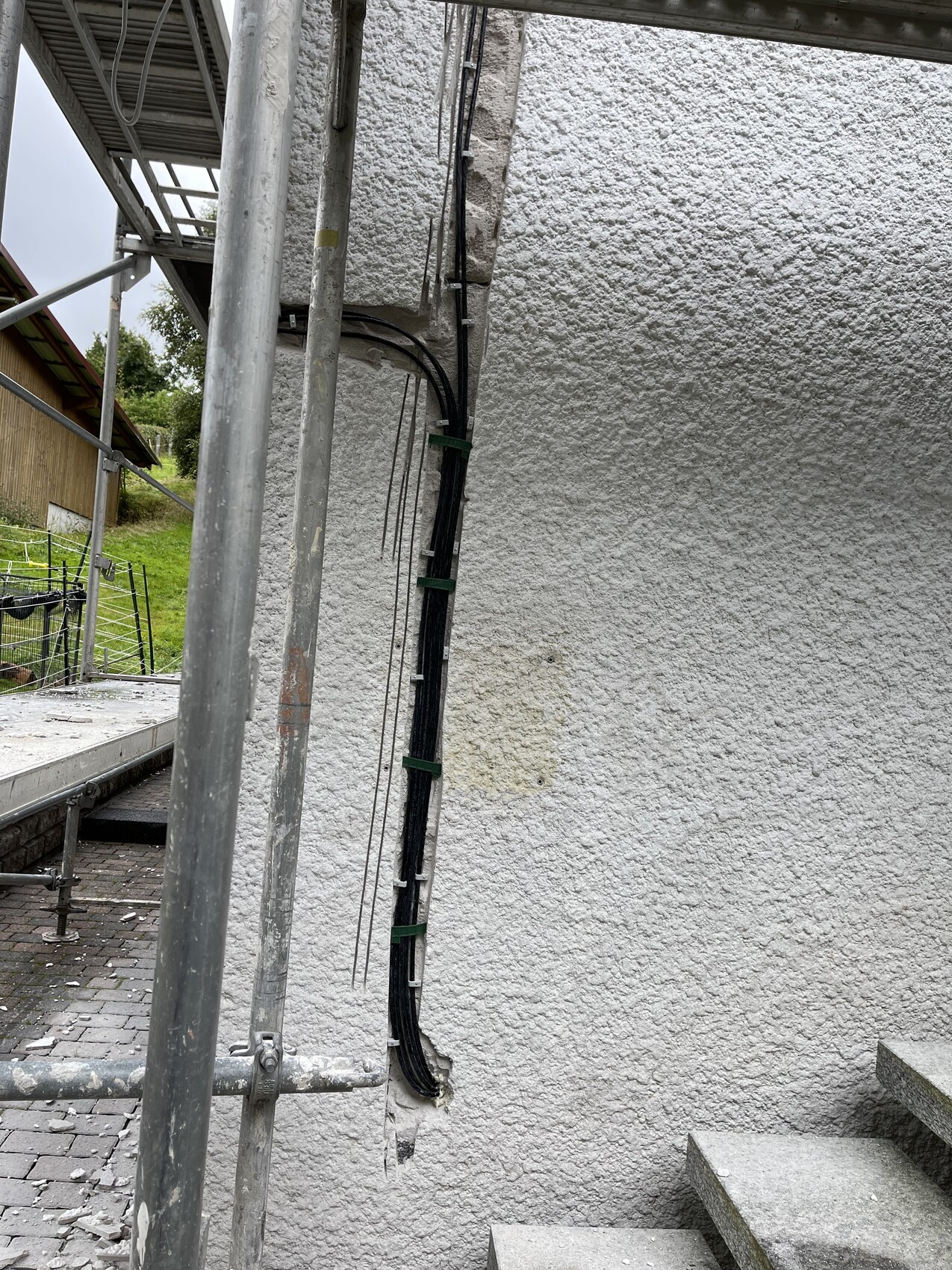
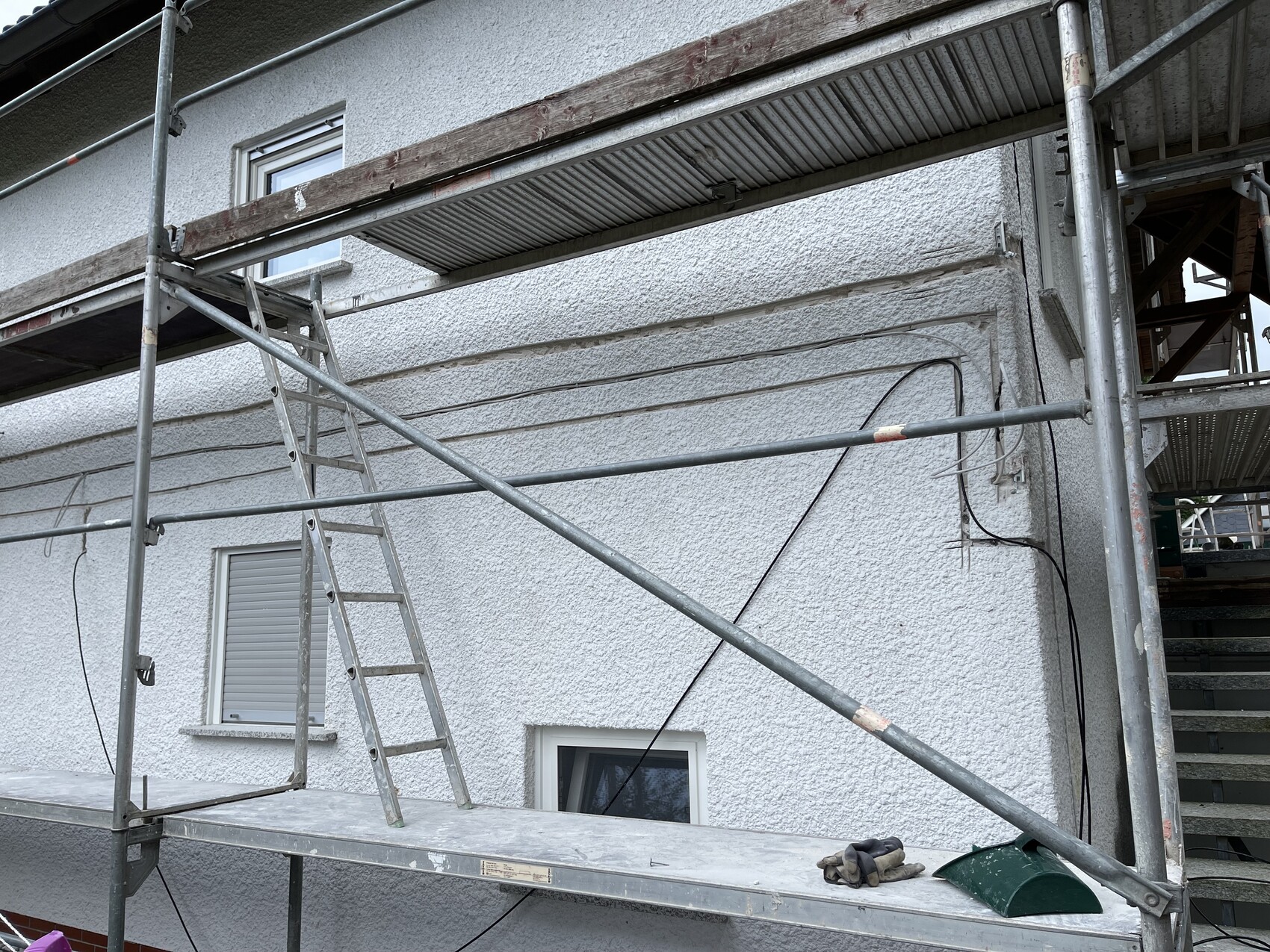
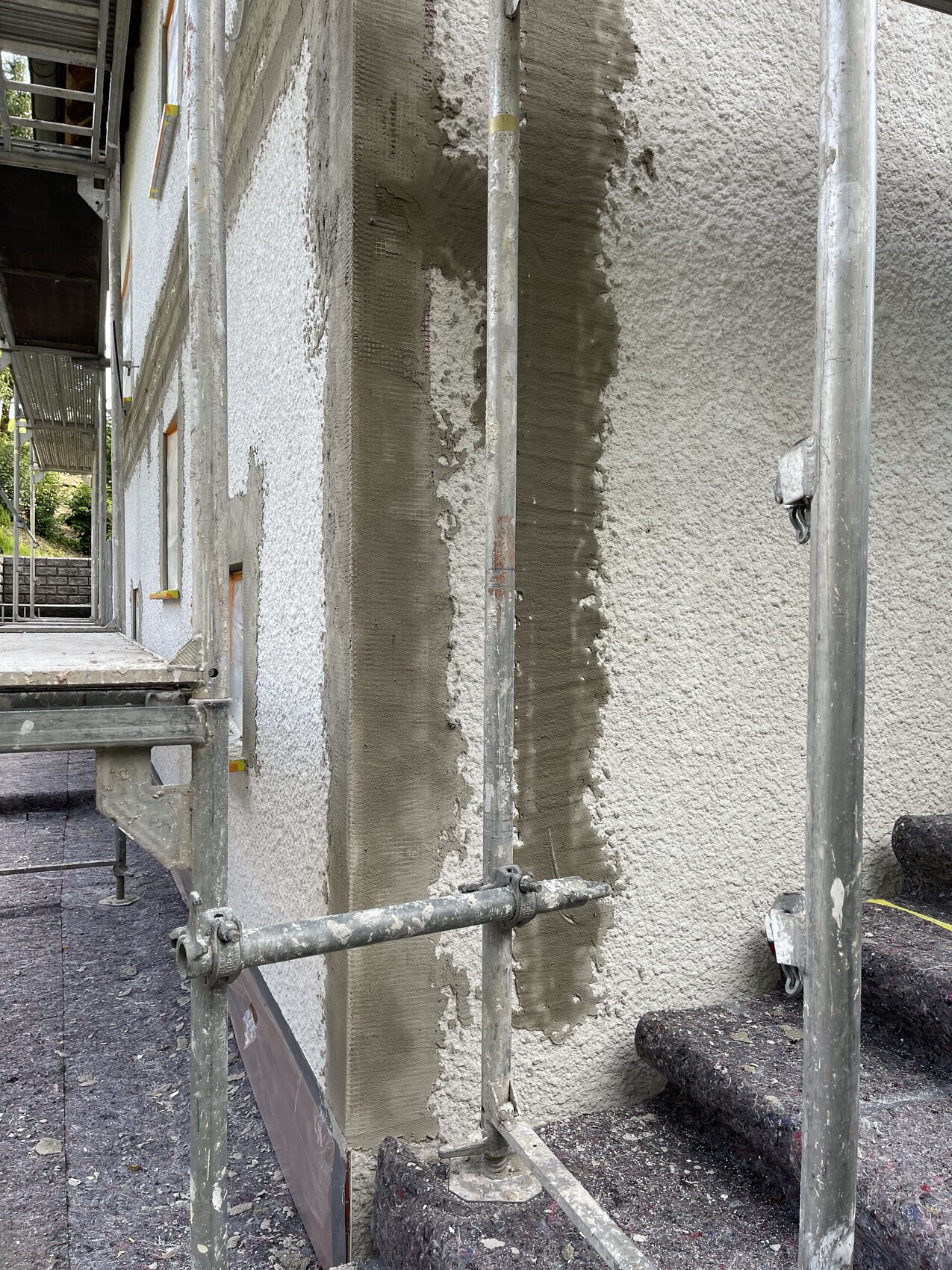
We have successfully installed five network cables around three sides of the house, running into four rooms. One room now has a double outlet, while the other rooms have single outlets. This will be sufficient for our needs.
The router and related equipment are now located in the basement. All wall chases have been plastered. There was a scare when the outlet in the living room didn’t work properly at first, but a second inspection was able to fix the issue.

Schimi1791 schrieb:
A second inspection was then able to fix the error.Careful termination is rarely a strong point for electricians. I like to remind everyone of the 50% (!) error rate across all network ports in our still-to-be-sold house.Schimi179111 Sep 2021 23:28K1300S schrieb:
Careful installation is rarely a strong point for electricians. I like to remind people of the 50% error rate across all network ports in our still-under-construction house. Fortunately, I have two electricians on hand. The first worked messily with the keystones and was a bit rushed. The second was more experienced and managed to get it done properly.
Similar topics