
Hello,
I need some help with my garden wall.
We have a slope in the garden and want to border the slope next to the lawn with a small garden wall.
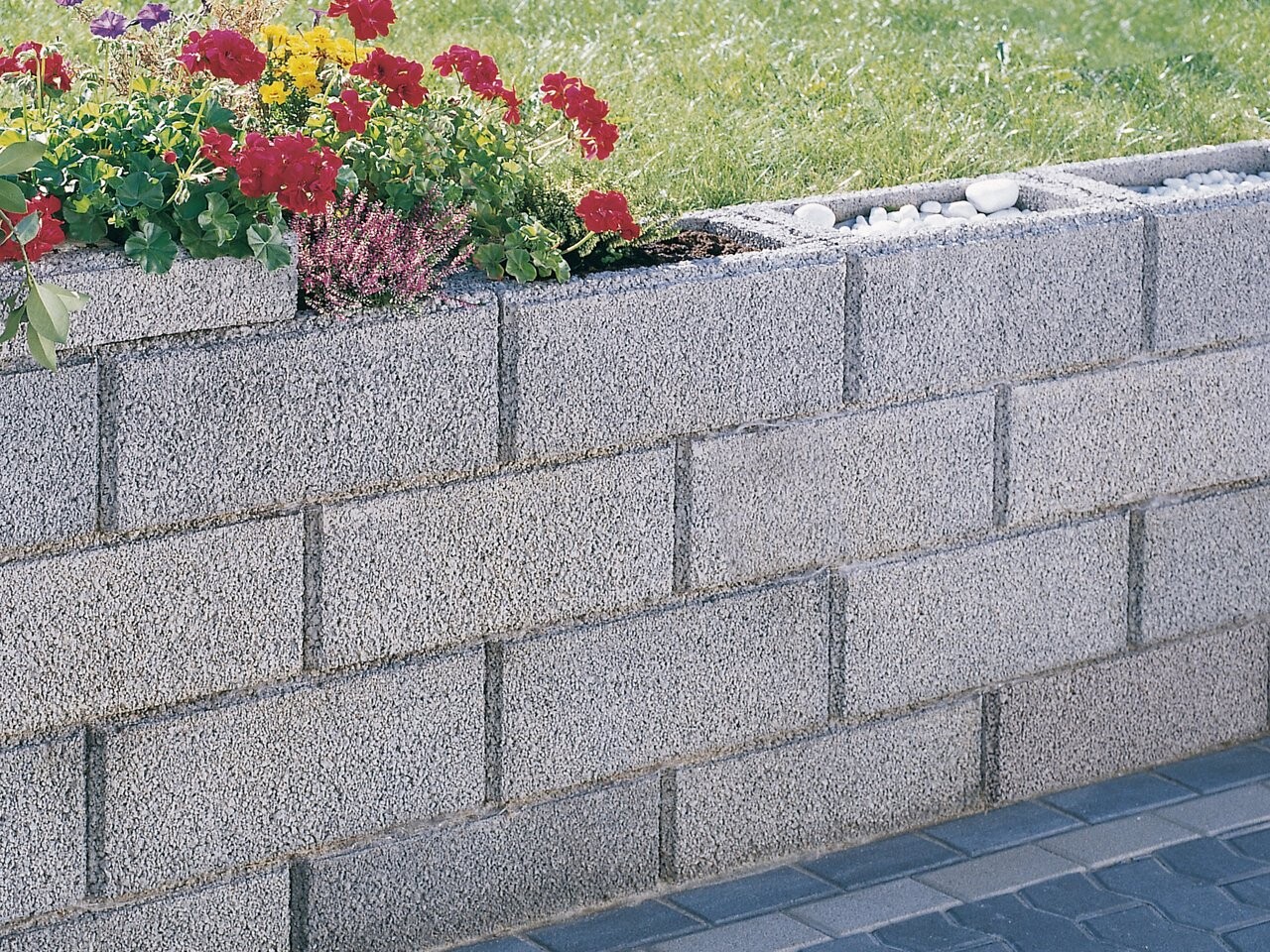
This is how it should look in the end. At the bottom, there is the lawn with a row of edging stones, and above the wall, there will be a flower bed.
The wall should be about 3–4 stone courses high, so approximately 60–80cm (24–31 inches) tall, and about 10m (33 feet) long.
My question:
What kind of foundation is needed for this wall?
Do you need a solid concrete footing, or would it be enough to sink one course of stones into the ground and fill it with concrete?
What would be your suggestion for a foundation for such a small wall?
I need some help with my garden wall.
We have a slope in the garden and want to border the slope next to the lawn with a small garden wall.
This is how it should look in the end. At the bottom, there is the lawn with a row of edging stones, and above the wall, there will be a flower bed.
The wall should be about 3–4 stone courses high, so approximately 60–80cm (24–31 inches) tall, and about 10m (33 feet) long.
My question:
What kind of foundation is needed for this wall?
Do you need a solid concrete footing, or would it be enough to sink one course of stones into the ground and fill it with concrete?
What would be your suggestion for a foundation for such a small wall?
W
WilderSueden5 Feb 2024 17:59FrankChief schrieb:
At the very bottom, only gravel and compact it (you can use an SDS Max tamping plate with a demolition hammer, right?) You can rent trench tampers here for €35 (around $38) per day. They are definitely better and more ergonomic than a plate attached to a demolition hammer. Hand tampers are great for corners and small areas, but after about 10m (33 feet) you won’t enjoy using one much anymore.
To add to Philfuel’s point, the individual rows of stones are connected vertically with rebar. Always vibrate the concrete properly; ideally, you use a concrete vibrator bottle. Alternatively, you can poke with a stick, but with this amount, it’s tedious and not as effective. Don’t underestimate the amount of concrete you’ll need either.
A
Allthewayup5 Feb 2024 18:17Is your main concern with the wall its appearance, or is it primarily to stabilize the slope?
If it’s the latter, I would definitely recommend angle stones. It’s faster and easier, provided you have an excavator available.
If it’s the latter, I would definitely recommend angle stones. It’s faster and easier, provided you have an excavator available.
F
FrankChief6 Feb 2024 07:38Allthewayup schrieb:
Is your main concern with the wall its appearance, or is it to stabilize the slope?
If it’s the latter, I would definitely recommend using angle stones. It’s faster and easier, provided you have an excavator on site. It is really just about the appearance.
The slope is stable on its own now, and it’s not very high either.
The wall will be 60cm (24 inches) high above ground.
Does such a small wall really need a complex foundation? We plan to stack two rows of stones.
Behind the stone row, we want to backfill with soil up to the wall, so visually it creates a second level or a large raised flower bed.
S
Simon-1896 Feb 2024 09:10FrankChief schrieb:
The wall will be 60cm (24 inches) high above ground.
Does such a small wall really require such an extensive foundation? We want to stack two rows of blocks.
We plan to backfill the slope behind the block row with soil up to the wall, creating a second level or a large raised bed visually. Keep in mind, whether using shuttering blocks or L-blocks, that the wall must be properly waterproofed on the backside, with drainage and drainage outlets installed, as well as permeable material added. Otherwise, soil and dirty water will eventually push through the joints.
Even L-blocks need proper ground preparation—likely 50cm (20 inches) of well-compacted gravel will be sufficient. Without good groundwork, individual blocks may tilt forward over time.
W
WilderSueden6 Feb 2024 12:30FrankChief schrieb:
The wall will be 60cm (24 inches) high above ground.
Does such a small wall really need a complicated foundation? We want to stack two rows of bricks on top of each other. Then just build a dry-stone wall. It’s less sensitive to frost and only needs a gravel base about 30cm (12 inches) thick. If you lean it slightly backward and fill properly behind it, that will be enough for support. You can also skip drainage behind the wall since it is water-permeable.
F
FrankChief6 Feb 2024 13:42@WilderSueden What exactly do you mean by a dry stone wall?
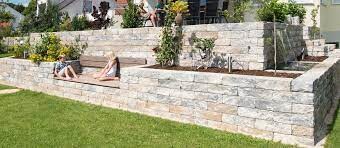
Do you mean something like this?
We definitely want it to end up as a straight wall so that we can lay a row of lawn edging stones neatly at the bottom along the grass.
Do you mean something like this?
We definitely want it to end up as a straight wall so that we can lay a row of lawn edging stones neatly at the bottom along the grass.
Similar topics