
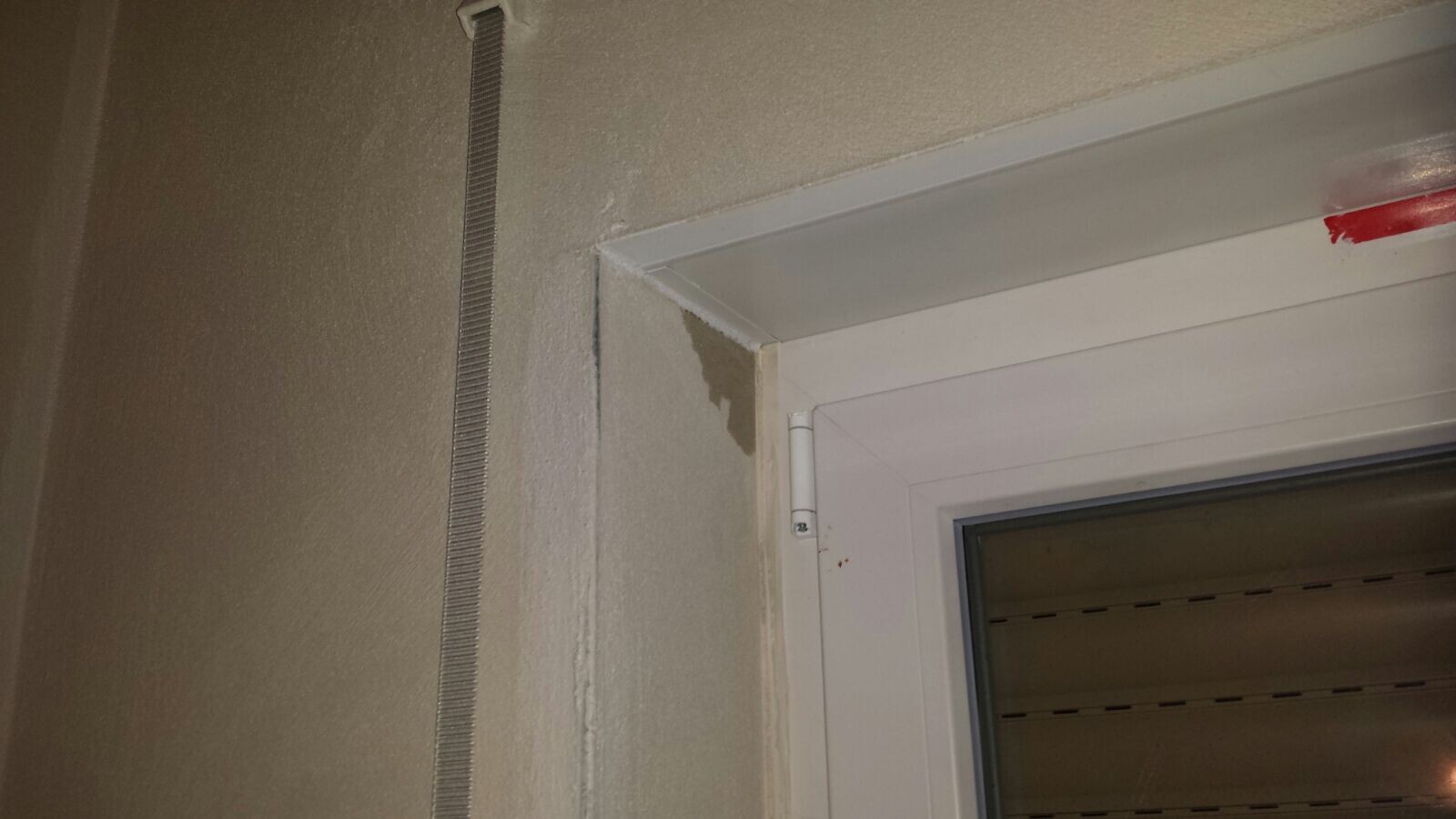
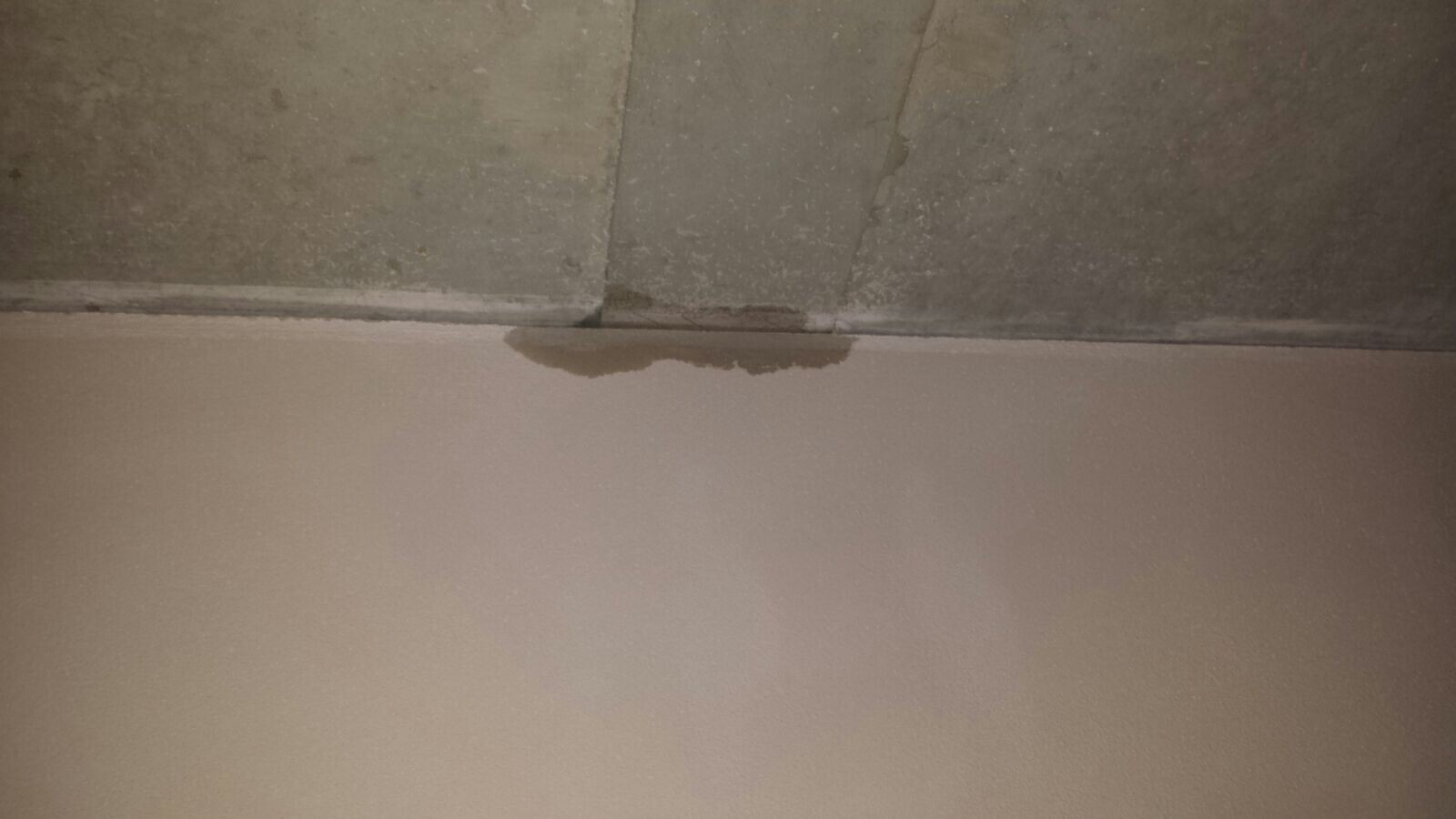
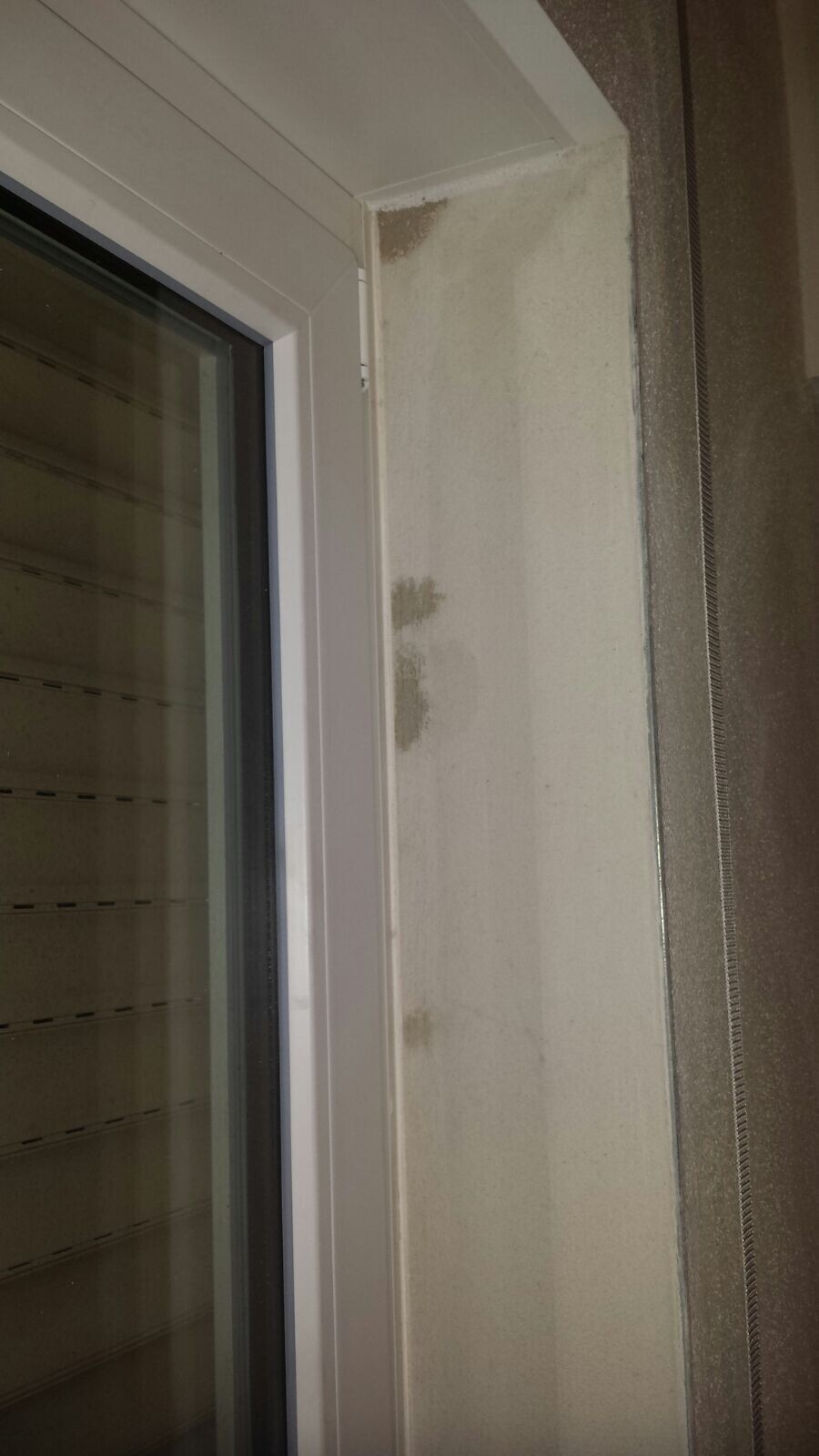
Hello everyone, the screed has been in the house for 10 weeks now. The walls and screed still contain a lot of moisture that is evaporating. We have had the heating running for about 3 weeks. Even before the heating was turned on, we noticed these spots. Now they have appeared again in exactly the same places. What do you think about this? Condensation spots or moisture coming in from outside?
Hi,
Only someone with solid expertise can give you an exact answer.
From the photos, it doesn’t look like condensation stains to me. The stains seem to indicate a significant amount of moisture (do you have access to a moisture meter?).
As the construction expert recently said quite rightly: water finds its way, it doesn’t have to enter the building exactly where it appears inside.
If it were due to condensation, that would suggest noticeable thermal bridges at the spots shown. That’s also not ideal. Were the stains just as prominent before the heating was turned on?
In my opinion, you definitely need to have a qualified professional thoroughly investigate the exact situation and background here. I would definitely not just leave it as is. If something is really wrong, you’ll face problems and expenses later due to consequential damage... now is the best time to deal with it.
Besides a possible defect in the building envelope (water ingress from outside), damage to a water pipe or heating system piping is also possible. A colleague of mine experienced the latter two years ago. It was noticed too late (no action taken), and then the shock came: the screed had to be completely removed (had to move out of the house again!). Such scenarios can be prevented.
Best regards,
Thorsten
PS: After 10 weeks, screed usually has completed most of its curing process. Of course, some moisture still comes out, but in the first 2-4 weeks, it is significantly more than after 10 weeks. However, last week we had heavy rain and storms almost all over Germany.
Only someone with solid expertise can give you an exact answer.
From the photos, it doesn’t look like condensation stains to me. The stains seem to indicate a significant amount of moisture (do you have access to a moisture meter?).
As the construction expert recently said quite rightly: water finds its way, it doesn’t have to enter the building exactly where it appears inside.
If it were due to condensation, that would suggest noticeable thermal bridges at the spots shown. That’s also not ideal. Were the stains just as prominent before the heating was turned on?
In my opinion, you definitely need to have a qualified professional thoroughly investigate the exact situation and background here. I would definitely not just leave it as is. If something is really wrong, you’ll face problems and expenses later due to consequential damage... now is the best time to deal with it.
Besides a possible defect in the building envelope (water ingress from outside), damage to a water pipe or heating system piping is also possible. A colleague of mine experienced the latter two years ago. It was noticed too late (no action taken), and then the shock came: the screed had to be completely removed (had to move out of the house again!). Such scenarios can be prevented.
Best regards,
Thorsten
PS: After 10 weeks, screed usually has completed most of its curing process. Of course, some moisture still comes out, but in the first 2-4 weeks, it is significantly more than after 10 weeks. However, last week we had heavy rain and storms almost all over Germany.
K
karismasen3 Dec 2015 09:22What kind of plaster do you have on the wall? Lime-gypsum?
It's similar for us... the plaster was applied at the end of October, and the screed in early November. We have been gently heating for 10 days now, and the walls are still not properly dry, even after 6 weeks!
The damp areas in our case are larger but not as intensely wet as yours. They are mostly in the corners as well. We were told that the plaster might not have been completely dry when stored and was applied with some moisture... but that shouldn’t be possible because the plaster would start setting and would probably clump up, right?
Does anyone here have experience with why the drying process takes so long?
It's similar for us... the plaster was applied at the end of October, and the screed in early November. We have been gently heating for 10 days now, and the walls are still not properly dry, even after 6 weeks!
The damp areas in our case are larger but not as intensely wet as yours. They are mostly in the corners as well. We were told that the plaster might not have been completely dry when stored and was applied with some moisture... but that shouldn’t be possible because the plaster would start setting and would probably clump up, right?
Does anyone here have experience with why the drying process takes so long?
karismasen schrieb:
Does anyone here know why the drying process takes so long?During the curing of plaster, screed, and similar materials, a significant amount of moisture is released over several weeks.
Without on-site measurements—such as the exact moisture content of the wall, wall temperature, or air humidity—it is very difficult to accurately assess the situation remotely on a case-by-case basis.
If this had happened to me during construction, I would simply hire an expert for around 200,- to have it inspected. These professionals are trained for this purpose, and the cost is well worth it. If everything is fine, you can be reassured. If there is an issue, it can be identified and resolved.

To clarify the cause of the damage, the type of structural shell must be known. Is it a timber frame or timber panel construction? Or is it a solid construction? Large amounts of mixing water enter the building through plaster and screed, which must be removed either by sufficient ventilation or by using construction dryers. The damp areas suggest significant condensation caused by uncontrolled convection of warm, moist air on cold building elements (thermal bridges). For example, this may occur through the roller shutter strap reel inside the roller shutter box, or through a variable moisture vapor barrier within the insulation between rafters, leading as liquid water down to the wall plate, where it could potentially dampen the ceiling. Such areas should be opened up if possible. Have you conducted a blower door test, potentially including leakage detection?
Additionally, you can measure the relative humidity and, if necessary, set up construction dryers. After about 10 weeks, the highest moisture load should have mostly passed. It is possible that moisture has condensed heavily in certain spots where it cannot evaporate anymore and is now finding new capillary paths. Mineral insulation materials in the roof area (such as mineral wool or glass wool) can become heavily damp but dry poorly after installation because they do not allow capillary moisture transport.
In general, construction moisture will eventually dry out completely, provided that the component design and moisture supply from building use allow it.
Additionally, you can measure the relative humidity and, if necessary, set up construction dryers. After about 10 weeks, the highest moisture load should have mostly passed. It is possible that moisture has condensed heavily in certain spots where it cannot evaporate anymore and is now finding new capillary paths. Mineral insulation materials in the roof area (such as mineral wool or glass wool) can become heavily damp but dry poorly after installation because they do not allow capillary moisture transport.
In general, construction moisture will eventually dry out completely, provided that the component design and moisture supply from building use allow it.
W. Pickartz schrieb:
It is possible that moisture in liquid form has condensed more heavily in certain spots, where it can no longer evaporate and is now seeking new paths through capillary action. Fundamentally, construction moisture will eventually dry out completely if the building assembly and moisture input from the living space allow it.Hello W. Pickartz,
the words of the expert (architect) – I had already thought and hoped you would join the thread.
In this case, you have partially confirmed and clarified some of my layman’s views.
What makes me suspicious about the pictures is especially the one showing moisture coming through between the ceiling and the wall (visible). It looks very damp there (after all, it’s just a photo... and what can be seen). It’s not just a little water... that spot feels, from intuition, really strange. The areas near the shutter boxes indicate thermal bridges for me (condensation). Whether the water is coming from the screed or somewhere else (well stored and now pressing out due to capillary action) is certainly harder to assess (or only possible on site / through some measurements)? The stains were reportedly gone according to the original poster’s interpretation—and have now reappeared more suddenly. And last week there was heavy rain, also in Bavaria.
I will keep following the thread. I am curious how things develop for the original poster and what else happens there. I hope for them that it is construction moisture and nothing else!
One more thing from a layman’s perspective: If I were the builder there, I would definitely not be happy with the almost 100% likely thermal bridges at the shutter boxes!
Best regards
Thorsten
Similar topics