
Maybe you can help me.
The grey areas are planned to have a setback in the insulation.
The white areas will have 16cm (6.3 inches) insulation with ETICS (external thermal insulation composite system).
The grey areas will have 14cm (5.5 inches) insulation.
This will create a drip edge on the first floor.
The plan is to extend the aluminum window sills in this area directly between the window sills and the masonry. One window sill would even need to be installed around the corner of the house. I have doubts about whether this approach is correct.
Does anyone have experience with this?
Of course, there are also opinions suggesting why not just continue the 16cm (6.3 inches) insulation and use a different render, for example. We also find the architect’s idea visually appealing.
With a 2cm (0.8 inches) difference, it is said that very precise workmanship is necessary; otherwise, it will look uneven.
In the basement, however, the offset is technically not a problem.
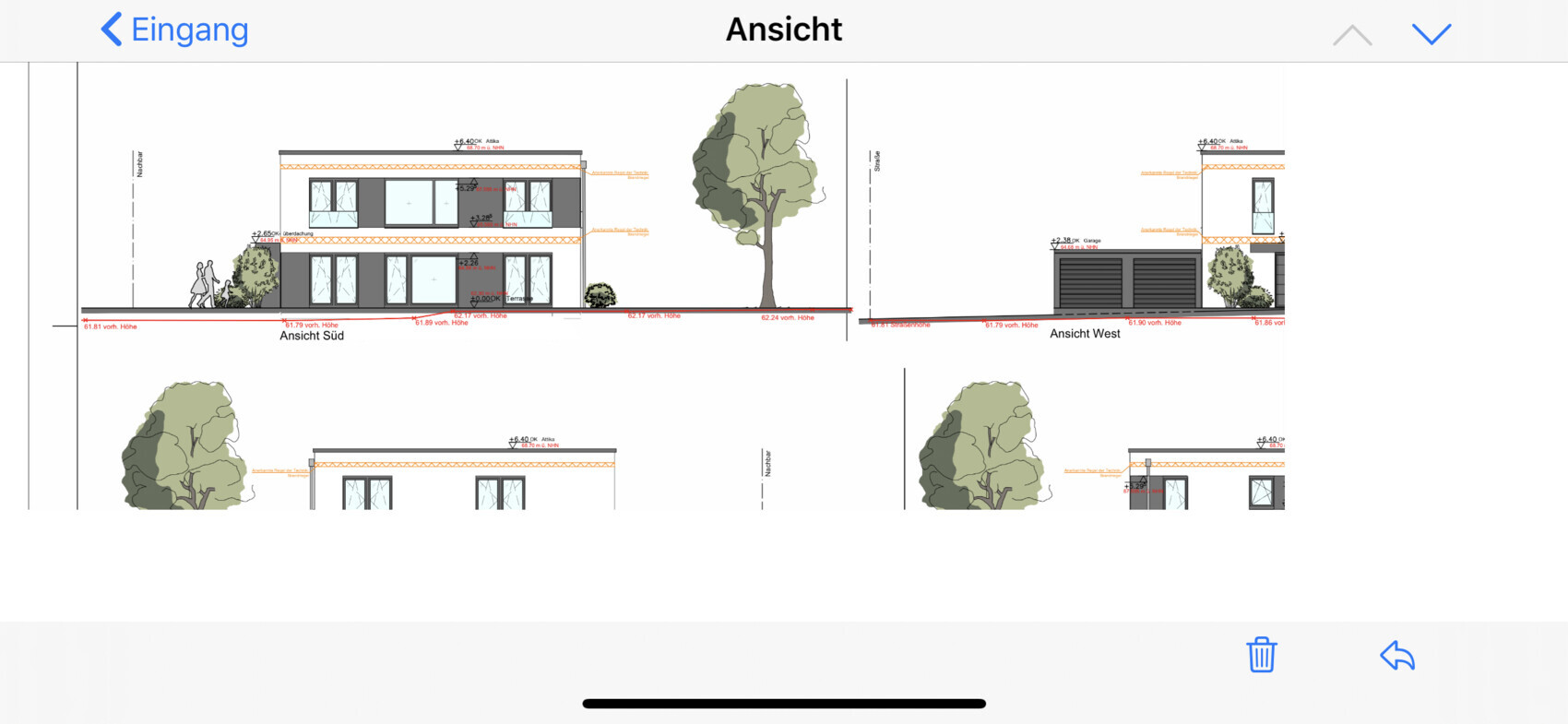
The grey areas are planned to have a setback in the insulation.
The white areas will have 16cm (6.3 inches) insulation with ETICS (external thermal insulation composite system).
The grey areas will have 14cm (5.5 inches) insulation.
This will create a drip edge on the first floor.
The plan is to extend the aluminum window sills in this area directly between the window sills and the masonry. One window sill would even need to be installed around the corner of the house. I have doubts about whether this approach is correct.
Does anyone have experience with this?
Of course, there are also opinions suggesting why not just continue the 16cm (6.3 inches) insulation and use a different render, for example. We also find the architect’s idea visually appealing.
With a 2cm (0.8 inches) difference, it is said that very precise workmanship is necessary; otherwise, it will look uneven.
In the basement, however, the offset is technically not a problem.
Hello Bertie
I’m not an expert and have no experience with this type of design. Visually, I like it very much.
But did the architect explain if they have implemented something like this before? If yes, has it been in trouble-free use for several years?
Otherwise, despite my appreciation for design, I would avoid this. If dirt accumulates there later or there are streaks on the facade, the frustration and disappointment will be significant. And the rework will be costly.
I would prefer a uniform finish or one with a different type of render/plaster. To me, it’s not worth the risk.
Best regards! mini_g!
I’m not an expert and have no experience with this type of design. Visually, I like it very much.
But did the architect explain if they have implemented something like this before? If yes, has it been in trouble-free use for several years?
Otherwise, despite my appreciation for design, I would avoid this. If dirt accumulates there later or there are streaks on the facade, the frustration and disappointment will be significant. And the rework will be costly.
I would prefer a uniform finish or one with a different type of render/plaster. To me, it’s not worth the risk.
Best regards! mini_g!
Similar topics