
Hello everyone,
this is about the method our house builder is using to create a waterproof basement. To be honest, I have never heard of this before, and there is very little information available online about it... and what there is mostly relates to commercial or office buildings.
The method is called "fresh concrete composite membrane" (FBVK #waterproof) with double-layer exterior walls 20cm (8 inches) thick.
One step down would be the "WU-basement" with double-layer exterior walls 24cm (9.5 inches), joint flashing. Of course, this option is also cheaper (approx. 3,000 €).
The plan is to set up a home office in the basement. Therefore, we would prefer it to be "properly sealed," ideally without high humidity caused by water-resistant concrete.
A soil report is not available yet!
Are you familiar with the first method? Have you had any experience with it or any opinions?
It would also be interesting to know whether insulation is possible at all if there is a "membrane" facing the soil on the outside.
this is about the method our house builder is using to create a waterproof basement. To be honest, I have never heard of this before, and there is very little information available online about it... and what there is mostly relates to commercial or office buildings.
The method is called "fresh concrete composite membrane" (FBVK #waterproof) with double-layer exterior walls 20cm (8 inches) thick.
One step down would be the "WU-basement" with double-layer exterior walls 24cm (9.5 inches), joint flashing. Of course, this option is also cheaper (approx. 3,000 €).
The plan is to set up a home office in the basement. Therefore, we would prefer it to be "properly sealed," ideally without high humidity caused by water-resistant concrete.
A soil report is not available yet!
Are you familiar with the first method? Have you had any experience with it or any opinions?
It would also be interesting to know whether insulation is possible at all if there is a "membrane" facing the soil on the outside.


After reviewing the basement construction and specifications:
Exterior Walls:
Total thickness 24cm (9.5 inches), formwork-smooth concrete panels connected with the statically required reinforcement.
14cm (5.5 inches) waterproof concrete pour including a "special system."
Whatever a special system is... (still) no idea.
Even more concerning to me is that the material of the formwork walls is not specified. At the moment, it reads as if I will later have a 14cm (5.5 inches) thick waterproof concrete wall, through which water will definitely diffuse.
Exterior Walls:
Total thickness 24cm (9.5 inches), formwork-smooth concrete panels connected with the statically required reinforcement.
14cm (5.5 inches) waterproof concrete pour including a "special system."
Whatever a special system is... (still) no idea.
Even more concerning to me is that the material of the formwork walls is not specified. At the moment, it reads as if I will later have a 14cm (5.5 inches) thick waterproof concrete wall, through which water will definitely diffuse.
Regarding the waterproof basement:
- Complete execution according to waterproofing standards!
- The prefabricated walls (formwork) also comply with waterproofing standards and are made of waterproof concrete.
- A waterproof concrete thickness of 24cm (9.5 inches) is achieved.
Regarding the application with FBVB:
- A membrane from the company StekoX is used, specifically "Polyfleece SX 1000".
- Service life: At least as long as the building itself!
- Perimeter insulation is easily possible with this system.
A brief note on the "myth of vapor diffusion" in waterproof concrete basements. Even in our builder’s construction and performance specifications, the basement is described as vapor-permeable. Higher-grade uses are generally not recommended in this case. However, they are possible with the alternative of fresh concrete composite membrane (which is, of course, more expensive).
By now, we know how to assess this properly…
Hello everyone,
I’m not entirely sure whether I should continue this (older) thread or start a new one. Since the topic fits exactly, I’m joining in here. Please excuse me if I should have done it the other way around...
We are building a Schwörer house in Switzerland with a FBVK basement, using exactly the StekoX system (Polyfleece SX membrane) mentioned by @Wissi. Unfortunately, it’s quite new that Schwörer houses in Switzerland now use StekoX instead of Sika. Therefore, I lack any expertise or points of comparison here in Switzerland.
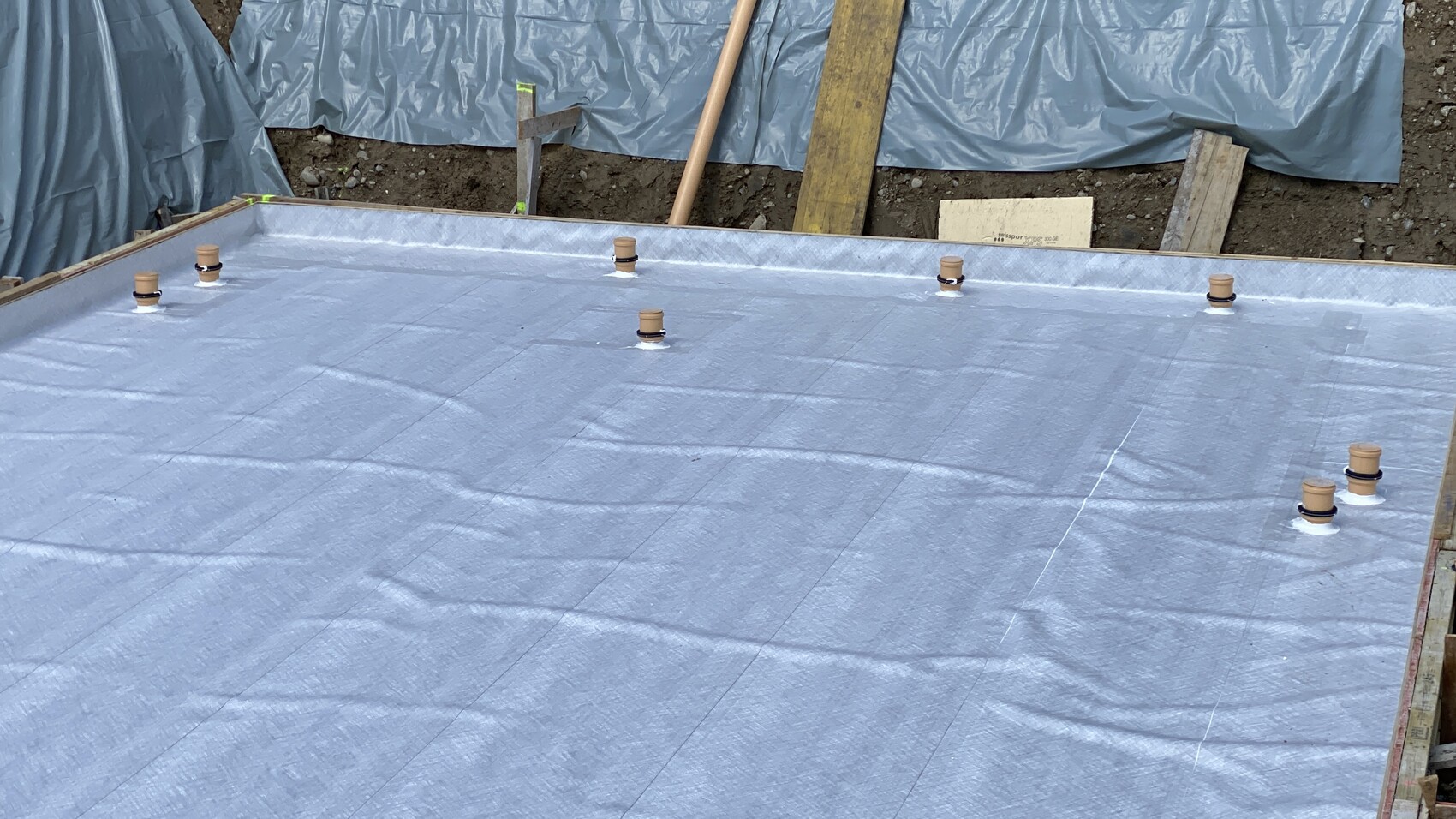
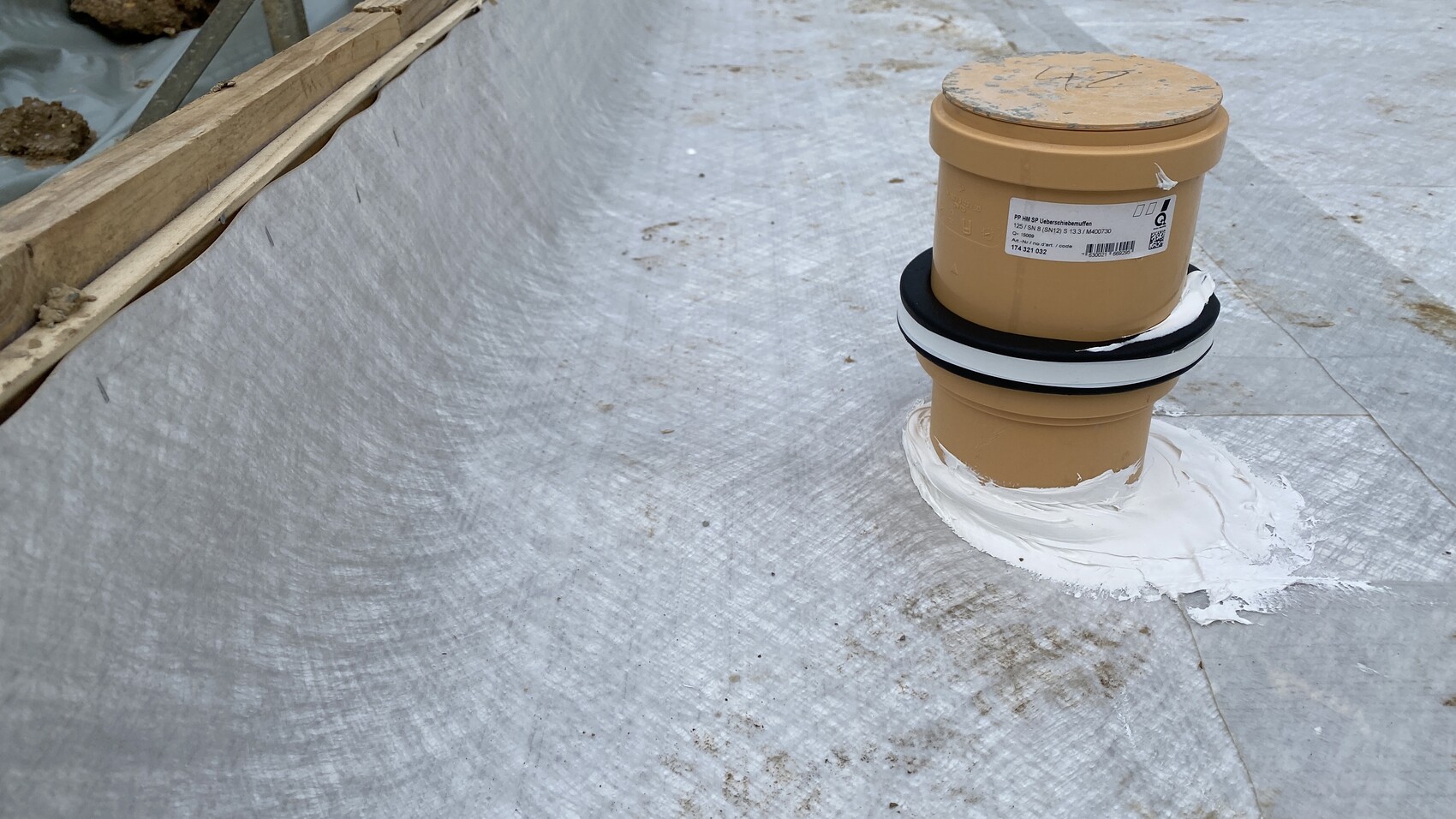
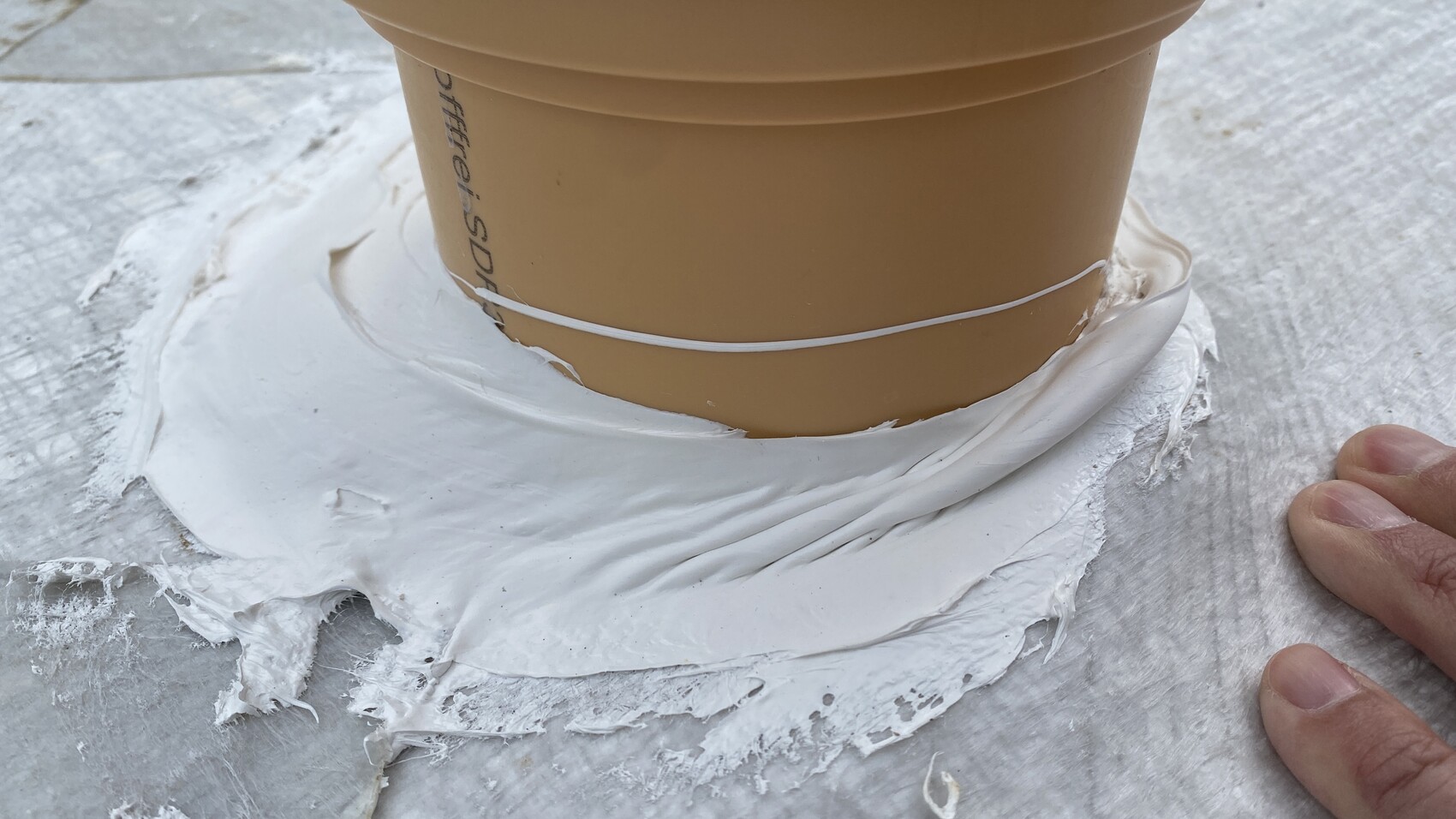
My question is how you handled floor penetrations for sewage pipes on your projects. In our case, the following was done: a swelling paste was applied around the pipes on top of the membrane at the bottom, and additionally, a swelling rubber tape was wrapped around the pipes about halfway up, as shown in the photos. This is the current status. The reinforcement is going in now, and the concrete pour is scheduled for Friday.
Is this correct? Does this look reasonable? How did it look at your sites? Photos from your builds would be very helpful...
Many thanks and best regards from Switzerland,
Dave
I’m not entirely sure whether I should continue this (older) thread or start a new one. Since the topic fits exactly, I’m joining in here. Please excuse me if I should have done it the other way around...
We are building a Schwörer house in Switzerland with a FBVK basement, using exactly the StekoX system (Polyfleece SX membrane) mentioned by @Wissi. Unfortunately, it’s quite new that Schwörer houses in Switzerland now use StekoX instead of Sika. Therefore, I lack any expertise or points of comparison here in Switzerland.
My question is how you handled floor penetrations for sewage pipes on your projects. In our case, the following was done: a swelling paste was applied around the pipes on top of the membrane at the bottom, and additionally, a swelling rubber tape was wrapped around the pipes about halfway up, as shown in the photos. This is the current status. The reinforcement is going in now, and the concrete pour is scheduled for Friday.
Is this correct? Does this look reasonable? How did it look at your sites? Photos from your builds would be very helpful...
Many thanks and best regards from Switzerland,
Dave
Hi @dave_ch, I’m not sure to what extent advertising from external sources (related to Facebook groups) is allowed here, but if sharing a reference to a place where several Schwörerhaus customers could help you is permitted, I’d be happy to provide it.
EDIT: The rules regarding these groups seem to be very strict. Let’s just say… there is a social network where groups like these exist. I also know some people there who have already built with FBVF and probably still have photos. It can’t hurt in case no pictures accumulate here.
EDIT: The rules regarding these groups seem to be very strict. Let’s just say… there is a social network where groups like these exist. I also know some people there who have already built with FBVF and probably still have photos. It can’t hurt in case no pictures accumulate here.
Similar topics