
Good morning,
We have a problem with water behind the grout in our shower. However, our tiler is not very cooperative. Maybe someone has experience with this issue and can give us an opinion before we contact an expert:
- The shower in the guest bathroom has only been used 5 times since we moved in, so wear and tear can be ruled out.
- The grout in the shower, especially where the floor meets the wall tiles, has come loose and appears to be leaking salts (?). In the photos, you can see that the regular grout near the silicone joints is noticeably darker, which we believe indicates moisture.
- We informed the tiler about the problem, and he said these were maintenance joints, so it’s not a warranty issue, but he would redo the grout. He then applied a new silicone bead over the old one, which peeled off immediately after just one shower (silicone on silicone, of course, didn’t hold). The dark areas on the grout remained several weeks after the last shower. When pressing on the new joints, water also came out of the grout.
- Since the new grout separated from the old, and the old grout was already damaged, I removed the silicone to redo the grouting completely. During this process, we could see that water had collected behind the grout and there are large voids. A piece of paper pushed between the grout pulled water out immediately.
- This means the grout is allowing water to pass through, and water is collecting in these voids. If water continues to accumulate there and cannot dry out (since it is behind the silicone joints), are we not looking at water damage very soon?
Is this normal? In our opinion, this area should be sealed so that no water can collect there.
Thank you in advance if anyone can provide an assessment.
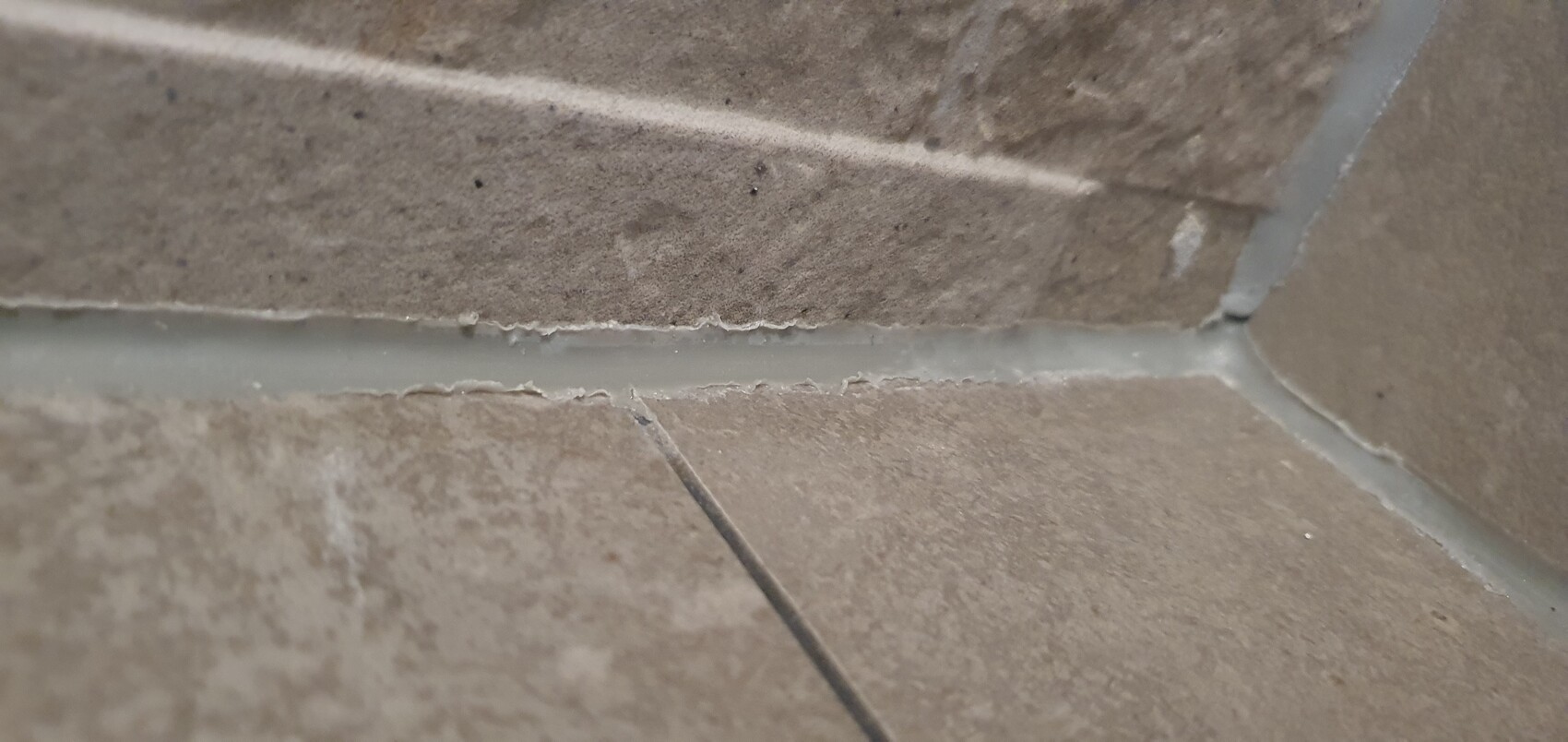
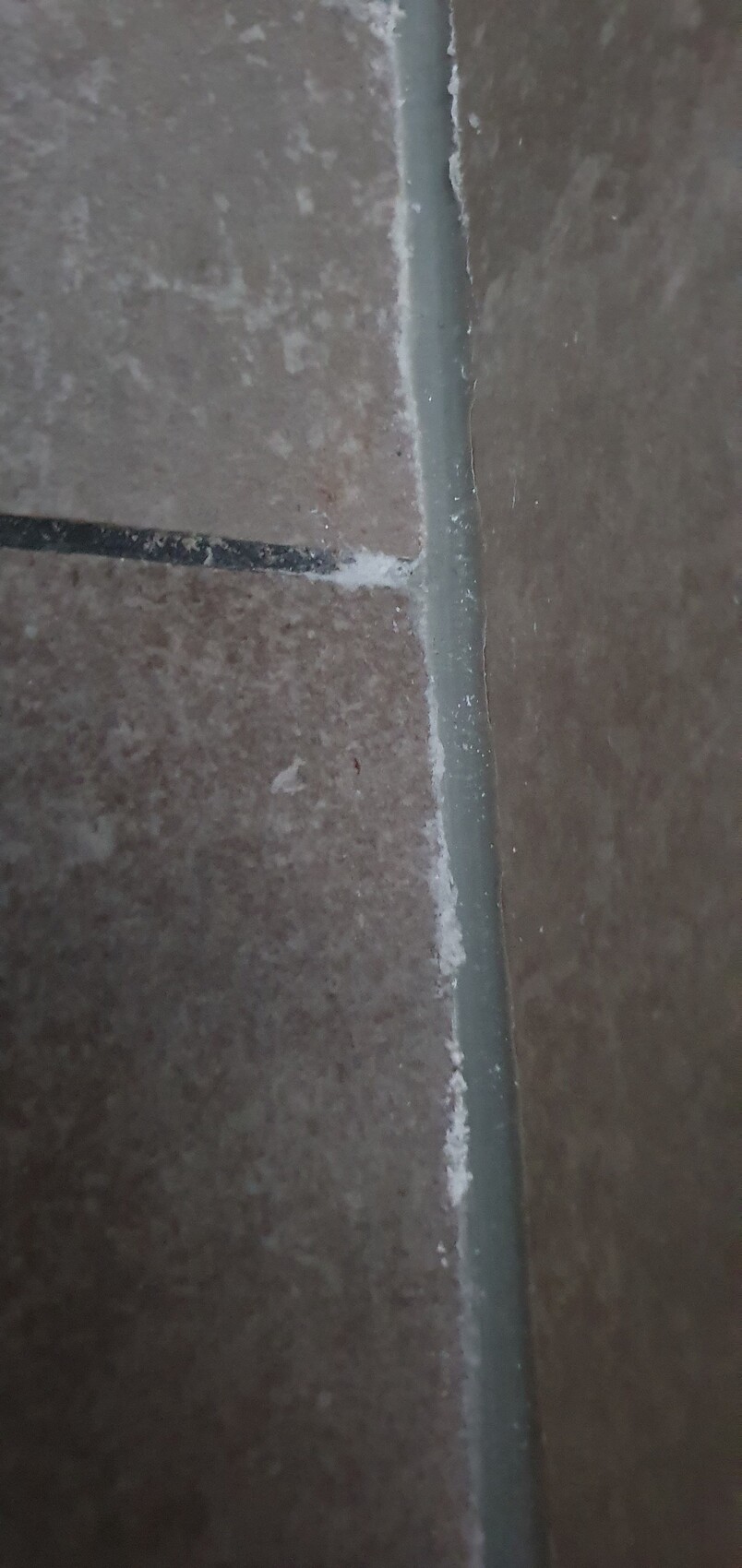

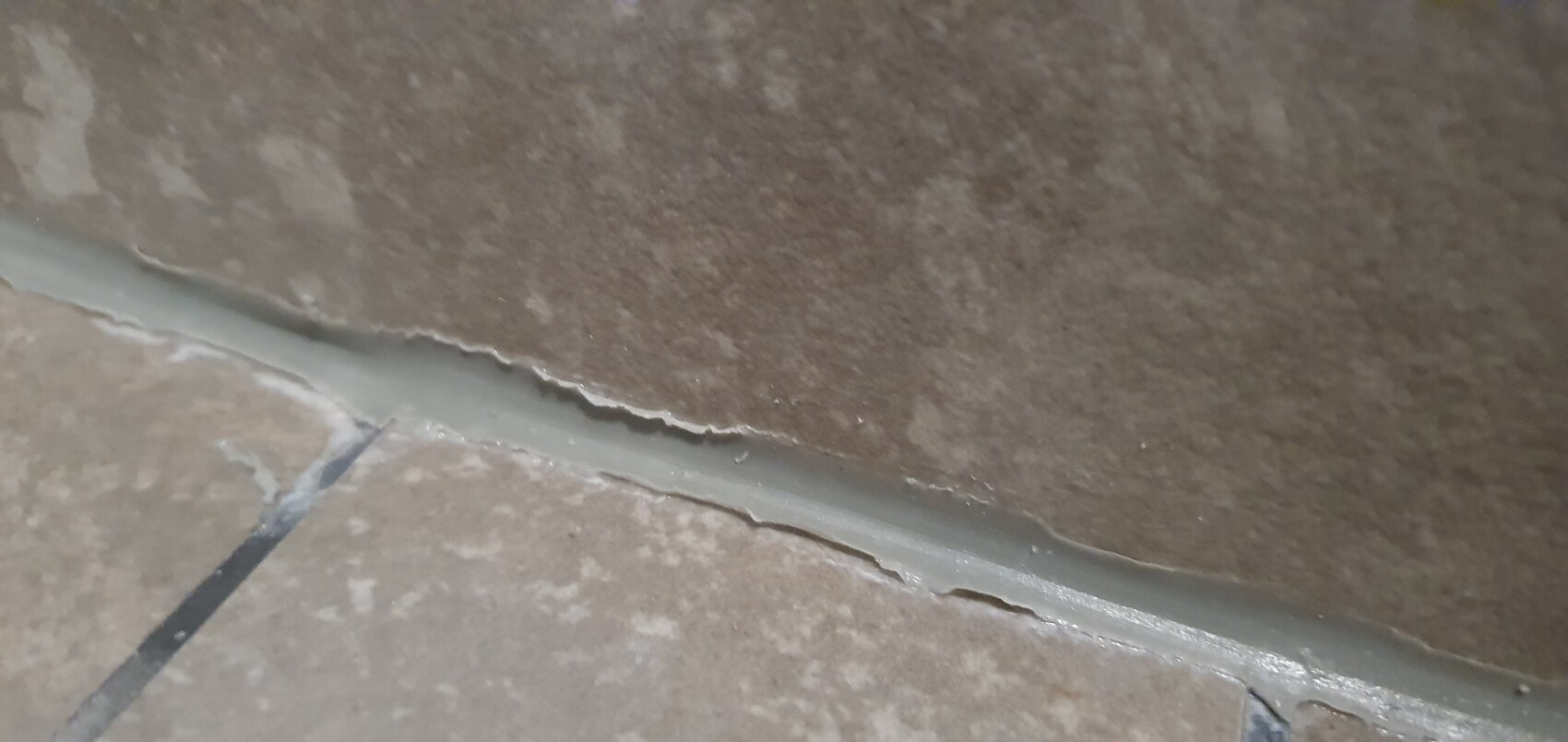
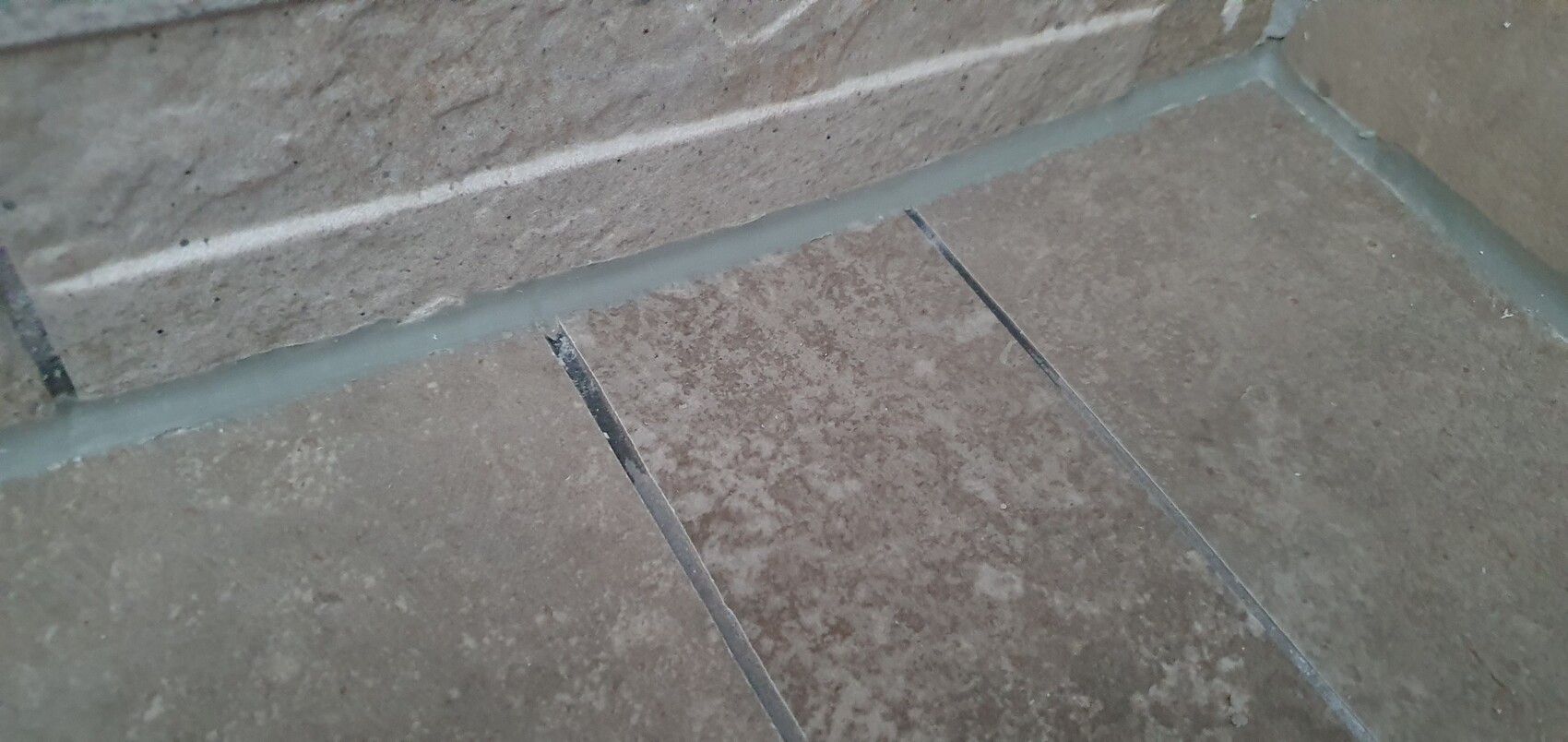

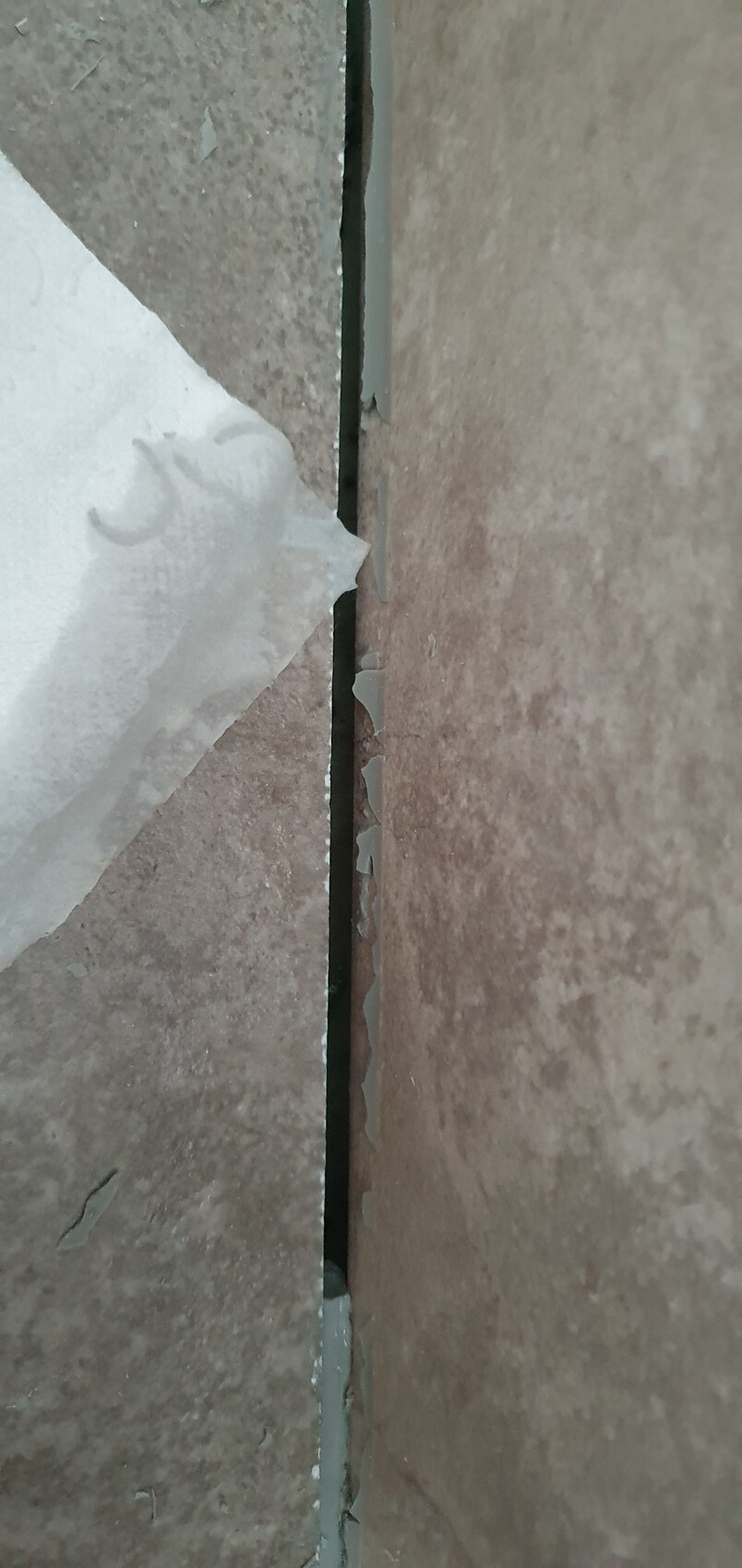
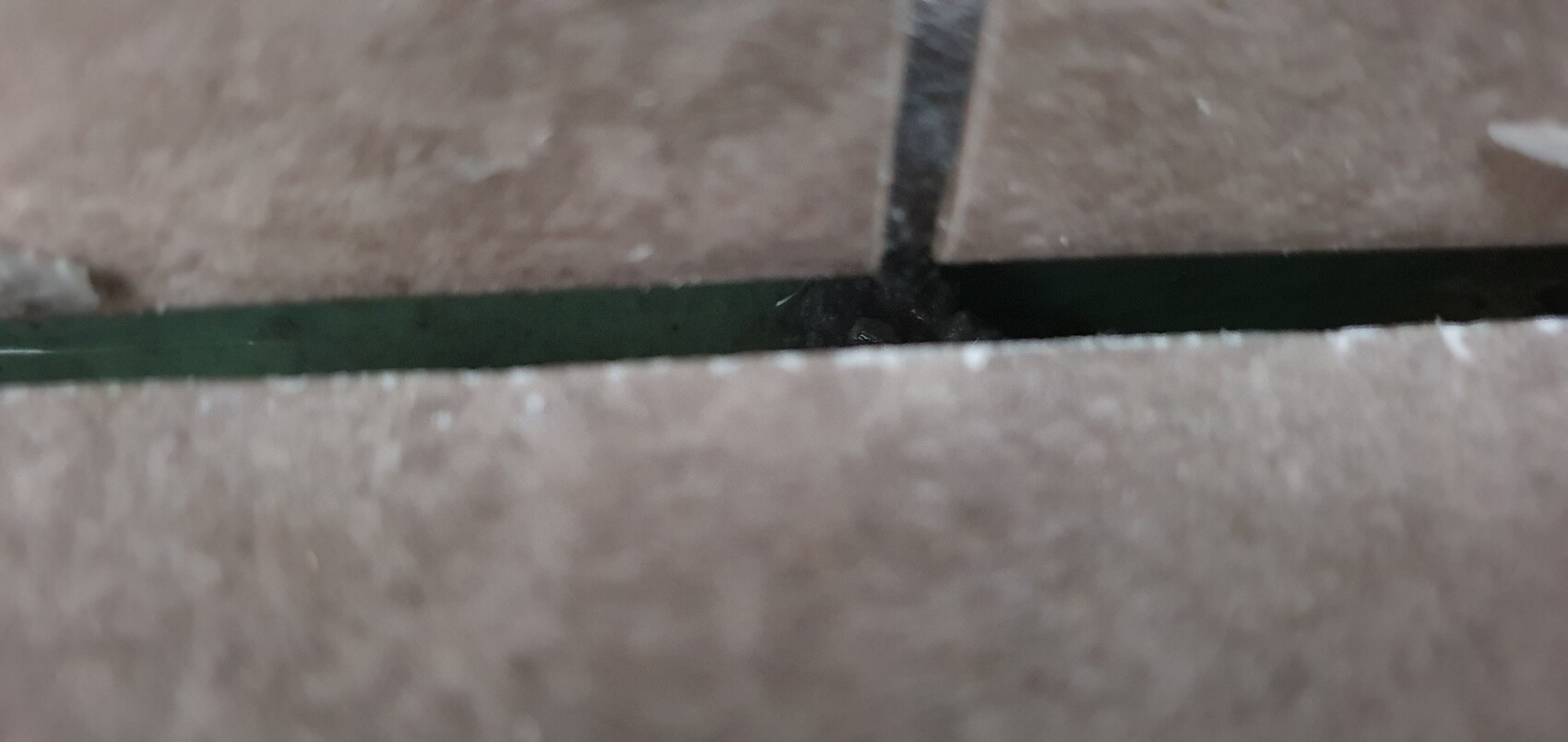
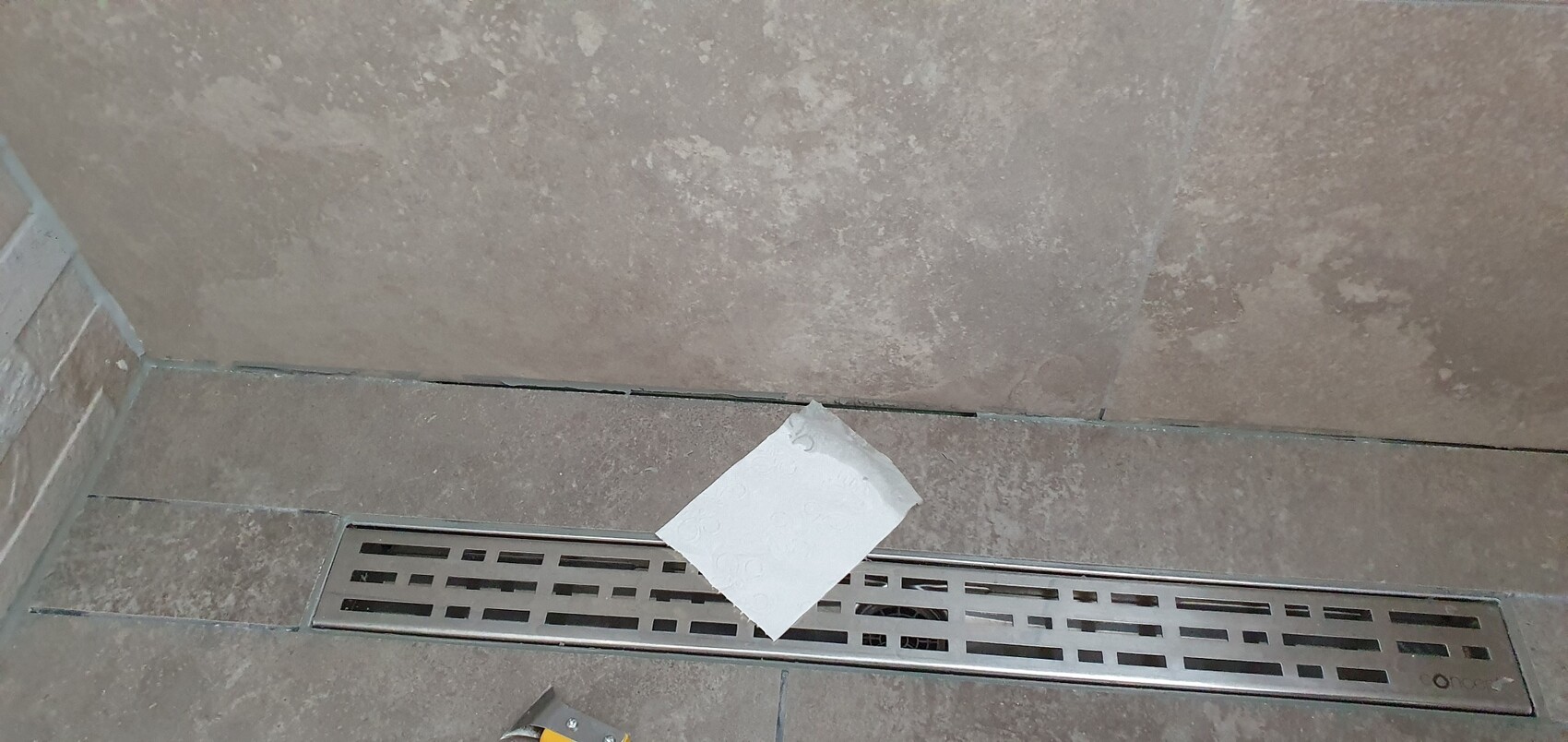
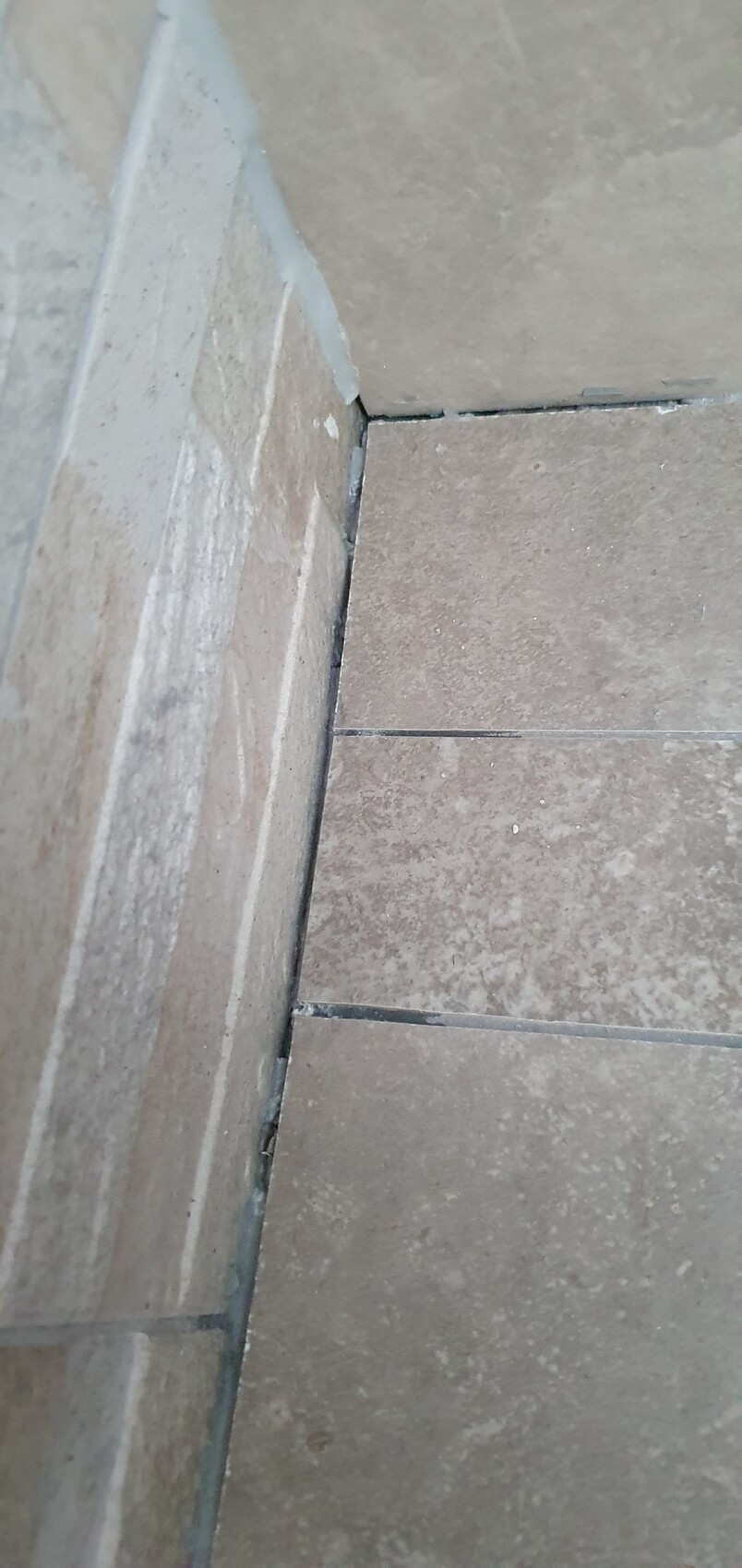
We have a problem with water behind the grout in our shower. However, our tiler is not very cooperative. Maybe someone has experience with this issue and can give us an opinion before we contact an expert:
- The shower in the guest bathroom has only been used 5 times since we moved in, so wear and tear can be ruled out.
- The grout in the shower, especially where the floor meets the wall tiles, has come loose and appears to be leaking salts (?). In the photos, you can see that the regular grout near the silicone joints is noticeably darker, which we believe indicates moisture.
- We informed the tiler about the problem, and he said these were maintenance joints, so it’s not a warranty issue, but he would redo the grout. He then applied a new silicone bead over the old one, which peeled off immediately after just one shower (silicone on silicone, of course, didn’t hold). The dark areas on the grout remained several weeks after the last shower. When pressing on the new joints, water also came out of the grout.
- Since the new grout separated from the old, and the old grout was already damaged, I removed the silicone to redo the grouting completely. During this process, we could see that water had collected behind the grout and there are large voids. A piece of paper pushed between the grout pulled water out immediately.
- This means the grout is allowing water to pass through, and water is collecting in these voids. If water continues to accumulate there and cannot dry out (since it is behind the silicone joints), are we not looking at water damage very soon?
Is this normal? In our opinion, this area should be sealed so that no water can collect there.
Thank you in advance if anyone can provide an assessment.
C
Costruttrice10 Oct 2023 10:04Densky89 schrieb:
Is there any way to check afterwards if waterproofing was done? Apart from removing the tiles and inspecting underneath?If, understandably, you no longer trust the tiler and don’t have enough knowledge about proper installation, I would immediately consult an expert. Also, avoid using the shower until the issue is properly clarified.
I wouldn’t recommend trying to fix or adjust anything yourself, as the tiler might quickly blame you for any problems.

Buchsbaum schrieb:
First, I would check the slope in the shower towards the drain. Use a small spirit level to see if the water flows against the drain or even pools there.
At the joint between the floor and the wall at the back, I would glue a strip instead of just a sealant joint, using body filler adhesive like Sika Flex or a similar product.
That would make the connection watertight. I would also seal the other connections with body filler adhesive instead of silicone.
There are semi-circular sealing strips for corner areas.
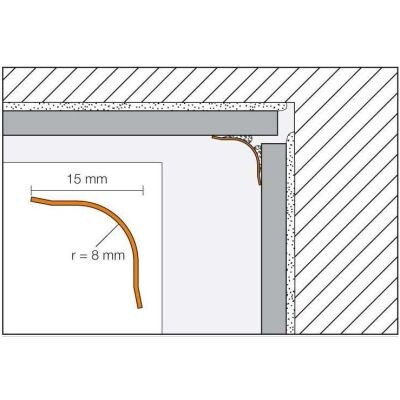
But first check the slope, otherwise everything else makes no sense. What use are superficial waterproofing measures if there was no waterproof coating applied behind the wall and floor tiles?
I answer my own question: none at all! (Or only for a few days or weeks) until the wall behind is soaking wet and mold starts to develop.
Trying to fix mistakes made by the hired tradespeople yourself would be, in my opinion, a disaster as @Costruttrice already said.
The only correct measure is: expert assessment.
B
Buchsbaum10 Oct 2023 11:45The only proper course of action: an expert.
Better to follow up immediately with a legal team and thoroughly challenge the tiler.
What exactly is the expert supposed to do? Do they have X-ray vision?
They will chip away the tiles to see what was done underneath. What if everything was done correctly? Then it could get expensive for the homeowner.
As I said, just stick a few stainless steel coving strips into the corners, and that will keep things stable for many years. I would never seal such heavily stressed corners with silicone.
Better to follow up immediately with a legal team and thoroughly challenge the tiler.
What exactly is the expert supposed to do? Do they have X-ray vision?
They will chip away the tiles to see what was done underneath. What if everything was done correctly? Then it could get expensive for the homeowner.
As I said, just stick a few stainless steel coving strips into the corners, and that will keep things stable for many years. I would never seal such heavily stressed corners with silicone.
C
Costruttrice10 Oct 2023 12:24Buchsbaum schrieb:
What is the expert supposed to do? Does he have X-ray vision?
He will chip away the tiles to see what was done underneath. But what if everything is correct? Then it will be expensive for the homeowner. It’s clear that an inspection is necessary. Because something definitely isn’t right; otherwise, this problem would occur more often.
Buchsbaum schrieb:
As I said, just glue a few stainless steel cove corner trims into the corners, and then there won’t be any issues for many years. I would never seal such heavily stressed corners with silicone. Exactly my point—I’m building a new house and paying a lot of money for my bathroom, only to have to fix a problem caused by some DIY hack, even though I am still under the warranty period.
Installing any kind of trims is just treating the symptoms; it does not address the root cause.
I repeat: something must have been done incorrectly.
Buchsbaum schrieb:
The only proper measure: an expert assessor
最好直接请一个律师团队介入,然后好好揪出瓷砖工人的问题。
What is the expert supposed to do? Do they have X-ray vision?
They will have to chip away some tiles to see what was done underneath. What if everything is correct? Then it will be expensive for the homeowner. Right, it can get costly for the original poster. Even if the tiler made mistakes, there is no guarantee they will be held responsible. The expert assessor must at least be paid by the homeowner themselves. Reimbursement only happens in court if the homeowner wins (not in settlements) or if the tiler finally agrees. BUT: If this problem isn’t fixed properly, the consequential damage can be much higher. Then 2,000–5,000 (currency) won’t matter anymore (do we even know what type of construction the original poster has? Solid construction, timber frame, etc.). It’s definitely a nuisance. And it is NEVER correct to apply silicone over silicone as a quick fix!
Buchsbaum schrieb:
As mentioned, just glue some stainless steel coving angles into the corners, and then you have peace of mind for many years. I would never seal such stressed corners with silicone. Exactly, the covings will then be sealed. But the regular tile joints are not (permanently) waterproof. That’s how it is, it can be read about if you want. The only real protection is the waterproofing layer behind the tiles and the properly installed collars/bands at edges and corners. Why do you want to push the original poster towards such clearly wrong advice? Just to show off? I am not a building expert, but I can at least share my personal experience with my relatively new build. And precisely on this topic, our tiler had to pay the glazier extra work because he forgot a collar (around the tap). With solid timber construction, the house can literally fall apart if mold develops behind the surfaces.
I will leave it at that now; the original poster is an adult and can hopefully decide for themselves what is right.
No one is forcing them to hire an expert assessor, only strongly advising, since they apparently do not have the necessary knowledge.

The fact that so much water is being pushed upwards and has not yet found its way into the wall or across the floor into another room (where is the shower located?) rather indicates that the waterproofing is in place and effective. However, this does not change the necessary action, because a cavity where water can accumulate over a long period and cannot dry out must be avoided.
Similar topics