
Hello,
For my shed extension, which is similar to a garage, steel trapezoidal sheet metal is used as the roofing material. I currently have the problem that water seems to be entering underneath the sheet from the eaves, probably caused by wind or air drafts.
The edge of the trapezoidal sheet has been bent downwards everywhere in the valleys with a seaming tool to create a drip edge. The last 15 cm (6 inches) of the underside of the sheet does not have an anti-condensation fleece (to prevent water from being absorbed into the fleece at the edge).
Now I am considering installing an additional drip edge and using profile fillers. However, I am unsure whether adding the profile fillers would negatively affect the ventilation of the anti-condensation fleece, since the shed is closed on the sides and has a shed door at the front. Of course, air still enters from everywhere, so it is not airtight.
I can only do this after the wet months so that the wood can dry out again first or be reworked if necessary.
Best regards
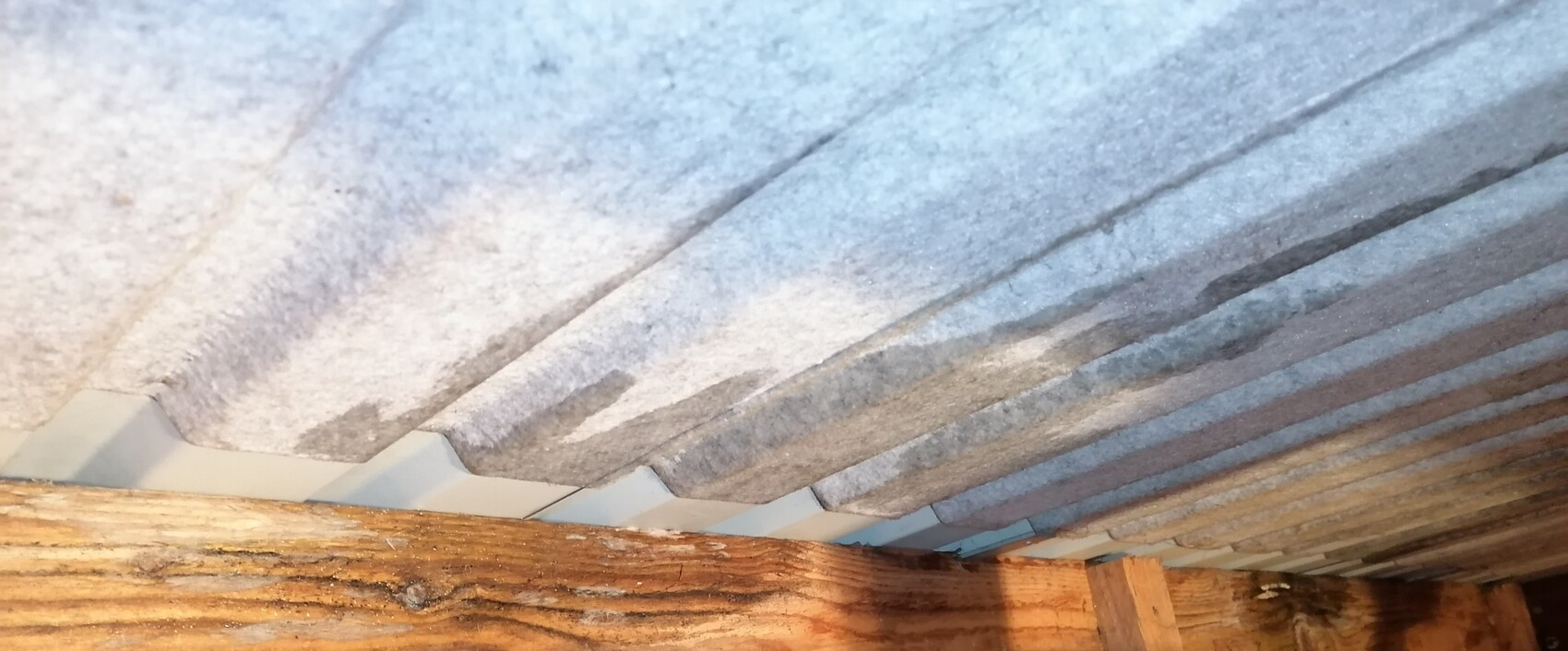
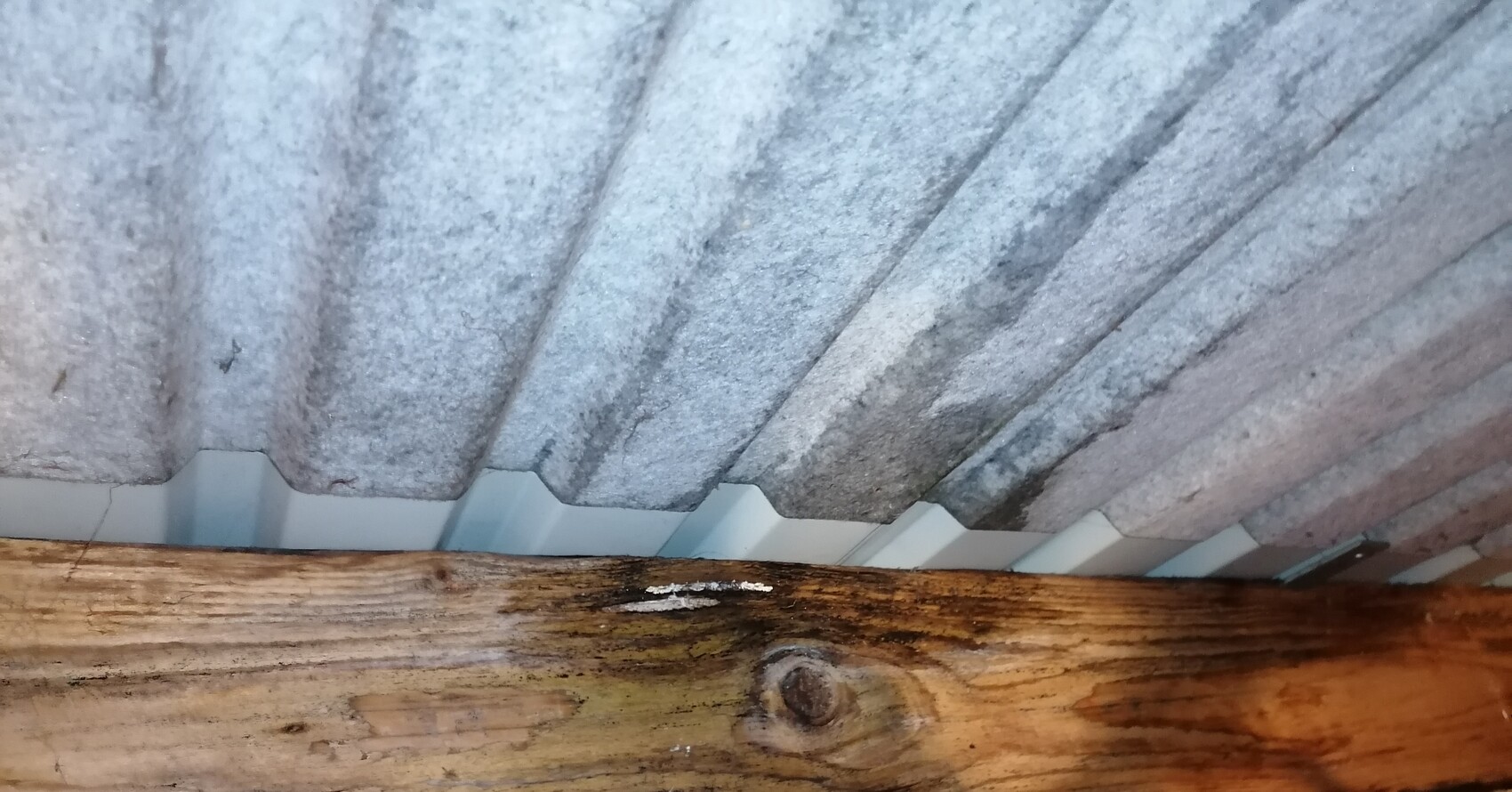
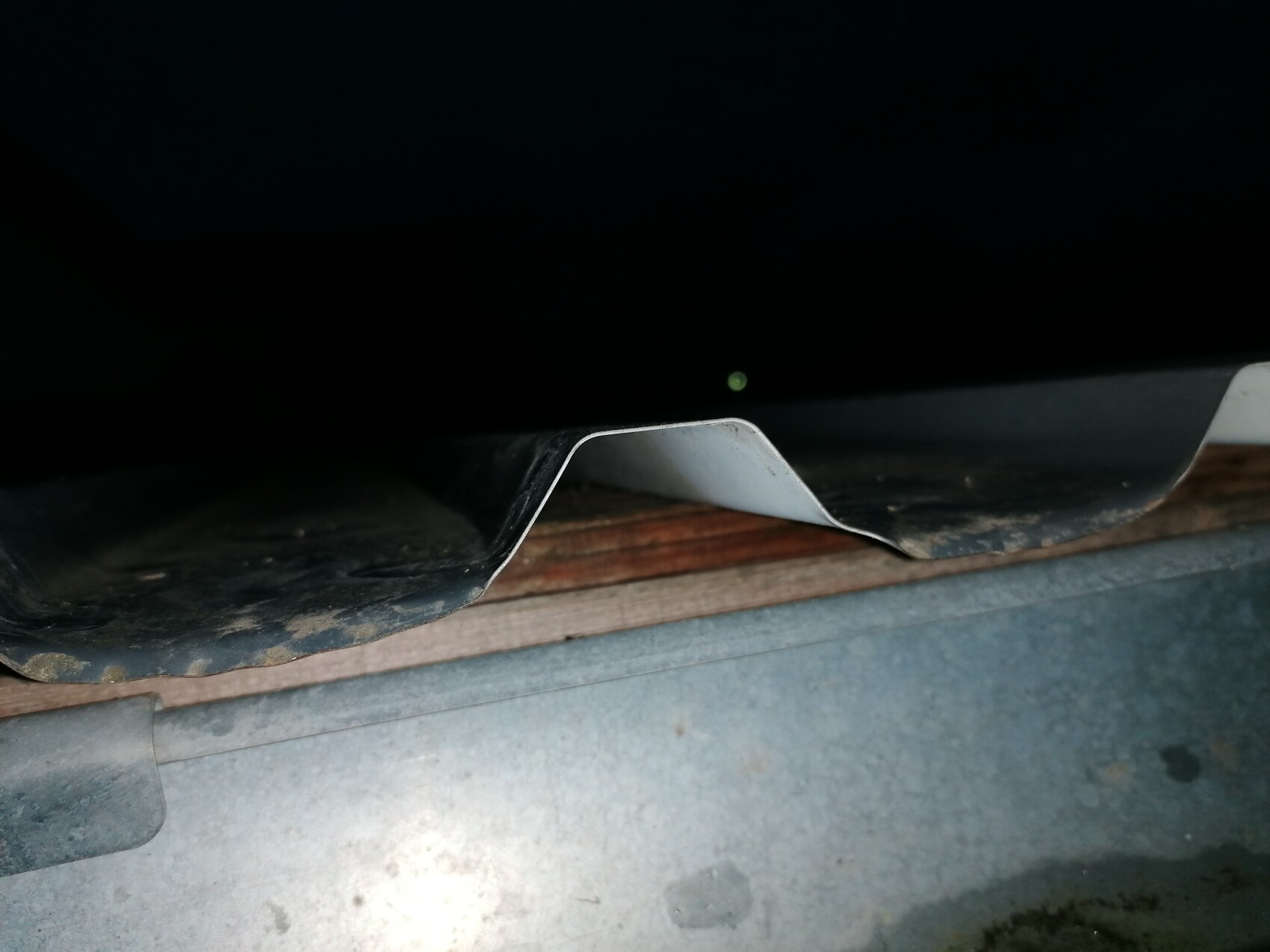
For my shed extension, which is similar to a garage, steel trapezoidal sheet metal is used as the roofing material. I currently have the problem that water seems to be entering underneath the sheet from the eaves, probably caused by wind or air drafts.
The edge of the trapezoidal sheet has been bent downwards everywhere in the valleys with a seaming tool to create a drip edge. The last 15 cm (6 inches) of the underside of the sheet does not have an anti-condensation fleece (to prevent water from being absorbed into the fleece at the edge).
Now I am considering installing an additional drip edge and using profile fillers. However, I am unsure whether adding the profile fillers would negatively affect the ventilation of the anti-condensation fleece, since the shed is closed on the sides and has a shed door at the front. Of course, air still enters from everywhere, so it is not airtight.
I can only do this after the wet months so that the wood can dry out again first or be reworked if necessary.
Best regards
 HausiKlausi10 May 2023 20:27
ABC-Fuchs schrieb:
What do you mean by the other seals? Sorry, that was a bit unclear. The sheet metal screws usually come with a rubber washer that prevents water from entering the screw hole.
A
ABC-Fuchs13 May 2023 20:44HausiKlausi schrieb:
Sorry, I was a bit vague. The sheet metal screws usually come with a rubber washer that prevents water from entering the screw hole. Ah, okay. Yes, I will double-check to make sure all the screws are properly seated. However, I can’t imagine that’s the cause of the problem. I believe the water is actually being drawn upwards inside somewhere in the eaves area due to the membrane.
B
Bausparfuchs13 May 2023 23:03Can water flow uphill?
How does it then get upwards? Why does the water only rise in a small section instead of along the entire length?
I would say that the water comes from above. A screw or ridge might be leaking. Certainly, the overhang to the gutter is very small, but that should not be the cause. Maybe something in an overlap is not sealed or no longer sealed. This needs to be checked.
In general, it is always very difficult to pinpoint the exact source of water intrusion.
How does it then get upwards? Why does the water only rise in a small section instead of along the entire length?
I would say that the water comes from above. A screw or ridge might be leaking. Certainly, the overhang to the gutter is very small, but that should not be the cause. Maybe something in an overlap is not sealed or no longer sealed. This needs to be checked.
In general, it is always very difficult to pinpoint the exact source of water intrusion.
B
Benutzer 100114 May 2023 10:40Bausparfuchs schrieb:
Can water flow uphill?
How does it get up there then? Why does the water only appear in a small section instead of along the entire length?
I would say the water is coming from above. A screw or ridge cap might be leaking. The overhang to the gutter is certainly very small, but that should not be the cause. Maybe there is a problem with a lap joint that is not properly sealed anymore. This needs to be checked.
In general, it is always very difficult to locate the source of water ingress.Yes, water can flow uphill… this is called capillary action.