
H
Harri_Bayer5513 Jul 2023 14:24Hello everyone,
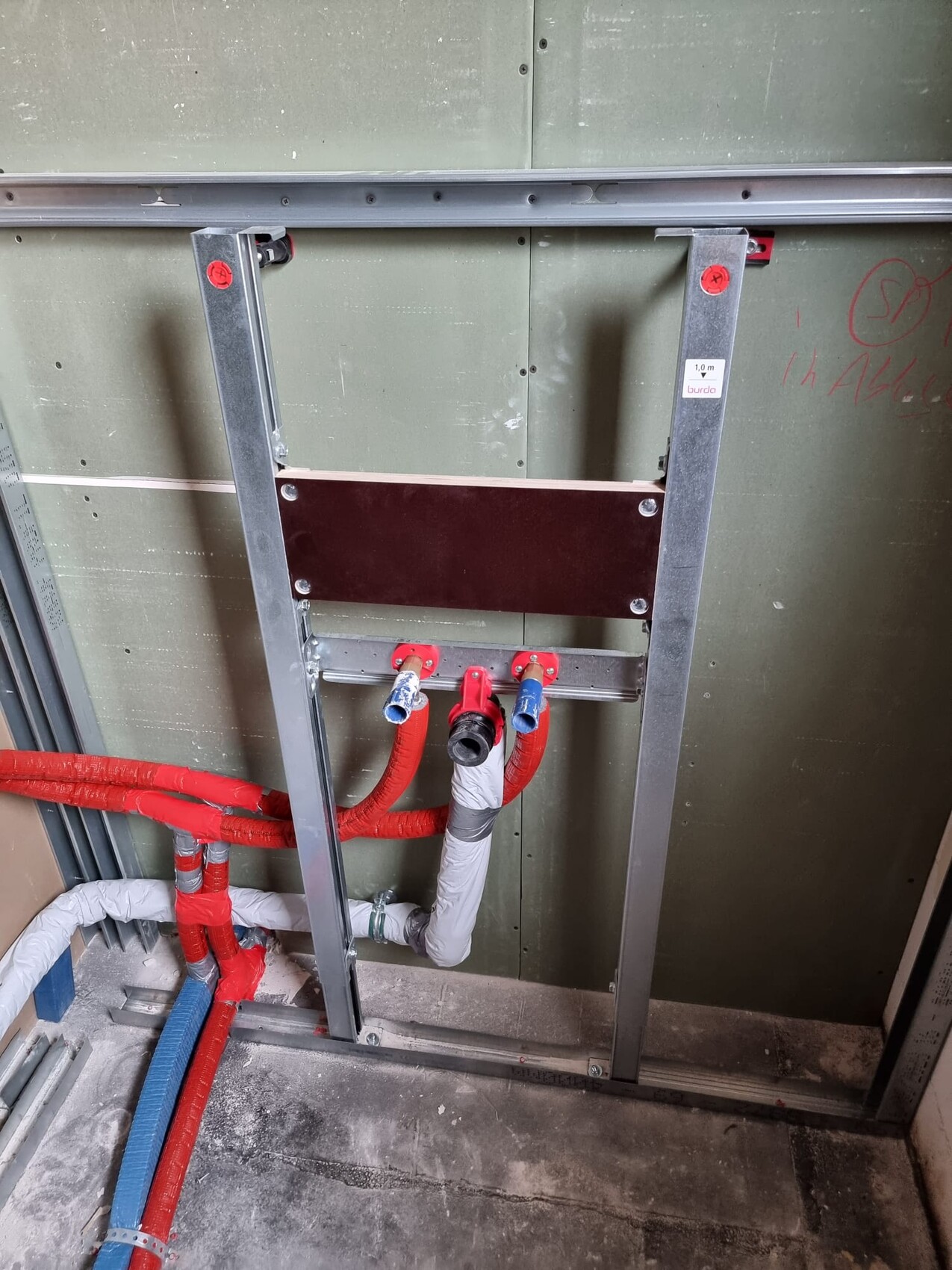
I have a question regarding the installation of pre-wall systems on drywall (see pictures). Our wall has double layers of plasterboard.
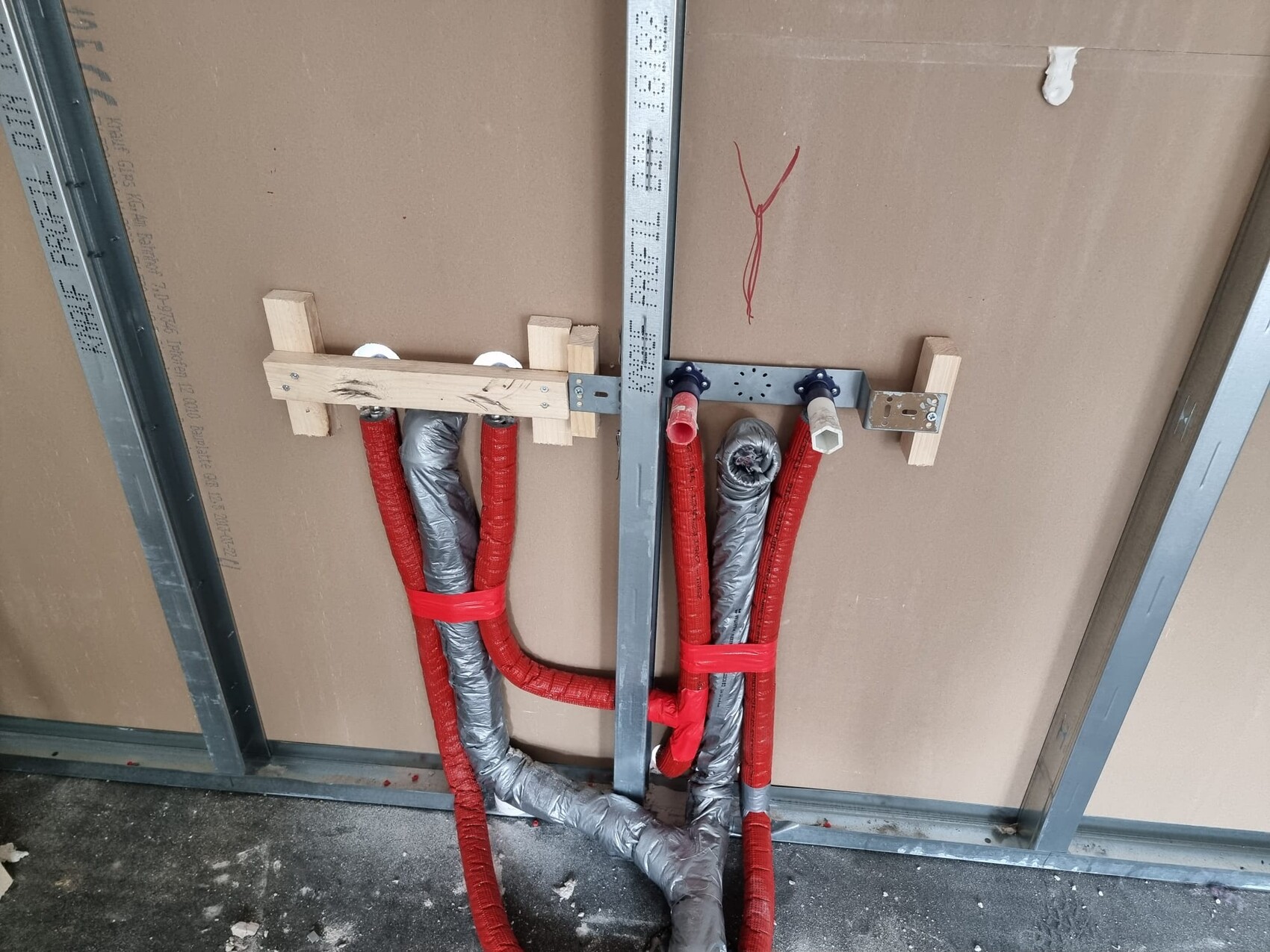
The upper mounting of the pre-wall frame is only fixed to the back wall using two simple wooden battens. Is this a common practice? Is this normal? It looks quite odd to me, more like patchwork than professional work, almost like shoddy construction. Don’t they usually use cross braces in such cases?
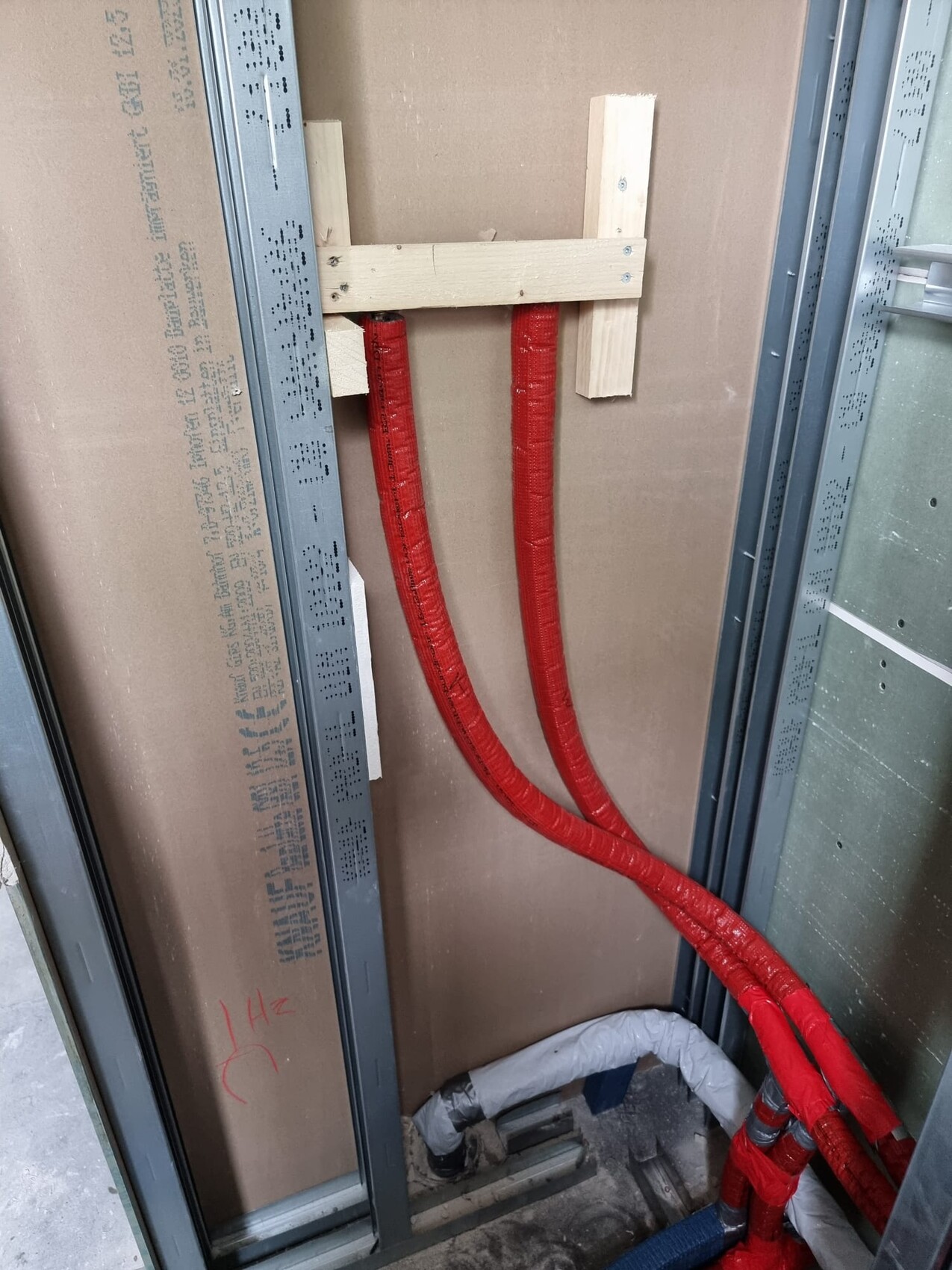
Pre-wall installation for washbasin
Backside of washbasin, attached with wooden battens

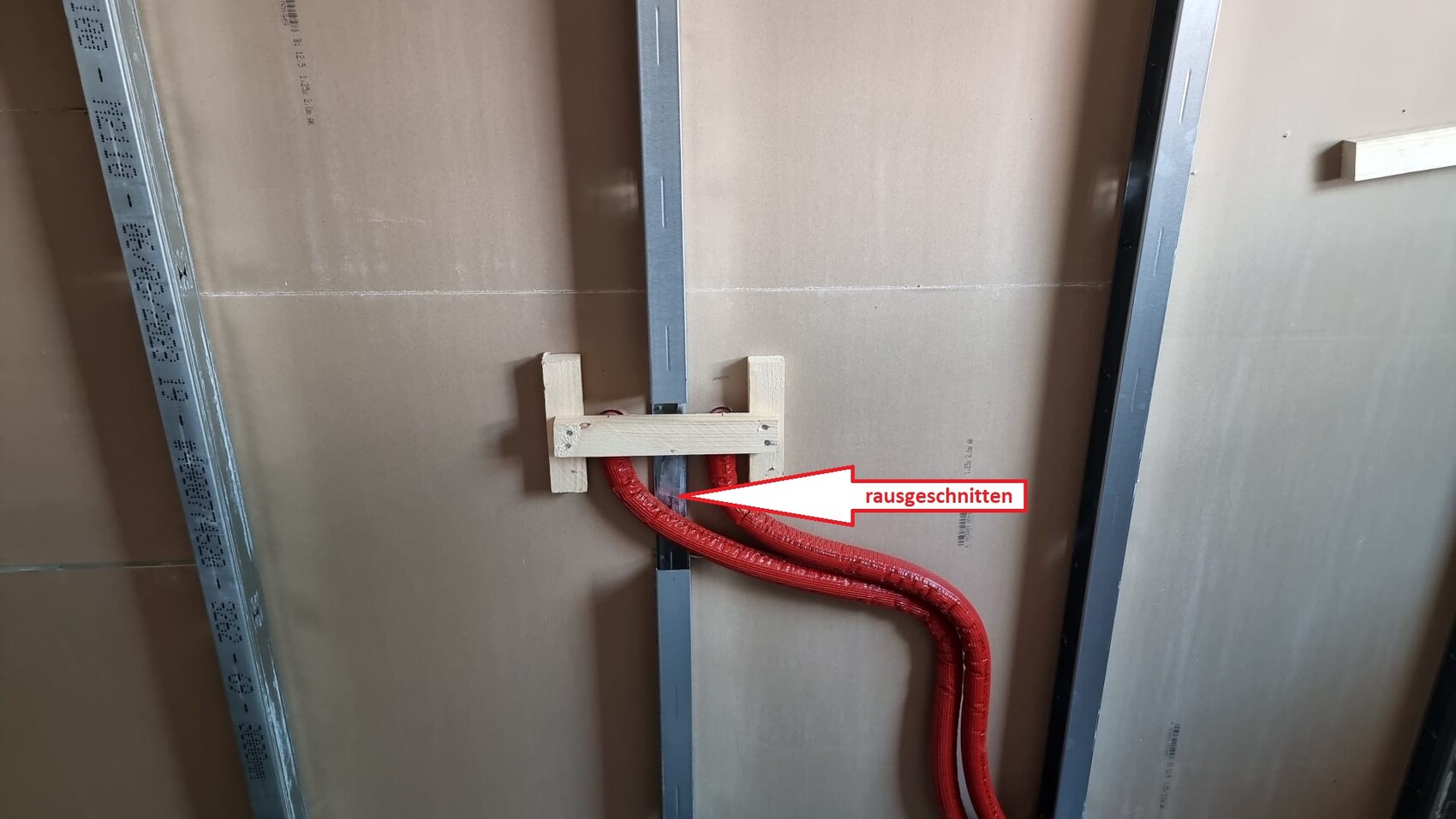
In the bathroom, a U-profile in the middle was cut out to attach the fittings. When I pull firmly on the fittings, the entire wall wobbles. That can’t be right, can it? I should mention that the drywall is currently installed on only one side so that the electrician can still work inside. It’s possible that once the other side is installed, it will be completely stable—I’m just not an expert.
Can anyone give me some advice?
Thank you very much!
I have a question regarding the installation of pre-wall systems on drywall (see pictures). Our wall has double layers of plasterboard.
The upper mounting of the pre-wall frame is only fixed to the back wall using two simple wooden battens. Is this a common practice? Is this normal? It looks quite odd to me, more like patchwork than professional work, almost like shoddy construction. Don’t they usually use cross braces in such cases?
Pre-wall installation for washbasin
Backside of washbasin, attached with wooden battens
In the bathroom, a U-profile in the middle was cut out to attach the fittings. When I pull firmly on the fittings, the entire wall wobbles. That can’t be right, can it? I should mention that the drywall is currently installed on only one side so that the electrician can still work inside. It’s possible that once the other side is installed, it will be completely stable—I’m just not an expert.
Can anyone give me some advice?
Thank you very much!
The profile manufacturer would definitely have a panic attack — cutting out side walls is not allowed! If no alternative routing for the cables is possible, a crossover (lateral reinforcement) must be installed there.
Wooden furring strips are often used in the UK, but in your case it looks very improvised — there are actually better ready-made solutions, such as Leifeld UniBlock. Even better is fastening to CW studs, for example with clamping rails or similar (Leifeld also offers various systems for this).
Wooden furring strips are often used in the UK, but in your case it looks very improvised — there are actually better ready-made solutions, such as Leifeld UniBlock. Even better is fastening to CW studs, for example with clamping rails or similar (Leifeld also offers various systems for this).
H
Harri_Bayer5513 Jul 2023 15:07Harakiri schrieb:
The profile manufacturer will definitely have a panic attack – cutting out side walls is not allowed! If no alternative routing for the cables is possible, a crossover reinforcement must be installed there.
Wooden bottom tracks are often used, but in your case it looks very improvised – there are actually better ready-made solutions, such as Leifeld UniBlock. Even better is fastening to metal stud profiles, for example with clamp mounting rails or similar (Leifeld also offers different systems). Thank you, I will make sure the profile is replaced and done properly. I will take a look at the clamp mounting rails and order them. If necessary, I will install them myself.
It is probably too late for the clamping rails, as they usually need to be wrapped around the profiles – this must be done before the paneling.
In theory, you could angle a mounting rail to size, screw it to the profiles on the left and right, so that it ultimately provides the correct depth for the wall panels. However, the installers should actually be familiar with this and usually have the appropriate components readily available.
In theory, you could angle a mounting rail to size, screw it to the profiles on the left and right, so that it ultimately provides the correct depth for the wall panels. However, the installers should actually be familiar with this and usually have the appropriate components readily available.
H
Harri_Bayer552 Aug 2023 12:40Thanks for the tip. I showed the problem to the drywall contractor, and after shaking his head, thankfully he was able to fix it. He added a reinforcement profile there. Hopefully, it will all hold up.