
ᐅ Was our flat roof constructed correctly and according to current industry standards?
Created on: 4 Oct 2021 15:49
E
elsausbHello dear forum members,
we are looking for another perspective on issues we have already discussed with the roofer. Specifically, this concerns a flat roof on the garage as well as the flat roof on our rooftop terrace, which, according to our analysis, was installed incorrectly.
1. Installation of roofing membranes
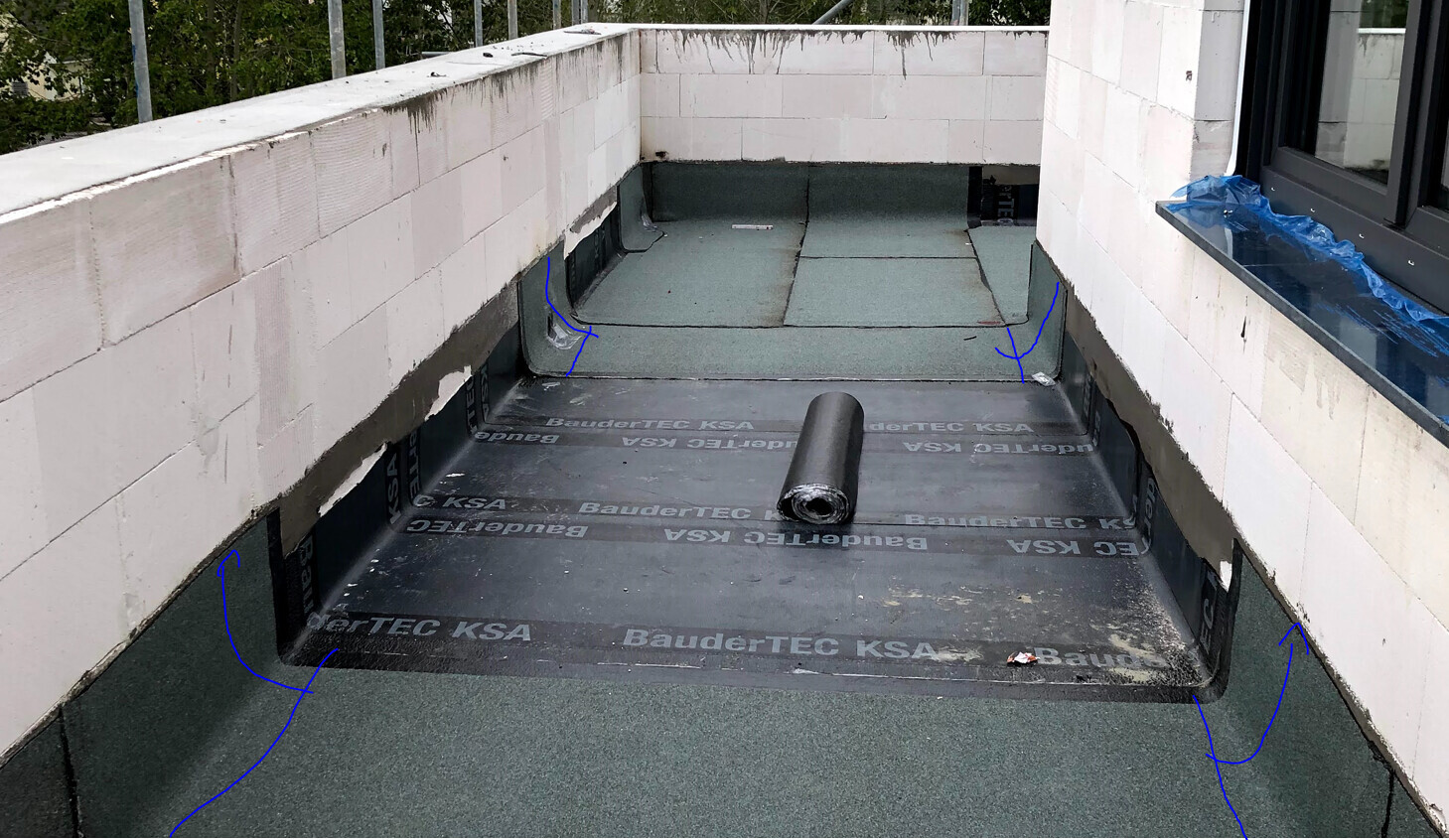
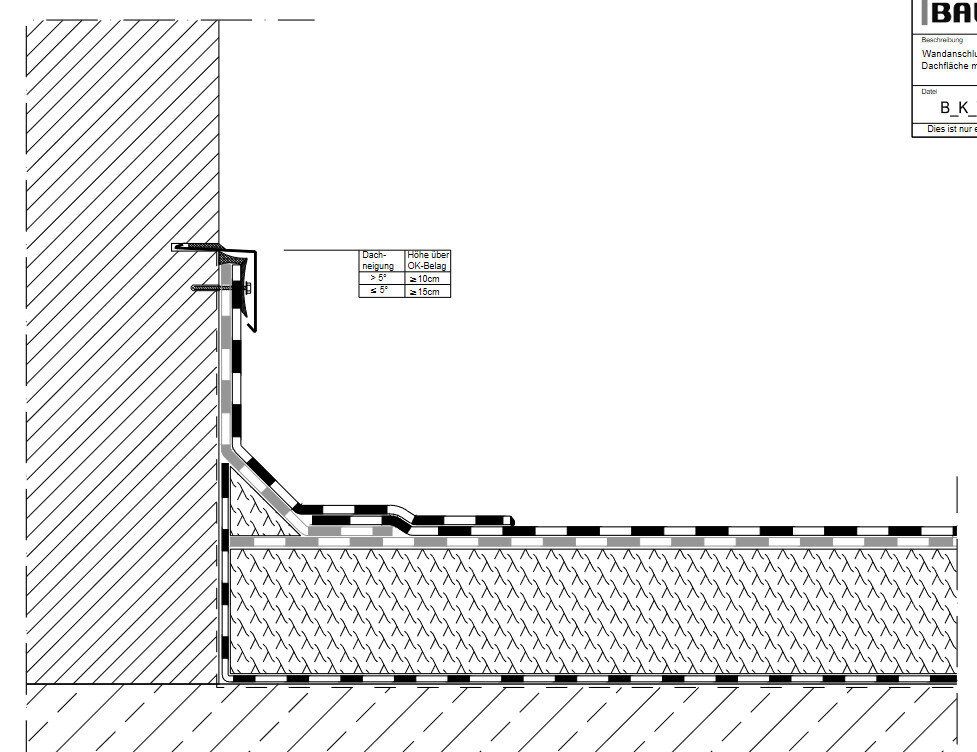
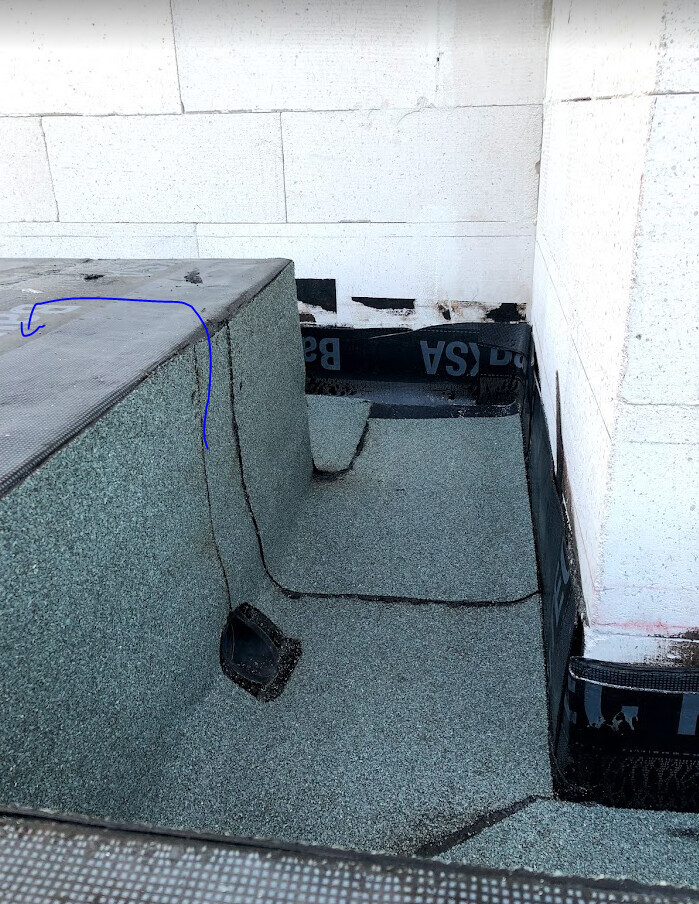
As can be seen in the two pictures below, the manufacturer's instructions were not properly followed. The underlayment was, on the one hand, pulled directly up against the wall and, on the other hand, not installed in double layers at the connections. According to the example diagram, there should be four layers overlapping in the corner, but we only have two. Furthermore, the underlayment is not at the same height as the top layer, meaning that only the underlayment is secured against slipping by the later-installed counterbatten. Also, no ice wedge was installed.
2. Connections at the parapet
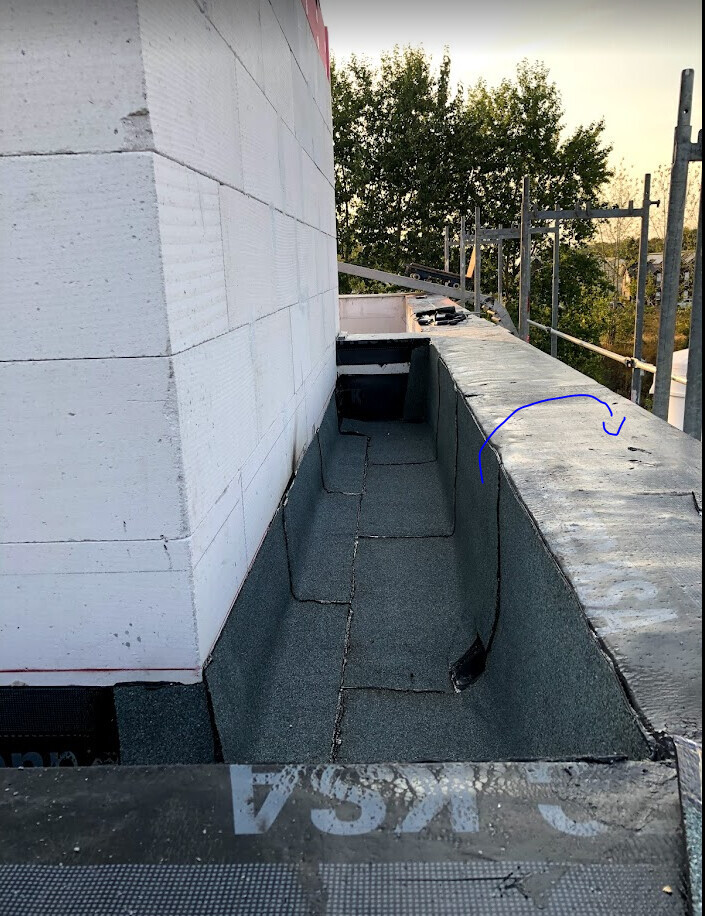
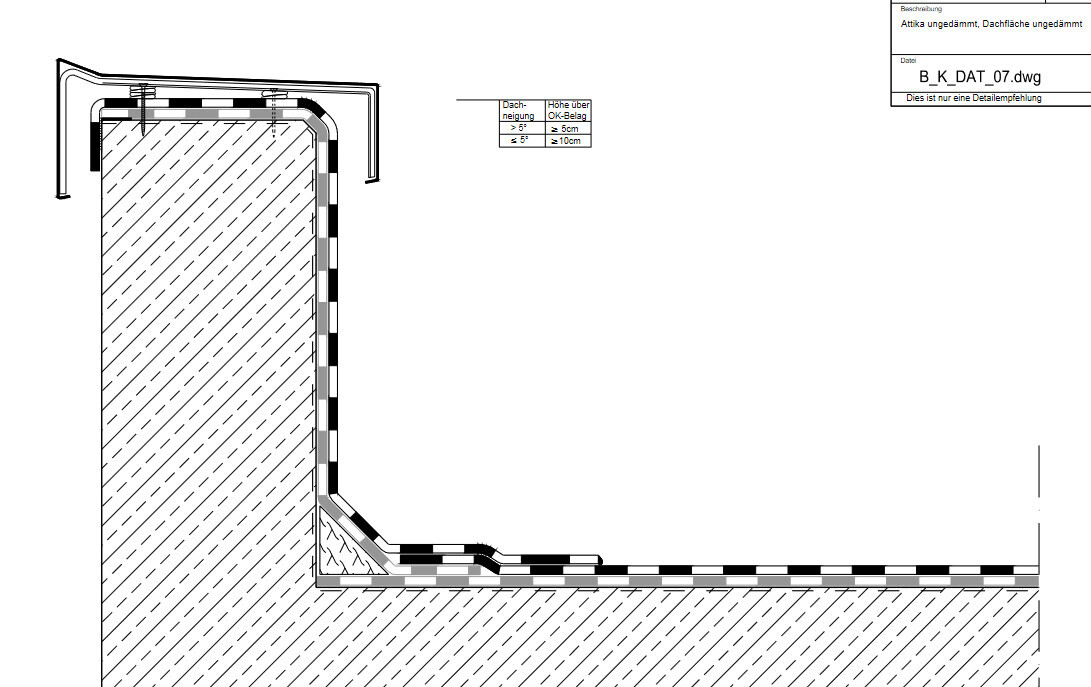
The same problem occurs at the connections at the parapet. Additionally, the top layer was only installed up to the end of the parapet and not, as in the diagram, extended beyond the outer edge. In our opinion, this could allow water from driving rain or snowdrift to get under the metal flashing and eventually seep through the seams.
3. Blistering on bitumen membranes
It is also noticeable that blistering is slowly forming on areas of the membrane exposed to a lot of sunlight. We were told that some production defects occurred, which can cause this. However, we suspect that moisture has already accumulated in the underlying insulation, which then tries to diffuse outward when exposed to sunlight. Has anyone had similar experiences? When the covering was partially opened, residual moisture was definitely detected, although it dried out quickly after a short period.
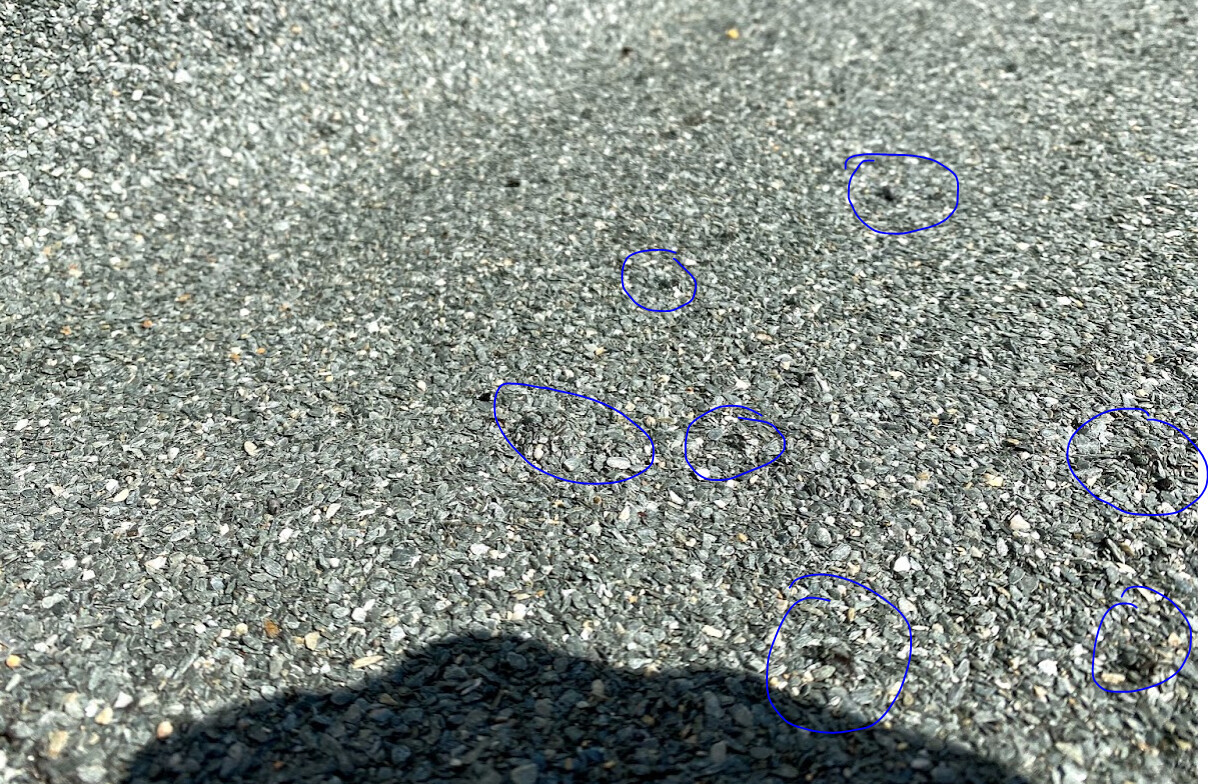
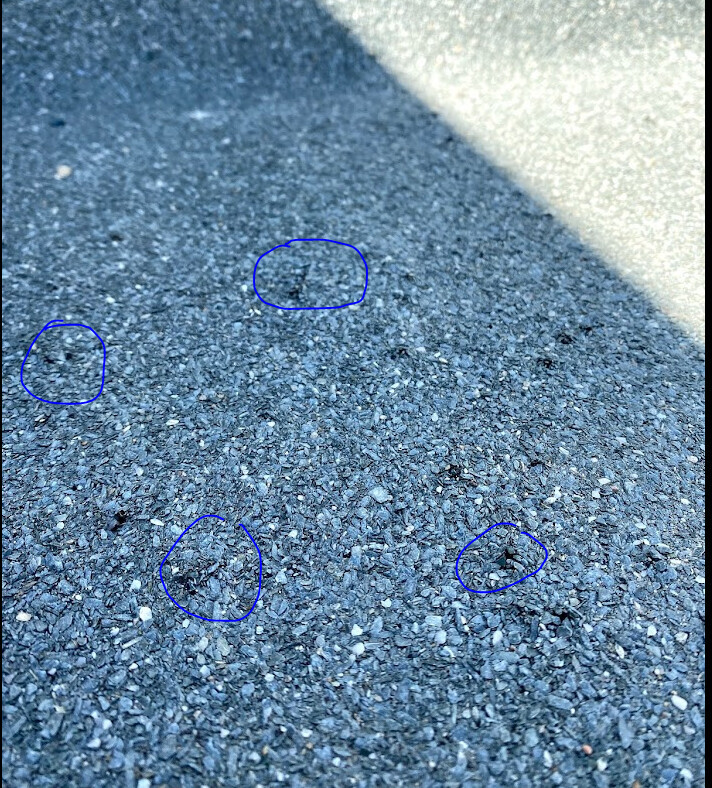
4. Counterbatten
Further, the photos below show that the masonry is exposed in some areas and not fully covered by the counterbatten. This is probably related to my first point, as the membranes were not installed in two layers. Instead, the entire membrane was pulled from left to right on a trial-and-error basis. Also, it is unclear to me how the current setup prevents water from migrating from the plaster behind the counterbatten. According to the diagram, the counterbatten should be recessed into the masonry to prevent water migration.
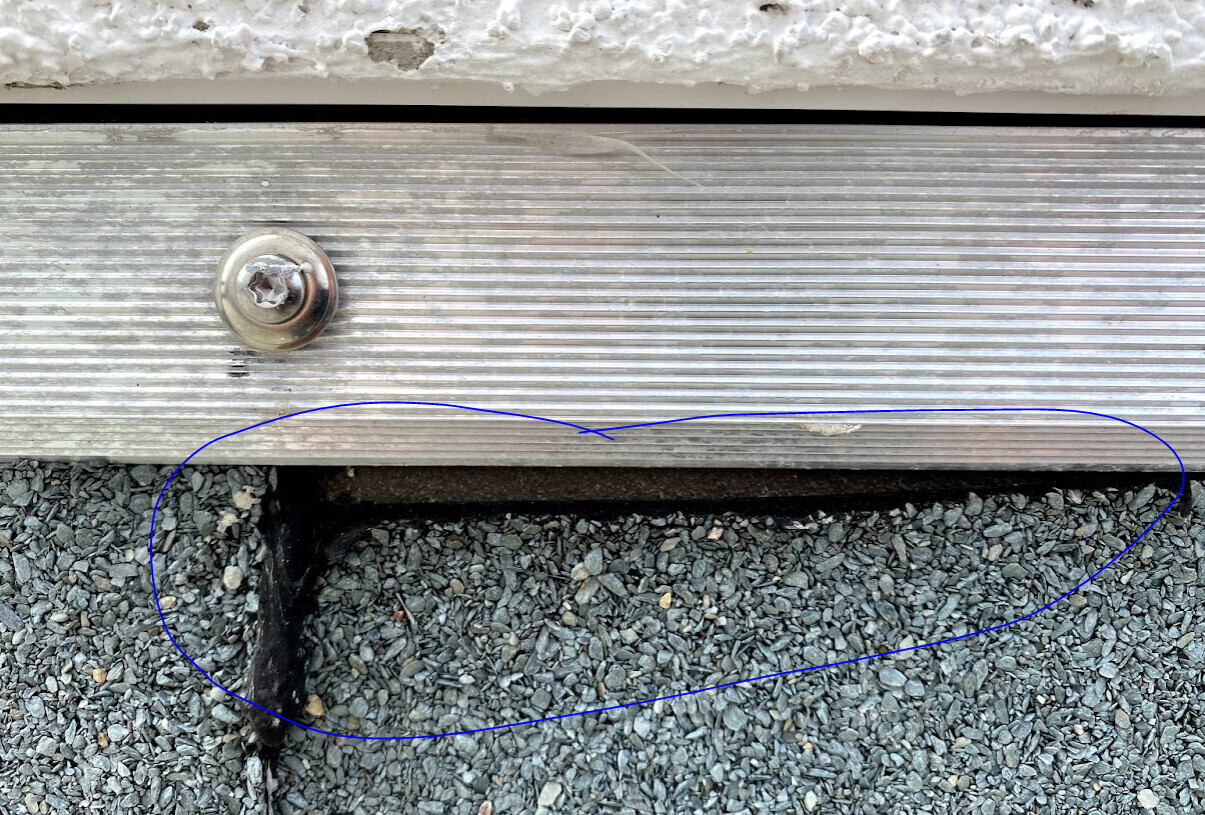
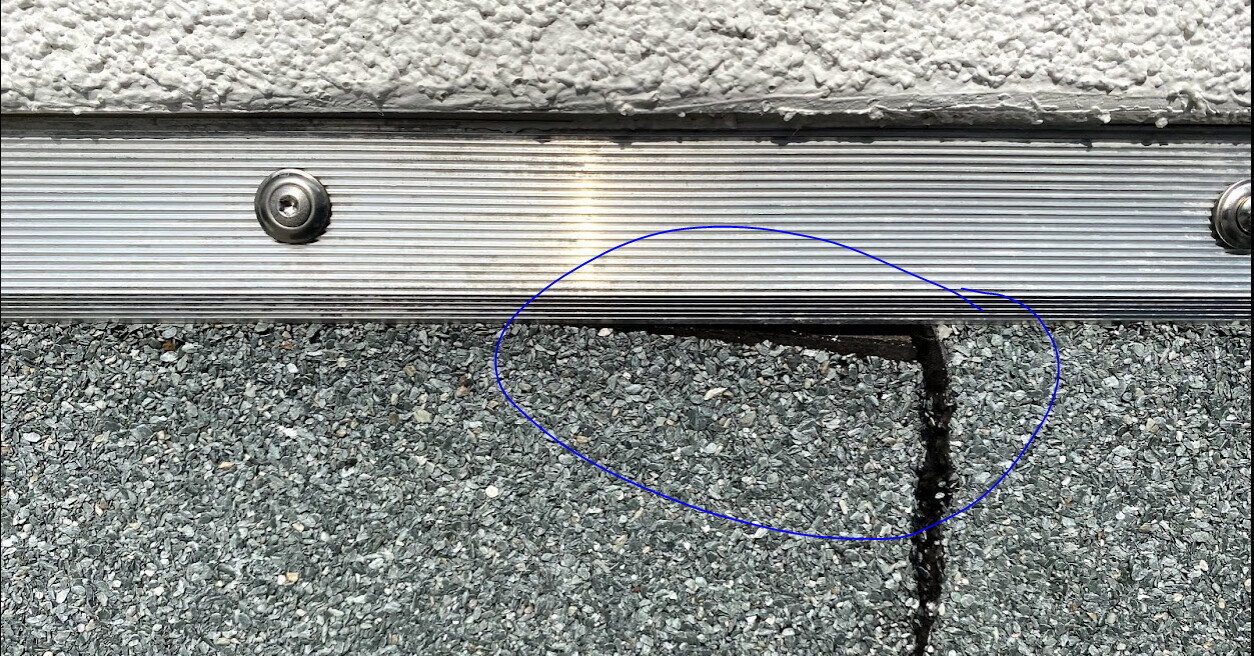
4. Proposed solution from the roofer
As a solution, the roofer suggested adding another membrane over the existing ones to compensate for the material deficiency from point 3 and to cover up the other defects. From our point of view, this is a huge outrage, since the defects would still be present and only covered by an additional layer. What do you think? Does that make sense, or should we insist on having the entire roof redone?
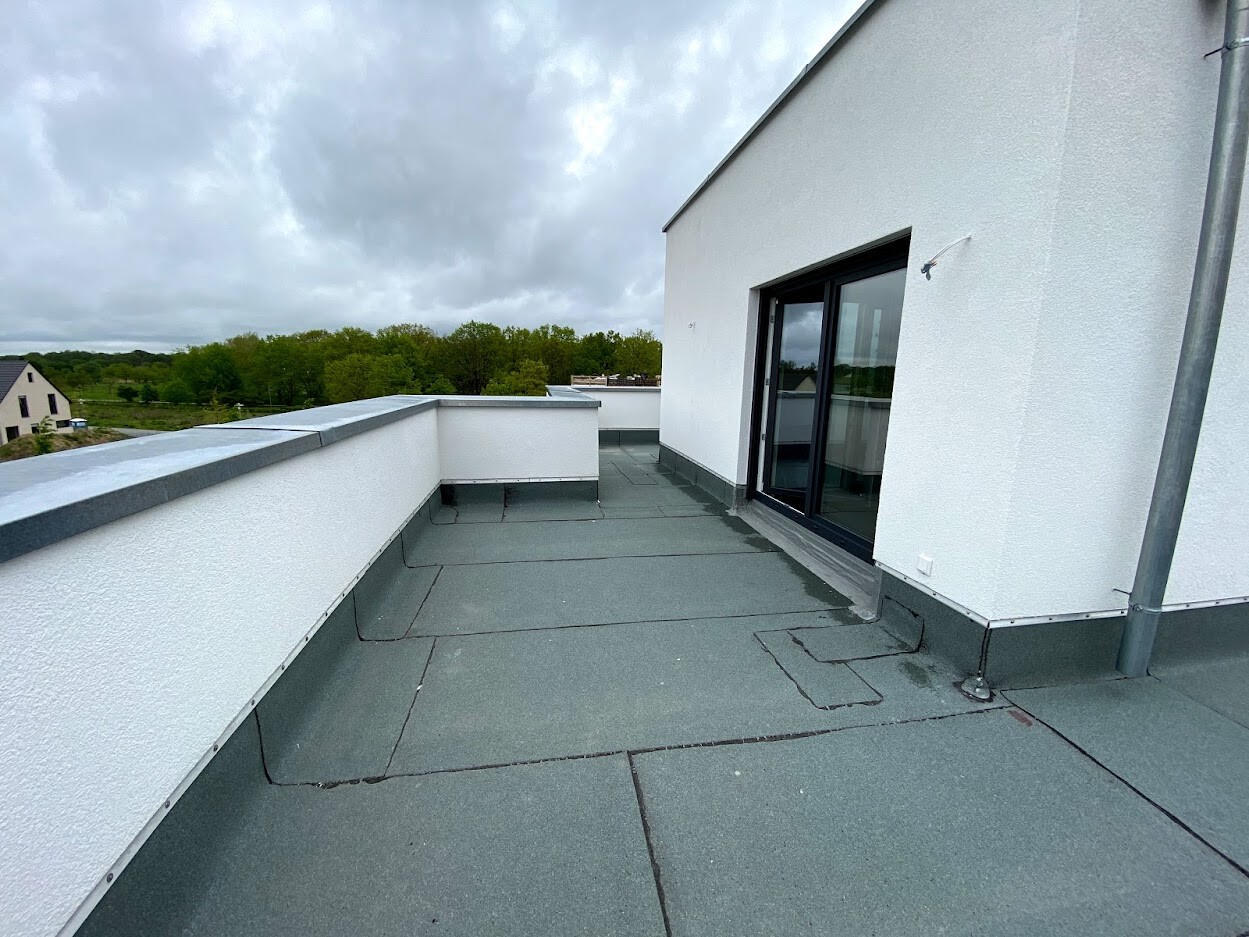
By the way, this is how it looks today. You can see at the connection where a test opening was made.
Thank you very much for your help!
we are looking for another perspective on issues we have already discussed with the roofer. Specifically, this concerns a flat roof on the garage as well as the flat roof on our rooftop terrace, which, according to our analysis, was installed incorrectly.
1. Installation of roofing membranes
As can be seen in the two pictures below, the manufacturer's instructions were not properly followed. The underlayment was, on the one hand, pulled directly up against the wall and, on the other hand, not installed in double layers at the connections. According to the example diagram, there should be four layers overlapping in the corner, but we only have two. Furthermore, the underlayment is not at the same height as the top layer, meaning that only the underlayment is secured against slipping by the later-installed counterbatten. Also, no ice wedge was installed.
2. Connections at the parapet
The same problem occurs at the connections at the parapet. Additionally, the top layer was only installed up to the end of the parapet and not, as in the diagram, extended beyond the outer edge. In our opinion, this could allow water from driving rain or snowdrift to get under the metal flashing and eventually seep through the seams.
3. Blistering on bitumen membranes
It is also noticeable that blistering is slowly forming on areas of the membrane exposed to a lot of sunlight. We were told that some production defects occurred, which can cause this. However, we suspect that moisture has already accumulated in the underlying insulation, which then tries to diffuse outward when exposed to sunlight. Has anyone had similar experiences? When the covering was partially opened, residual moisture was definitely detected, although it dried out quickly after a short period.
4. Counterbatten
Further, the photos below show that the masonry is exposed in some areas and not fully covered by the counterbatten. This is probably related to my first point, as the membranes were not installed in two layers. Instead, the entire membrane was pulled from left to right on a trial-and-error basis. Also, it is unclear to me how the current setup prevents water from migrating from the plaster behind the counterbatten. According to the diagram, the counterbatten should be recessed into the masonry to prevent water migration.
4. Proposed solution from the roofer
As a solution, the roofer suggested adding another membrane over the existing ones to compensate for the material deficiency from point 3 and to cover up the other defects. From our point of view, this is a huge outrage, since the defects would still be present and only covered by an additional layer. What do you think? Does that make sense, or should we insist on having the entire roof redone?
By the way, this is how it looks today. You can see at the connection where a test opening was made.
Thank you very much for your help!
You won’t like the answer:
After years of difficult experience with roofing felt (also known as bitumen membrane), I see typical problems emerging here:
- Flat-laid membranes will eventually leak because the seams where they are welded or glued will crack. With standing water on top, moisture will eventually penetrate.
- Areas intended for foot traffic are especially at risk. At some point, someone will place a chair on it and puncture holes.
If possible, I would
- at least install a slight slope
- apply a hard wear layer or at least block access to the area.
Sorry,
I don’t know a better answer.
Even with flawless installation, these are common issues with bitumen membranes.
After years of difficult experience with roofing felt (also known as bitumen membrane), I see typical problems emerging here:
- Flat-laid membranes will eventually leak because the seams where they are welded or glued will crack. With standing water on top, moisture will eventually penetrate.
- Areas intended for foot traffic are especially at risk. At some point, someone will place a chair on it and puncture holes.
If possible, I would
- at least install a slight slope
- apply a hard wear layer or at least block access to the area.
Sorry,
I don’t know a better answer.
Even with flawless installation, these are common issues with bitumen membranes.

According to https://www.hausbau-forum.de/threads/baumaengel-oder-stand-der-technik.35357/, if I were in your position, I would have a regular status meeting with a construction lawyer before each stage of the payment schedule. The general contractor seems to select their people based on their mood.
https://www.instagram.com/11antgmxde/
https://www.linkedin.com/company/bauen-jetzt/
https://www.instagram.com/11antgmxde/
https://www.linkedin.com/company/bauen-jetzt/
Similar topics