
ᐅ Wall construction for wall heating in a partially exposed basement
Created on: 11 Jul 2022 13:11
M
maxpdHi everyone,
I have a 20 sqm (215 sq ft) underground garage, with the entrance below ground level, but the rest above ground (5 sqm (54 sq ft) against the soil, 5 sqm (54 sq ft) exposed to outside air).
I want to convert this space into an office/fitness room. The permit is already approved.
Because of the low ceiling height (216 cm (7 ft 1 in)), I didn’t want to use underfloor or ceiling heating, but instead wanted to try wall heating.
The house is heated with an oil condensing boiler and radiators. A future installation of an air conditioning unit is planned due to the fitness use.
Here are some pictures of the walls (please ignore the red cross):
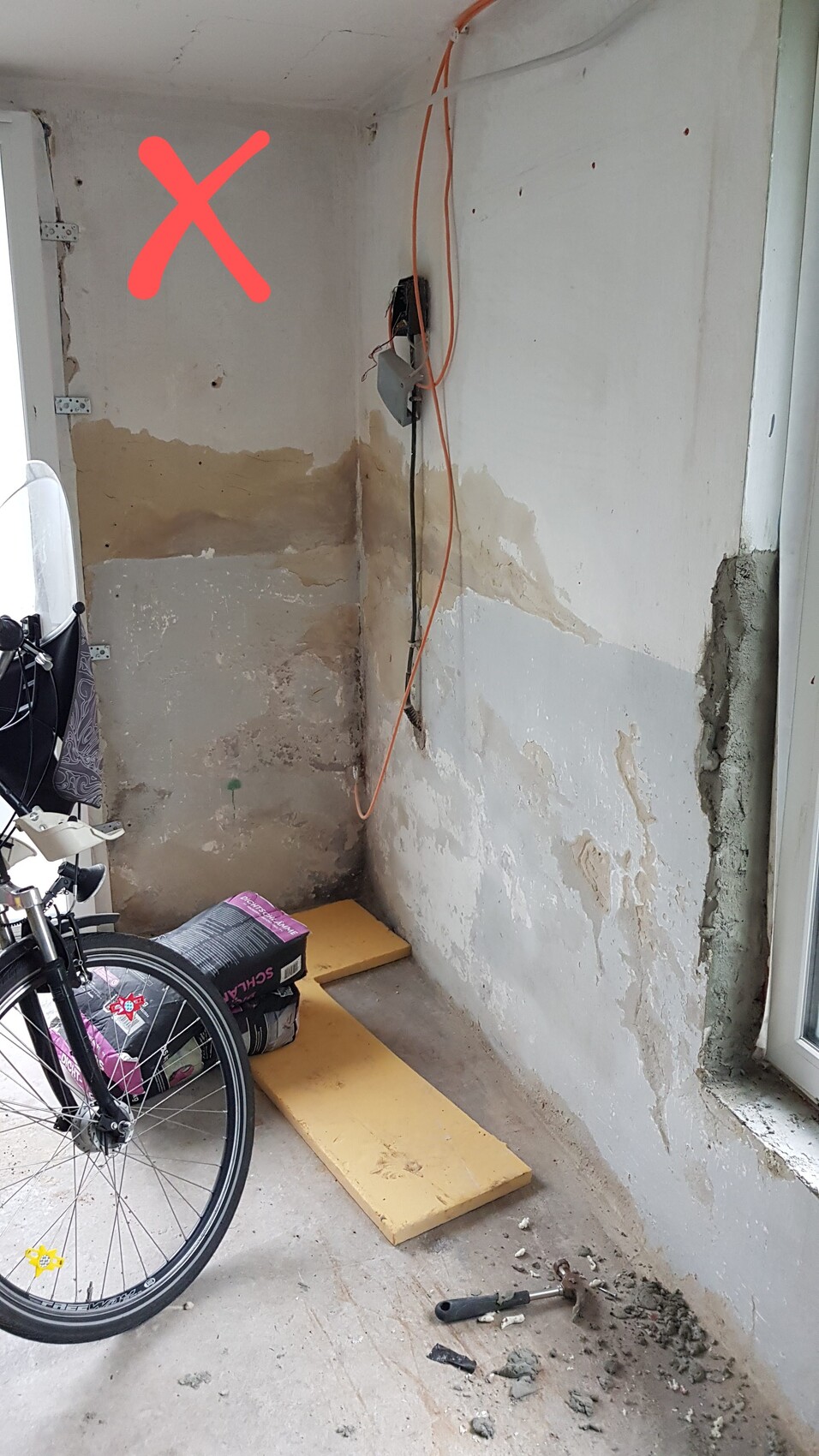
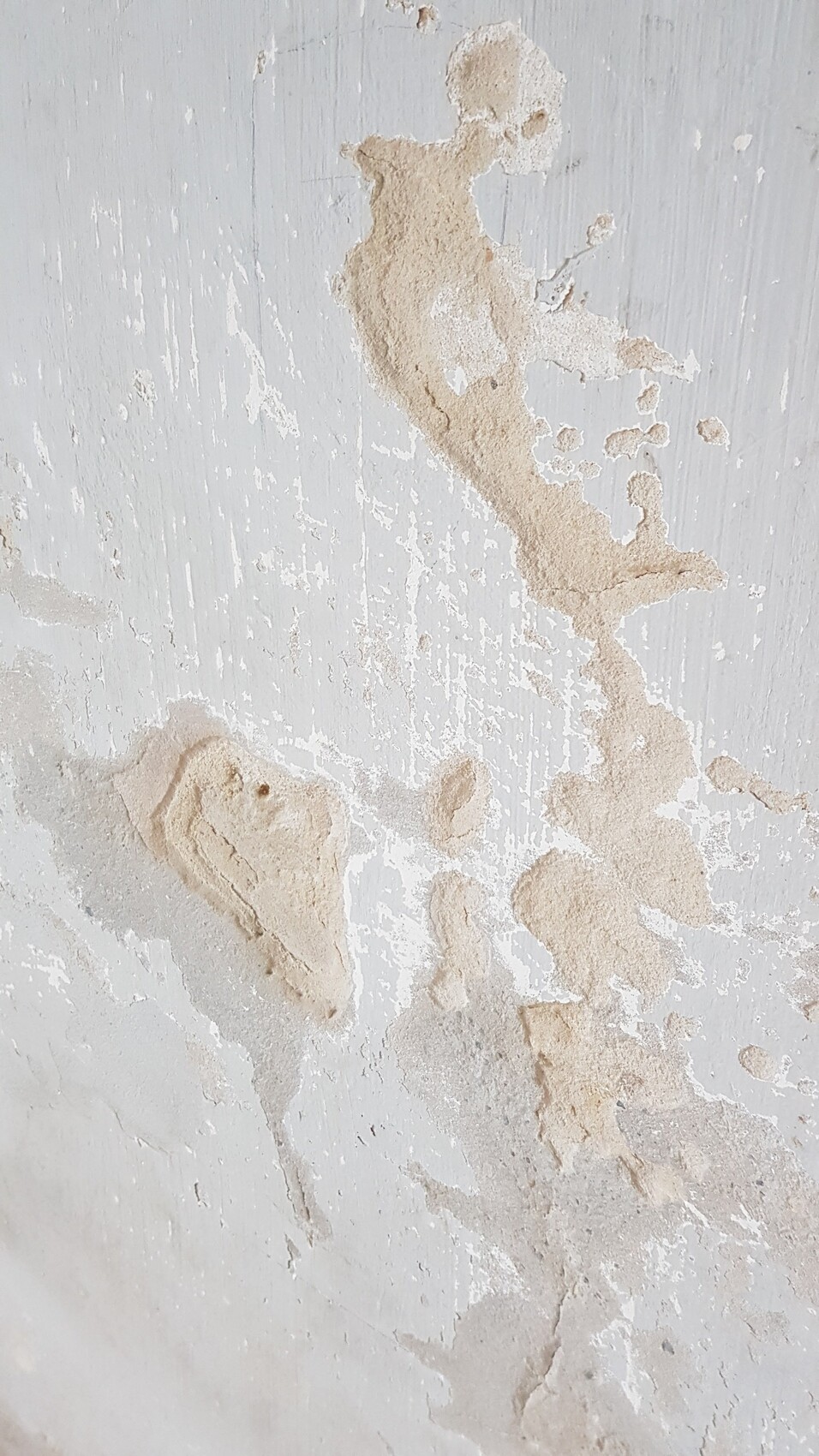
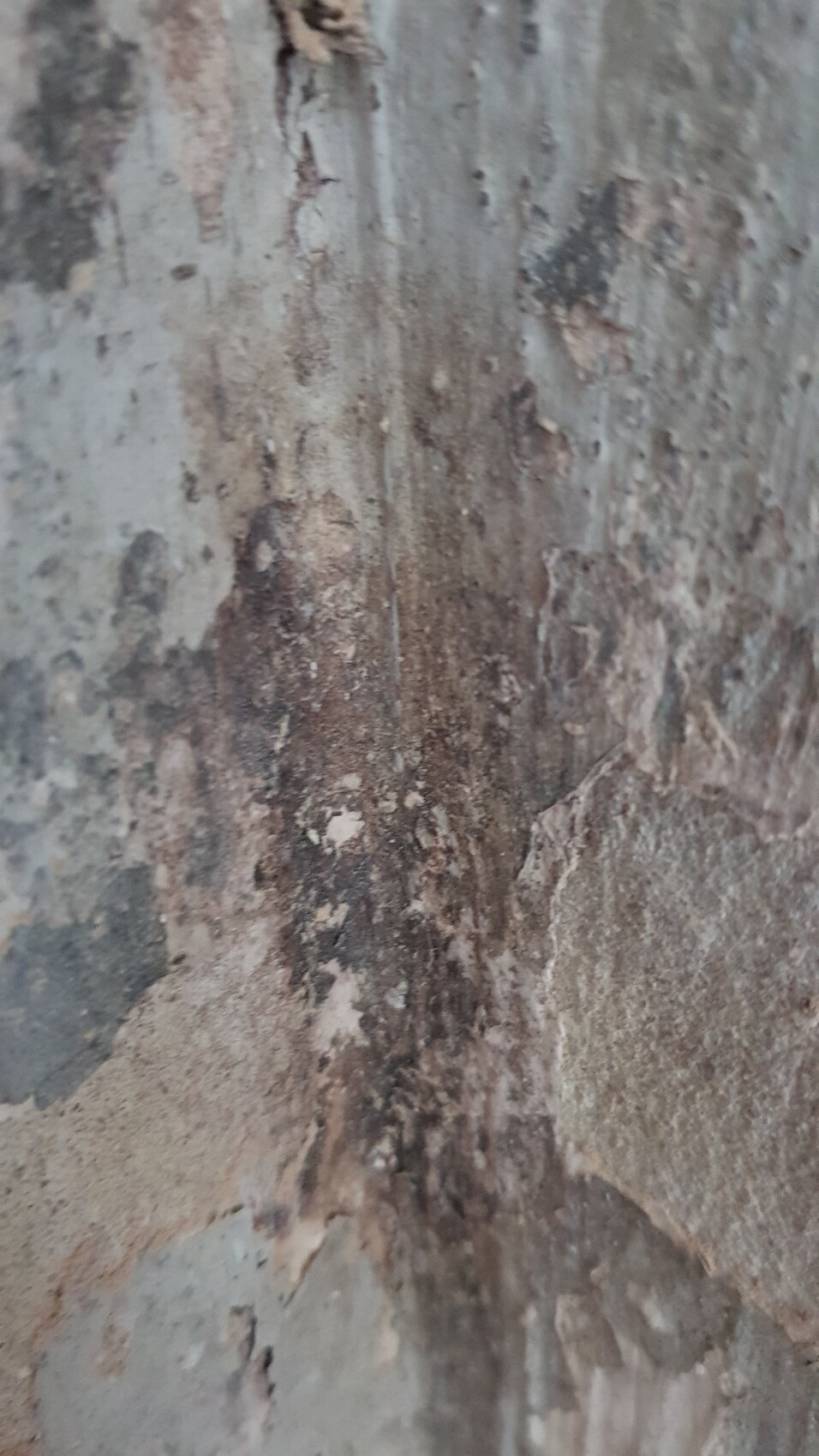
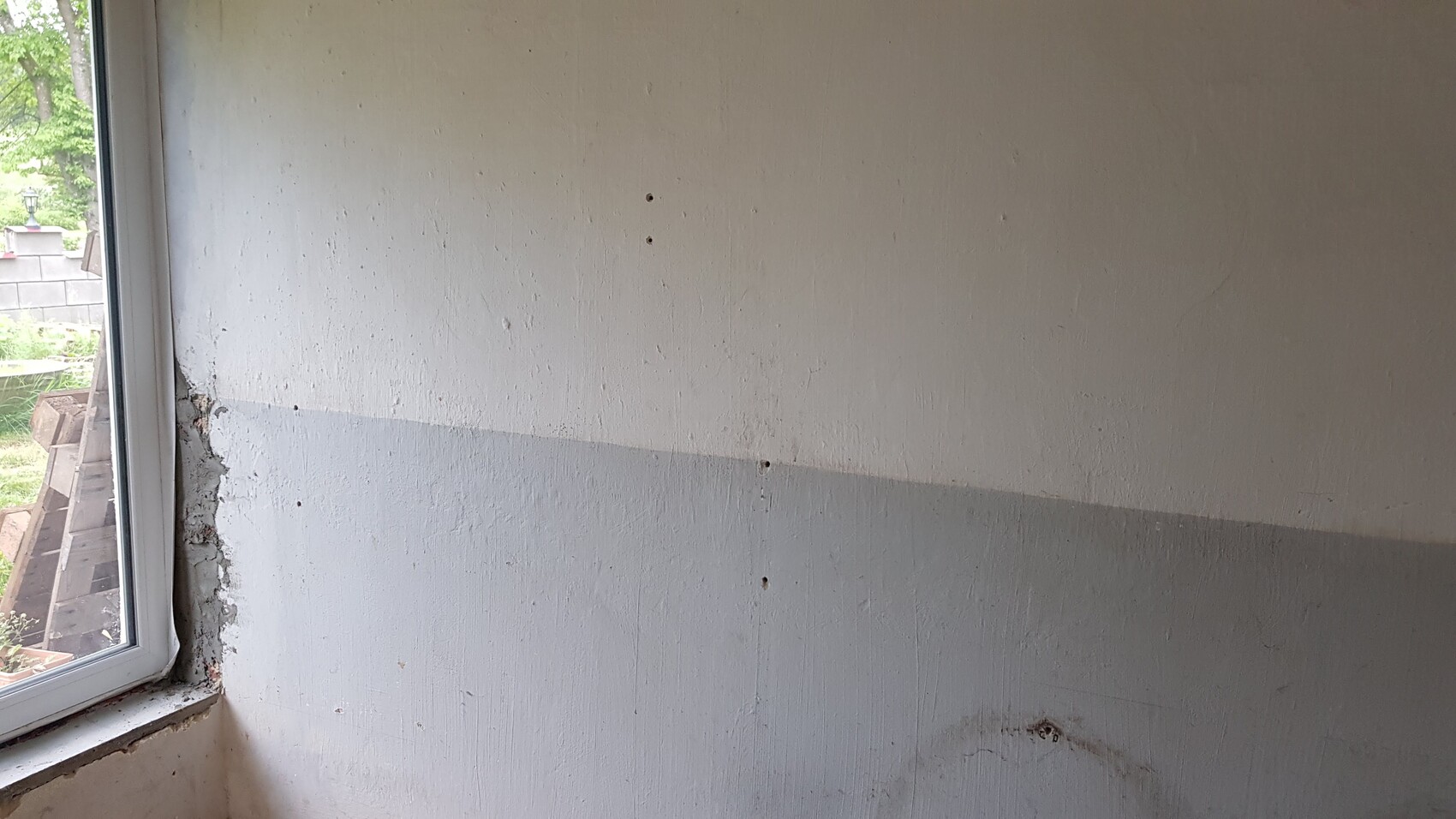
I believe the black spots in the corner are not mold. I have attached close-up images for reference. The wall is 36 cm (14 in) thick, built in 1964, and according to the architect’s plans made from cinder blocks. When the window was replaced, it seemed to be cinder hollow blocks.
My planned wall construction is as follows:
Apply a bonding slurry to the existing wall as is (exposed, plastered, and painted)
(Waterproofing slurry against moisture from the soil – the wall has remained dry after recent heavy rains)
Apply 3 cm (1.2 in) XPS insulation
Wall heating system
Clay plaster
Total thickness about 5–6 cm (2–2.4 in)
Estimated cost under 1600 Euros
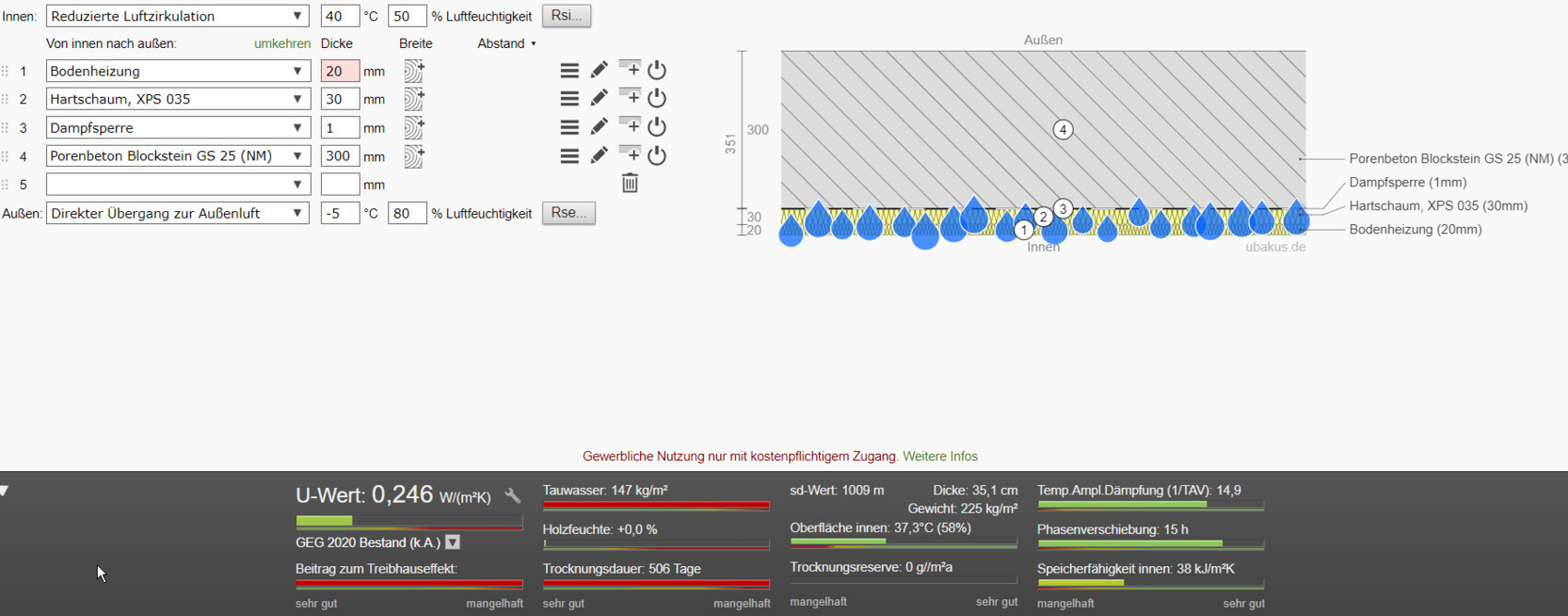
My concern is that the bonding slurry, which acts as a virtually "vapor-tight" layer, might cause the dew point to shift inward, potentially leading to mold behind the insulation. According to this calculation:
An alternative would be the following construction:
Remove all existing plaster layers
Apply lime bonding plaster
Apply insulating plaster
Wall heating system
Finish with fine lime plaster
Total thickness approximately 7 cm (2.8 in)
Estimated cost over 2500 Euros
Advantages:
The lime insulating plaster can absorb and release moisture.
Potentially creates a more natural indoor climate.
Disadvantages:
Significantly more work.
Lower insulation performance compared to XPS.
Considerably higher cost.
What do you think?
Another option would be to install the heating on an interior wall, avoiding a large temperature gradient on the exterior wall, although this is not common practice.
For reference, here is a link to my parallel floor planning discussion: https://www.hausbau-forum.de/threads/bodenaufbau-garage-zu-wohnraum.43481/
Best regards,
maxpd
I have a 20 sqm (215 sq ft) underground garage, with the entrance below ground level, but the rest above ground (5 sqm (54 sq ft) against the soil, 5 sqm (54 sq ft) exposed to outside air).
I want to convert this space into an office/fitness room. The permit is already approved.
Because of the low ceiling height (216 cm (7 ft 1 in)), I didn’t want to use underfloor or ceiling heating, but instead wanted to try wall heating.
The house is heated with an oil condensing boiler and radiators. A future installation of an air conditioning unit is planned due to the fitness use.
Here are some pictures of the walls (please ignore the red cross):
I believe the black spots in the corner are not mold. I have attached close-up images for reference. The wall is 36 cm (14 in) thick, built in 1964, and according to the architect’s plans made from cinder blocks. When the window was replaced, it seemed to be cinder hollow blocks.
My planned wall construction is as follows:
Apply a bonding slurry to the existing wall as is (exposed, plastered, and painted)
(Waterproofing slurry against moisture from the soil – the wall has remained dry after recent heavy rains)
Apply 3 cm (1.2 in) XPS insulation
Wall heating system
Clay plaster
Total thickness about 5–6 cm (2–2.4 in)
Estimated cost under 1600 Euros
My concern is that the bonding slurry, which acts as a virtually "vapor-tight" layer, might cause the dew point to shift inward, potentially leading to mold behind the insulation. According to this calculation:
An alternative would be the following construction:
Remove all existing plaster layers
Apply lime bonding plaster
Apply insulating plaster
Wall heating system
Finish with fine lime plaster
Total thickness approximately 7 cm (2.8 in)
Estimated cost over 2500 Euros
Advantages:
The lime insulating plaster can absorb and release moisture.
Potentially creates a more natural indoor climate.
Disadvantages:
Significantly more work.
Lower insulation performance compared to XPS.
Considerably higher cost.
What do you think?
Another option would be to install the heating on an interior wall, avoiding a large temperature gradient on the exterior wall, although this is not common practice.
For reference, here is a link to my parallel floor planning discussion: https://www.hausbau-forum.de/threads/bodenaufbau-garage-zu-wohnraum.43481/
Best regards,
maxpd
Similar topics