
ᐅ Exposed wooden rafters in the living room on a subframe and drywall?
Created on: 30 Sep 2023 09:58
E
eNdless2kE
eNdless2k30 Sep 2023 09:58Hello,
we are planning to create an exposed wooden rafter ceiling in the living room. The living room measures 7 x 5 meters (23 x 16 feet) and is 5 meters (16 feet) high.
The ridge beam is 16 cm (6 inches) wide and 30 cm (12 inches) high. Drywall (gypsum board) will be installed on the wooden structure, and the wooden rafters will then be screwed onto it.
The wood for the rafters should match the ridge beam (spruce - structural timber) and will be either 10 x 10 cm (4 x 4 inches), 12 x 12 cm (5 x 5 inches), or 12 x 10 cm (5 x 4 inches) — the exact size has not yet been decided.
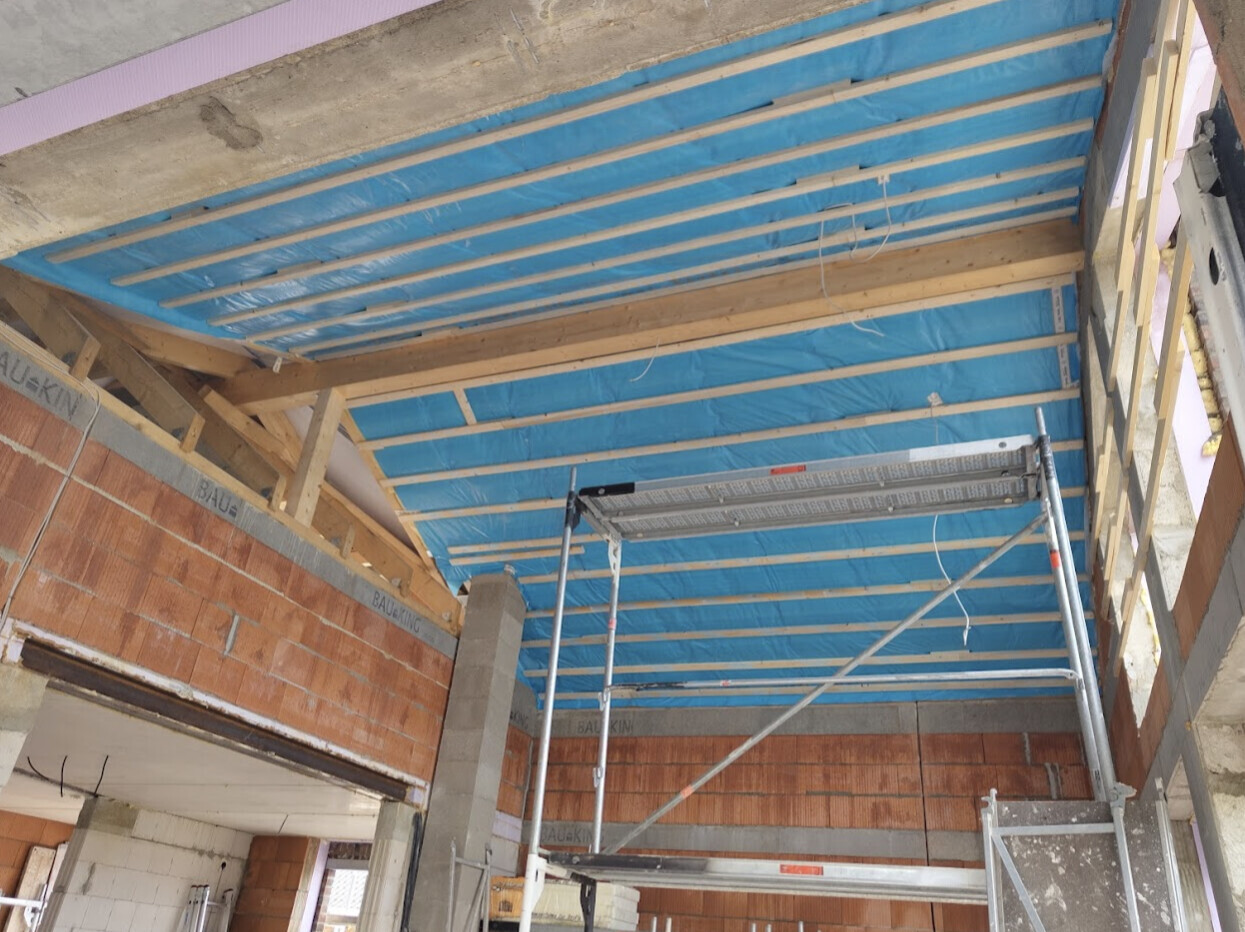
Is there any reason not to screw the wood directly onto the drywall and the substructure (25 mm (1 inch))? Or would it be better to attach them to the purlins?
Does anyone have experience with this topic?
It should look something like this:

we are planning to create an exposed wooden rafter ceiling in the living room. The living room measures 7 x 5 meters (23 x 16 feet) and is 5 meters (16 feet) high.
The ridge beam is 16 cm (6 inches) wide and 30 cm (12 inches) high. Drywall (gypsum board) will be installed on the wooden structure, and the wooden rafters will then be screwed onto it.
The wood for the rafters should match the ridge beam (spruce - structural timber) and will be either 10 x 10 cm (4 x 4 inches), 12 x 12 cm (5 x 5 inches), or 12 x 10 cm (5 x 4 inches) — the exact size has not yet been decided.
Is there any reason not to screw the wood directly onto the drywall and the substructure (25 mm (1 inch))? Or would it be better to attach them to the purlins?
Does anyone have experience with this topic?
It should look something like this:

We built something similar.
We set the wall above the kitchen back by 2m (6.5 feet) to create a gallery area for children to play or retreat, with plenty of books and games.
We didn’t like the wall opening into the living area that we saw in a show home, and the exposed beams were too much for us.
I would never attach beams to drywall screws because of the weight.
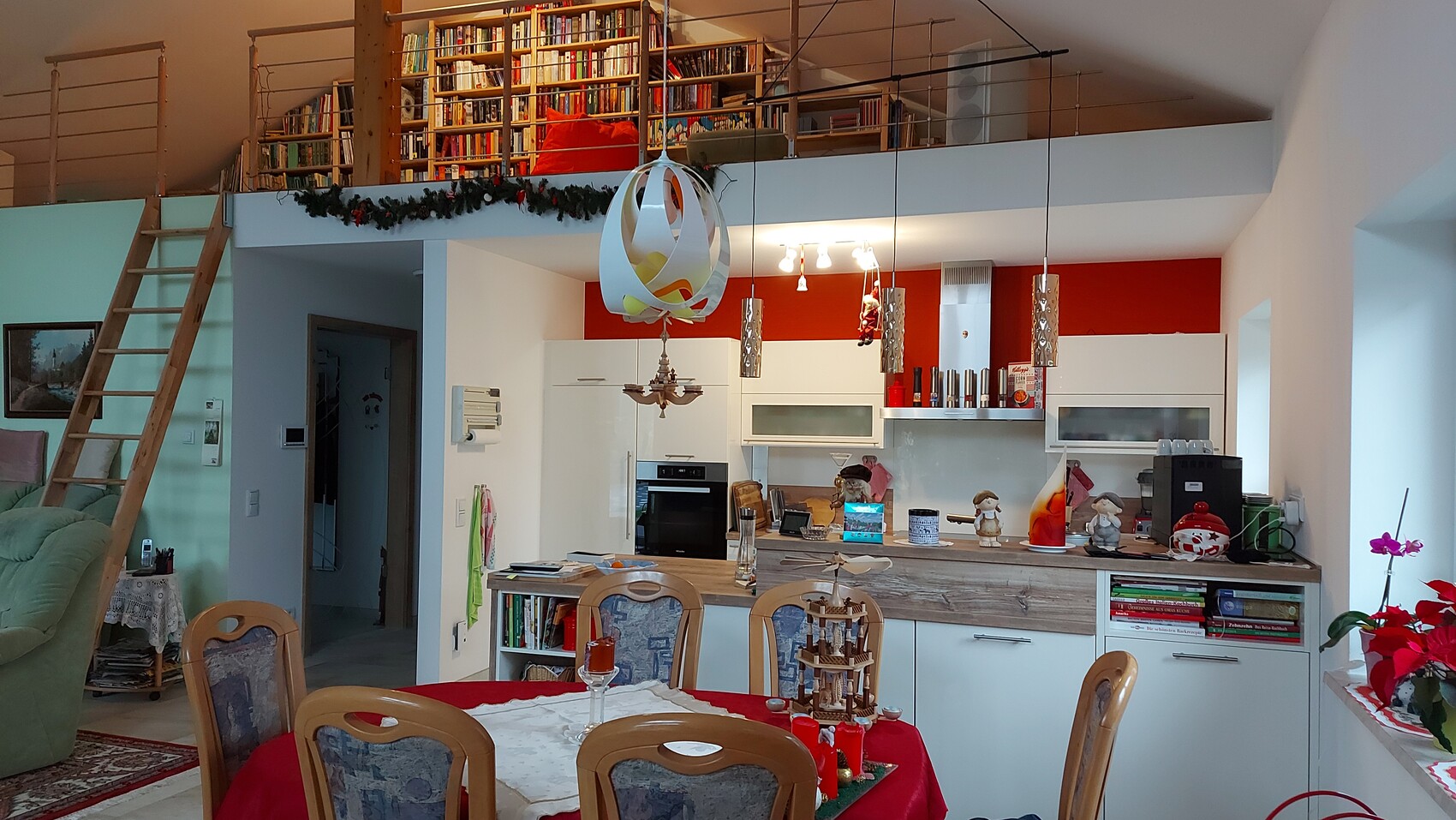
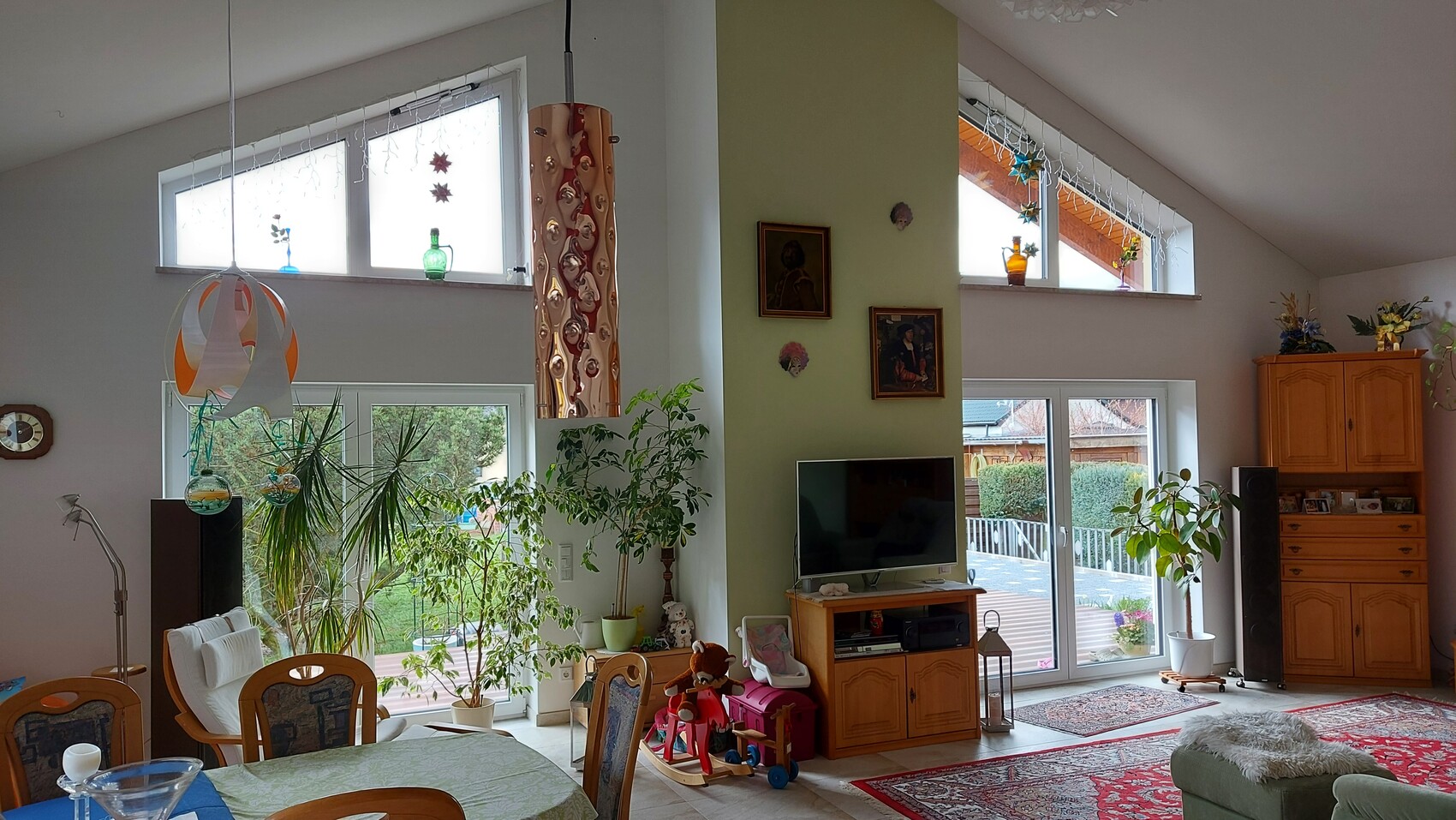
We set the wall above the kitchen back by 2m (6.5 feet) to create a gallery area for children to play or retreat, with plenty of books and games.
We didn’t like the wall opening into the living area that we saw in a show home, and the exposed beams were too much for us.
I would never attach beams to drywall screws because of the weight.
X
xMisterDx19 Oct 2023 14:55The drywall ceiling is already attached to the battens, so I wouldn’t also nail a 12cm x 12cm (5in x 5in) solid wood beam there. That already has considerable weight, a 12cm x 12cm x 600cm (5in x 5in x 236in) solid wood beam.
H
hanghaus202319 Oct 2023 15:36The decision is quite late. This should have been designed as an open roof structure from the start.
How does the carpenter plan to execute it?
Please show the lower support from both sides. One side has the ring beam to attach to, but unfortunately the other side is not visible. There also seems to be a crooked angle there?
Is there a cross-section or plan of the roof structure?
The easiest solution is to screw on top of the rafters. The screws should be countersunk by several centimeters (inches) and then covered with wood caps. If done properly, this won’t be visible.
Is the purlin made of glued laminated timber (glulam)?
I would either make the fake rafters hollow inside or use 10 x 16 cm (4 x 6 inches) glulam; otherwise, the rafters might twist if you’re unlucky.
How does the carpenter plan to execute it?
Please show the lower support from both sides. One side has the ring beam to attach to, but unfortunately the other side is not visible. There also seems to be a crooked angle there?
Is there a cross-section or plan of the roof structure?
The easiest solution is to screw on top of the rafters. The screws should be countersunk by several centimeters (inches) and then covered with wood caps. If done properly, this won’t be visible.
Is the purlin made of glued laminated timber (glulam)?
I would either make the fake rafters hollow inside or use 10 x 16 cm (4 x 6 inches) glulam; otherwise, the rafters might twist if you’re unlucky.
Similar topics