
Hello everyone,
Since I’m new here, I’m hoping for your helpful advice. We recently built a new house and planned to do the interior finishing ourselves. So far, it has gone quite well. However, I made a big mistake when installing the flooring. In the dining and living areas, there is an expansion joint, and a friend suggested that I simply lay the flooring over it. He said it looks better and saves me from having to make cuts. He did the same in his own home. Well, I thought he was right (otherwise, I had carefully observed all spacing requirements). Unfortunately, this had serious consequences. Now that the kitchen and the rest of the furniture are in place, the floor is warping exactly where the joint is. Not drastically, but it’s noticeable. I didn’t really notice it at first, or it wasn’t very visible. But it was definitely too late! Since the flooring is already installed throughout the entire room, I’m reluctant to tear it all out again. I thought I could cut the floor right where the expansion joint runs, maybe using a multi-tool or something similar. The problem is, I’m not exactly sure where the expansion joint is located. Maybe you have some ideas or solutions on the best way to approach this? I’m really frustrated with myself. And sorry for the long message... Thanks so much in advance.
Best regards, David
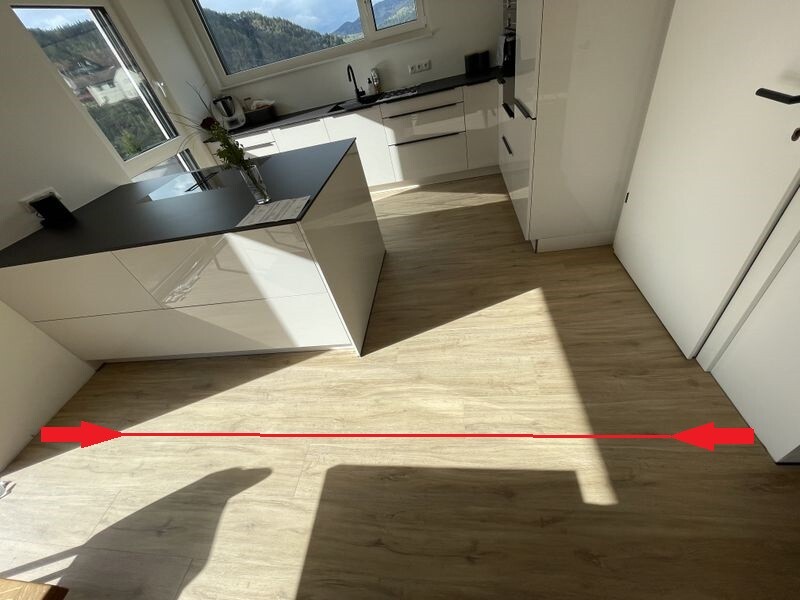
Since I’m new here, I’m hoping for your helpful advice. We recently built a new house and planned to do the interior finishing ourselves. So far, it has gone quite well. However, I made a big mistake when installing the flooring. In the dining and living areas, there is an expansion joint, and a friend suggested that I simply lay the flooring over it. He said it looks better and saves me from having to make cuts. He did the same in his own home. Well, I thought he was right (otherwise, I had carefully observed all spacing requirements). Unfortunately, this had serious consequences. Now that the kitchen and the rest of the furniture are in place, the floor is warping exactly where the joint is. Not drastically, but it’s noticeable. I didn’t really notice it at first, or it wasn’t very visible. But it was definitely too late! Since the flooring is already installed throughout the entire room, I’m reluctant to tear it all out again. I thought I could cut the floor right where the expansion joint runs, maybe using a multi-tool or something similar. The problem is, I’m not exactly sure where the expansion joint is located. Maybe you have some ideas or solutions on the best way to approach this? I’m really frustrated with myself. And sorry for the long message... Thanks so much in advance.
Best regards, David

@ "dobrusn":
The floor panels you installed have a total thickness of about 8mm (0.3 inches).
This means they can absorb quite a bit of tension—especially compression forces—without deforming.
The "expansion joint" you mentioned can only be a false joint in the screed.
Its purpose after the screed has dried is to absorb the tensile stresses in the screed structure without cracking, and afterwards it becomes irrelevant.
So you didn’t install it incorrectly.
I strongly advise against cutting the floor covering at the spot where you think relief is needed in a rush to fix it!
Carefully check, which is the best approach, all around the room at every edge to see if the floor is pressing somewhere because the perimeter gap, into which its length changes can expand, no longer exists.
The second possibility, if the floor was laid continuously and improperly across multiple rooms without intermediate expansion joints, is that the room geometry is causing the buckling.
In that case only, it might make sense to use the proper tool to cut out a strip of about 10mm (0.4 inches) below the door leaf and install a transition profile.
But please do not cut the floor covering where the red mark is on the photo!
That will not solve the problem and will ruin the overall appearance of the floor without any guarantee that the root cause will actually be fixed!
-------------------
Best regards and good luck: KlaRa
The floor panels you installed have a total thickness of about 8mm (0.3 inches).
This means they can absorb quite a bit of tension—especially compression forces—without deforming.
The "expansion joint" you mentioned can only be a false joint in the screed.
Its purpose after the screed has dried is to absorb the tensile stresses in the screed structure without cracking, and afterwards it becomes irrelevant.
So you didn’t install it incorrectly.
I strongly advise against cutting the floor covering at the spot where you think relief is needed in a rush to fix it!
Carefully check, which is the best approach, all around the room at every edge to see if the floor is pressing somewhere because the perimeter gap, into which its length changes can expand, no longer exists.
The second possibility, if the floor was laid continuously and improperly across multiple rooms without intermediate expansion joints, is that the room geometry is causing the buckling.
In that case only, it might make sense to use the proper tool to cut out a strip of about 10mm (0.4 inches) below the door leaf and install a transition profile.
But please do not cut the floor covering where the red mark is on the photo!
That will not solve the problem and will ruin the overall appearance of the floor without any guarantee that the root cause will actually be fixed!
-------------------
Best regards and good luck: KlaRa
dobrusn schrieb:
The floor is supposed to be installed around the kitchen. Others say you can safely place the kitchen directly on the vinyl flooring. Since we were pressed for time, we went with the latter option.If it’s truly a floating floor (click vinyl), I would suspect that’s the issue. In my opinion, placing the kitchen on vinyl is only acceptable if the vinyl is glued down. You have fully fixed the floating floor towards the kitchen with no room for expansion.S
Schorsch_baut27 Apr 2023 10:52What I notice: The (heavy) island is exposed to direct sunlight on the floor. Immediately after, there is a shaded area. As far as I know, this is extremely unfavorable for floating flooring.
Thank you for all the responses. So, here’s the situation. This bulge or raised area (about 5mm (0.2 inches)) is basically only on the left side of the island (around 1 meter (3.3 feet) long). I had assumed it was related to the expansion joint. After reading the replies (especially from pacmansh and KlaRa), I’m now unsure and think it might be connected to the island itself. Regarding sunlight exposure (temperature difference), I’m rather doubtful since it hasn’t changed either. What could I do in this case? What is your opinion? I have also checked everywhere to see if there is enough space near the walls. That is definitely sufficient.
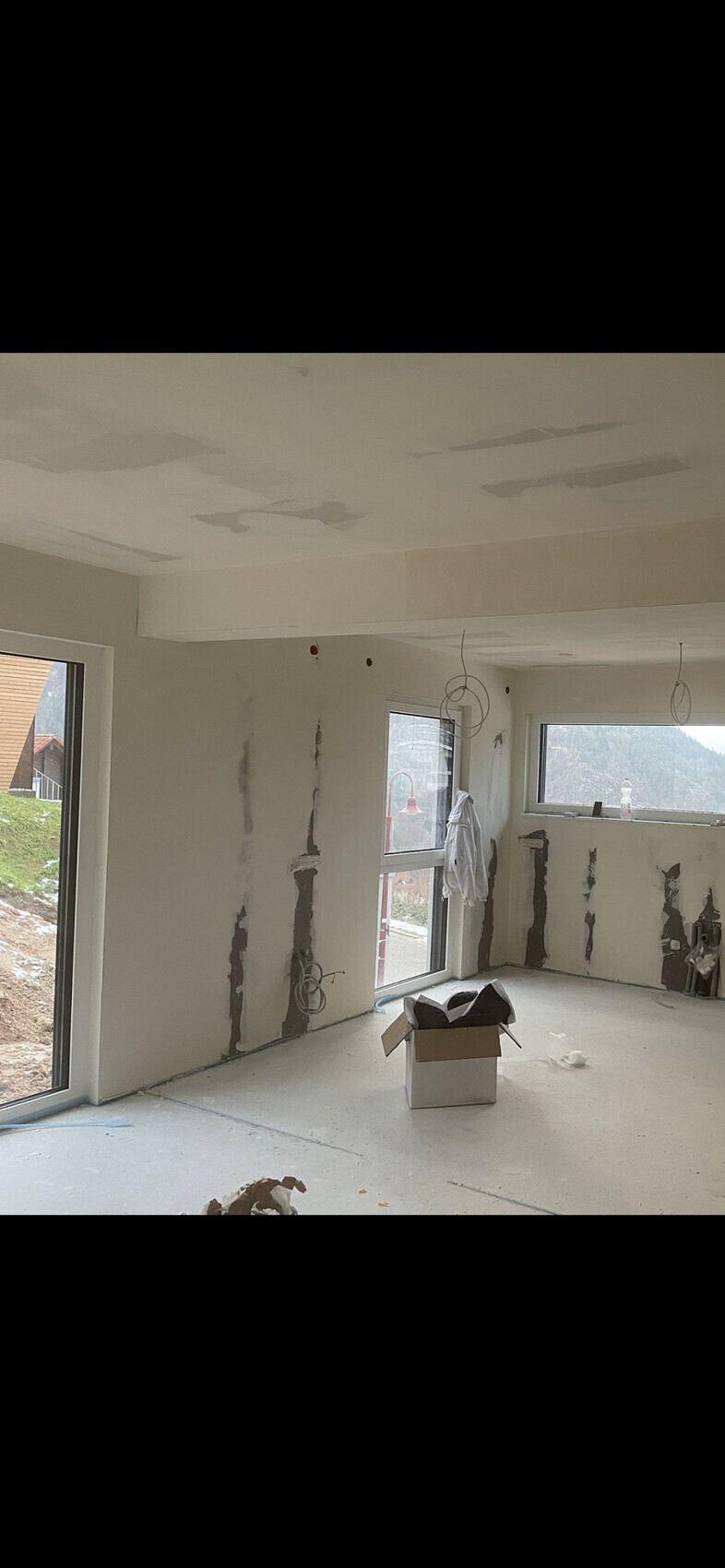
My only experience in this area is that I have installed click vinyl once, and in the new build, we will use glued vinyl (with a kitchen island on top). For click vinyl, I would have installed it up to the island. Not that I want to be called an expert.
However, everything suggests that the problem comes from the cabinets and the kitchen island. Do you see any possibility to cut something out in the area under the island that is hidden by the baseboard? That would probably be the first thing I would try.
However, everything suggests that the problem comes from the cabinets and the kitchen island. Do you see any possibility to cut something out in the area under the island that is hidden by the baseboard? That would probably be the first thing I would try.
Similar topics