
ᐅ Vinyl Flooring in Kitchen / Sagging Beam Ceiling / Installing Over Tiles?
Created on: 4 Jan 2025 13:30
S
Skarry91
Hello everyone,
We have taken over a house from my parents. We will be installing a new kitchen and want to lay a new vinyl floor with a thickness of 7.5 mm (0.3 inches). Currently, the floor in the middle of the room (from left to right) has slightly sunk by about 4 mm (0.16 inches).
We would like to install the vinyl flooring over the tiles (only up to the skirting board of the new kitchen, as otherwise we would need 8 mm (0.3 inches) thickness). However, we are concerned that the floor might sink even more. Under the tiles, there is a screed layer, beneath that OSB boards, and under those, joists.
How should we proceed?
Looking forward to your advice.
Thank you

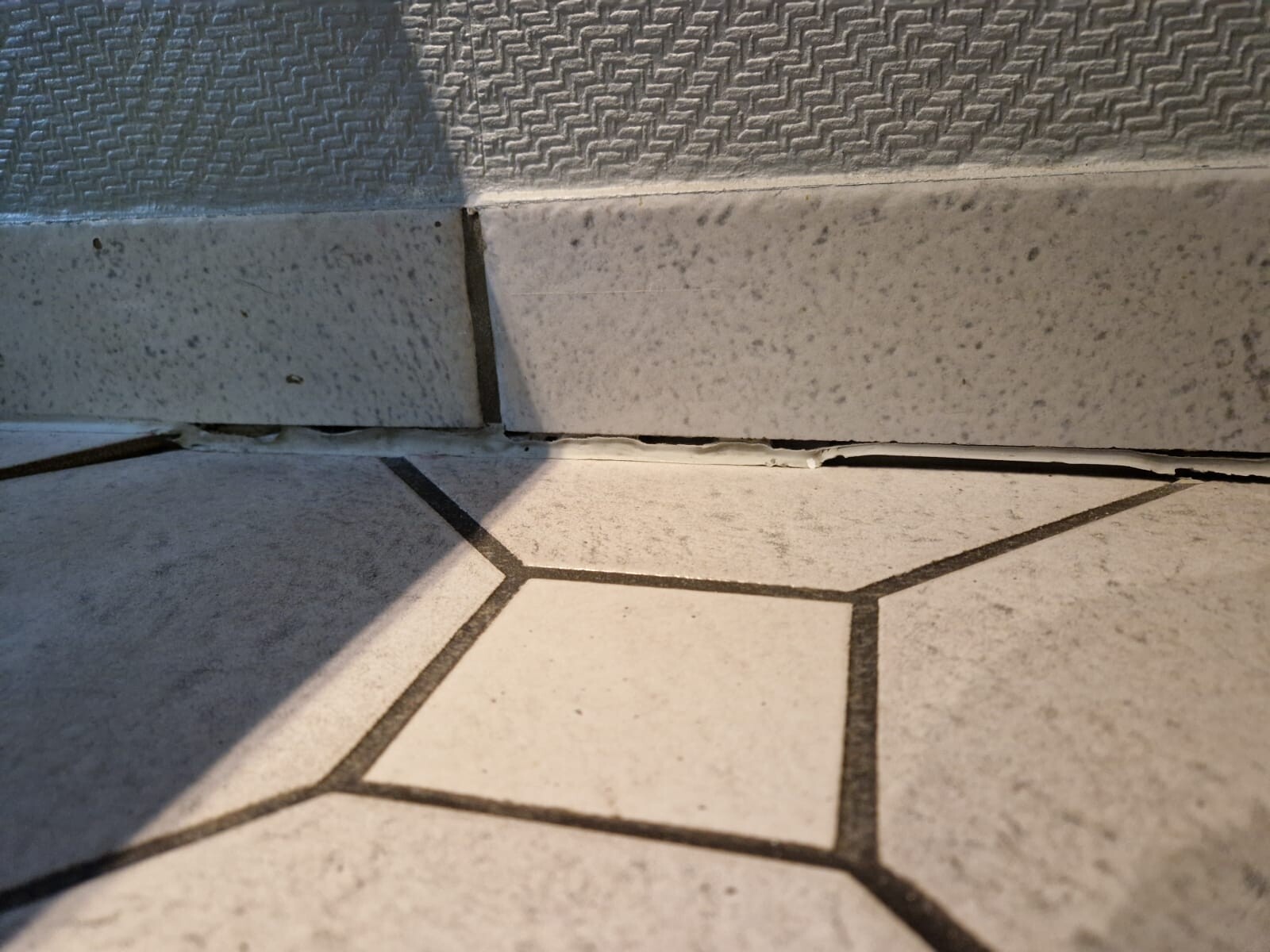
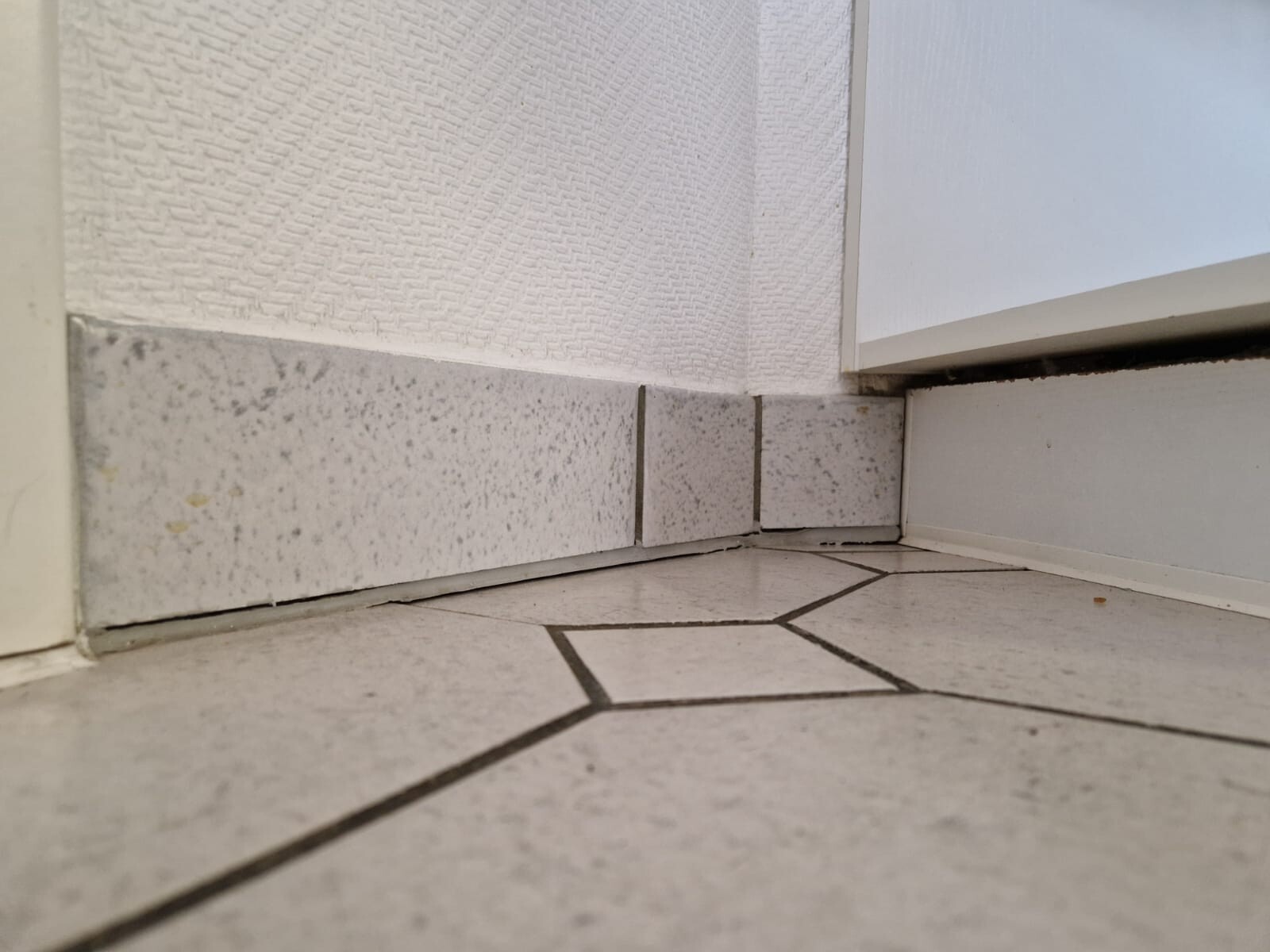
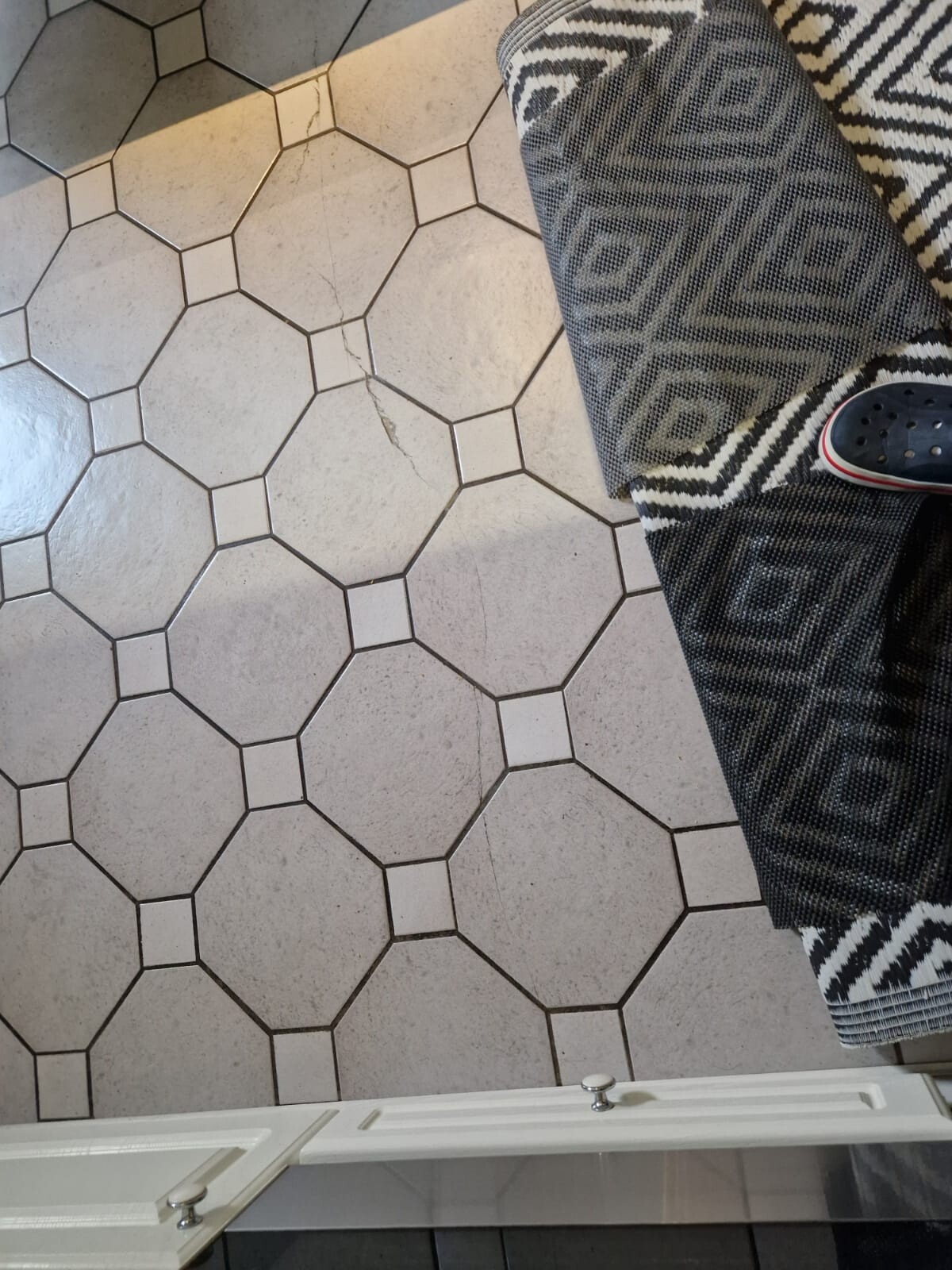
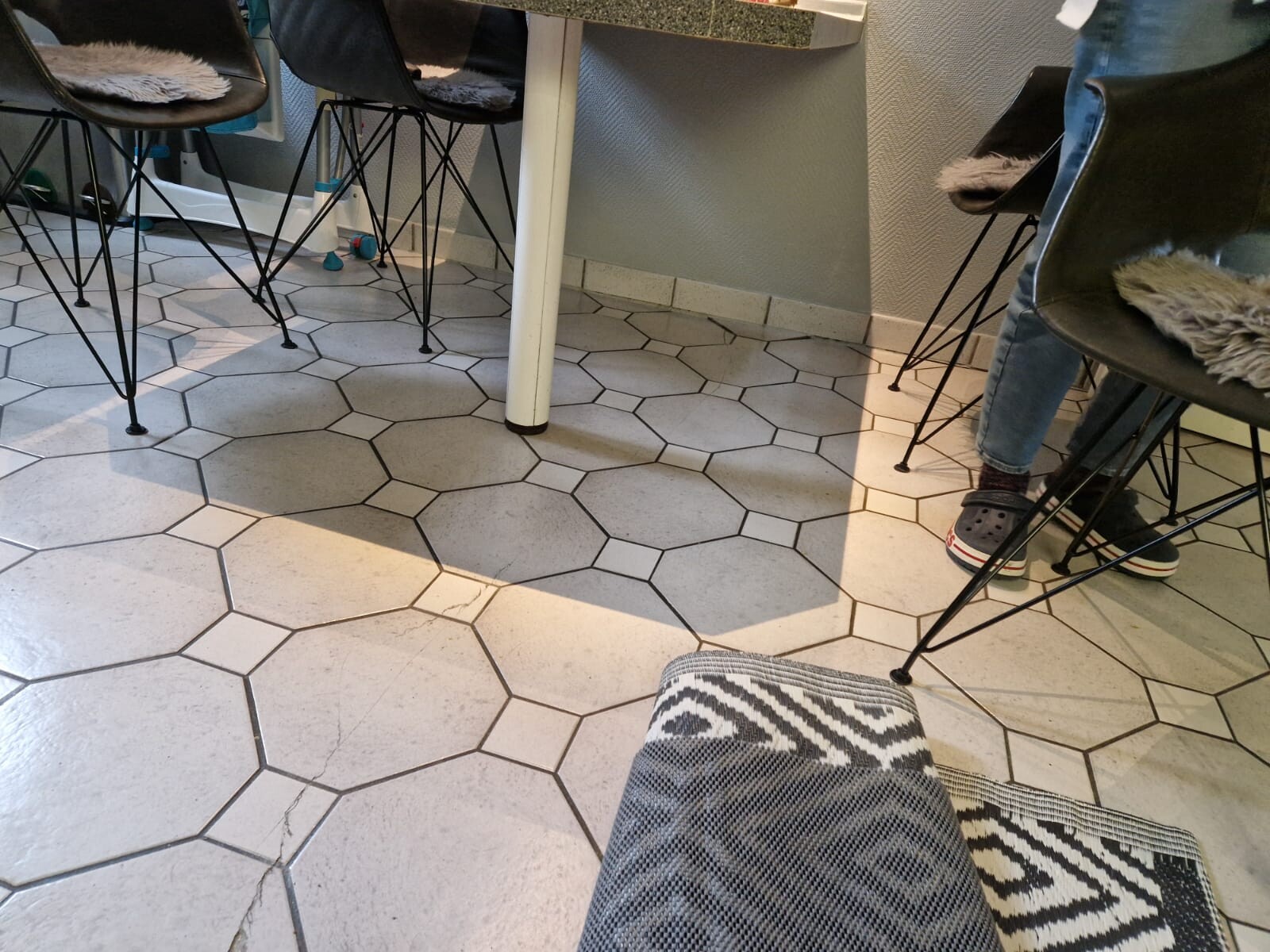
We have taken over a house from my parents. We will be installing a new kitchen and want to lay a new vinyl floor with a thickness of 7.5 mm (0.3 inches). Currently, the floor in the middle of the room (from left to right) has slightly sunk by about 4 mm (0.16 inches).
We would like to install the vinyl flooring over the tiles (only up to the skirting board of the new kitchen, as otherwise we would need 8 mm (0.3 inches) thickness). However, we are concerned that the floor might sink even more. Under the tiles, there is a screed layer, beneath that OSB boards, and under those, joists.
How should we proceed?
Looking forward to your advice.
Thank you

Skarry91 schrieb:
Below the tiles, there is a screed layer, underneath that OSB boards, and below those, beams. What is the construction year of the house? Wooden beams age and can sometimes sag.
Try using a laser distance meter to measure the distance to the ceiling in the middle of the room, then have 4-5 people stand side by side underneath. If the distance to the ceiling has increased by more than 5mm (0.2 inches), you should consult a structural engineer. A kitchen is quite heavy.
Nida35a schrieb:
What is the year of construction of the house? Wooden beams age and can sometimes sag. Take a laser distance measurer and measure the distance to the ceiling in the middle of the room, then have 4-5 people stand next to it. If the distance to the ceiling has increased by more than 5mm (0.2 inches), you should consult a structural engineer, as a kitchen is quite heavy.The house was built in the 1990s, so this is the construction.
It is always interesting to read the answers!
To the person asking the question:
Simply covering the sunken area is not an option!
I would definitely start by investigating the cause of the sinking.
This means: using a plunge saw with a diamond blade to remove the grout between the sunken tiles, vacuuming everything thoroughly, and carefully tapping the tiles loose with a hammer. There aren’t many tiles involved.
Keep them safe, as they will be reinstalled in the same place later.
Now carefully open the area exposed by the tiles deeper using a hammer and chisel, paying attention to any peculiarities in the subfloor.
In this way, you will find the cause within the floor structure, and keep the extent of the damage to a minimum.
If you want to install a full-surface PVC floor later, the entire tile surface must be thoroughly cleaned or mechanically ground with a diamond disc.
Then prime (with a dispersion primer for non-absorbent substrates) and level the whole area with a smoothing compound.
This prevents the grout lines of the ceramic tiles from showing through the thin PVC covering (which looks very unattractive).
Good luck: KlaRa
To the person asking the question:
Simply covering the sunken area is not an option!
I would definitely start by investigating the cause of the sinking.
This means: using a plunge saw with a diamond blade to remove the grout between the sunken tiles, vacuuming everything thoroughly, and carefully tapping the tiles loose with a hammer. There aren’t many tiles involved.
Keep them safe, as they will be reinstalled in the same place later.
Now carefully open the area exposed by the tiles deeper using a hammer and chisel, paying attention to any peculiarities in the subfloor.
In this way, you will find the cause within the floor structure, and keep the extent of the damage to a minimum.
If you want to install a full-surface PVC floor later, the entire tile surface must be thoroughly cleaned or mechanically ground with a diamond disc.
Then prime (with a dispersion primer for non-absorbent substrates) and level the whole area with a smoothing compound.
This prevents the grout lines of the ceramic tiles from showing through the thin PVC covering (which looks very unattractive).
Good luck: KlaRa
KlaRa schrieb:
It's always interesting to read the answers!
To the original poster:
Simply covering the sunken area is not an option!
I would definitely start by investigating the cause of the sinking.
This means: using a plunge saw with a diamond blade to remove the grout between the sunken tiles, vacuum everything thoroughly, and then carefully loosen the tiles with gentle hammer taps. There aren’t many of them.
Keep these tiles safe because they will be reinstalled in the same spots later.
Now, carefully open up the area revealed by the removed tiles deeper with a hammer and chisel, paying attention to any special conditions of the substrate.
By doing this, you will find the element in the floor structure causing the problem and keep the extent of the damage as small and manageable as possible.
-----------------
If you plan to install a full-surface vinyl floor later, the entire tile surface must be thoroughly cleaned or ground down with a diamond grinding disc.
After that, prime the surface (use a primer suitable for non-absorbent substrates) and apply a smooth leveling compound over the entire area.
This will prevent the tile grout patterns from showing through the thin vinyl covering, which looks unpleasant.
------------------------
Good luck: KlaRa Thanks for the advice, we are installing vinyl, not PVC.

Skarry91 schrieb:
Thanks for the tip, we are installing vinyl and not PVC.PVC is the official abbreviation for polyvinyl chloride. “Vinyl” as a standalone term does not exist in the flooring industry! A so-called “vinyl floor covering” is therefore one made of PVC, polyvinyl chloride!
Other floorings are referred to as “chlorine-free flooring” or similar, which means those made of polyethylene.
Similar topics